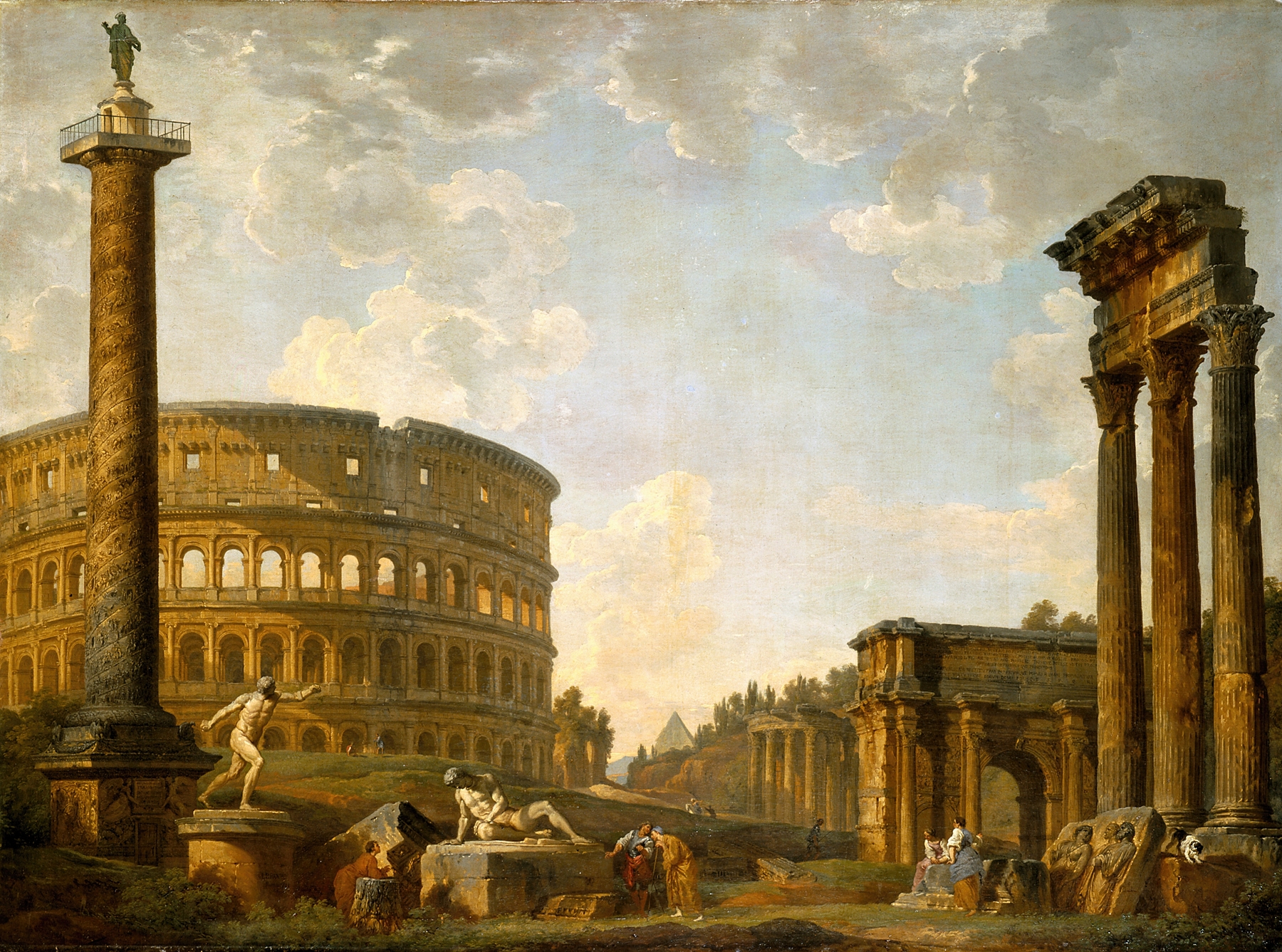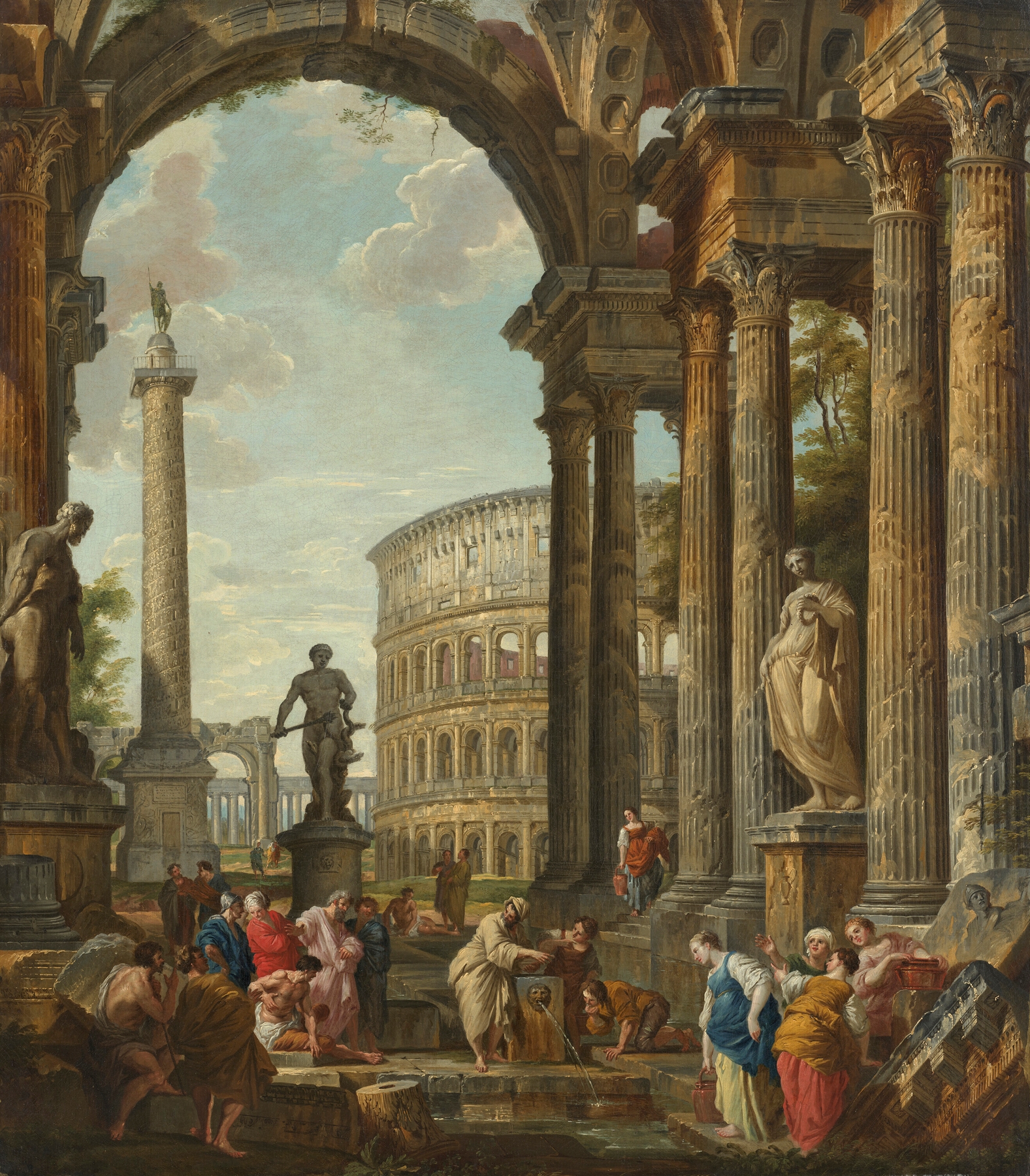
A classical capriccio with the Colosseum, Trajan’s column and the Farnese Hercules, with the Philosopher — History & Analysis
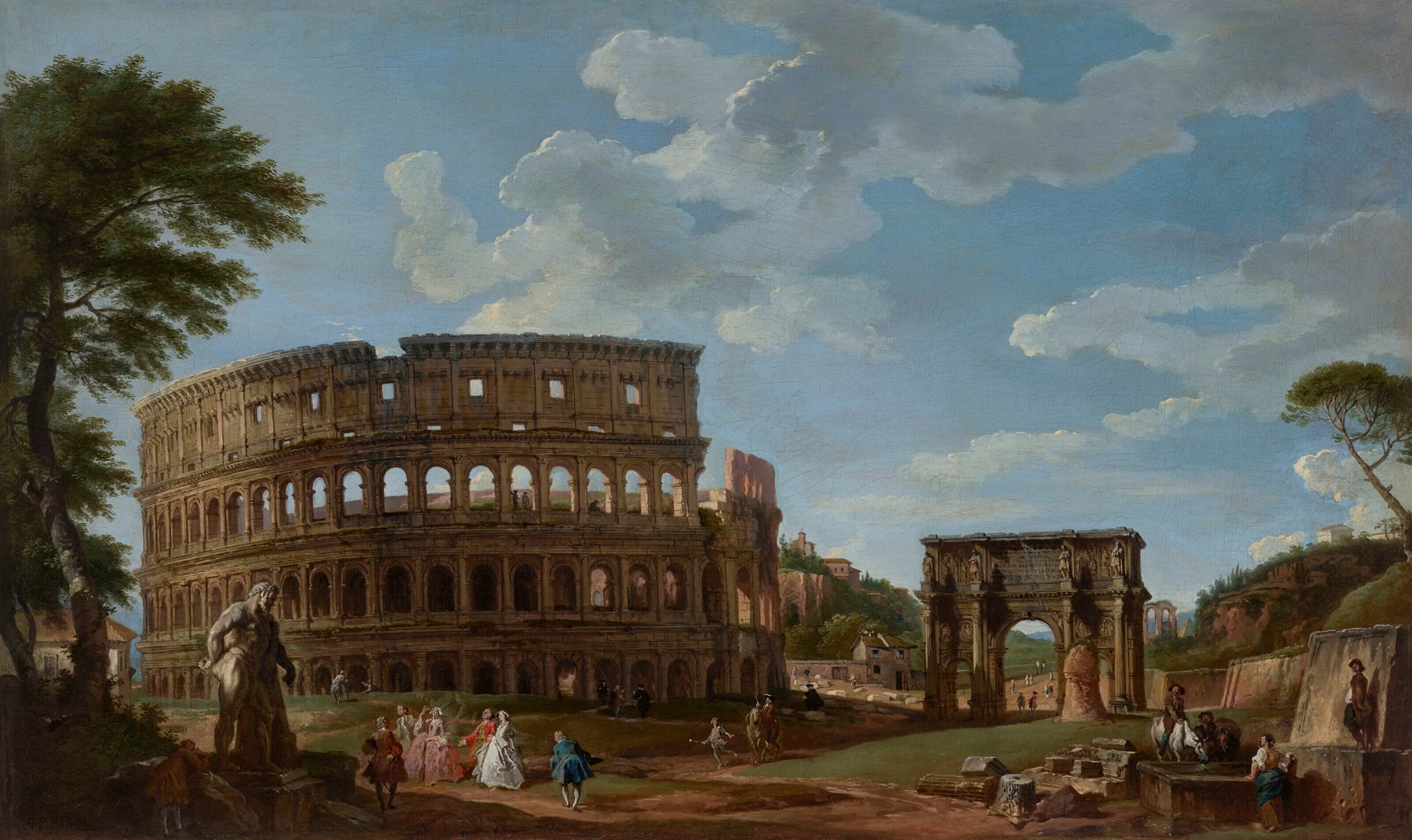
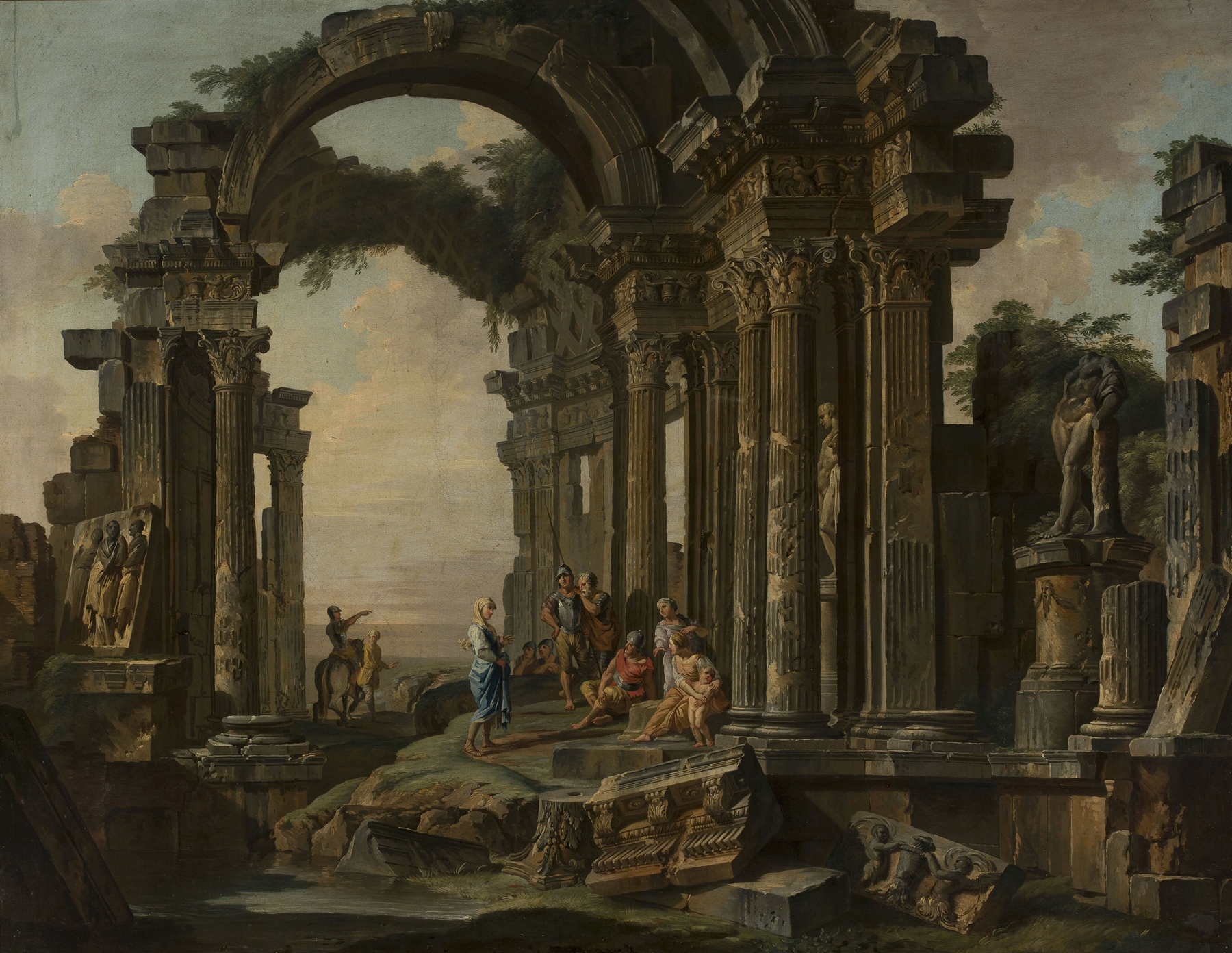
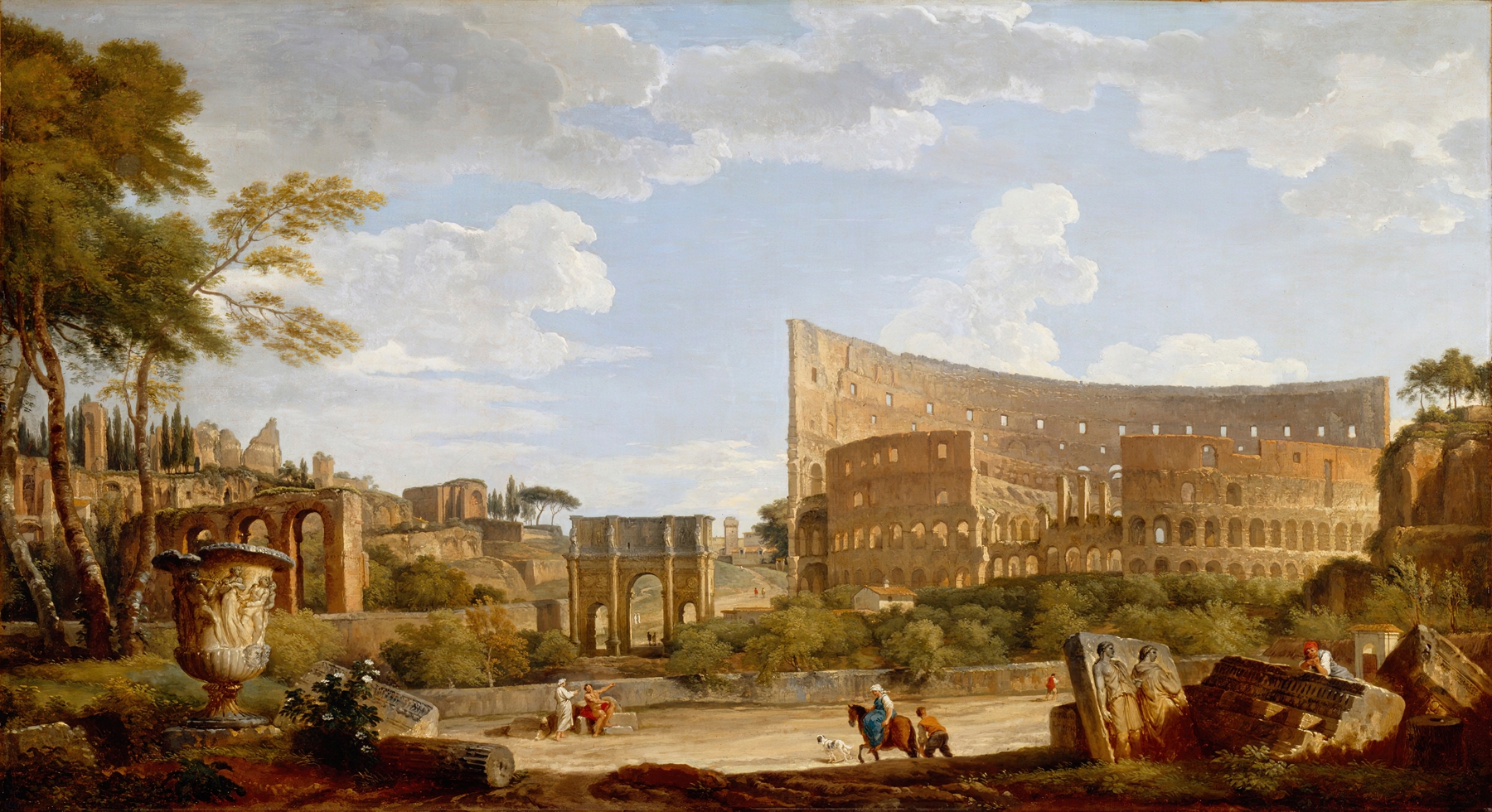
Who listens when art speaks of silence? The quiet dialogue between history and imagination unfolds in a vibrant tableau that captures the soul of Rome. Look to the center of the canvas and encounter the grand figures woven into the architecture of ancient lore. The luminous colors accentuate the contrasts between the soft pastels of the sky and the rich earth tones of the monuments. Notice how the light spills over the Colosseum, casting shadows that dance along the stone, while Trajan’s Column rises with regal defiance, both monuments cradling the Philosopher and the Farnese Hercules in a moment of contemplation. Each brushstroke invites you to traverse time itself, inviting the viewer to explore the depths of both the human experience and the monumental legacy of Rome. As you delve deeper, consider the juxtaposition of the philosopher's introspection against the backdrop of monumental might. The juxtaposition speaks of human fragility in the shadow of greatness, contrasting the enduring nature of art and philosophy against the once-bustling arenas of entertainment. The vibrant palette adds emotional weight, suggesting a conversation between the past and present, igniting contemplation within the observer’s heart. Panini created this work during a vibrant period in the 18th century, likely in Rome, where he was immersed in a world rich with classical inspiration and the burgeoning interest in the Grand Tour. As artists sought to capture the essence of antiquity, the painting reflects the era's fascination with blending reality and imagination, embodying a dialogue between history and the artist's vision.