A City Park — History & Analysis
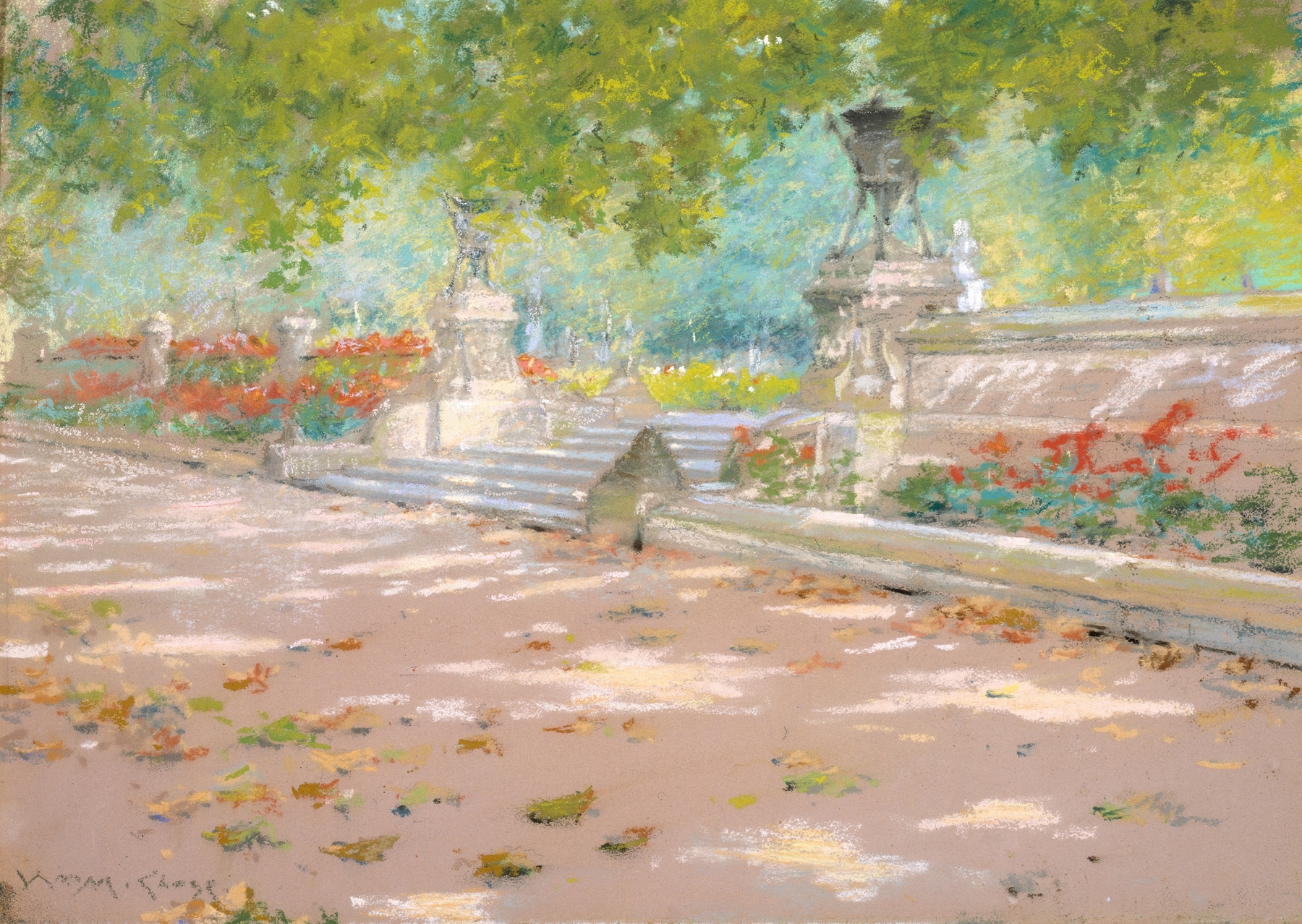
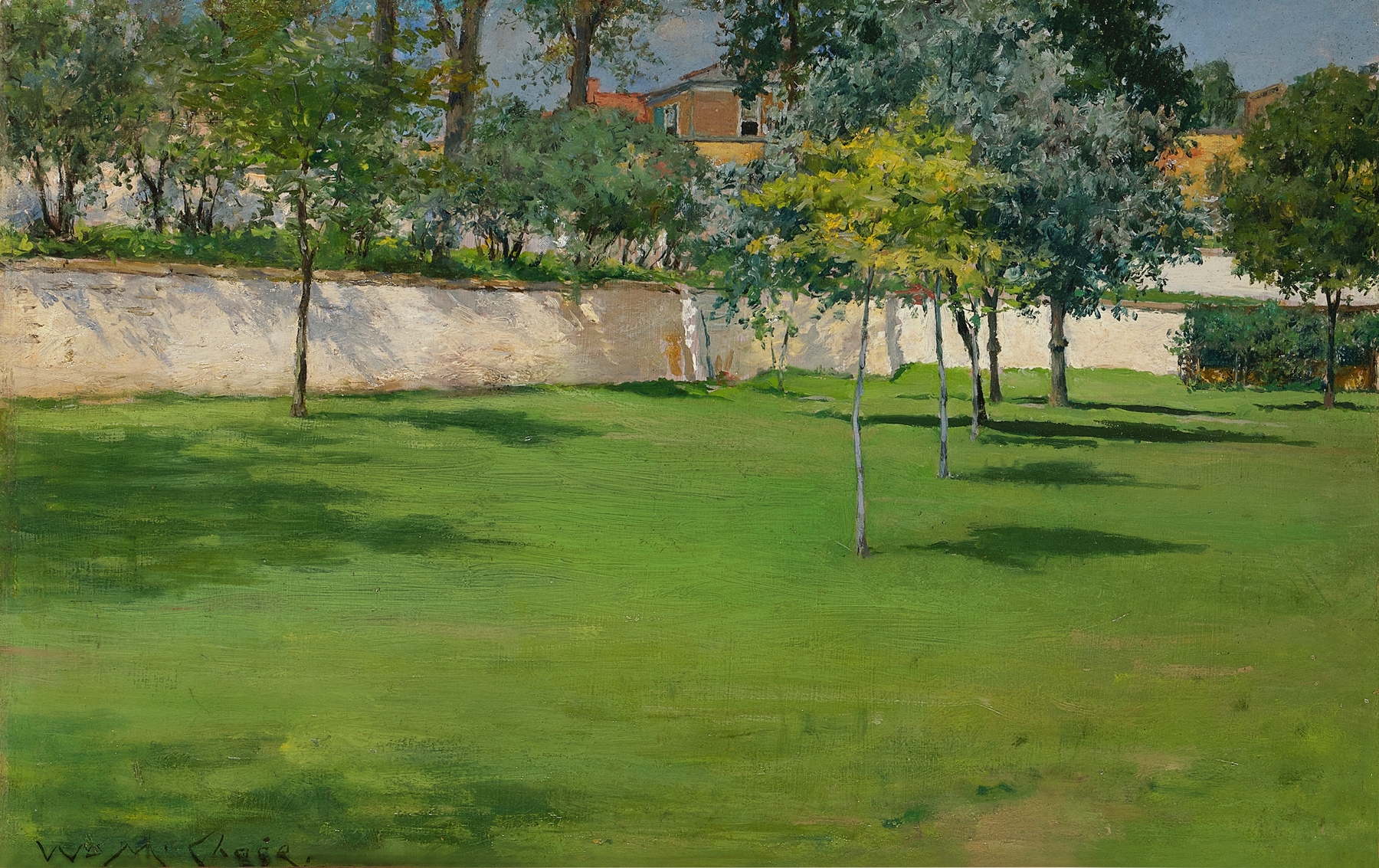
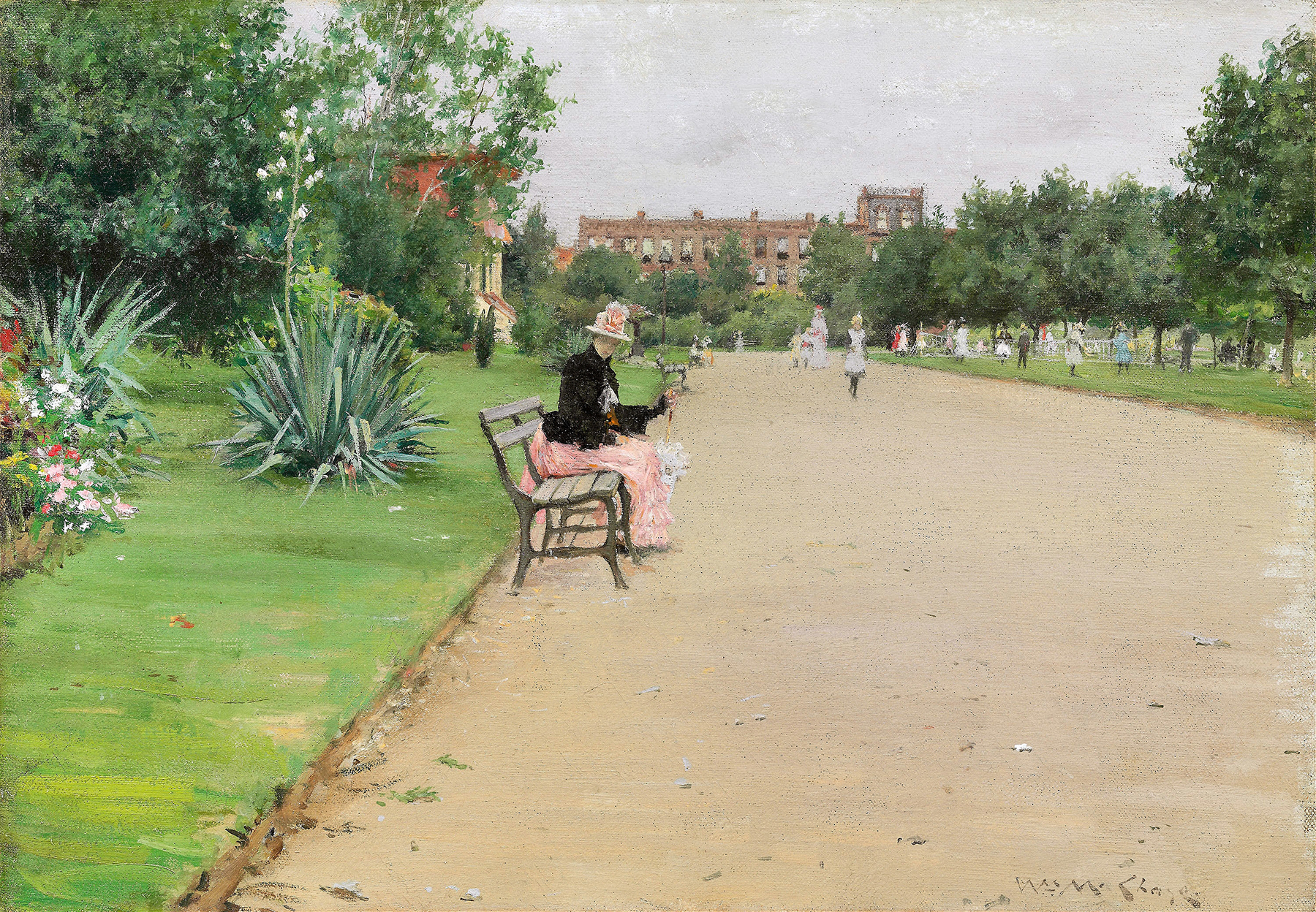
Who listens when art speaks of silence? In A City Park, the stillness resonates with a poignant sense of loss, inviting viewers to reflect on what remains unsaid within the confines of urban life. Look to the center where a solitary figure is seated on a bench, draped in soft, muted colors that blend harmoniously with the surrounding foliage. Notice how the dappled sunlight filters through the trees, casting delicate patterns on the ground, illuminating the empty space beside the figure—a subtle echo of absence.
The artist employs a loose, impressionistic style, with brush strokes that suggest movement while simultaneously capturing the quietude of the park, creating a contrast between the vibrancy of nature and the stillness of the human presence. The figure’s gaze seems directed inward, provoking a tension that resonates beyond the canvas. The surrounding blooms and verdant greenery, rich with life, stand in stark contrast to the solitary shape, embodying themes of solitude and yearning. This juxtaposition deepens the emotional weight, revealing a narrative of loss—perhaps of companionship or a cherished moment—imposed against the backdrop of an indifferent world.
The empty space echoes a longing for connection, amplifying the park's serene beauty with a subtle melancholy. Painted in 1887, this work emerged during a transformative period for William Merritt Chase, as he navigated the dynamics of American Impressionism. Residing in New York, he was deeply influenced by both European techniques and the bustling life of the city around him. This painting encapsulates a moment in his artistic evolution, a reflection on the intersection of urban experience and personal introspection amid a rapidly changing society.