A Cottage in the Woods — History & Analysis
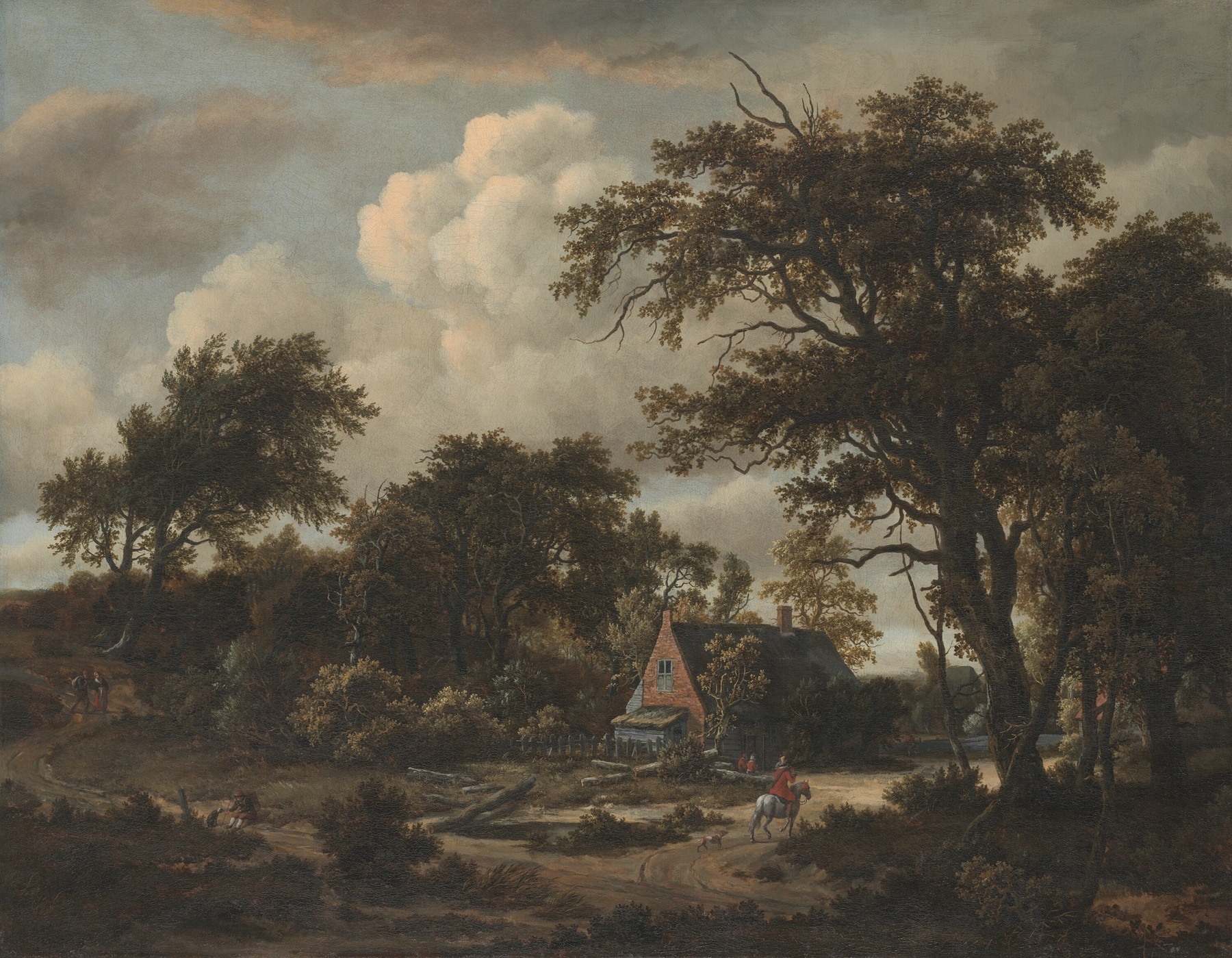
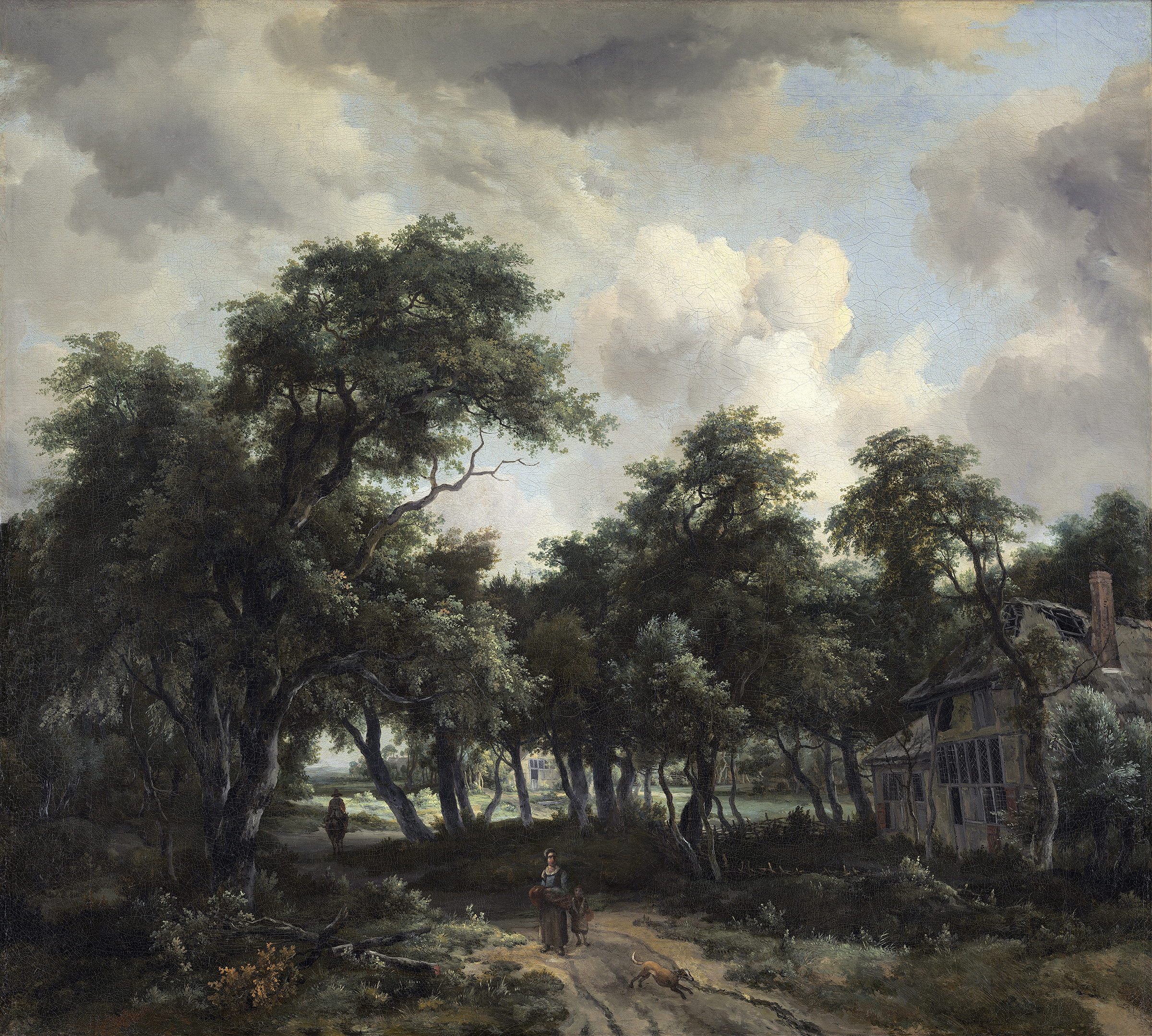
“Art reveals the soul when the world turns away.” In a time of relentless change, some creations whisper the truths we often ignore. Look to the left at the cottage, nestled amidst a lush tapestry of verdant foliage. Its thatched roof, slightly worn, hints at years of quiet existence, while the warm earth tones of the structure meld harmoniously with the surrounding greenery. Notice how dappled sunlight filters through the canopy overhead, casting playful shadows that dance upon the ground, evoking a sense of serenity and decay, a transition between life and what is yet to come.
Yet, within its beauty lies a poignant tension. The soft glow of the light contrasts with the encroaching wildness of the undergrowth, suggesting the inevitable passage of time and nature's reclamation. The fallen leaves scattered in the foreground serve as a reminder of cycles, where life flourishes only to fade, urging us to reflect on our own impermanence. The stillness of the scene resonates with solitude, inviting contemplation of the stories that linger long after the inhabitants have left.
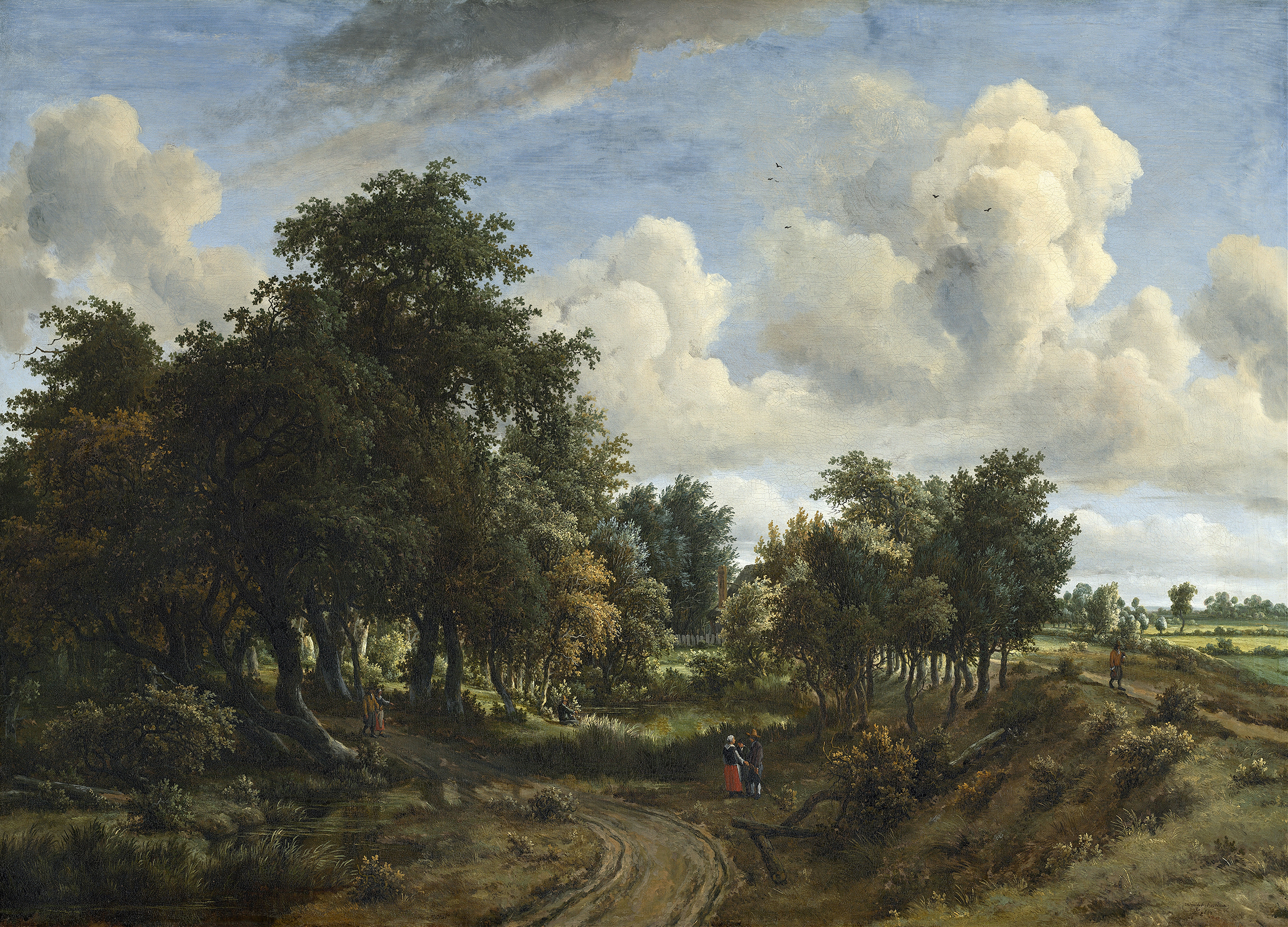
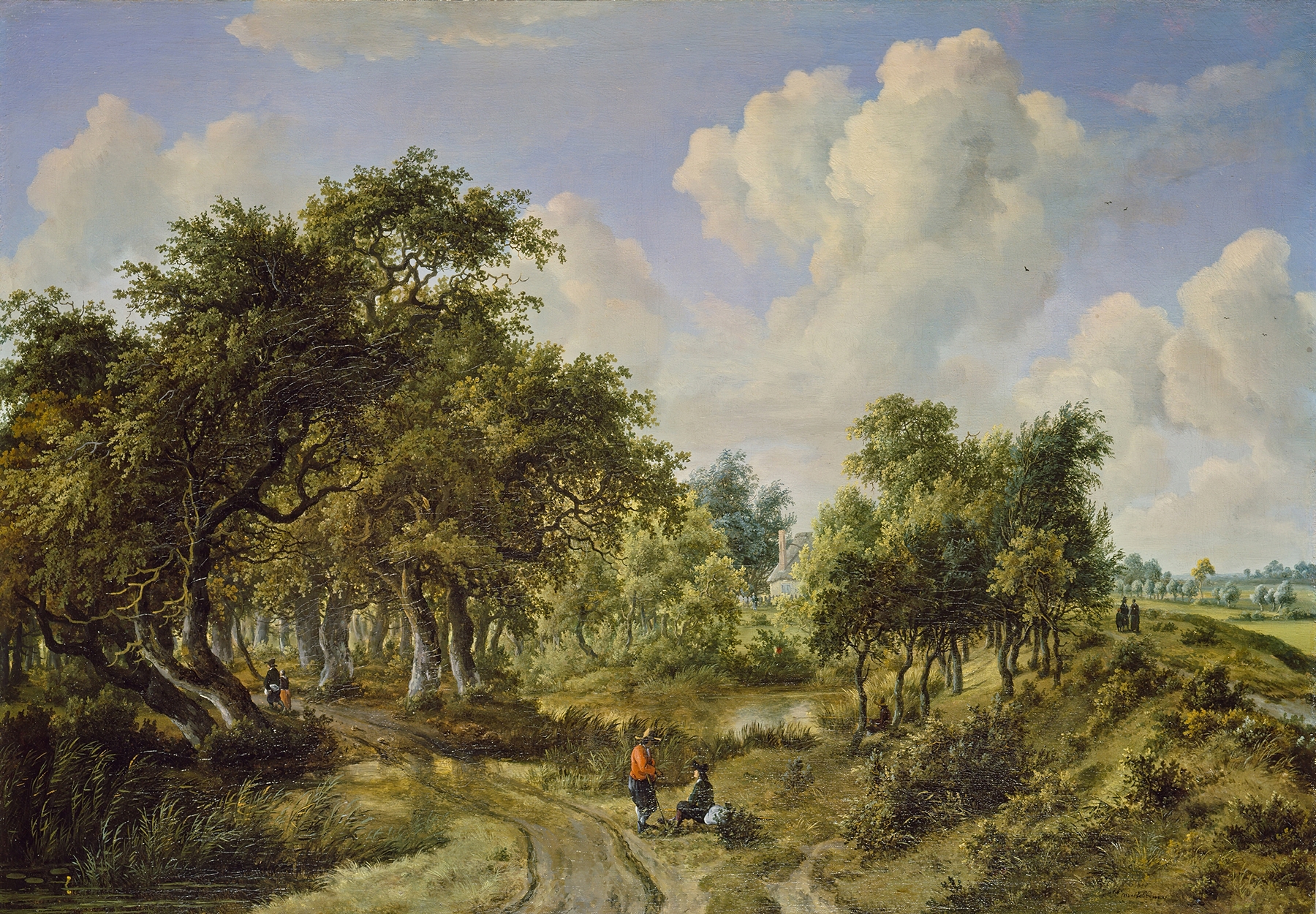
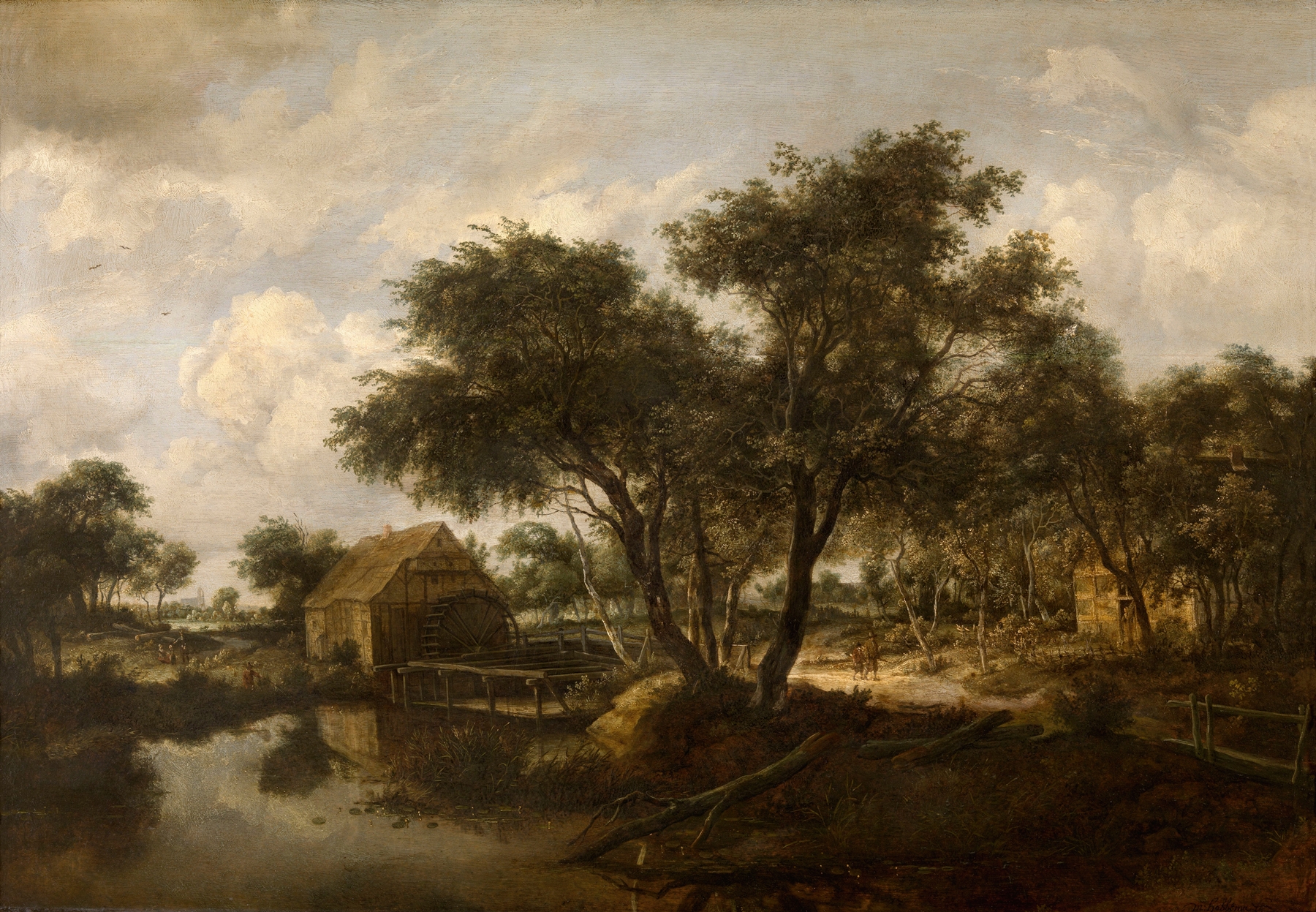
Created around 1662, this work emerged during a period when the Dutch Golden Age was reaching its zenith. Hobbema, residing in Amsterdam, was deeply influenced by the natural landscapes surrounding him as he focused on capturing the intimate relationship between human creation and a vibrant yet unforgiving nature. It was a time where art began to reflect not just the idealized beauty of life, but also the underlying truths of decay and the passage of time.