Bewaldete Flusslandschaft mit Figuren auf einem Weg — History & Analysis
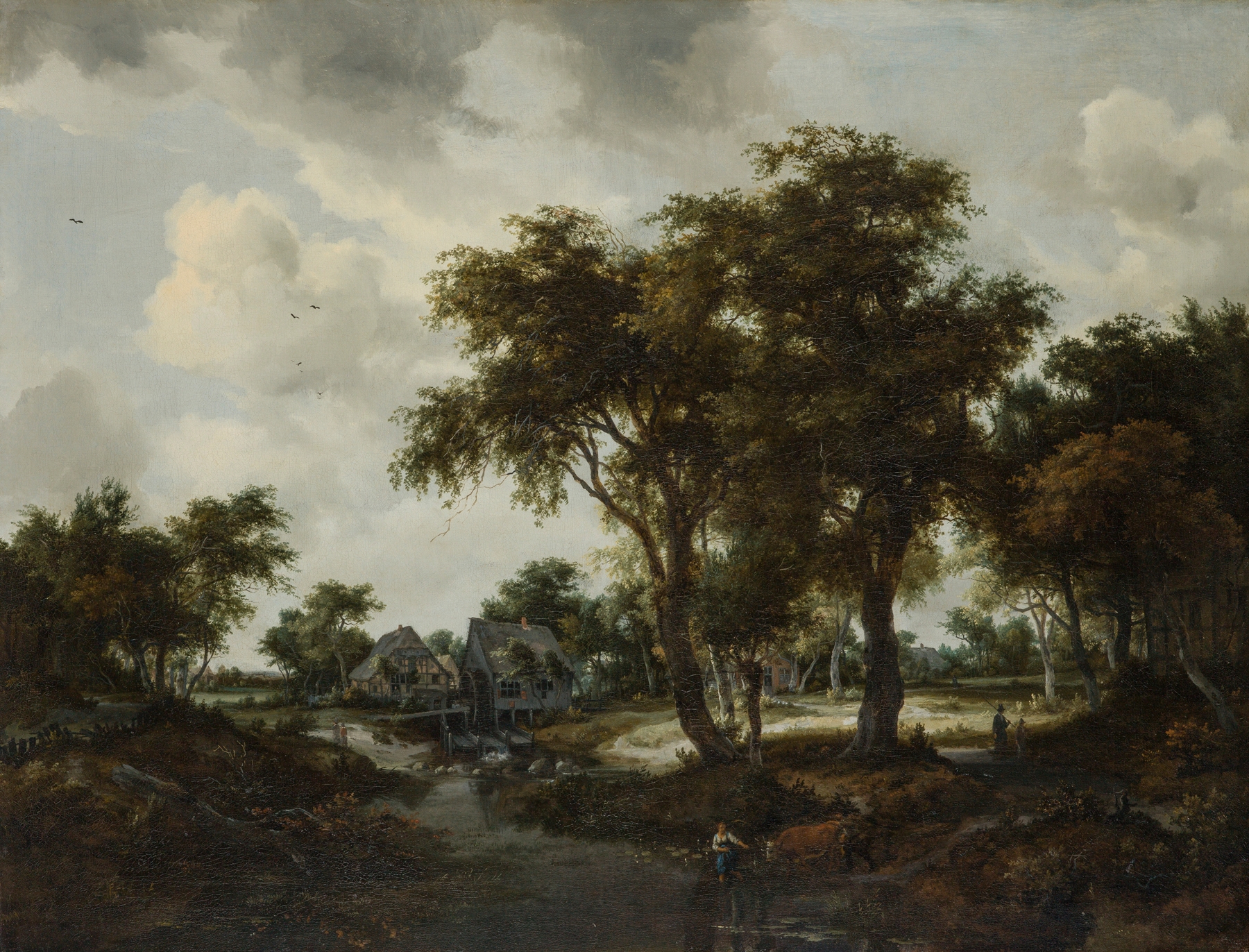
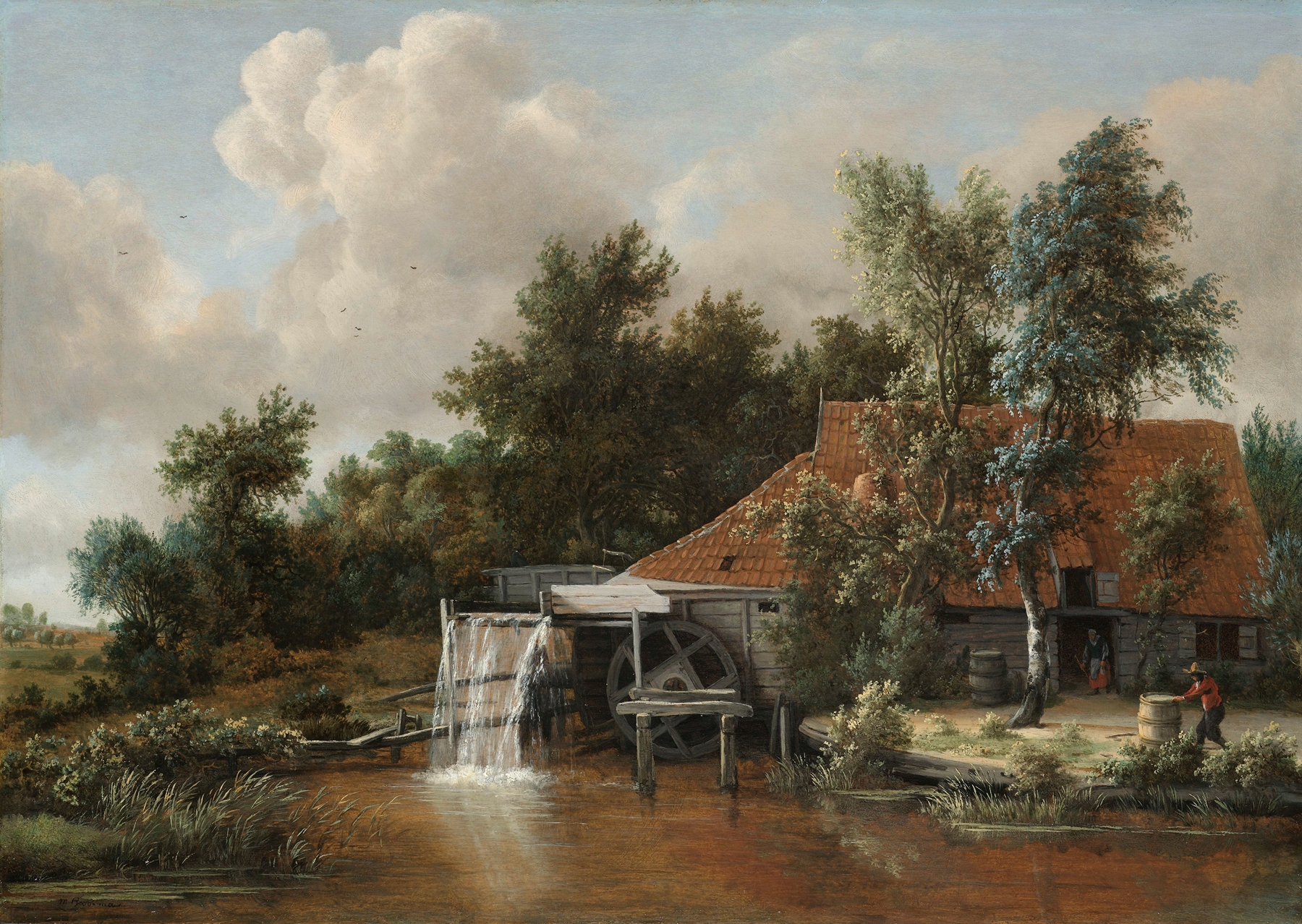
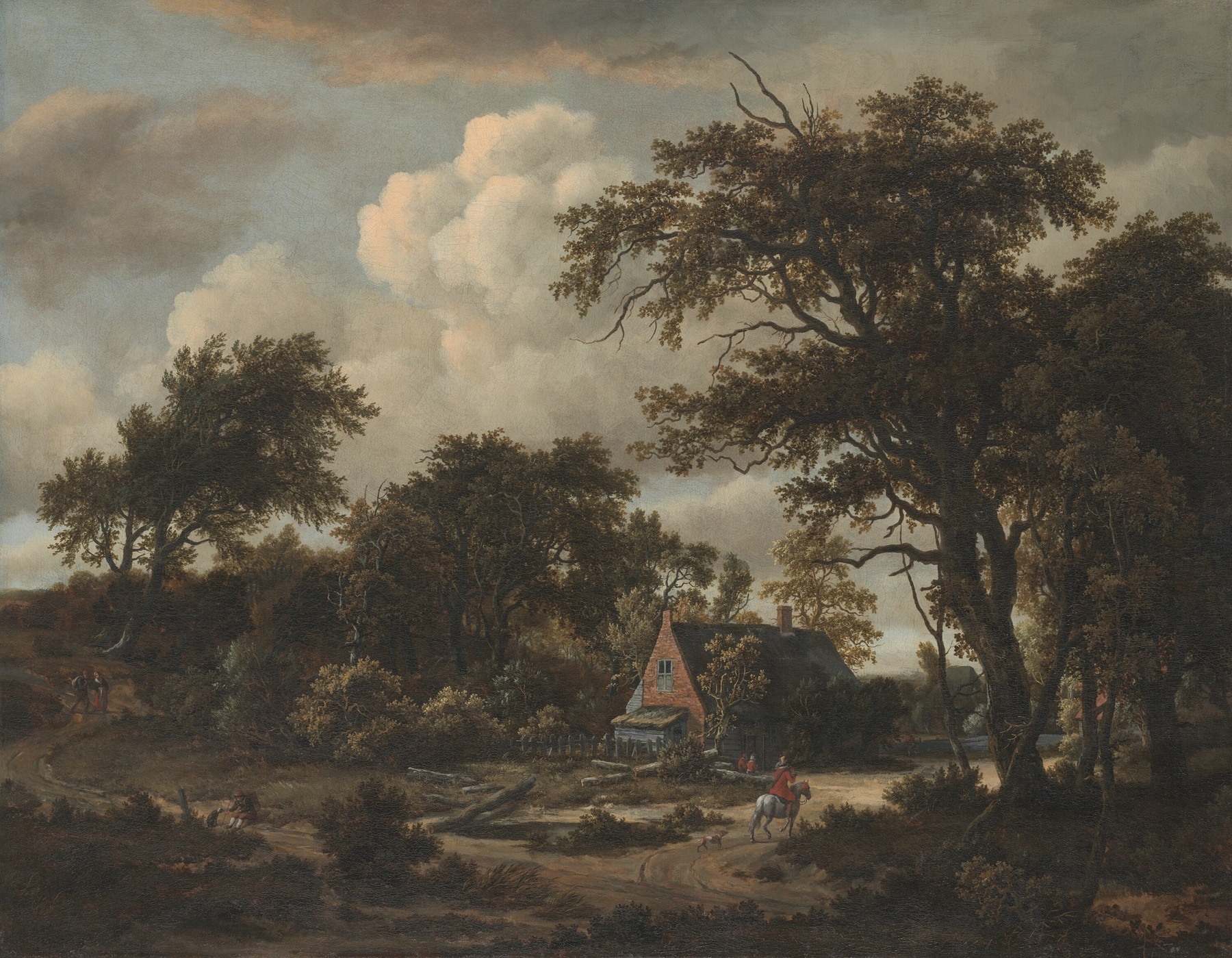
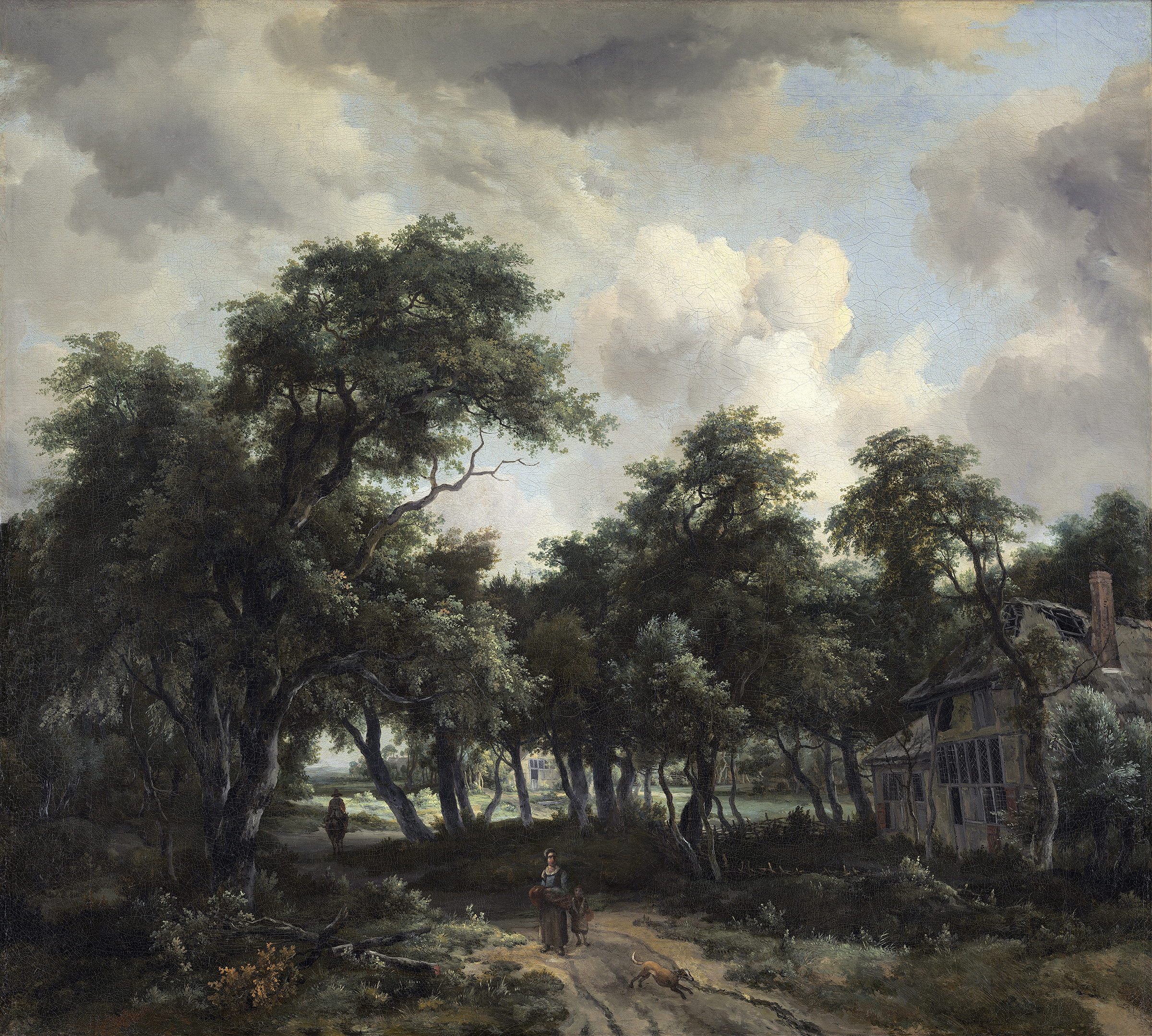
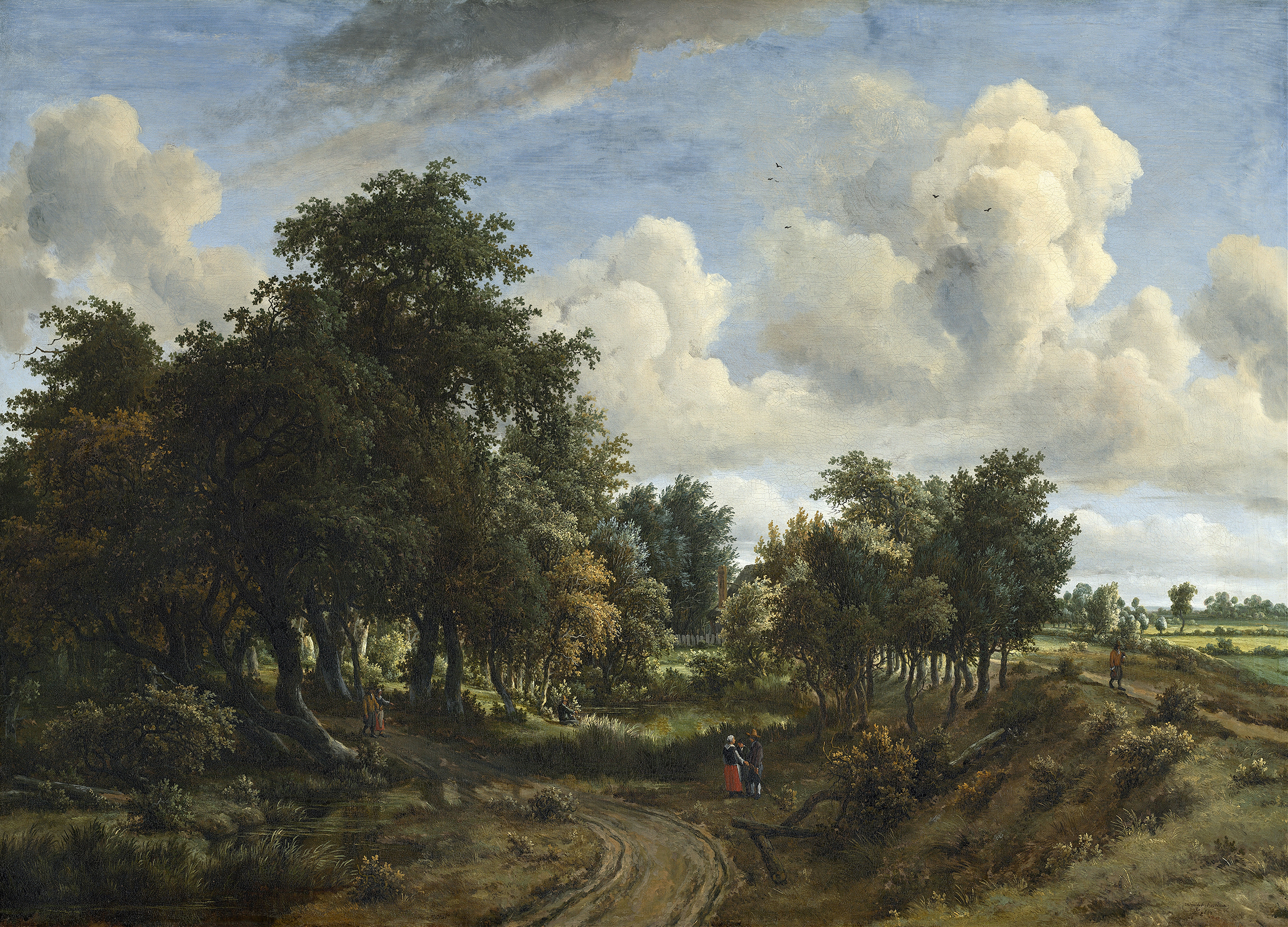
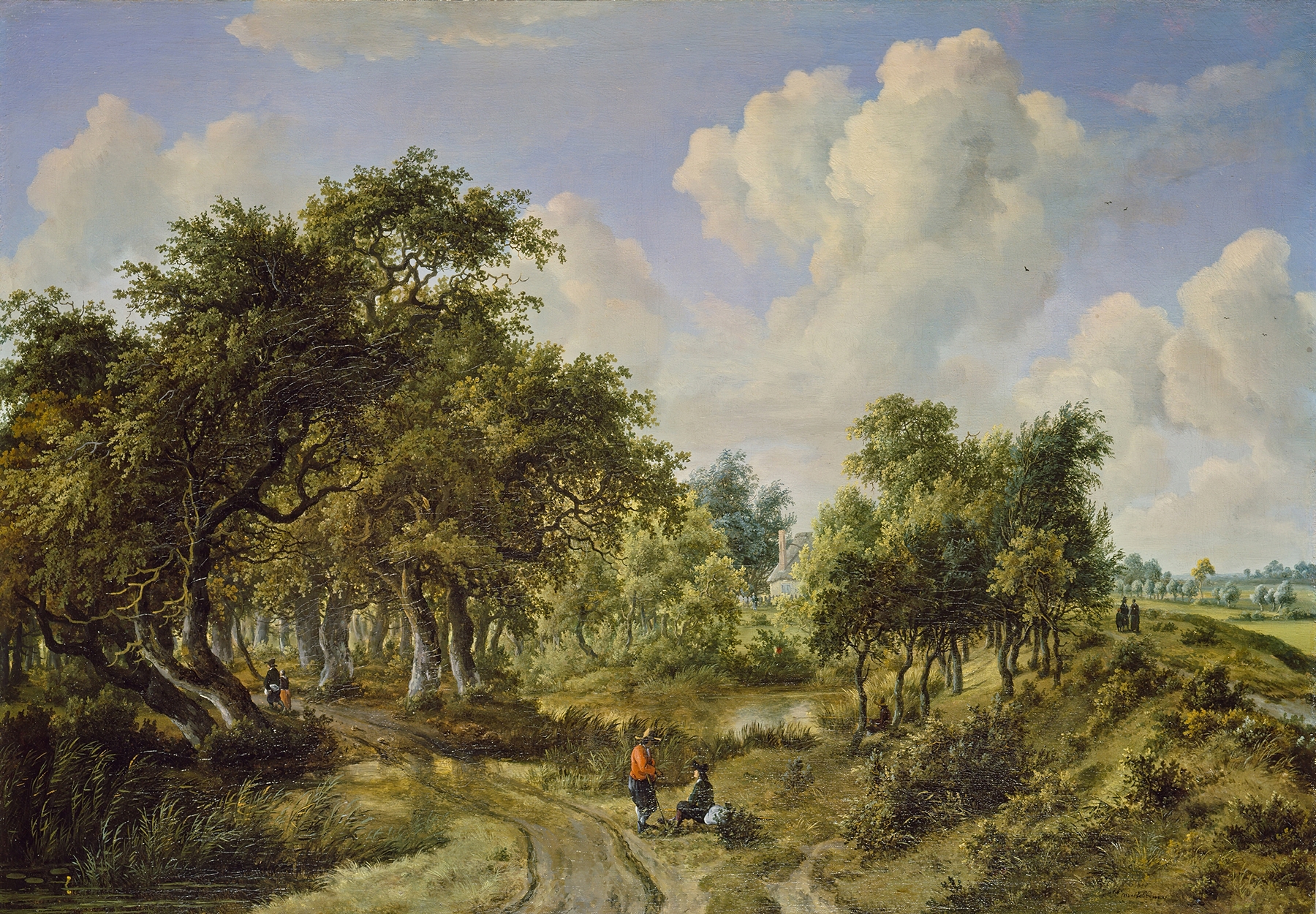
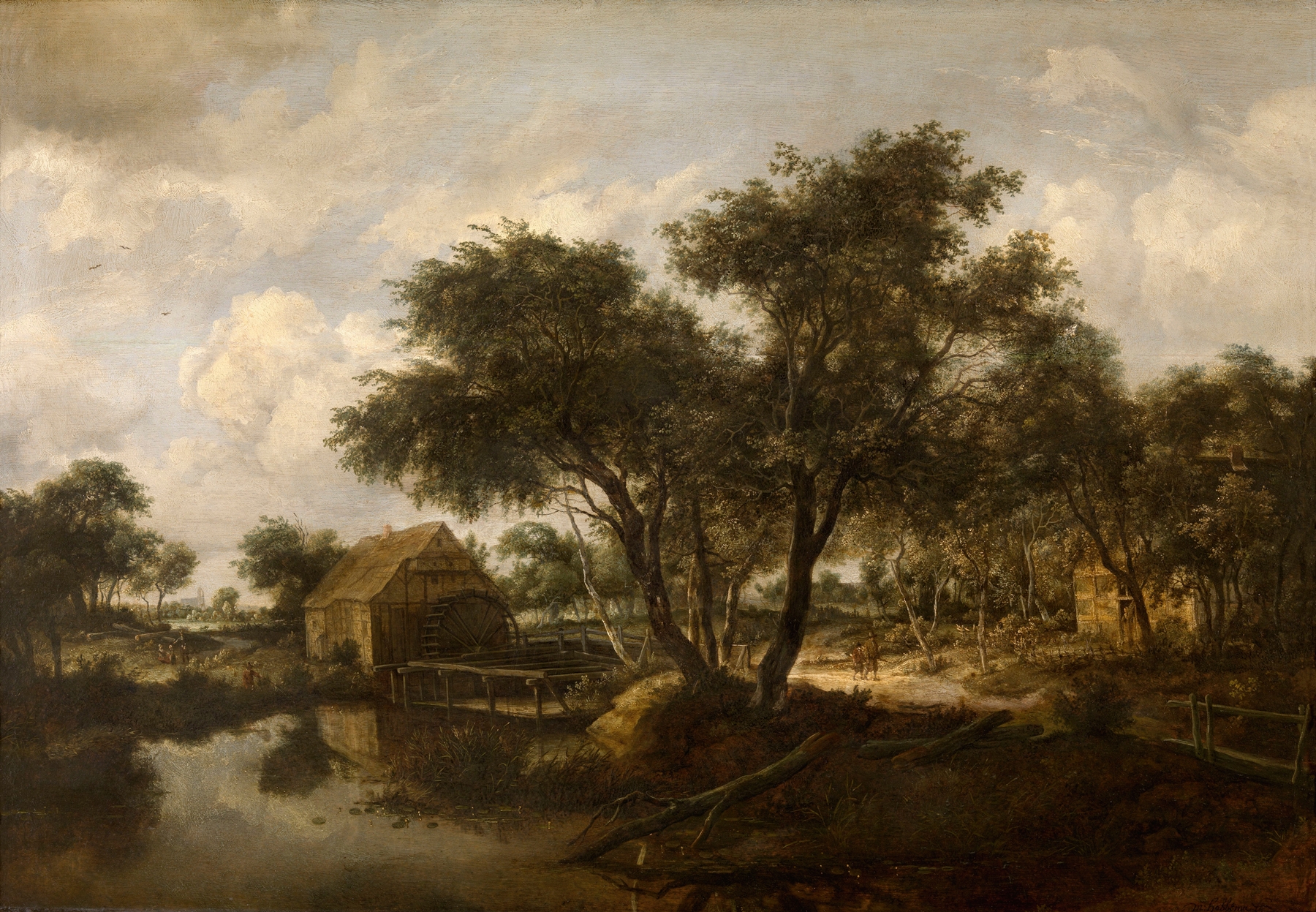
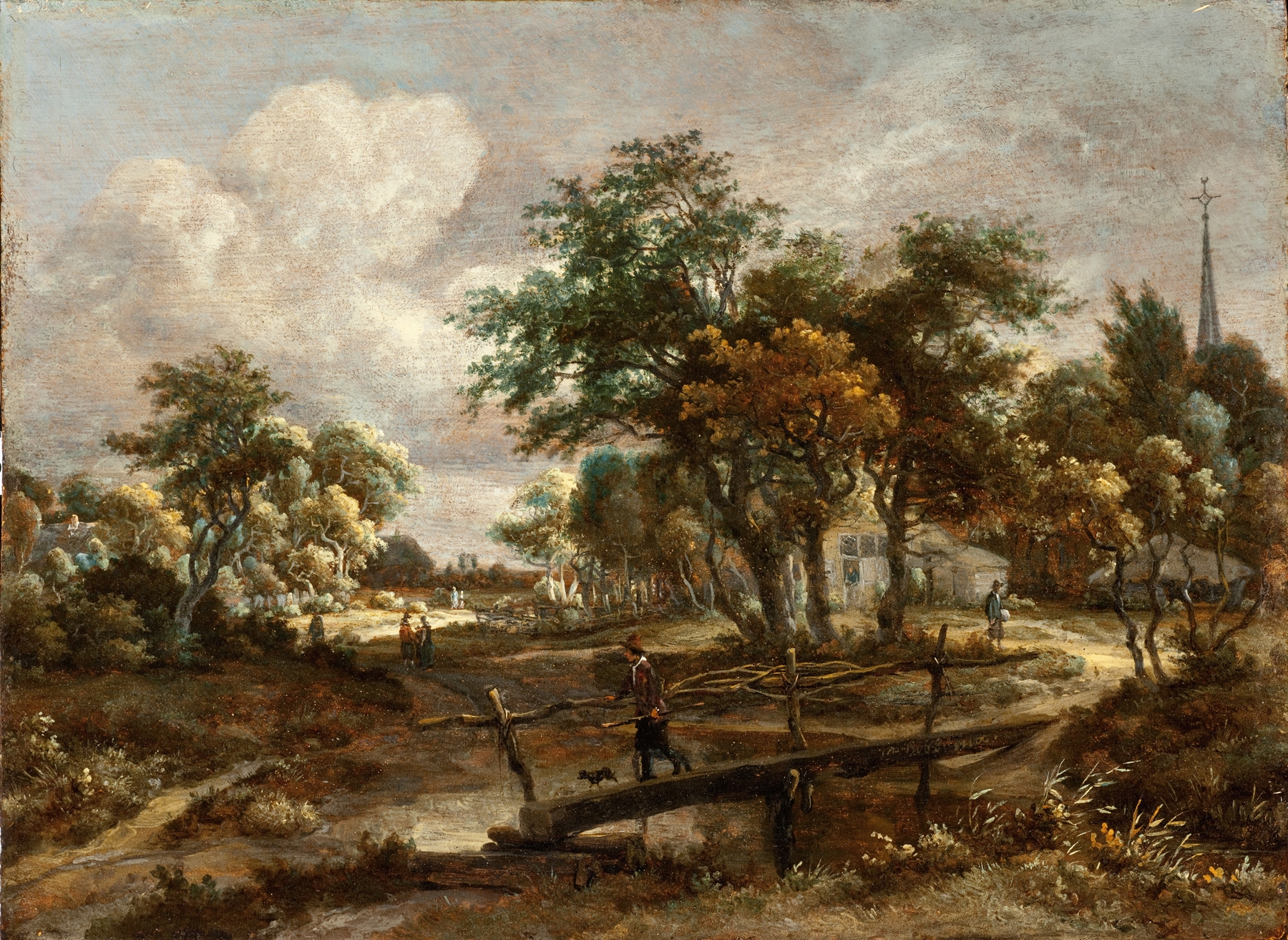
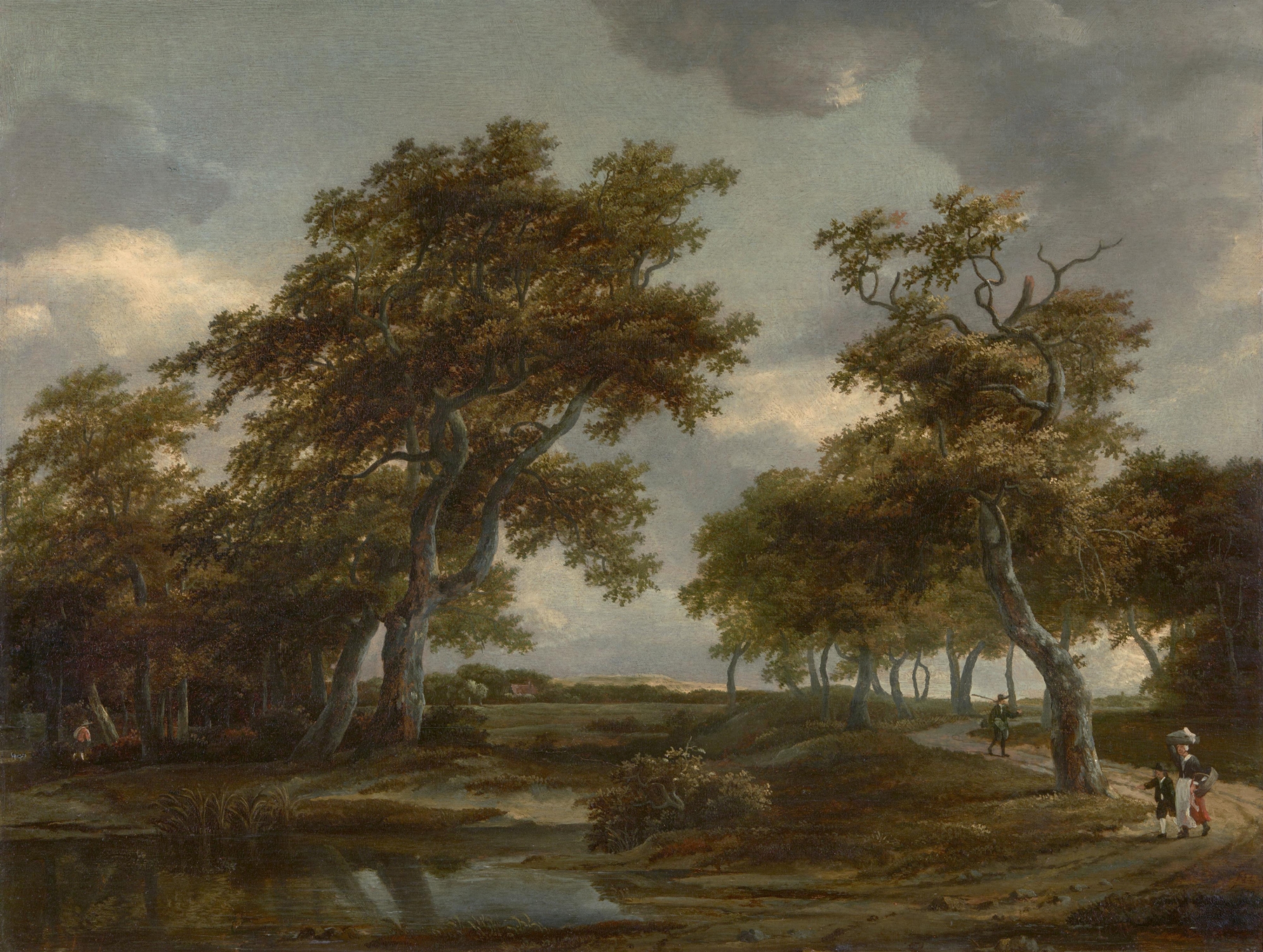
“Sometimes beauty is just pain, disguised in gold.” In *Bewaldete Flusslandschaft mit Figuren auf einem Weg*, the delicate interplay of color captures this sentiment, inviting viewers to consider the emotional undercurrents in nature's splendor. Look to the left where the sun-dappled forest meets the tranquil river. The lush greens of the trees are punctuated with vibrant highlights, while the figures on the winding path emerge softly from the landscape. Hobbema’s meticulous brushwork creates a tapestry of textures, from the ripple of water to the shimmering leaves, evoking a serene yet dynamic atmosphere. The warm hues of ochres and deep browns coalesce, lending depth to the scene, while the cool blues of the water reflect the sky, whispering of the endless cycles of life. Amid this pastoral beauty lies a tension between stillness and movement. The figures, though stationary, suggest a journey—each step a passage through the complexities of existence. The vibrant greens, symbolizing growth and renewal, contrast with the poised figures, hinting at life's unpredictable challenges. Additionally, the river, a timeless metaphor for change, winds through the landscape, suggesting that beauty often masks the struggles that lie beneath its surface. Meindert Hobbema painted this work in 1659 during a period when Dutch landscape painting was flourishing, marked by an emphasis on realism and meticulous detail. Living in Amsterdam, Hobbema was influenced by his contemporaries, particularly Jacob van Ruisdael, who paved the way for his exploration of nature. This painting reflects not only a personal vision but also the artistic currents of his time, where beauty in landscapes mirrored the complexities of the human experience.