A dune landscape with figures on a track — History & Analysis
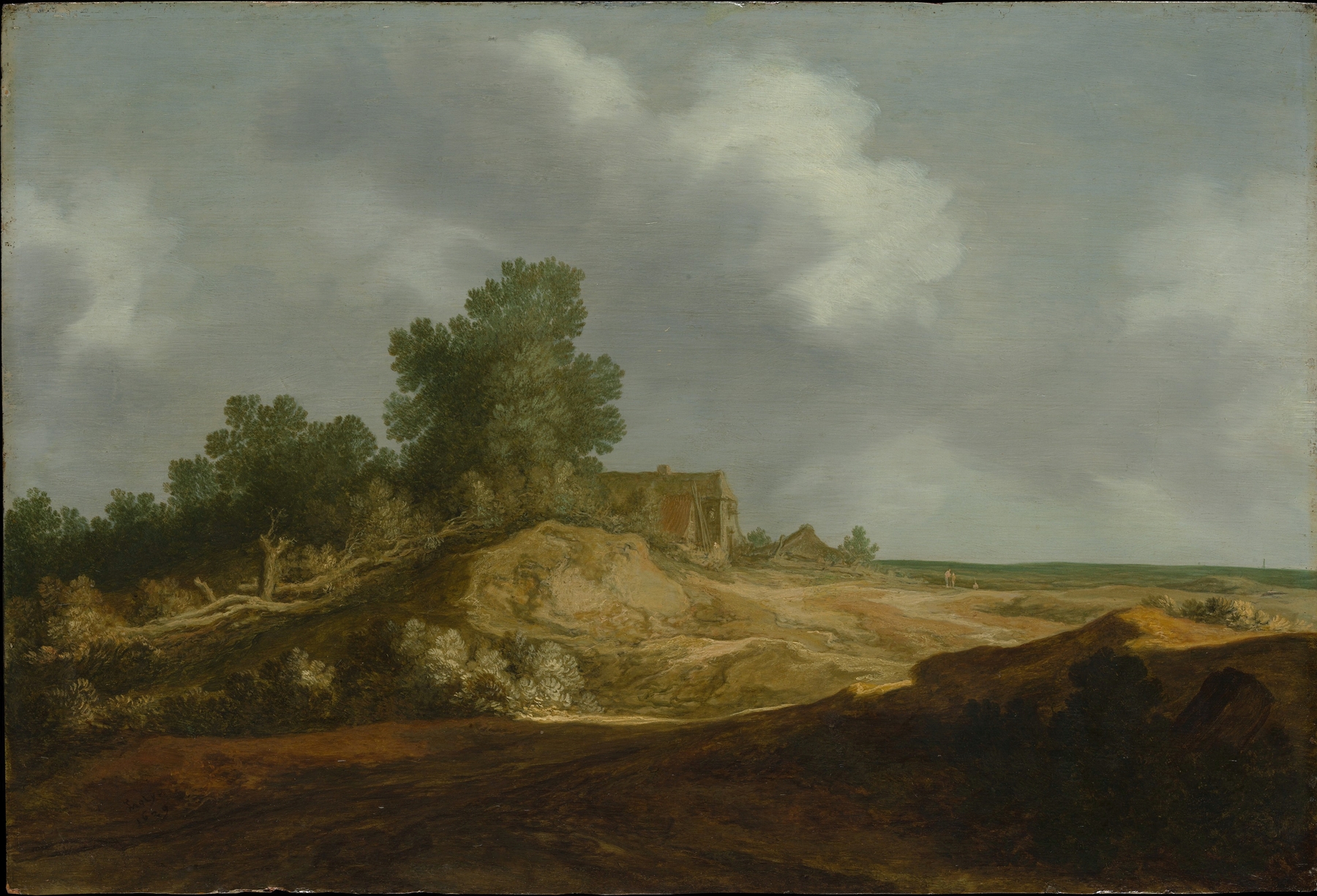
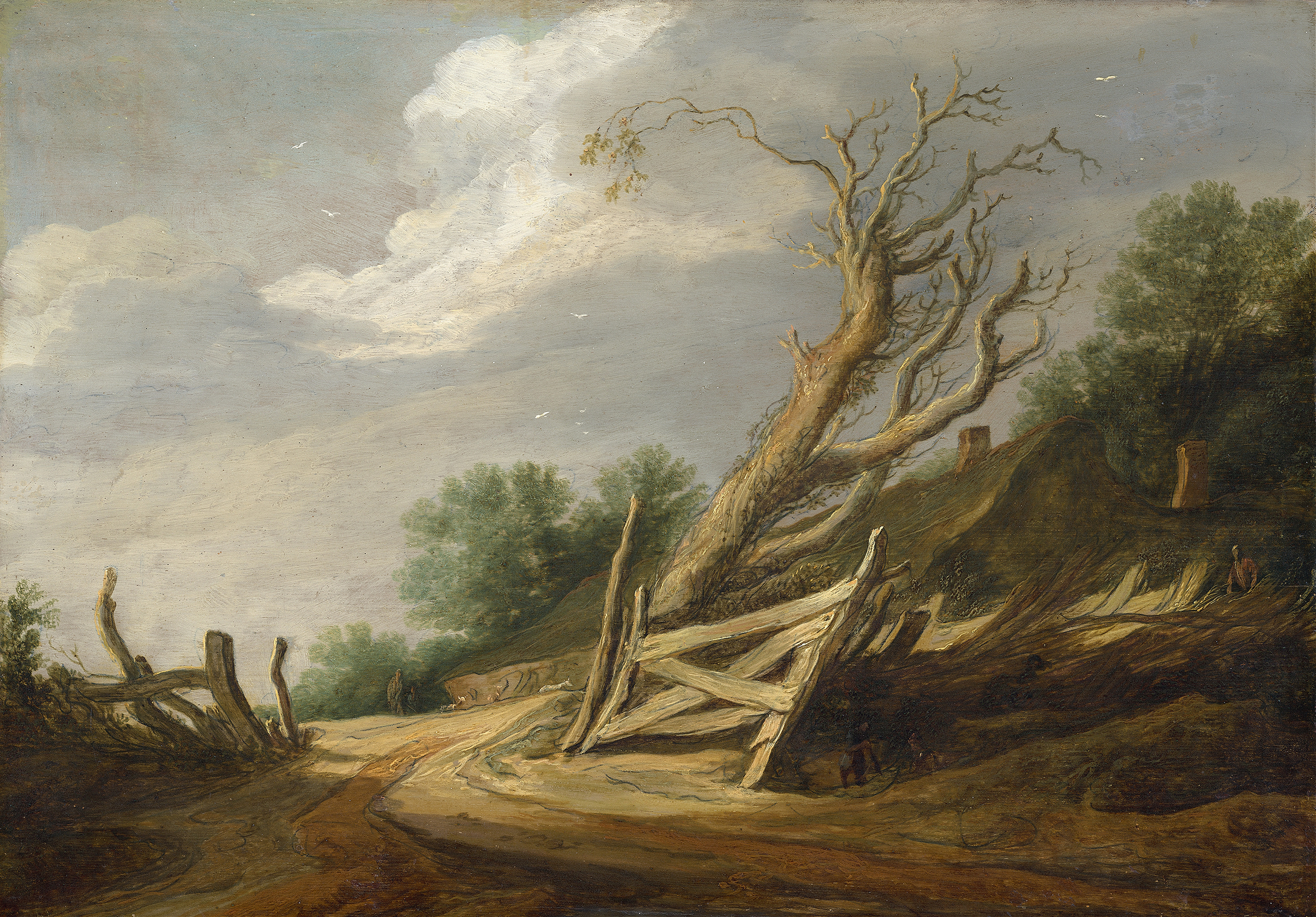
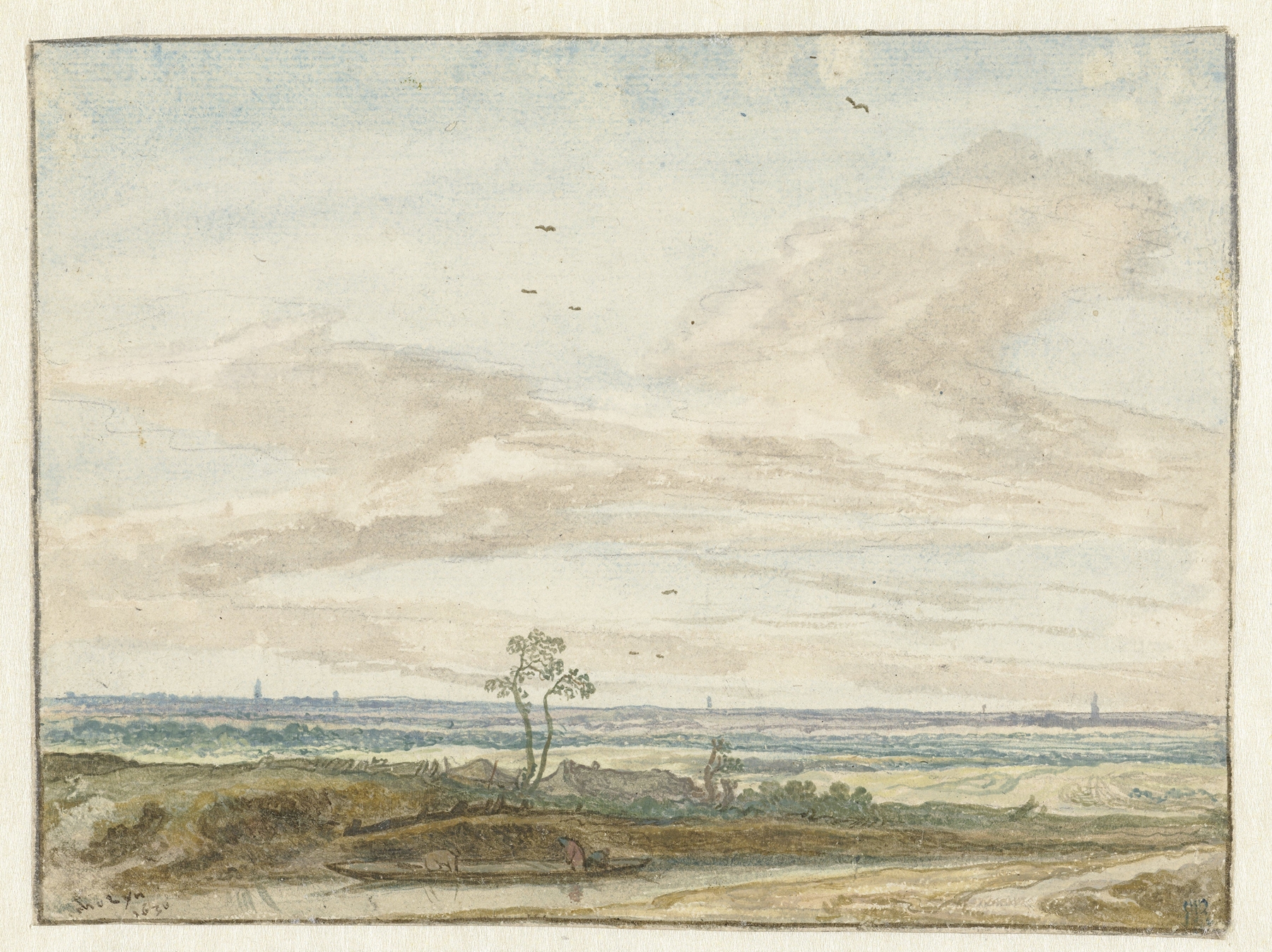
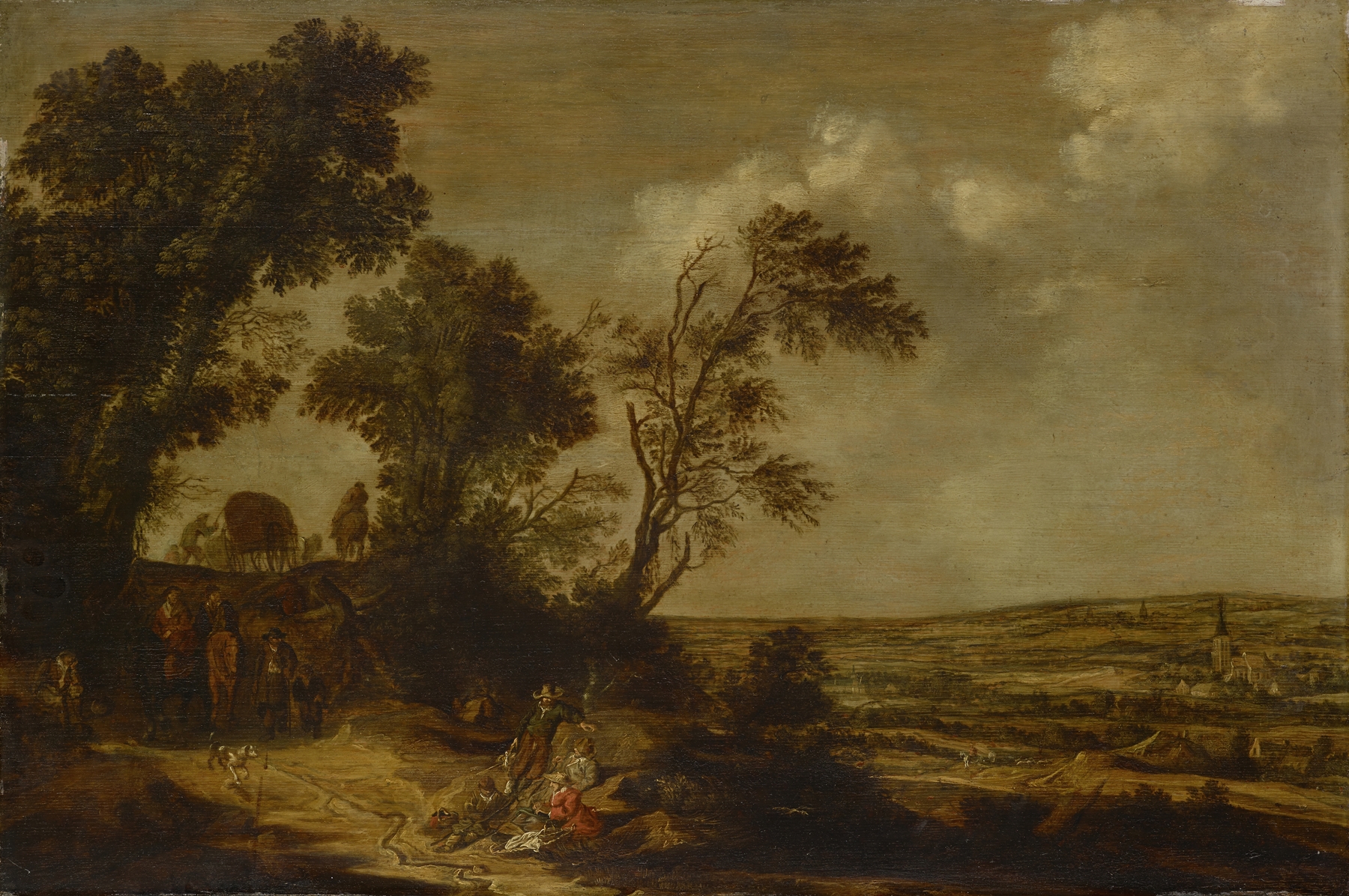
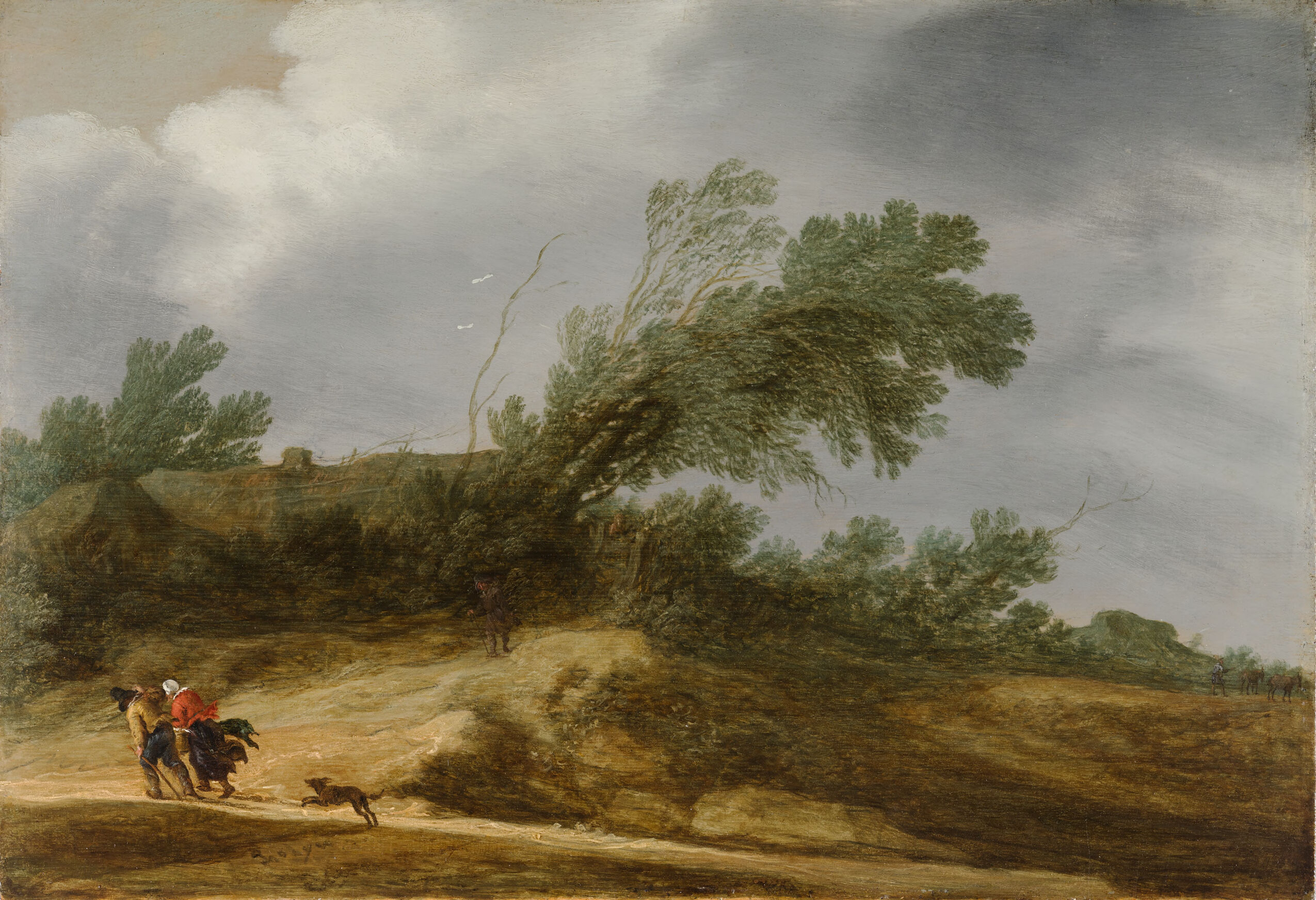
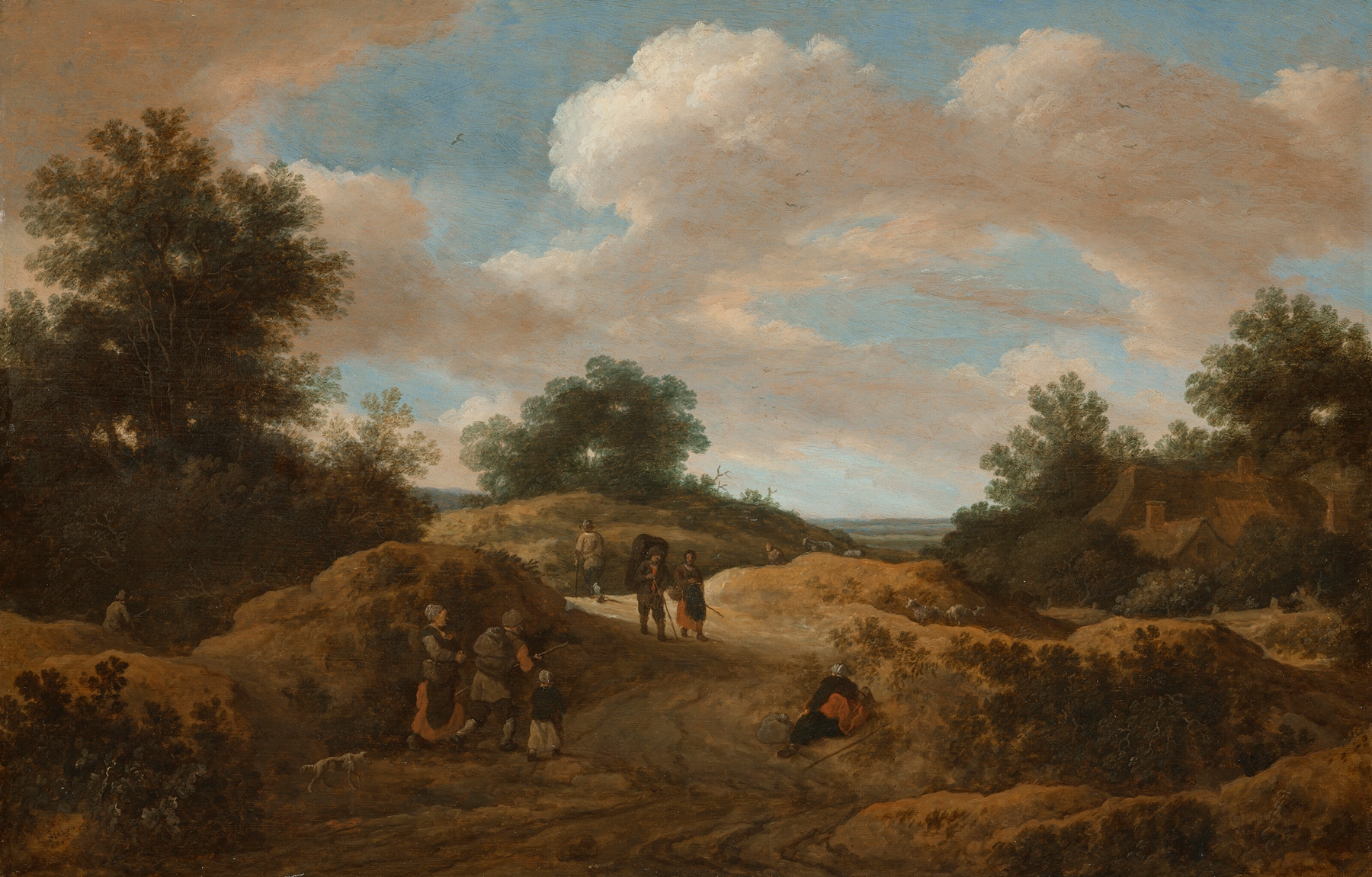
What if silence could speak through light? In A Dune Landscape with Figures on a Track, a hush envelops the scene, inviting viewers to contemplate the memory etched into the landscape. Look to the center, where the winding path gently guides the eye toward distant figures silhouetted against the soft amber glow of a setting sun. The dunes, painted with delicate brushstrokes of earthy browns and muted greens, rise and fall like the tides of forgotten dreams.
Notice how the light filters through the low-hanging clouds, cast in a golden hue that bathes the entire scene and lends a sense of serene tranquility. In this landscape, the contrast between the quiet figures and the vastness of the dunes evokes themes of solitude and reflection. Each bend in the path suggests a journey, one that might be both physical and metaphorical, hinting at the passage of time and the impermanence of life. The figures, though small in scale, seem to embody memories—fleeting moments captured in the embrace of nature’s grandeur.
Pieter de Molijn painted this piece in 1657 during a period marked by the flourishing of Dutch landscape painting. At this time, he was exploring the interplay of light and shadow, a technique that distinguished his work. The art world was experiencing a shift, with artists increasingly seeking to depict the natural world with a focus on mood and atmosphere, reflecting the changing values of society.