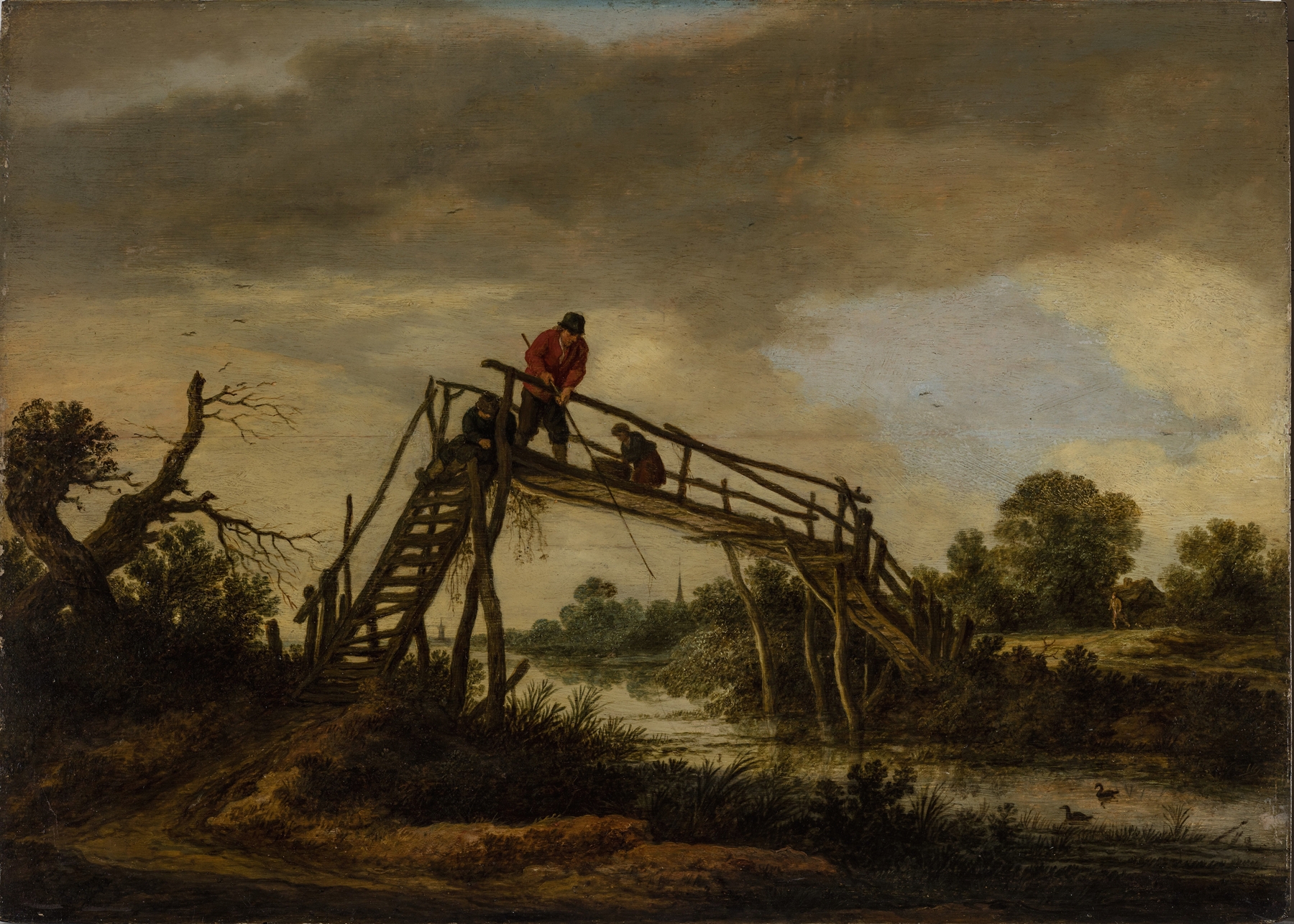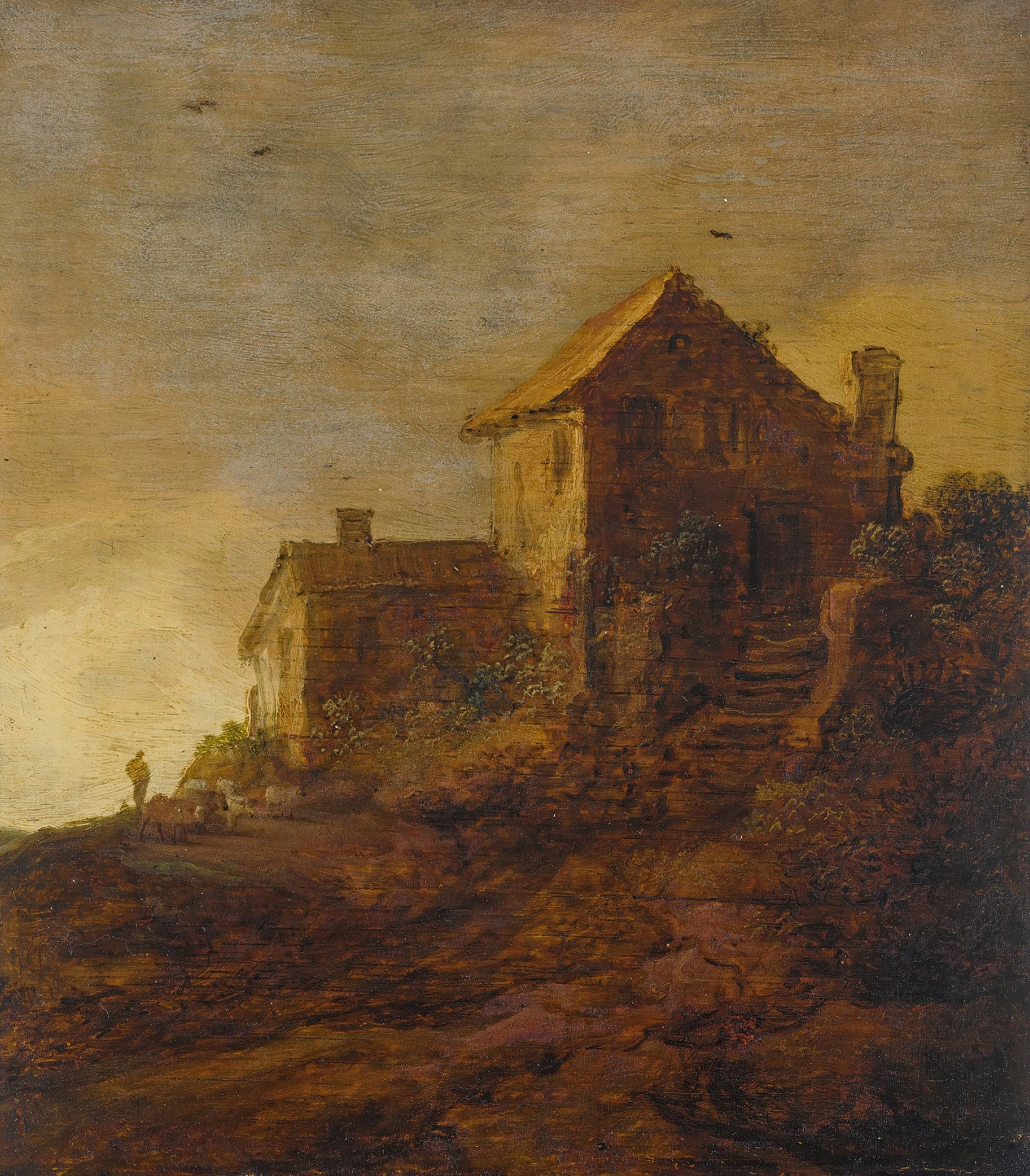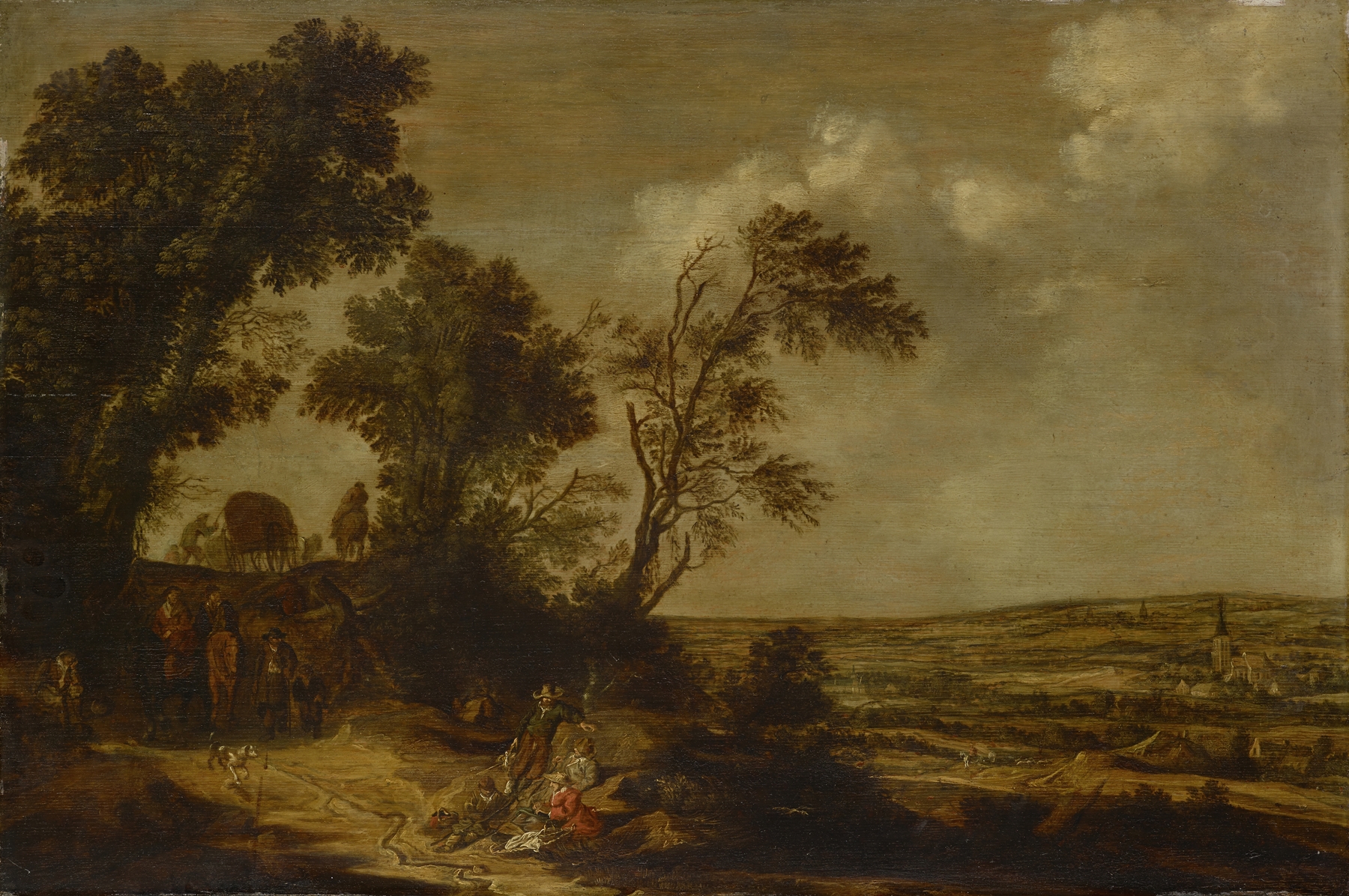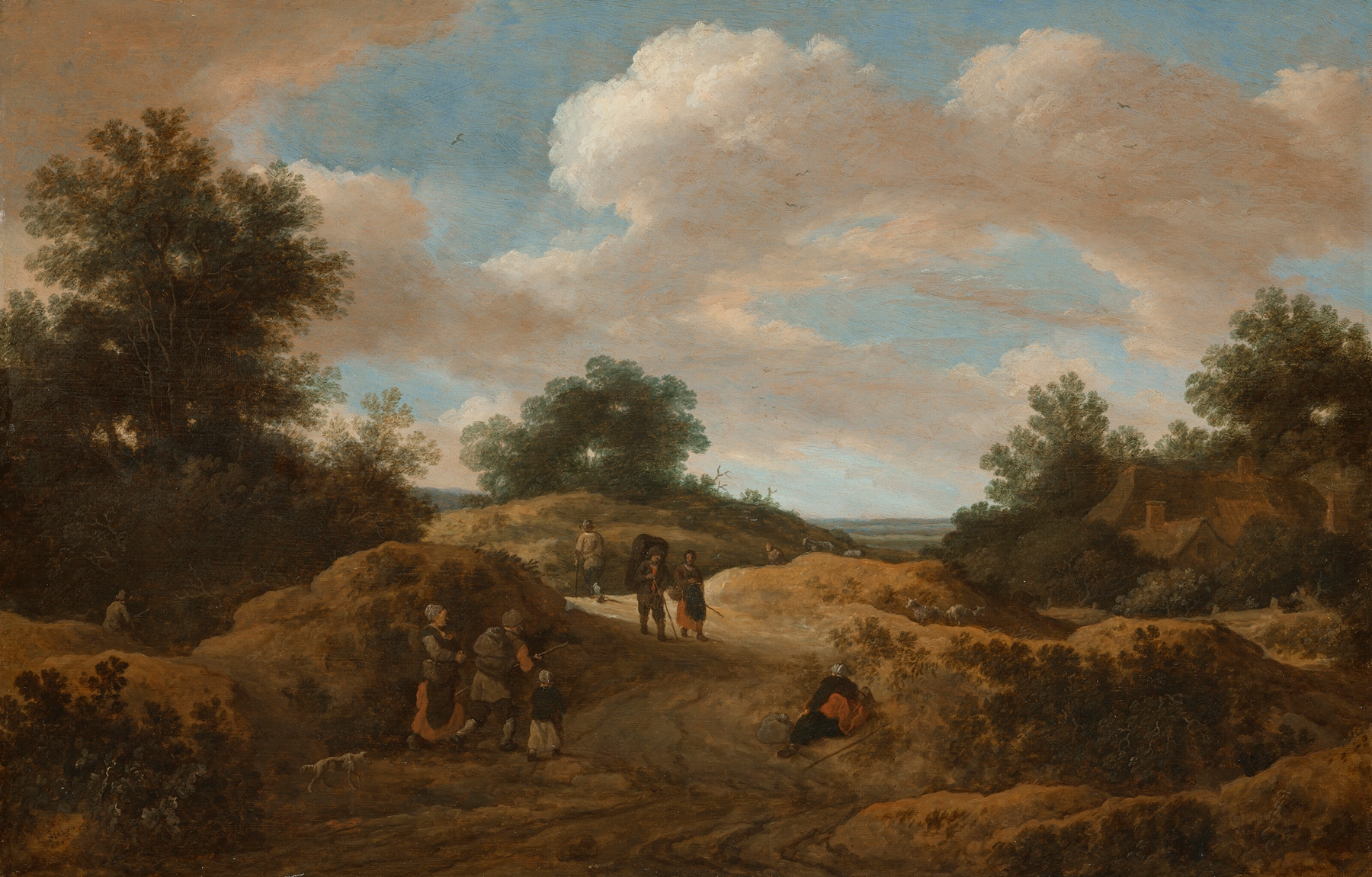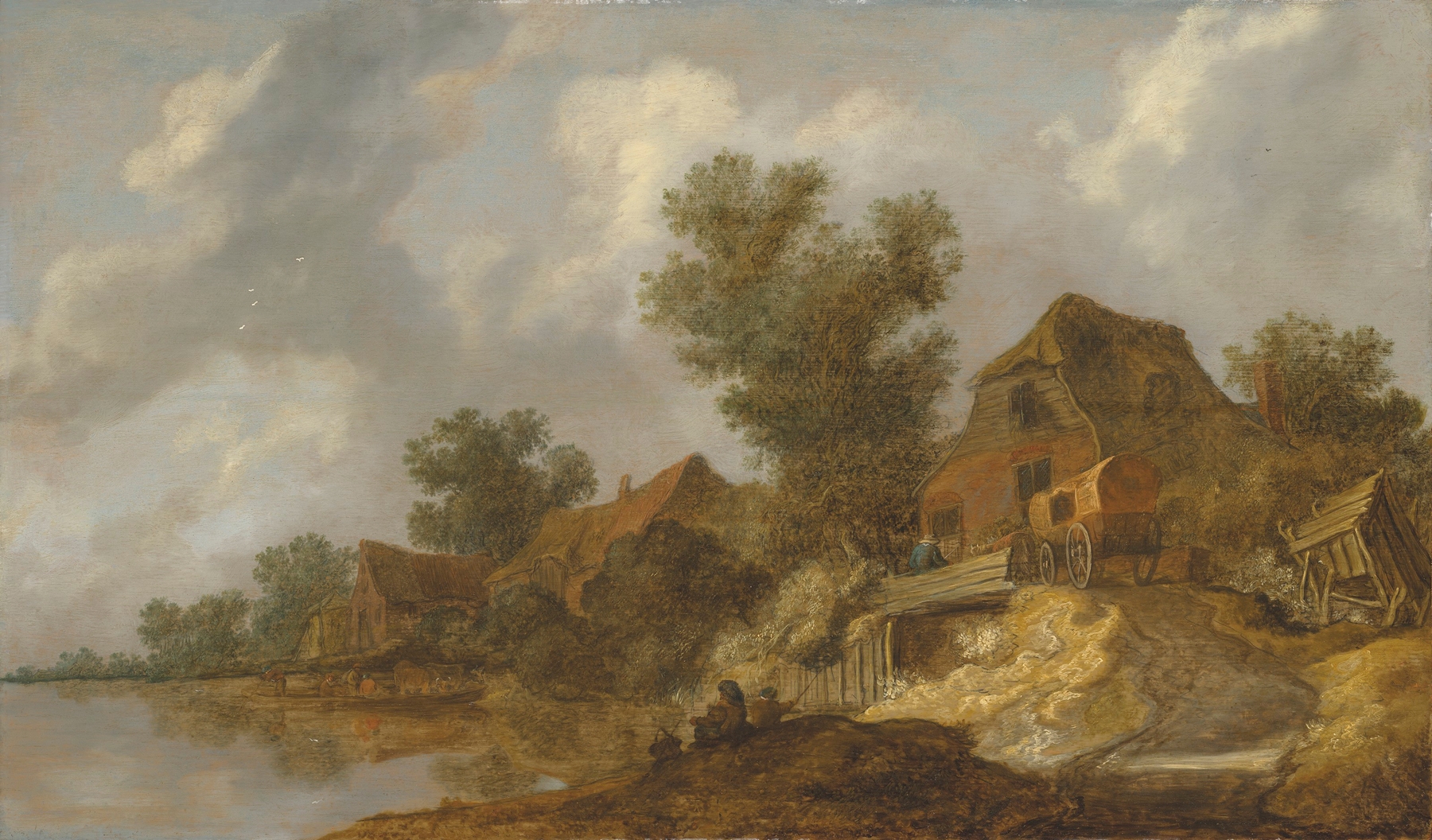
A river landscape with a ferry and fisherfolk, a carriage on a bridge near houses to the right — History & Analysis
“Sometimes beauty is just pain, disguised in gold.” The shimmering surface of a river can hold secrets beneath its tranquil facade, concealing the darker currents of life. Focus on the foreground, where a ferry glides through the water, its passengers caught in a moment of serene transition. Notice how the golden light dances on the rippling surface, creating a deceptive sense of calm. The muted hues of the surrounding landscape contrast with the subtle vibrancy of the sky, hinting at the harsh realities that lie beyond this idyllic scene.
The placement of the fishing folk on the banks draws the eye, illustrating their quiet labor against the backdrop of life unfolding in harmony. Yet, beneath this atmospheric tranquility lies a tension that speaks to the fragility of existence. The figures on the ferry seem momentarily free, yet they are trapped within the cycle of life and livelihood, reflecting the struggle of the common people against nature's whims. The carriage crossing the bridge, with its heavy burden, suggests movement fraught with purpose, hinting at the unspoken stories of those who travel.
This interplay of light and shadow reveals deeper layers of violence—both personal and societal—that challenge the surface beauty of the landscape. Pieter de Molijn painted this work during the 17th century, a time marked by the Dutch Golden Age and a flourishing of landscape artistry. Living in Holland amidst social upheaval and the evolving art scene, he sought to capture the essence of everyday life, merging beauty with the complex realities of the human experience. As he depicted the river's flow, he also wove in an undercurrent of struggle, reflecting the coexistence of peace and violence in the world around him.