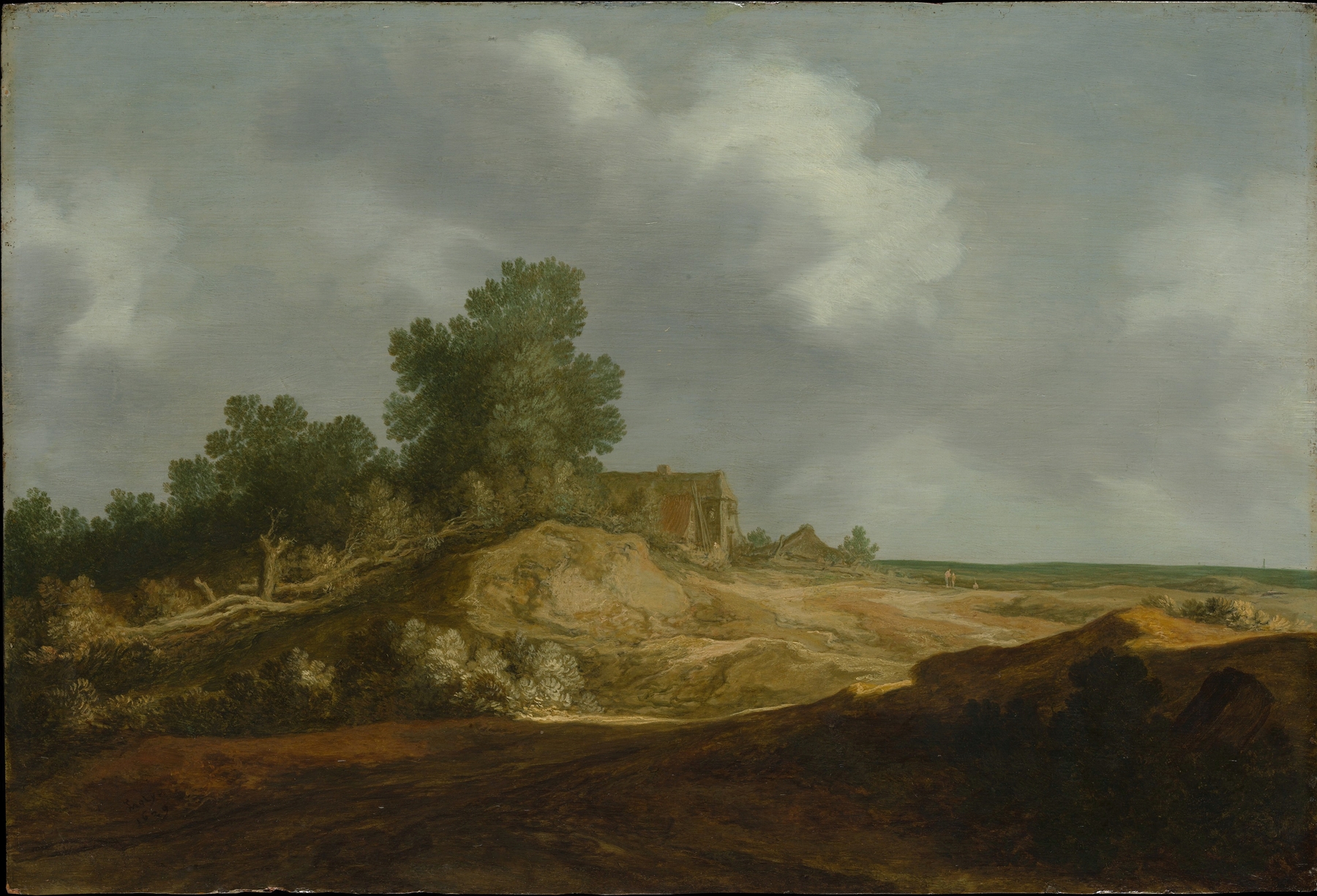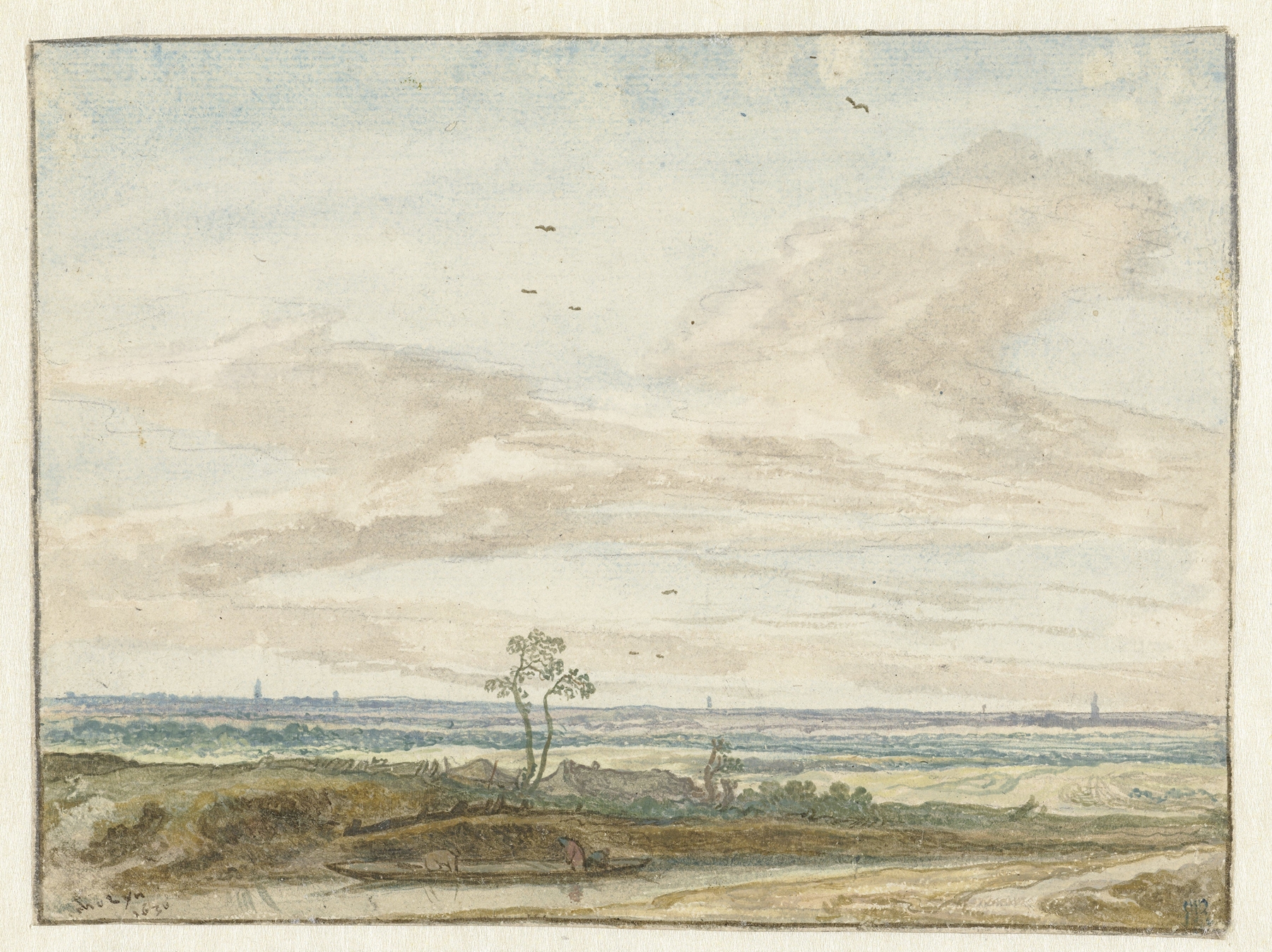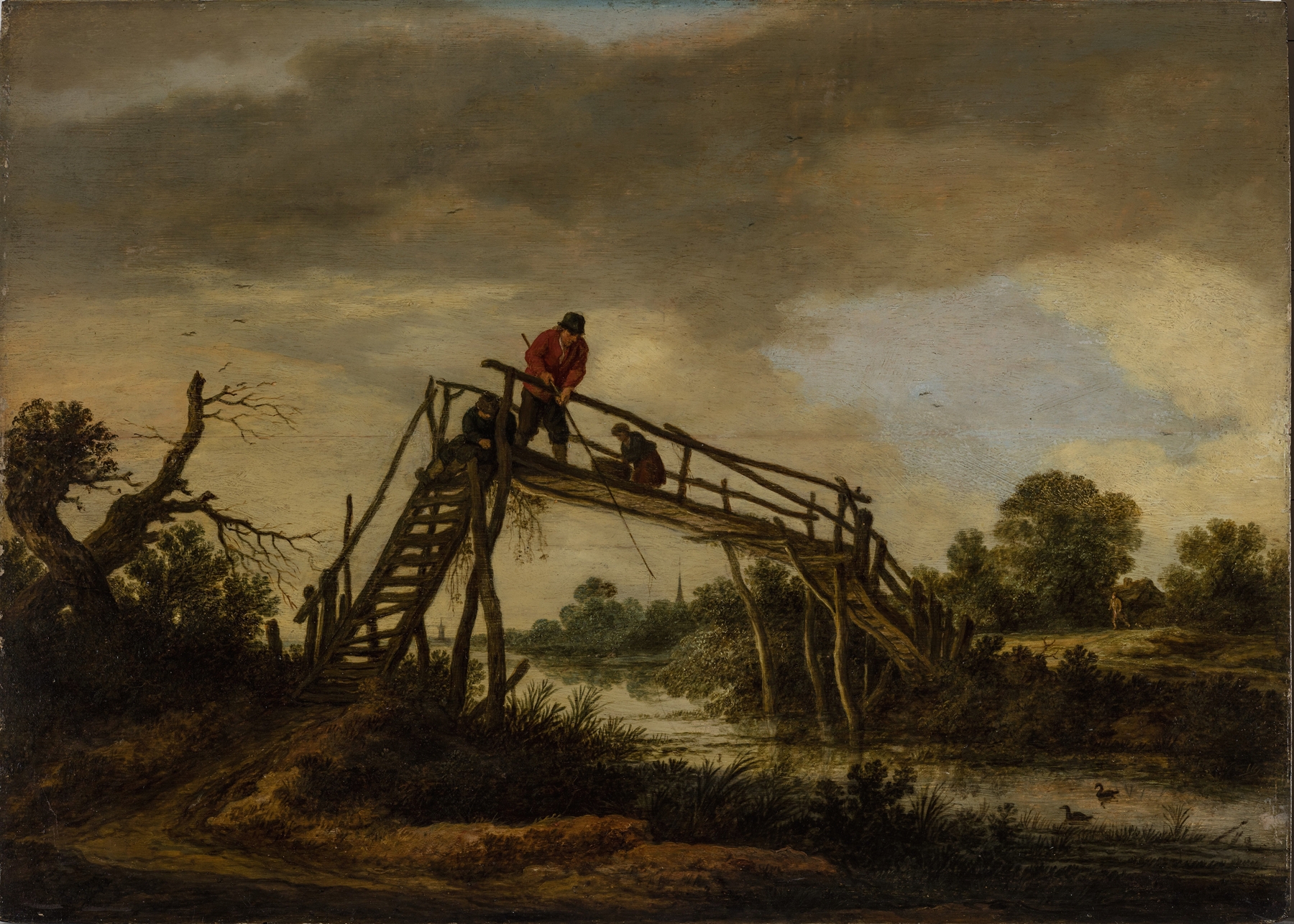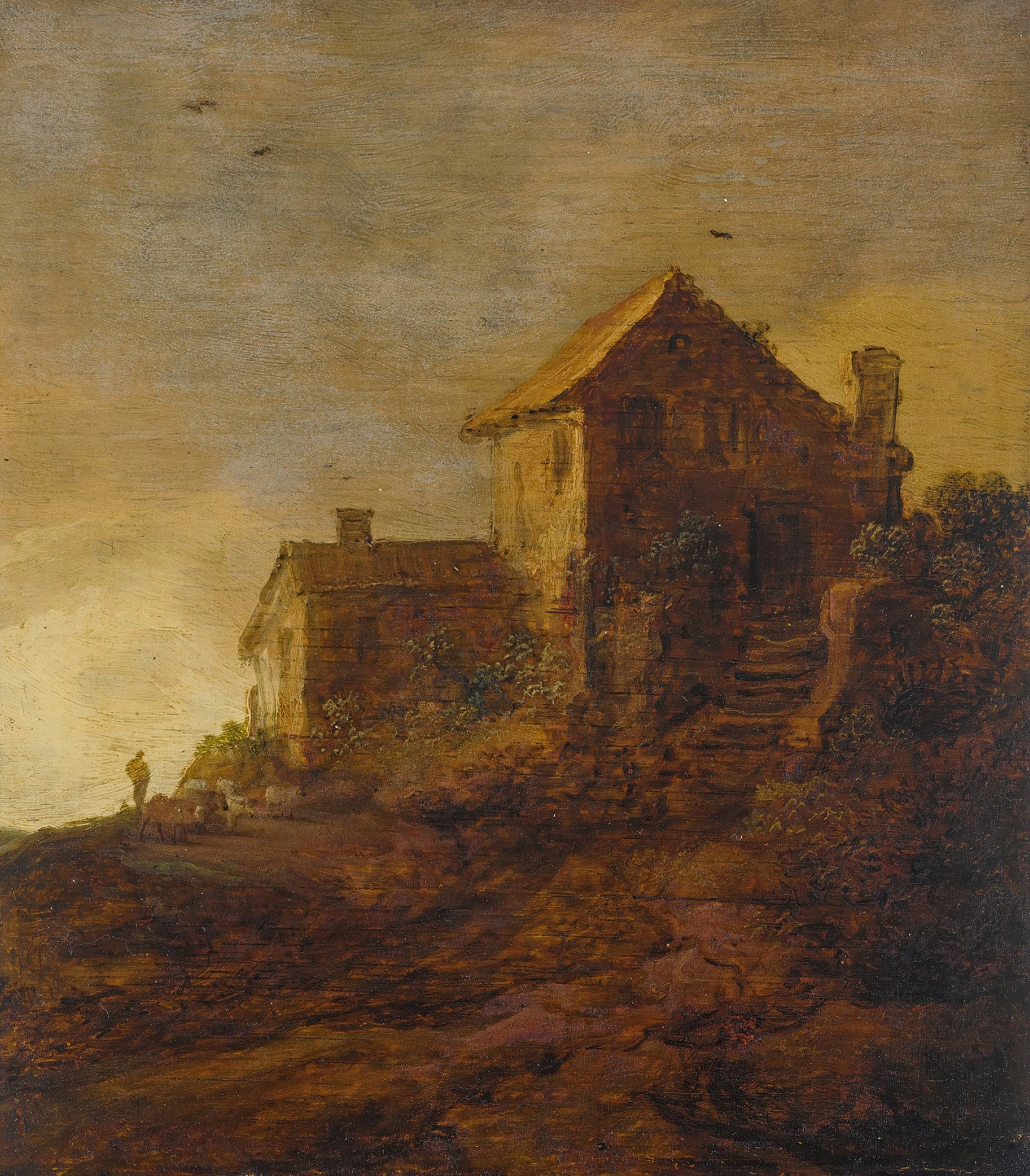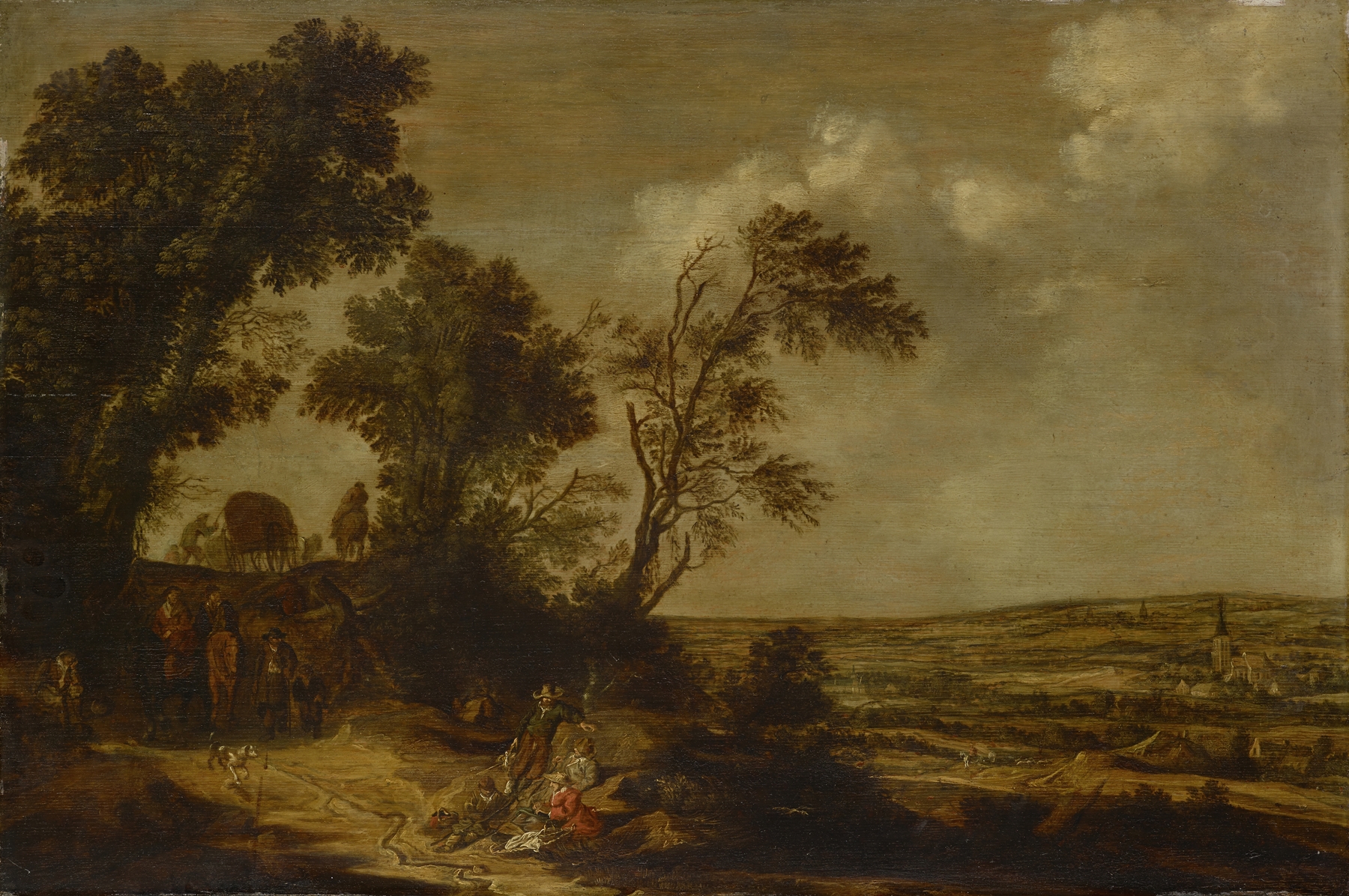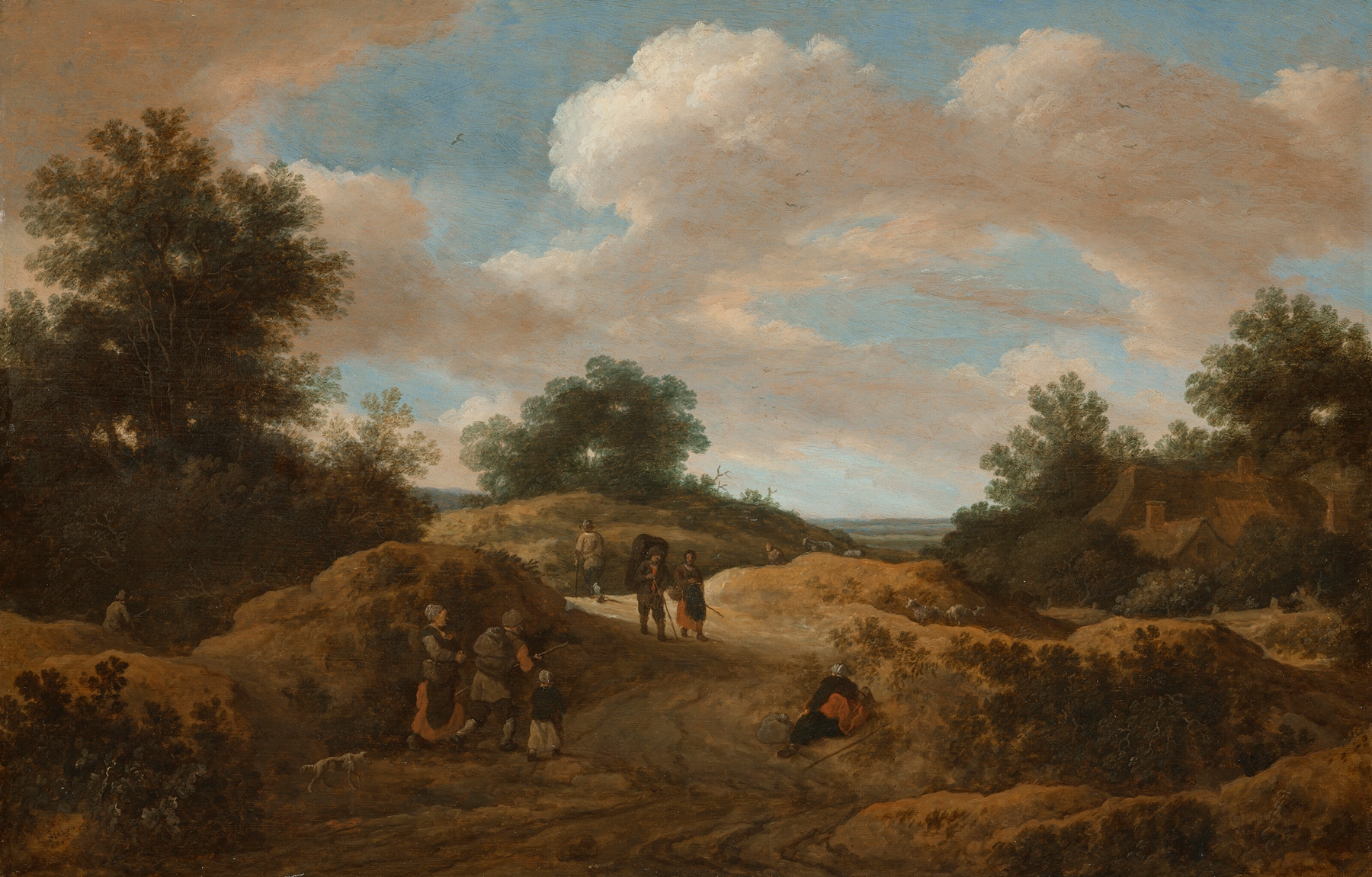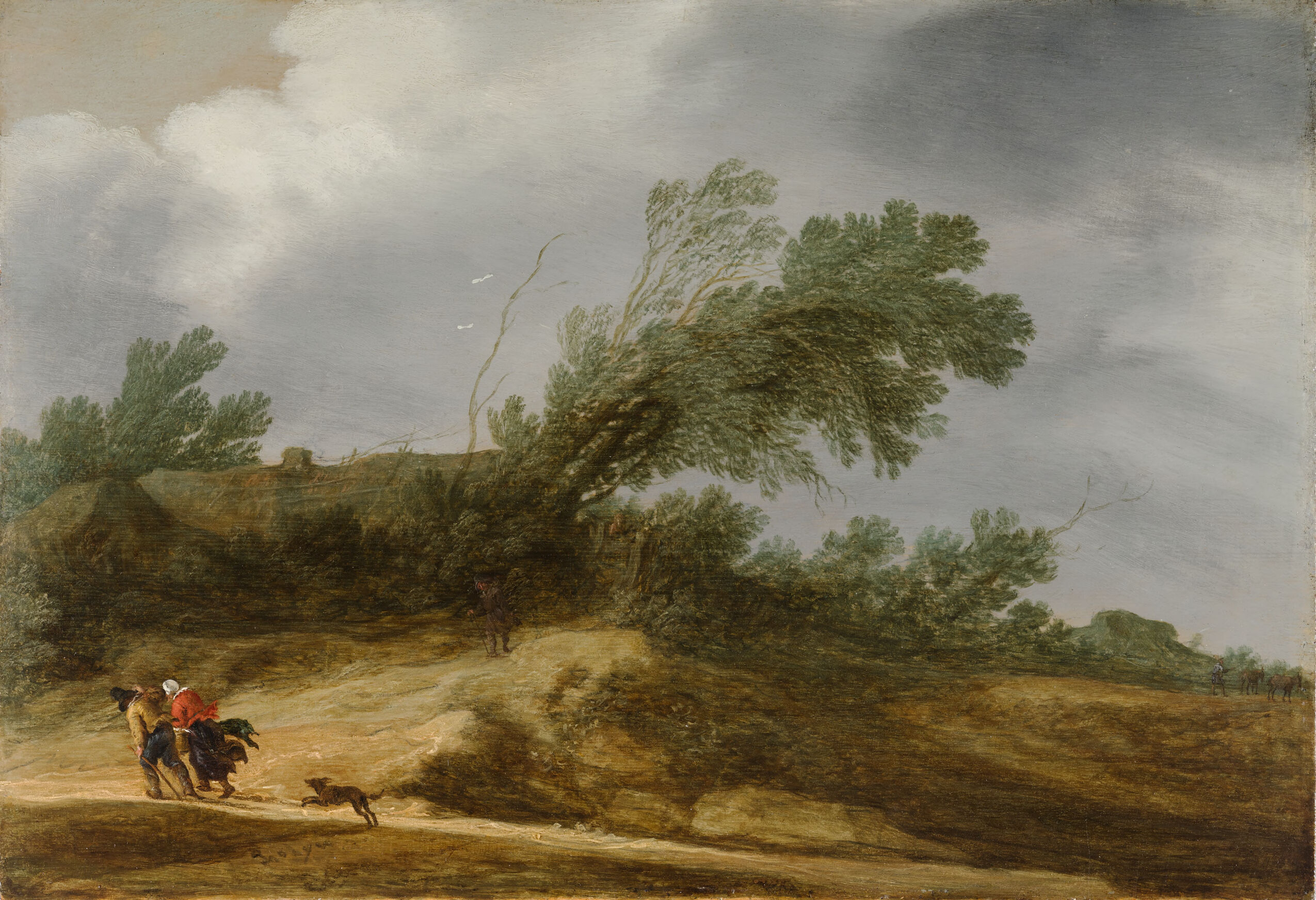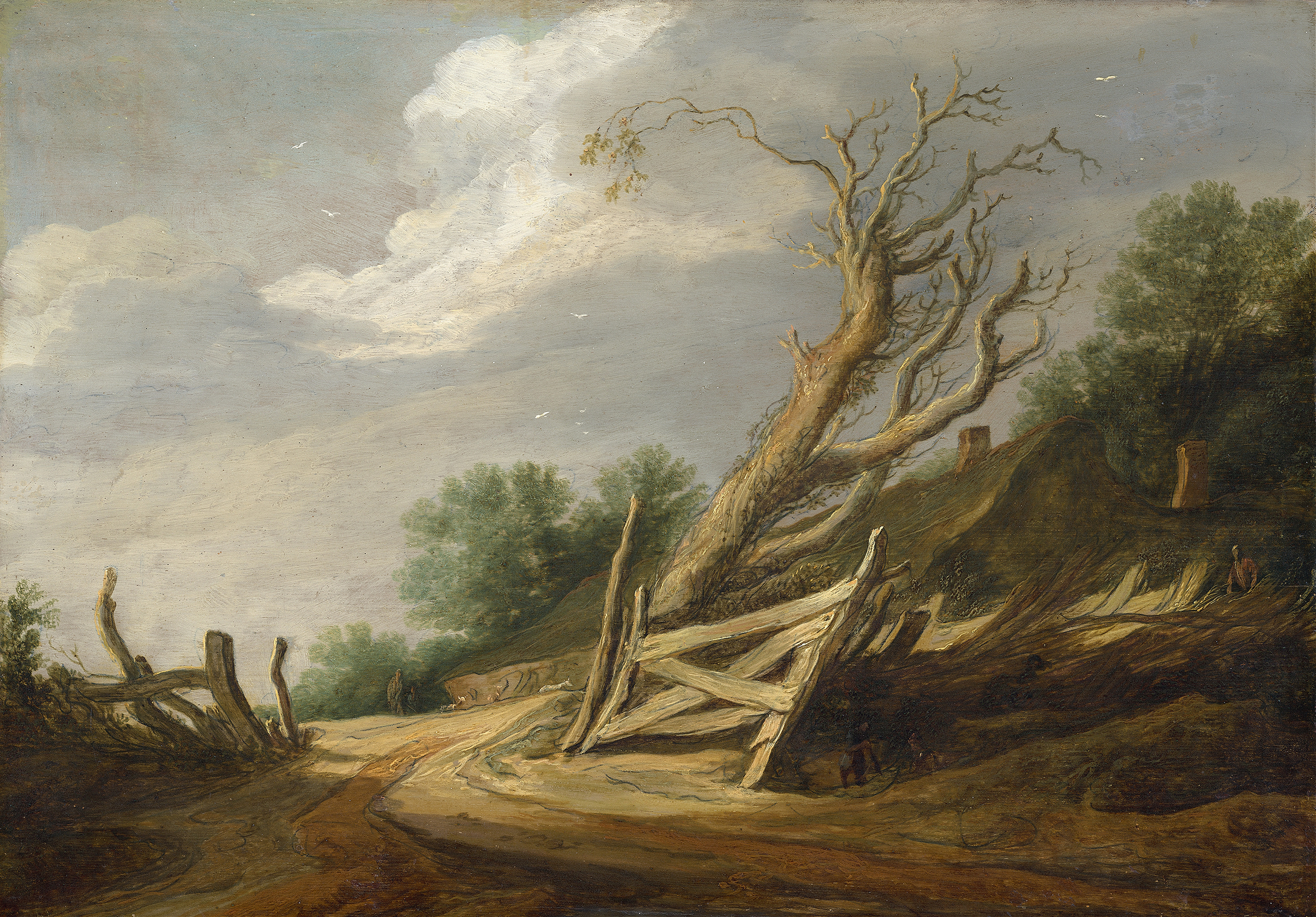
What if beauty was never meant to be finished? In *Landscape with Open Gate*, the horizon stretches beyond the limits of the canvas, inviting contemplation on the fleeting nature of pastoral beauty and the inevitable weight of loss. Look to the left at the open gate, its weathered wood standing ajar, beckoning viewers into a lush, verdant world. Beyond, the landscape unfolds—a harmonious blend of greens, browns, and golden sunlight illuminating the fields. Notice how the delicate brushstrokes capture the shifting light, lending depth to both the foreground and the distant hills, creating a sense of movement and stillness intertwined. The puffy clouds drift lazily in the sky, their reflections hinting at tranquil moments now lost to time. Beneath this idyllic surface, tensions emerge through contrast. The open gate symbolizes opportunity and the passage of time, yet it stands as a boundary to what once was. Around it, the lush vegetation thrives, suggesting life and vibrancy, while the soft, muted colors evoke nostalgia for what has faded. The landscape seems unfinished, enticing viewers to ponder the stories that lay beyond the threshold—the experiences, joys, and regrets tethered to the path untraveled. Pieter de Molijn painted *Landscape with Open Gate* between 1630 and 1635 during a transformative period in Dutch art, as artists began to explore light and atmosphere with increasing sophistication. Living in a time marked by both prosperity and the aftermath of the Thirty Years' War, he sought to capture the beauty of the natural world while reflecting on its impermanence. This work stands as a testament to the era's evolving perspective on landscape as both an escape and a mirror of human emotion.