A winter landscape with travellers and other figures on ice — History & Analysis
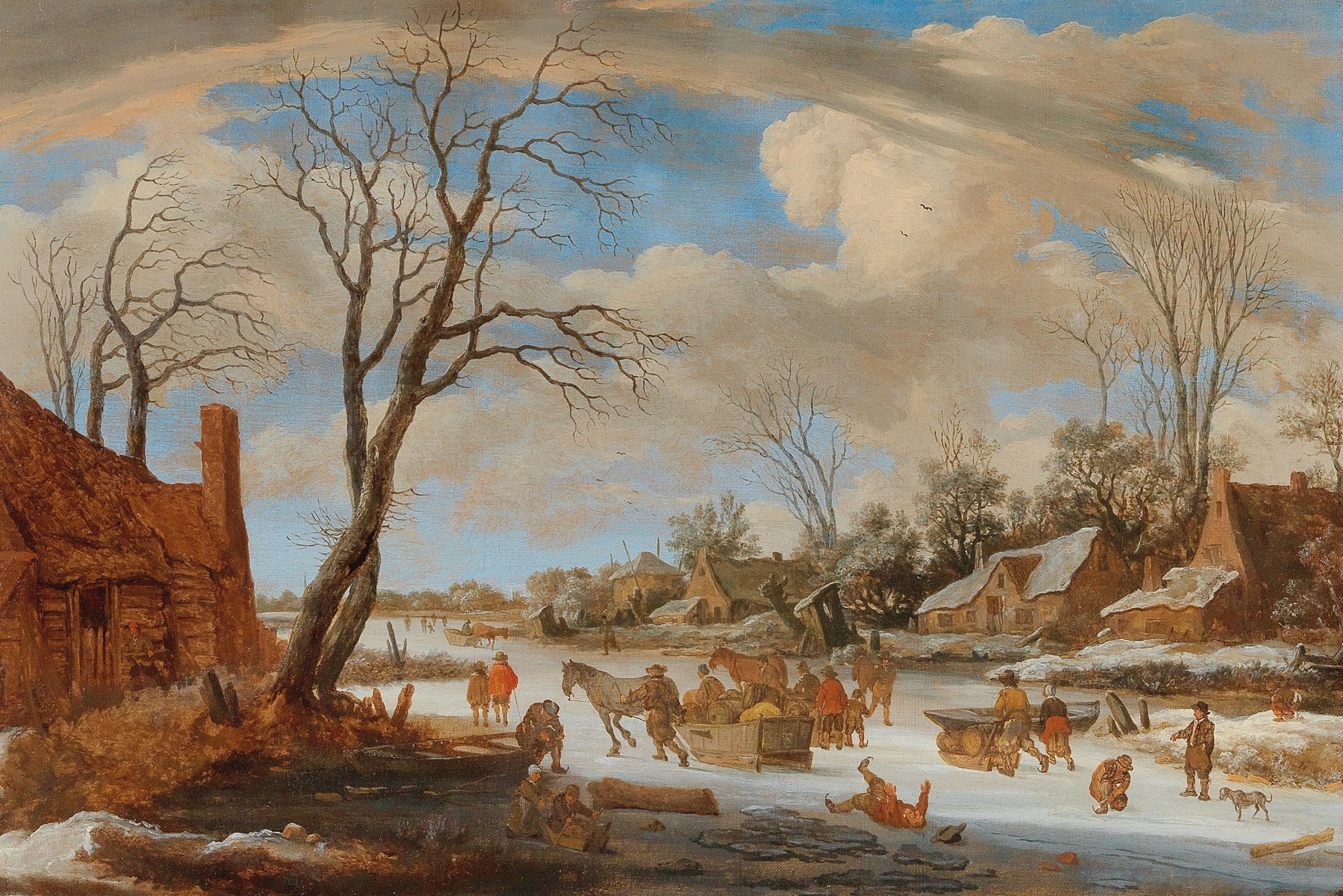
Is this a mirror — or a memory? The stillness of ice captures fleeting moments, evoking a profound sense of isolation amidst the bustling activity of life. Look to the center where a group of travelers navigates the frozen expanse, their figures stark against the luminescent white surface. Notice how de Molijn employs a palette dominated by cool blues and soft grays, while hints of warm earth tones breathe life into their clothing.
The horizon, tinged with a pale glow, melds seamlessly with the sky, creating a dreamlike quality that envelops the scene and invites contemplation. Beneath the surface, a tension between camaraderie and solitude emerges. While the travelers engage with one another, their faces reveal a quiet introspection, suggesting personal journeys beneath the shared experience.
The distant figures, seemingly lost in their own worlds, amplify the feeling of loneliness that permeates the canvas, as if each individual is both connected and isolated on this vast, icy stage. Painted during the Dutch Golden Age, when the art of landscape was flourishing, the artist rendered this scene in a time marked by social change and exploration. Though the exact date remains unknown, de Molijn’s work reflects the era’s fascination with nature and the human condition, capturing an ephemeral moment that resonates with both beauty and melancholy.