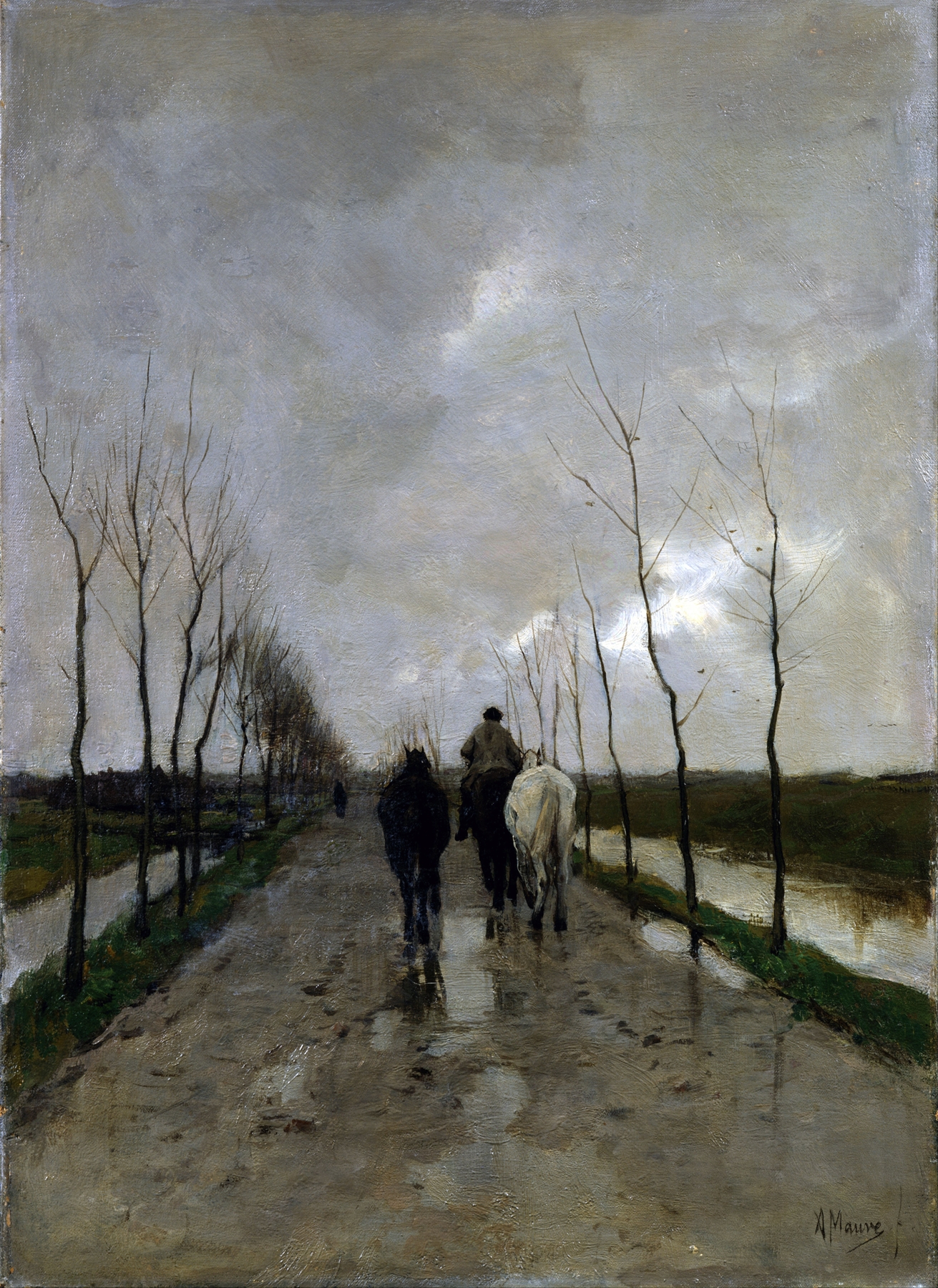
A Dutch Road — History & Analysis
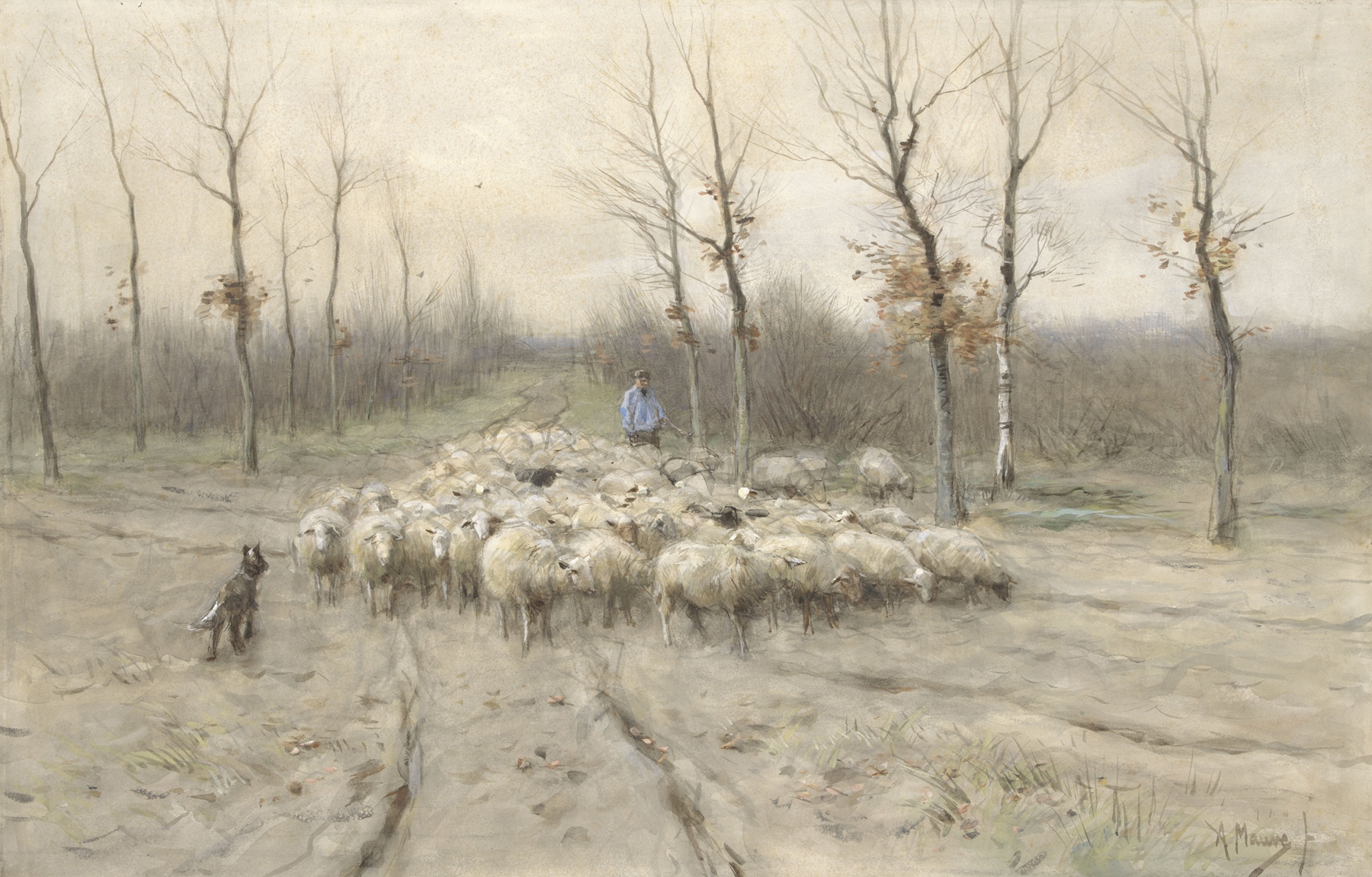
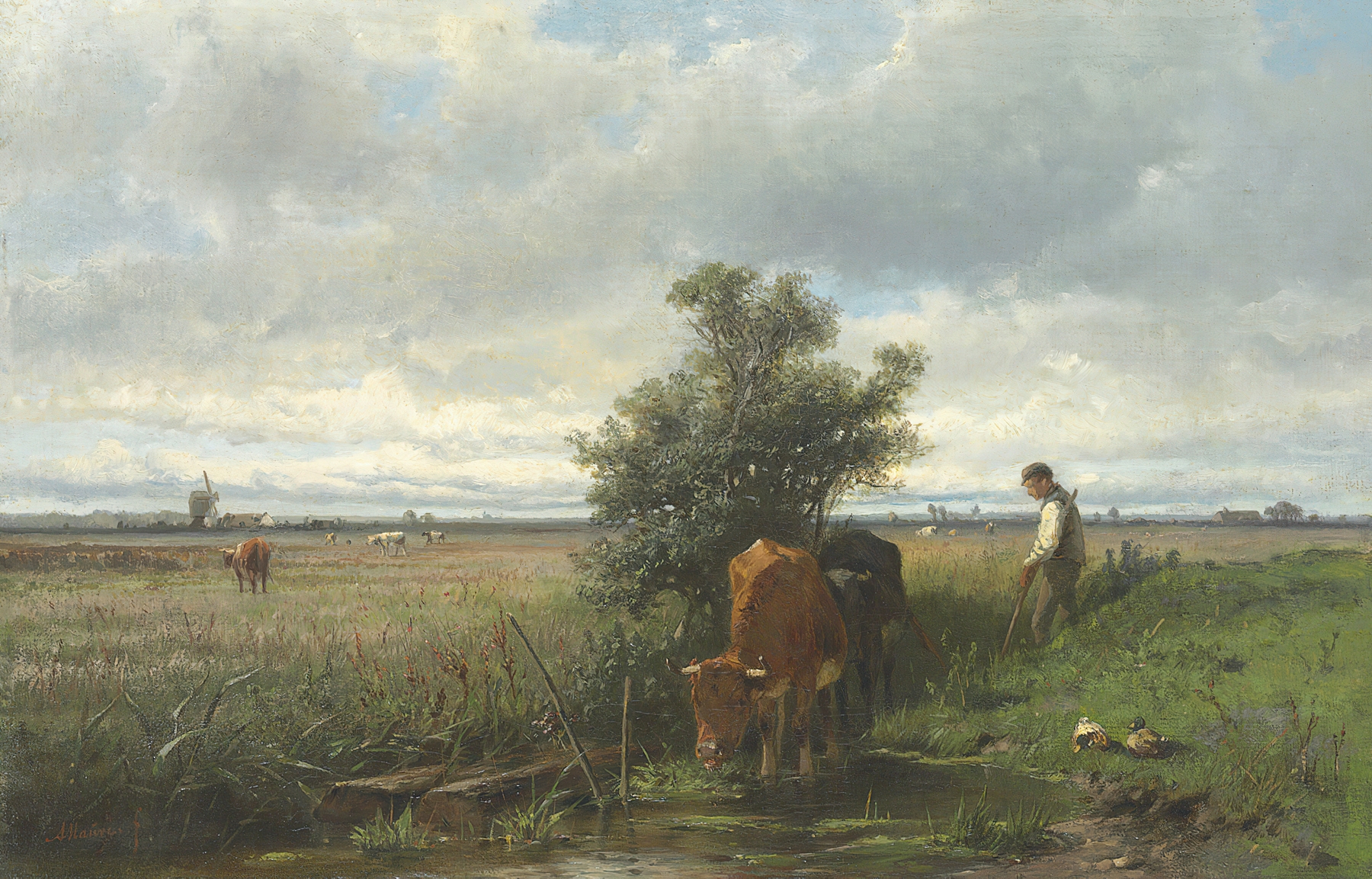
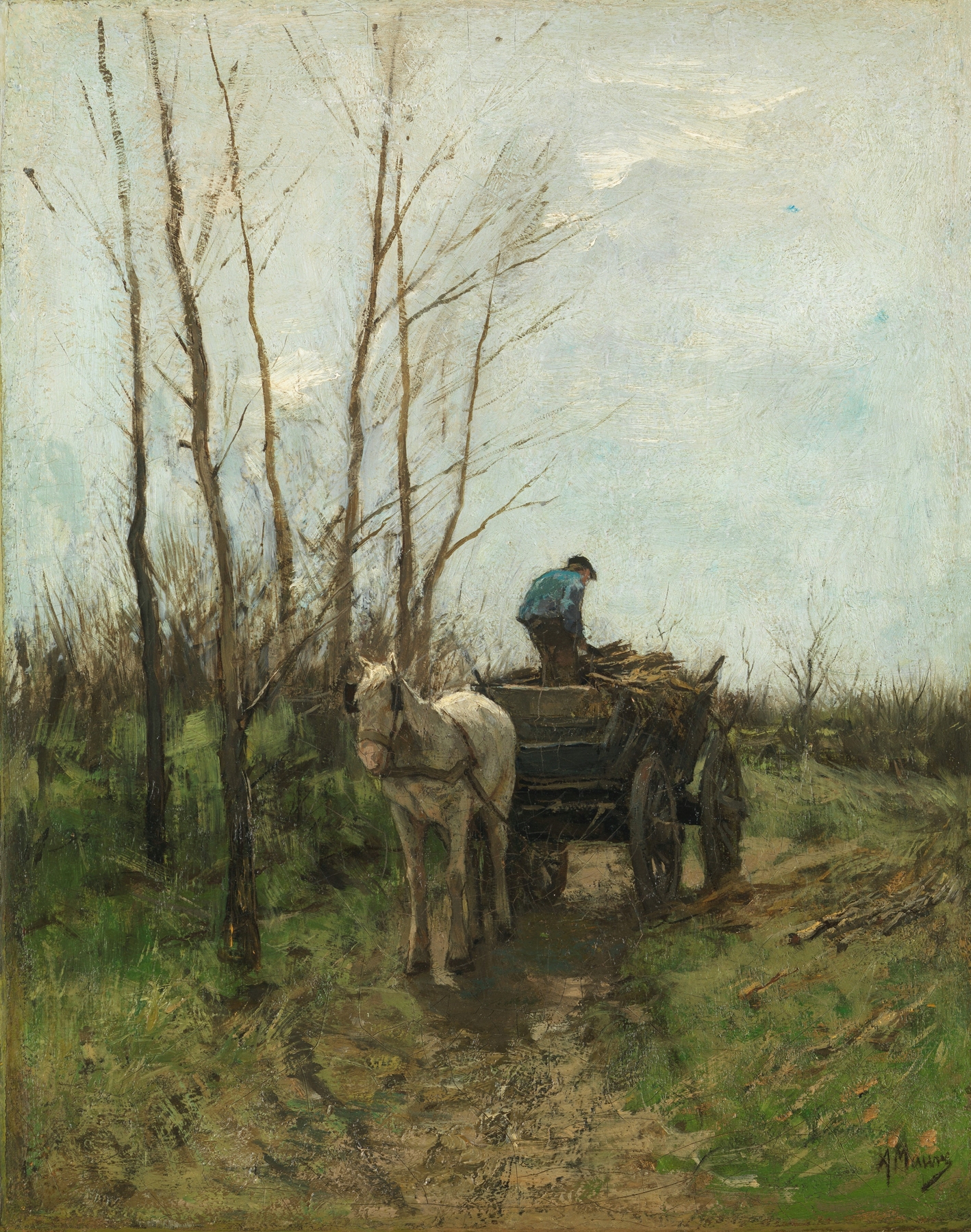
What secret hides in the quiet of the canvas? In this tranquil composition, the subtle interplay of colors and textures invites the viewer into a dreamlike world, where nature breathes in hushed tones. Look to the left at the soft curves of the winding road, inviting your gaze to meander with it. Mauve employs a muted palette, dominated by earthy browns and gentle greens, allowing the viewer to feel the embrace of the landscape.
Notice how the light dapples through the foliage, casting delicate shadows that suggest the passage of time. The stillness of the scene is punctuated by a solitary figure in the distance, their presence both grounding and ethereal, as they seem to dissolve into the horizon. Delve deeper into the emotional undercurrents at play; the quiet of the road conveys a sense of solitude and introspection. The flowing lines of the path symbolize life's journey, while the expansive sky hints at dreams and aspirations that stretch beyond the visible.
Each brushstroke encapsulates a moment suspended in time, inviting reflections on the intersection of reality and imagination. Created in the late 19th century, Mauve painted this piece during a period marked by the rise of the Hague School, which celebrated the beauty of rural life. He was deeply immersed in this movement, focusing on the intimate relationship between people and their environment. At this time, he experienced personal growth as an artist, exploring the nuances of light and atmosphere, which would define his legacy.