A Fish-market near Boulogne — History & Analysis
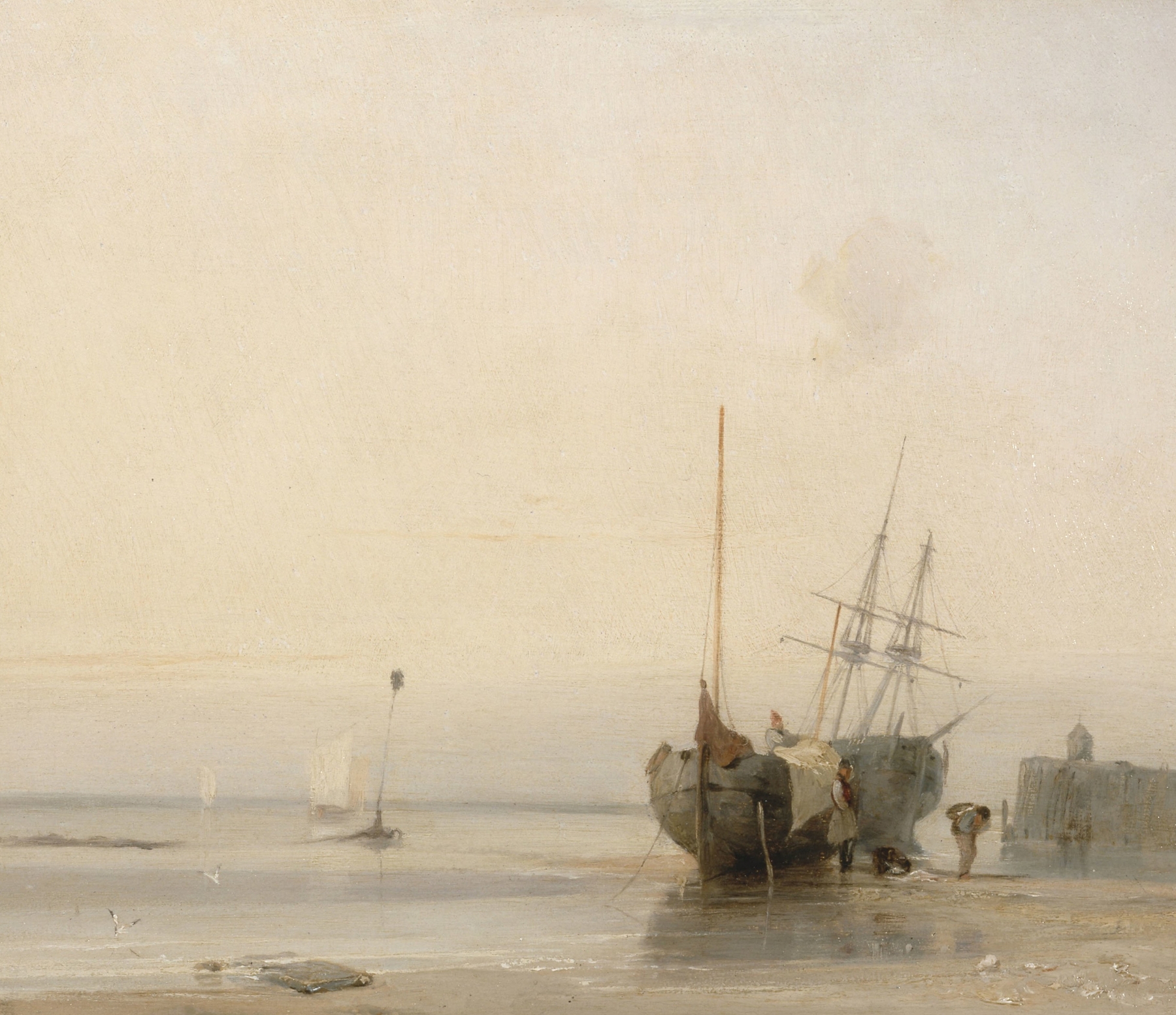
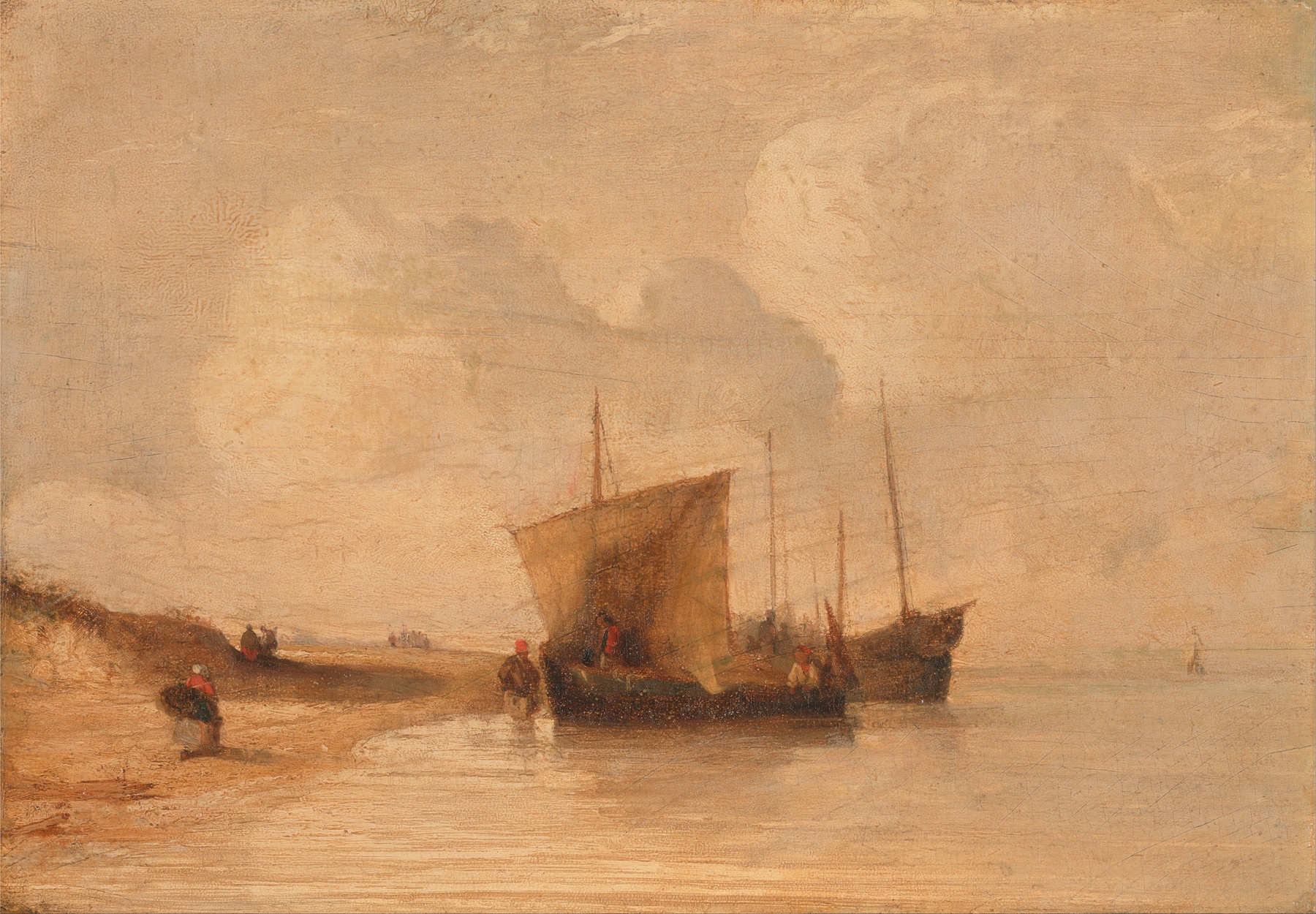
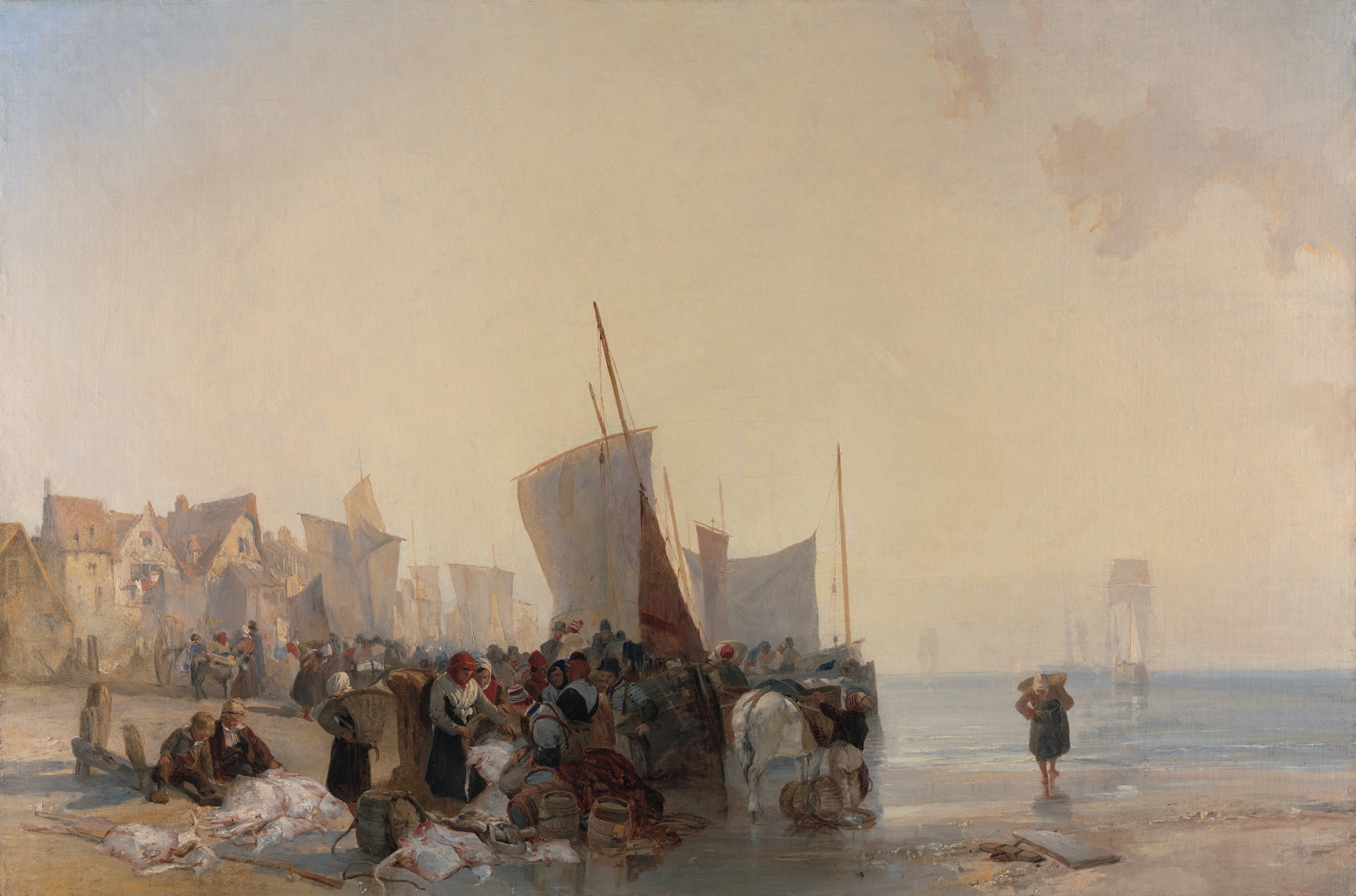
“Every silence here is a confession.” In the interplay of light and shadow, the unspoken weight of betrayal lingers delicately, cloaked in the mundane yet profound. Look to the foreground where a vibrant tapestry of fish spills across the market stall, each glistening scale catching the early morning light. The arrangement of colors—from silvery whites to deep, verdant greens—creates a vivid contrast that draws the eye. Beyond the stall, figures engage in quiet negotiation, their gestures animated yet restrained, as if weighed down by the specter of unvoiced secrets. The composition leads us deeper into this bustling space, where the fresh catch contrasts with the underlying tension of human interactions. The layered meanings unfold within the details; the fish, a symbol of livelihood and sustenance, may also reflect hidden deceit among the vendors and buyers. The bustling atmosphere teeters on the edge of chaos, yet the stillness of certain figures suggests a moment suspended in time, hinting at their inner turmoil. The way the fisherman stands, arms crossed, eyes downcast, speaks volumes—a portrait of vulnerability in a world governed by trust and exchange. In 1824, Richard Parkes Bonington painted this scene while living in France, a pivotal time in his artistic development. The Romantic movement was redefining the boundaries of art, and Bonington’s foray into capturing everyday life marked a departure from grand historical subjects. This work emerges from his explorative spirit as he sought to convey the subtleties of human experience against the backdrop of a changing society, setting the stage for artists who would follow in his footsteps.