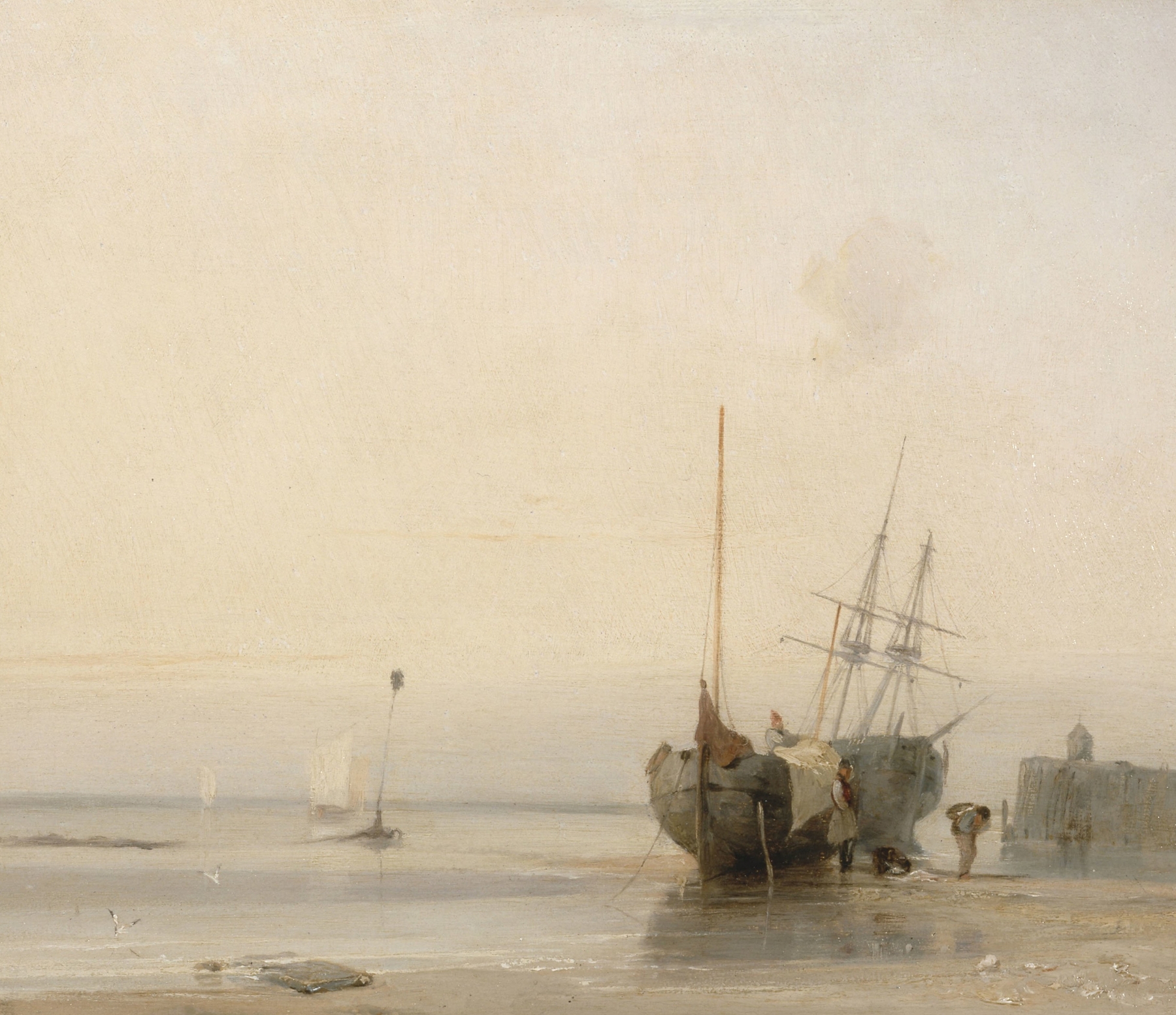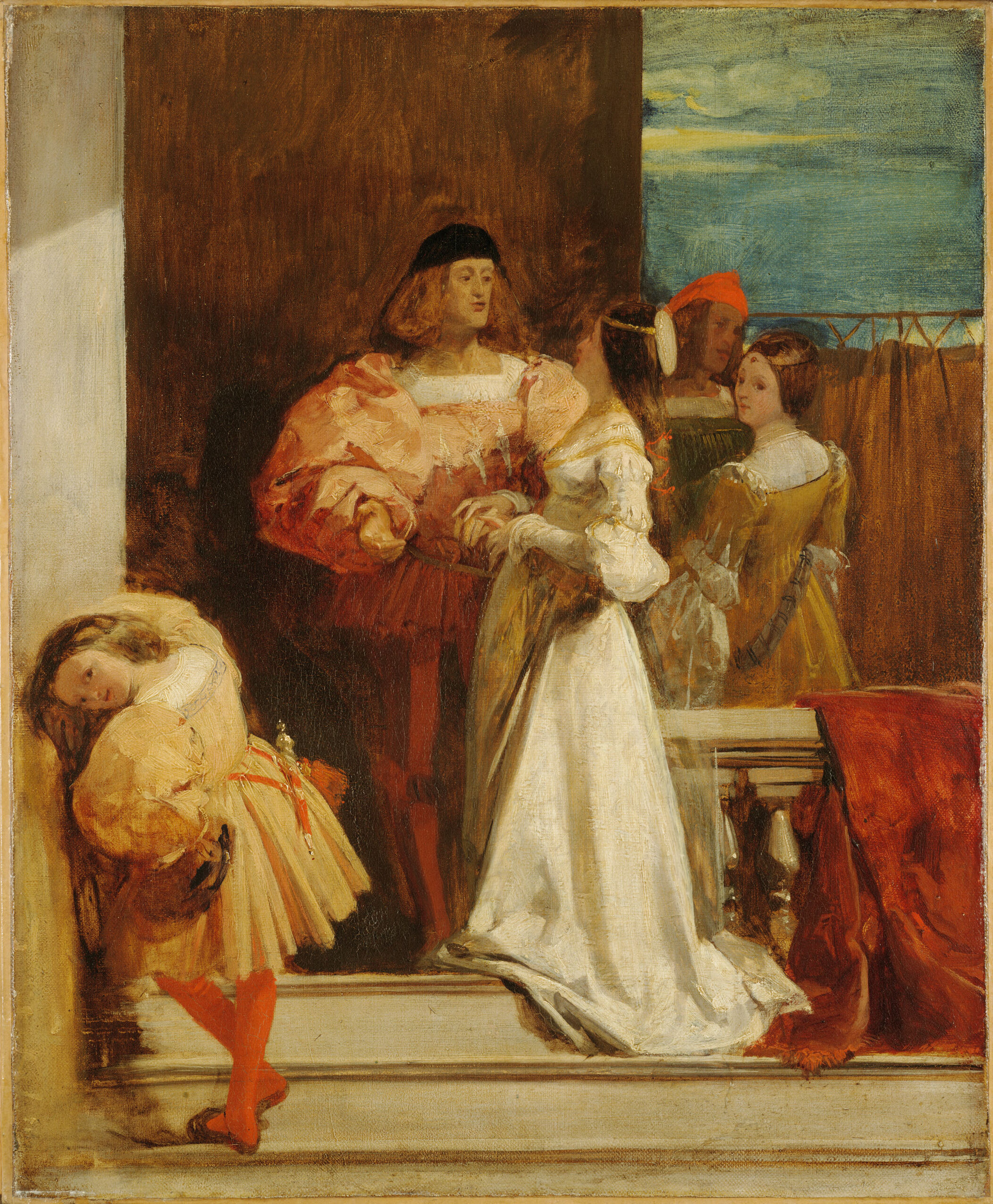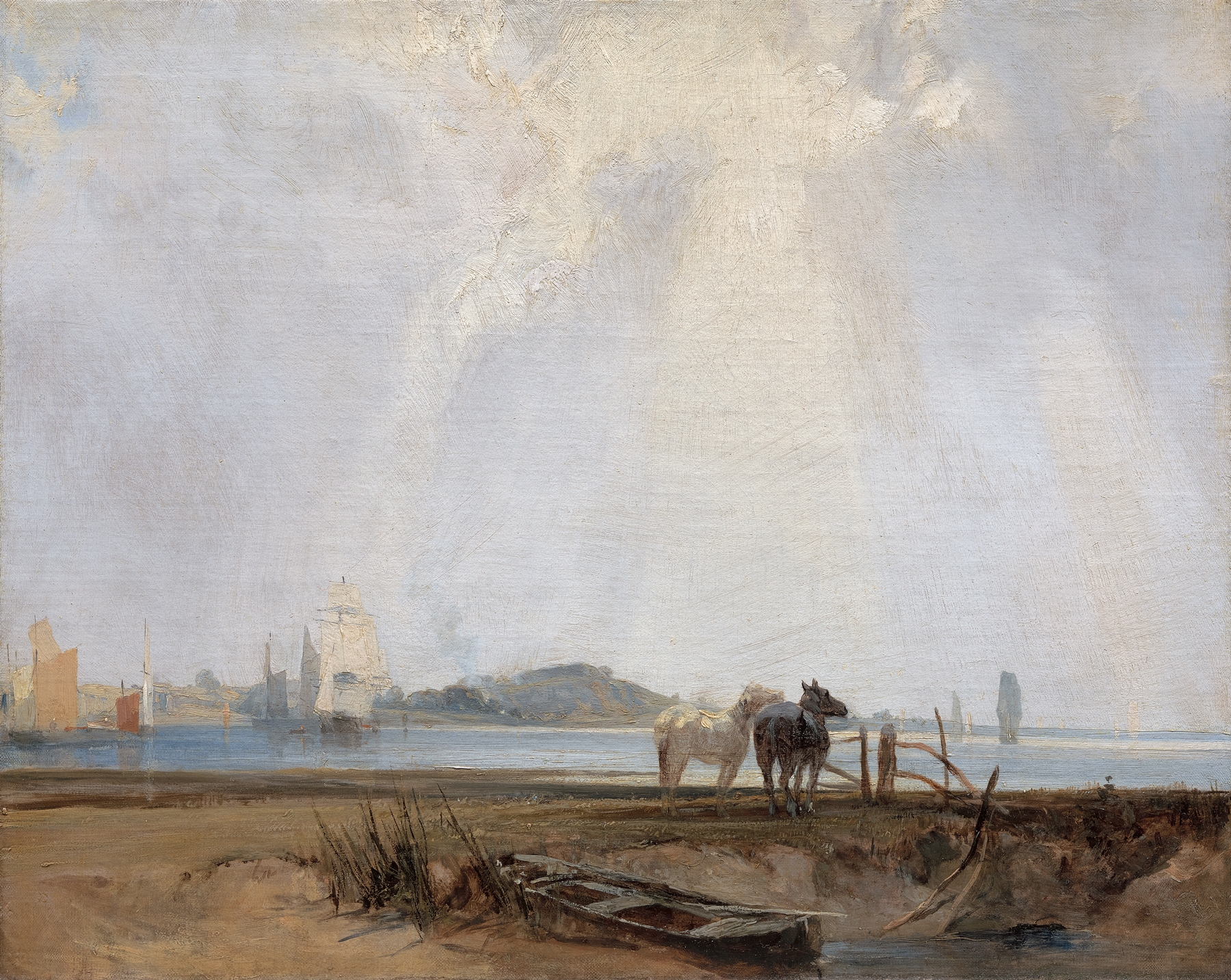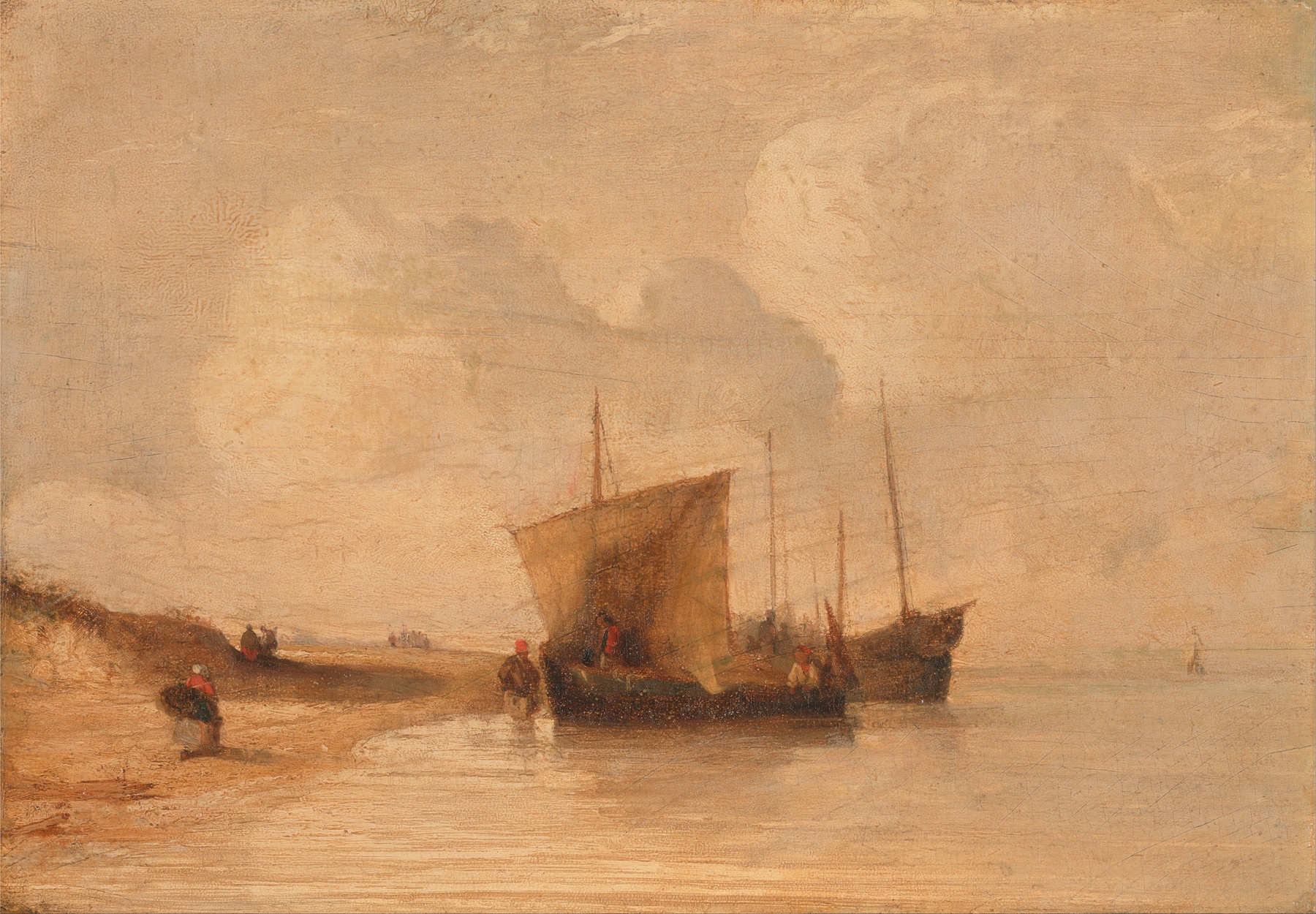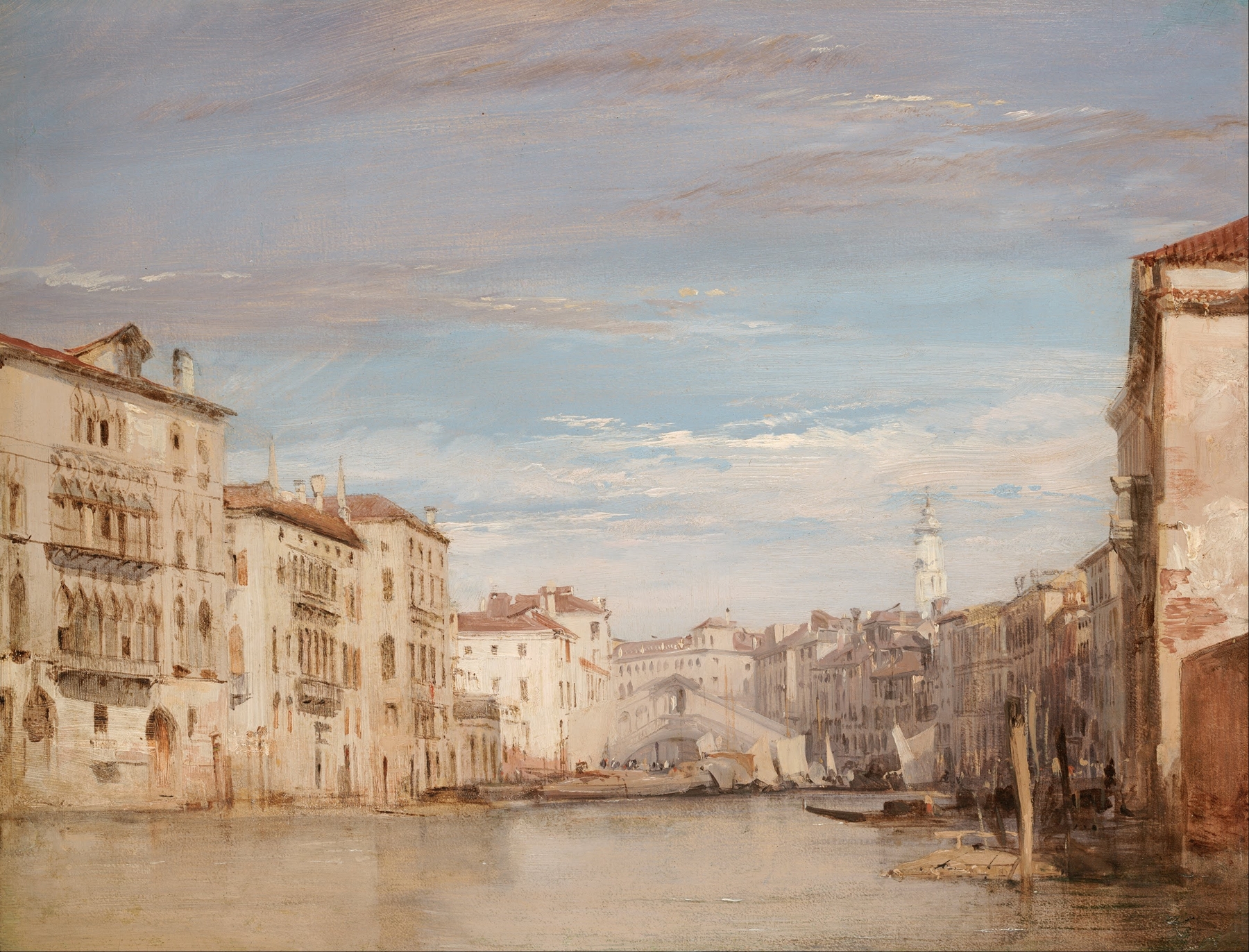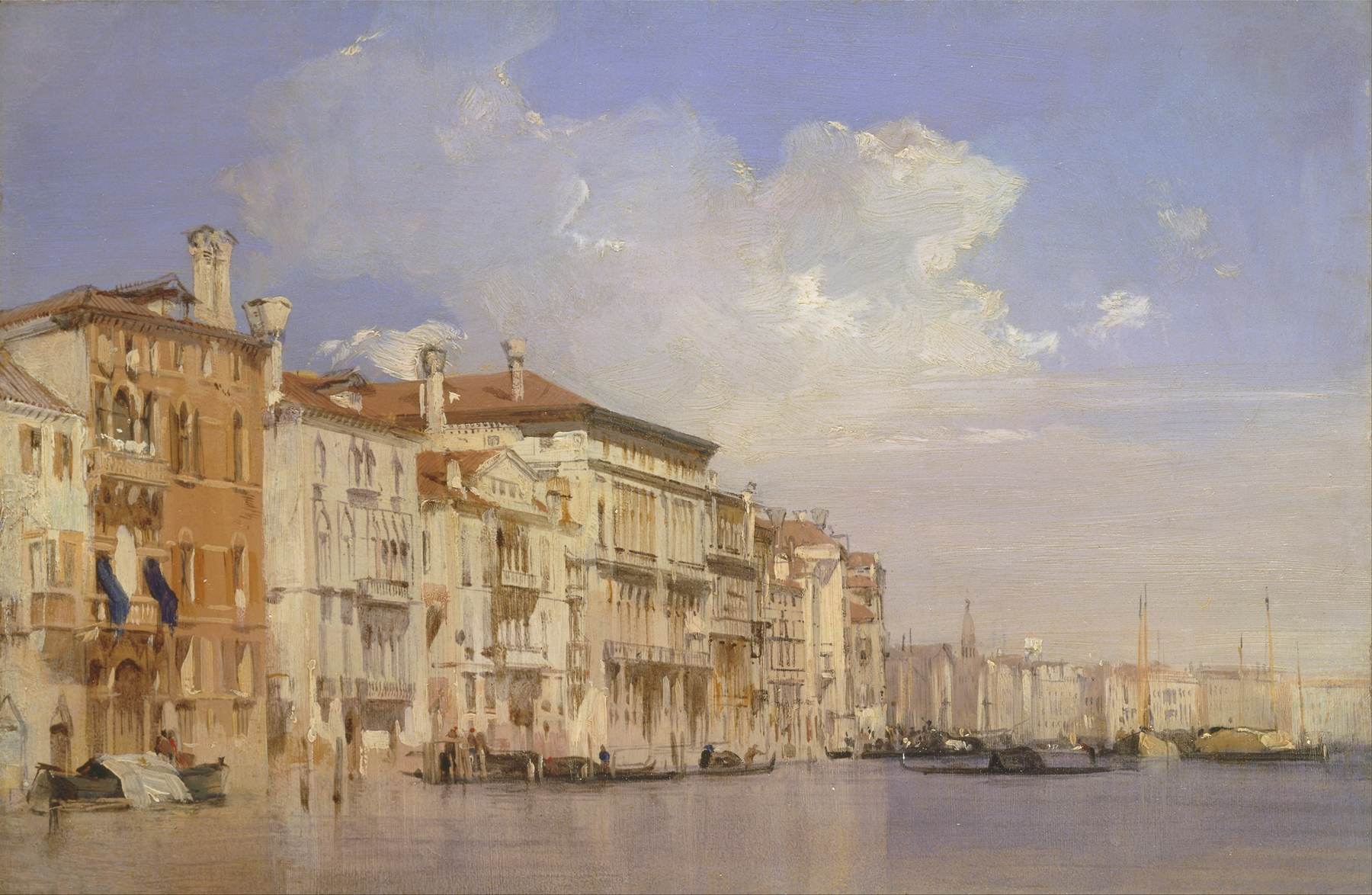
“Every silence here is a confession.” In the stillness of the Grand Canal, the beauty of Venice reveals not just its architectural splendor but a divine intimacy with water and light that transcends the ordinary. Look to the left at the delicate play of soft blues and muted greens, where the water captures reflections of the majestic buildings lining the canal. The warm hues of the setting sun cast an ethereal glow over the scene, illuminating the intricate details of the structures while creating a gentle contrast against the deepening shadows. Bonington’s brushwork conveys a sense of movement in the rippling water, pulling the viewer into the tranquil embrace of this Venetian landscape. Beyond its aesthetic charm, the artwork encapsulates a profound sense of fleeting moments and the passage of time. The boats, each anchored in their solitude, seem to carry the weight of untold stories, while the distant figures evoke feelings of isolation amid beauty. This juxtaposition between vibrancy and stillness speaks to the dual nature of existence, where divinity resides in both the seen and the unseen. Created in 1826, this piece emerged during a period when Bonington was heavily influenced by the Romantic movement, exploring the interplay of light and atmosphere. Living in Paris at the time, he was exposed to the works of great masters such as Turner and Constable, which inspired him to embrace color and technique in capturing the sublime essence of landscapes. This painting represents not just a moment in Venice, but also a pivotal point in the artist's journey towards mastering his craft.