The Grand Canal, Venice, Looking Toward the Rialto — History & Analysis
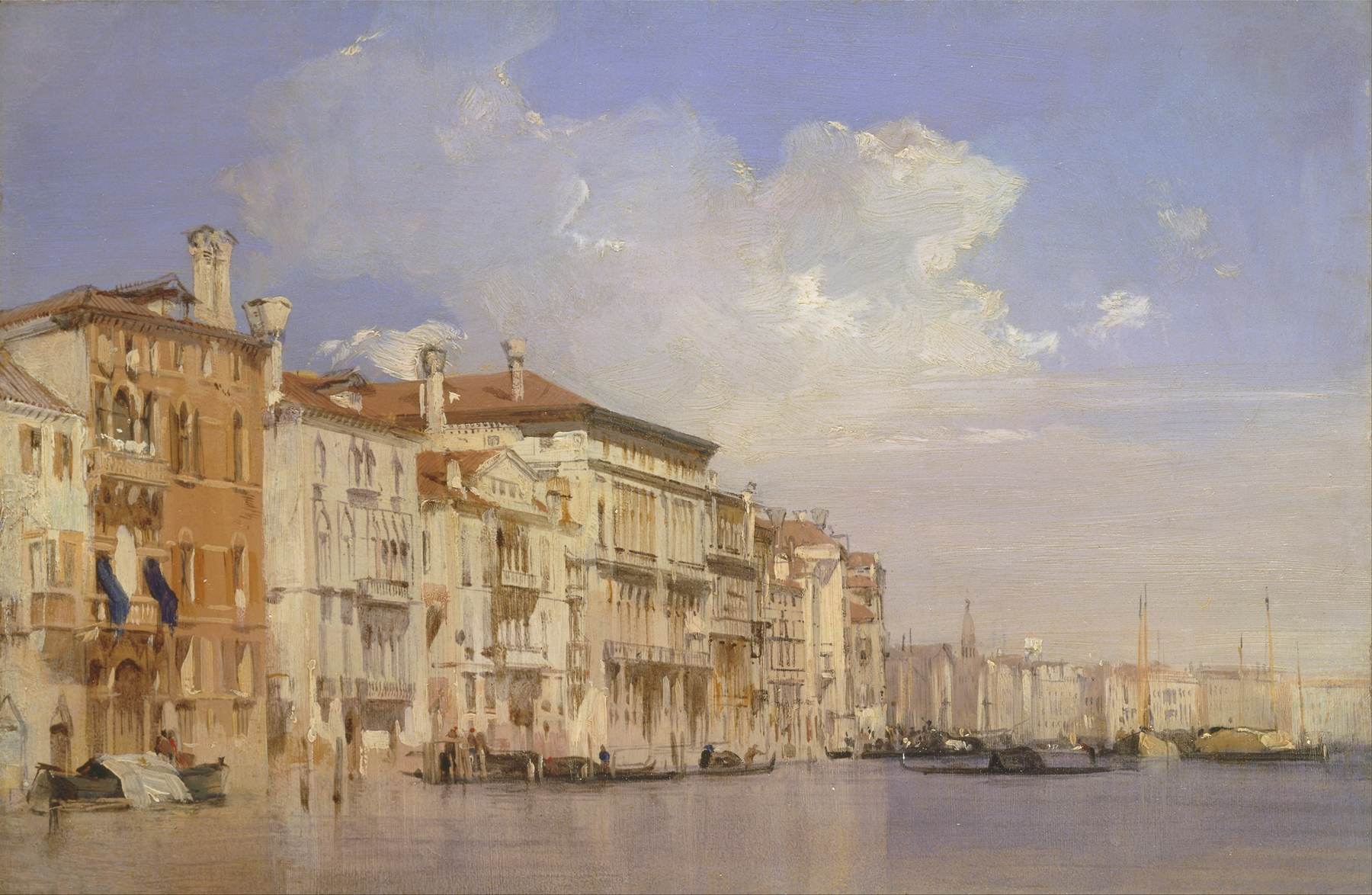
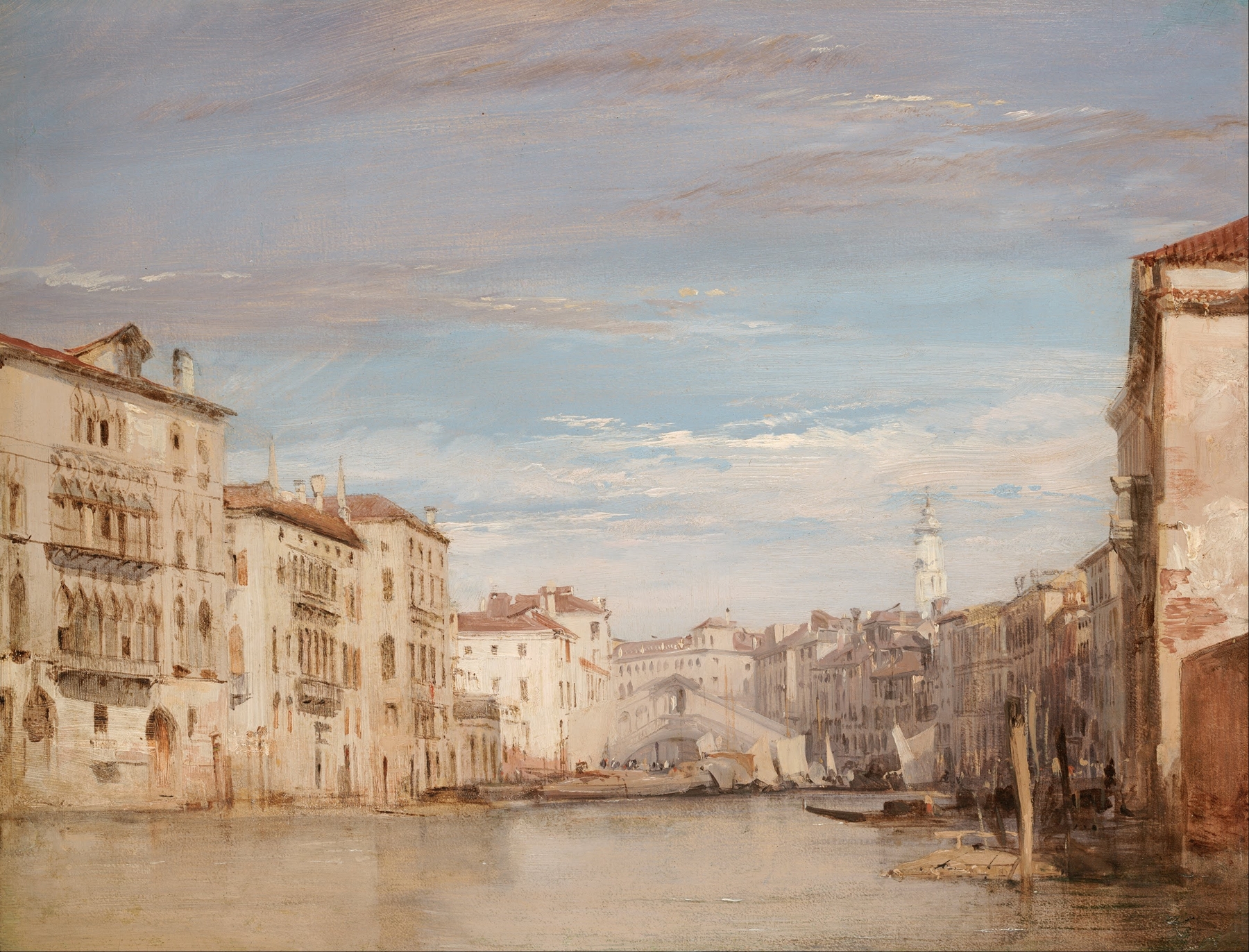
Is this a mirror — or a memory? The gentle ripples of the Grand Canal invite us to ponder the fleeting nature of beauty and time, evoking a deep yearning for moments lost and found. Look to the left at the vibrant reflections shimmering across the water's surface, where boats glide silently, their sails billowing softly in the breeze. The artist employs a delicate palette of blues and warm ochres that dance in harmony, capturing the essence of Venetian light. Notice how the composition draws the eye toward the iconic Rialto Bridge, its intricate architecture a testament to the city's storied past, framing the scene like a nostalgic postcard. Yet beneath this serene depiction lies a complexity that speaks to the tension between permanence and transience. The calming waters seem to hold secrets of bustling trade and quiet longing, while the distant figures moving along the promenade encapsulate the ebb and flow of life. Each stroke invites the viewer to consider what it means to connect with a place that is both familiar and ephemeral, suggesting a deeper relationship with memory itself. In 1826, Bonington was in Venice, immersed in the artistic fervor of the Romantic movement. This work emerged during a time when he was grappling with his own creative identity, influenced by the mastery of light and color found in his contemporaries. As he navigated the cultural currents of Europe, this painting served as both a personal exploration and a homage to the enchanting city that inspired countless artists before him.