A view of Dordrecht in winter — History & Analysis
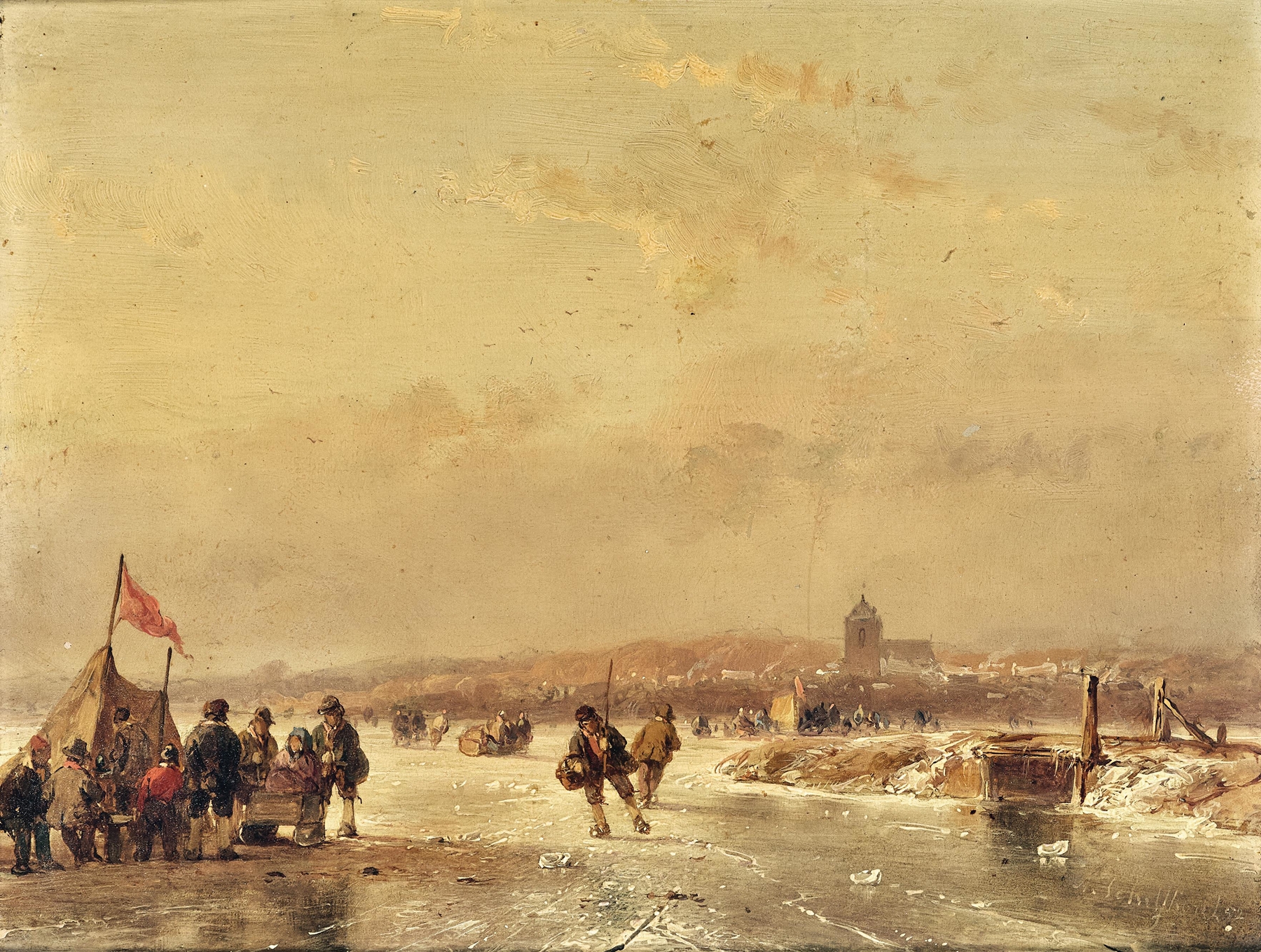
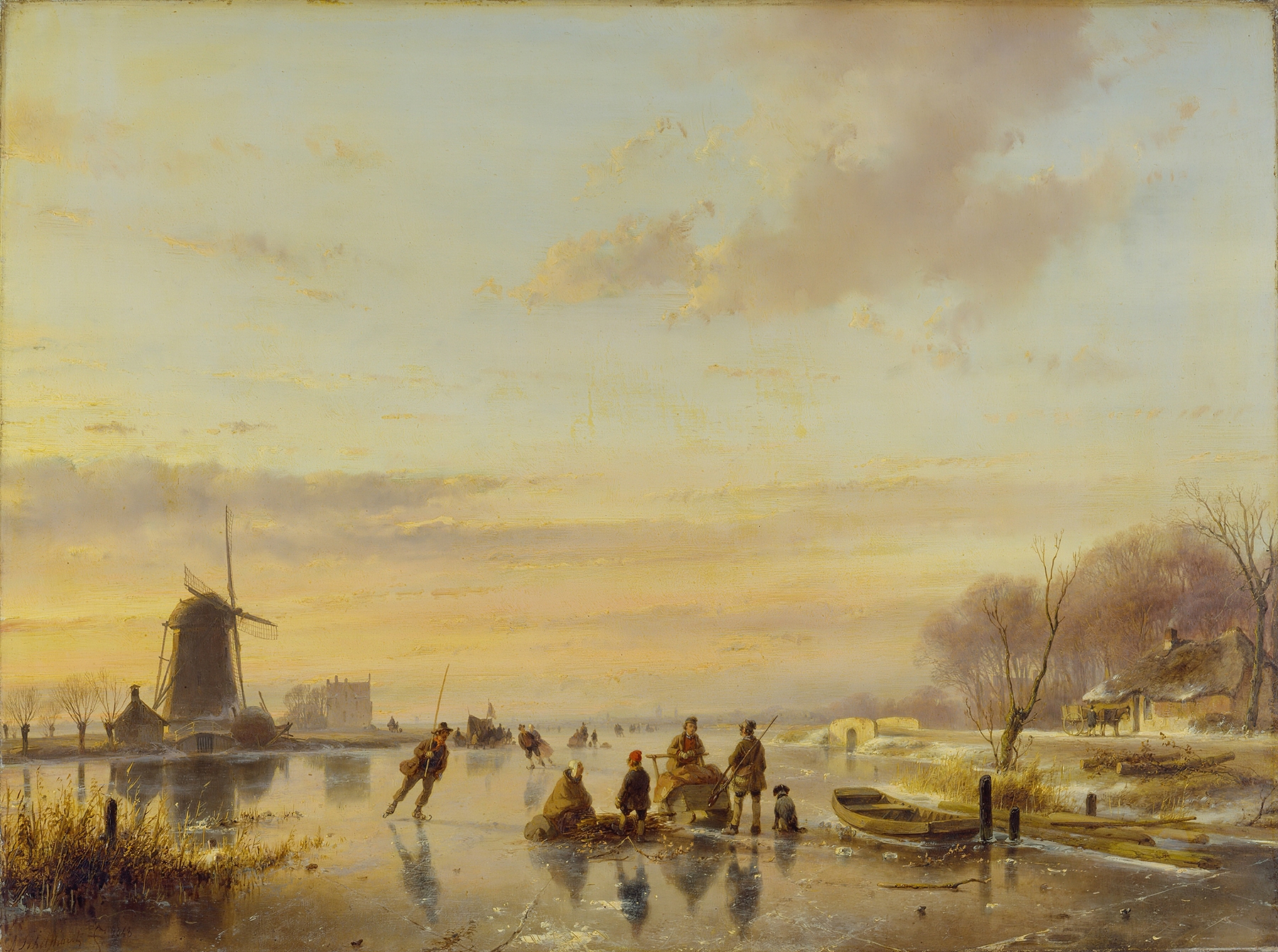
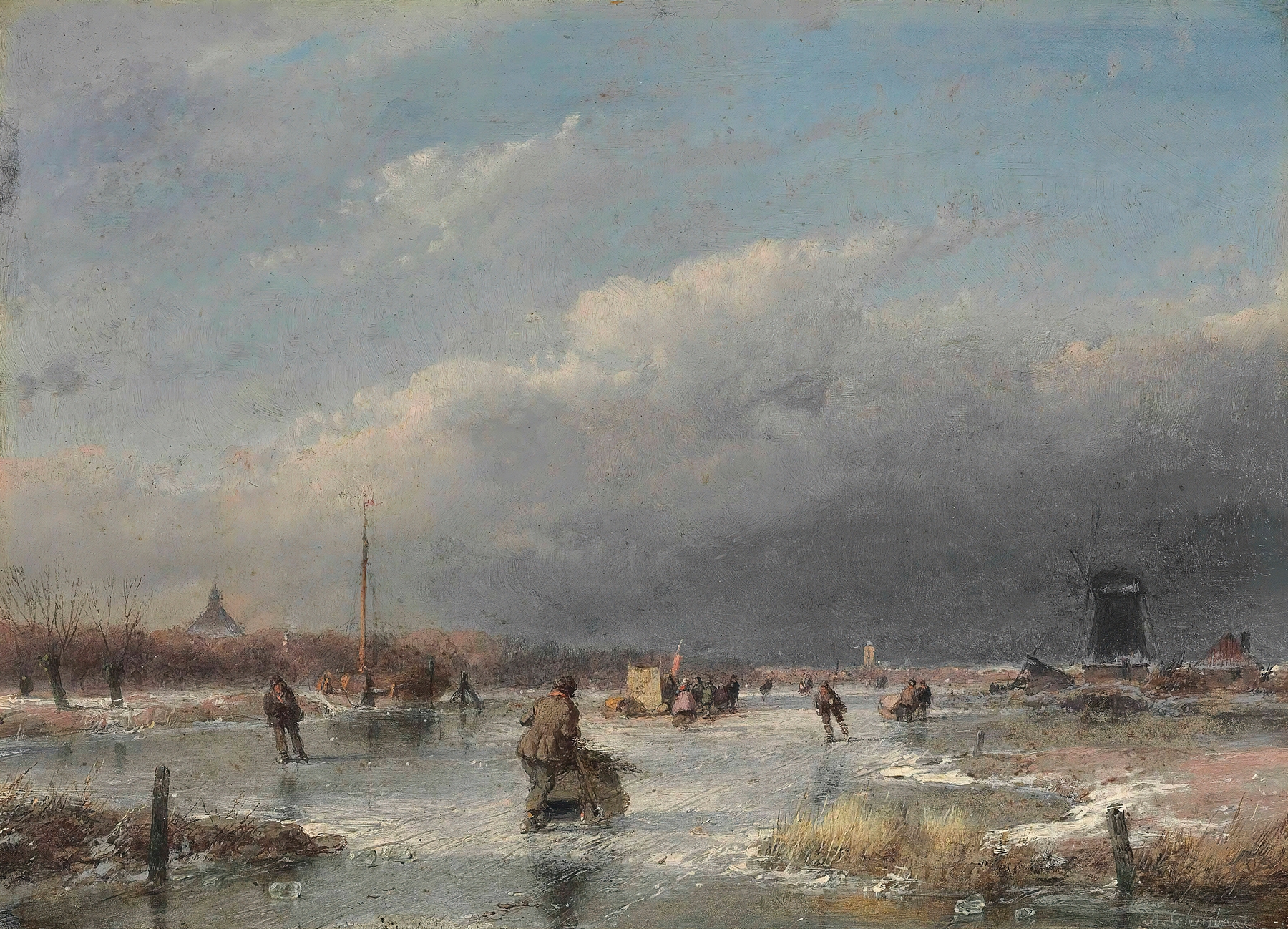
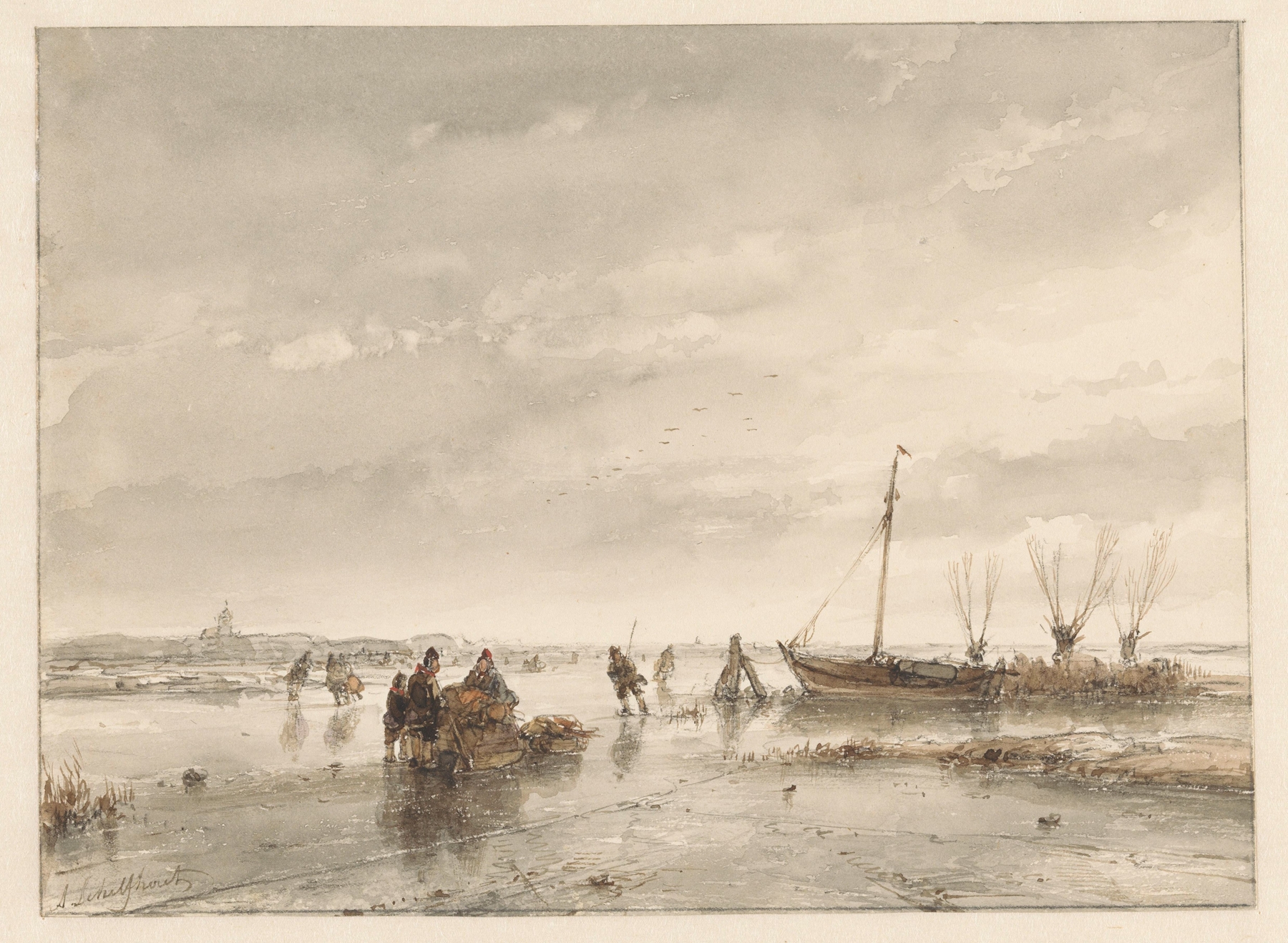
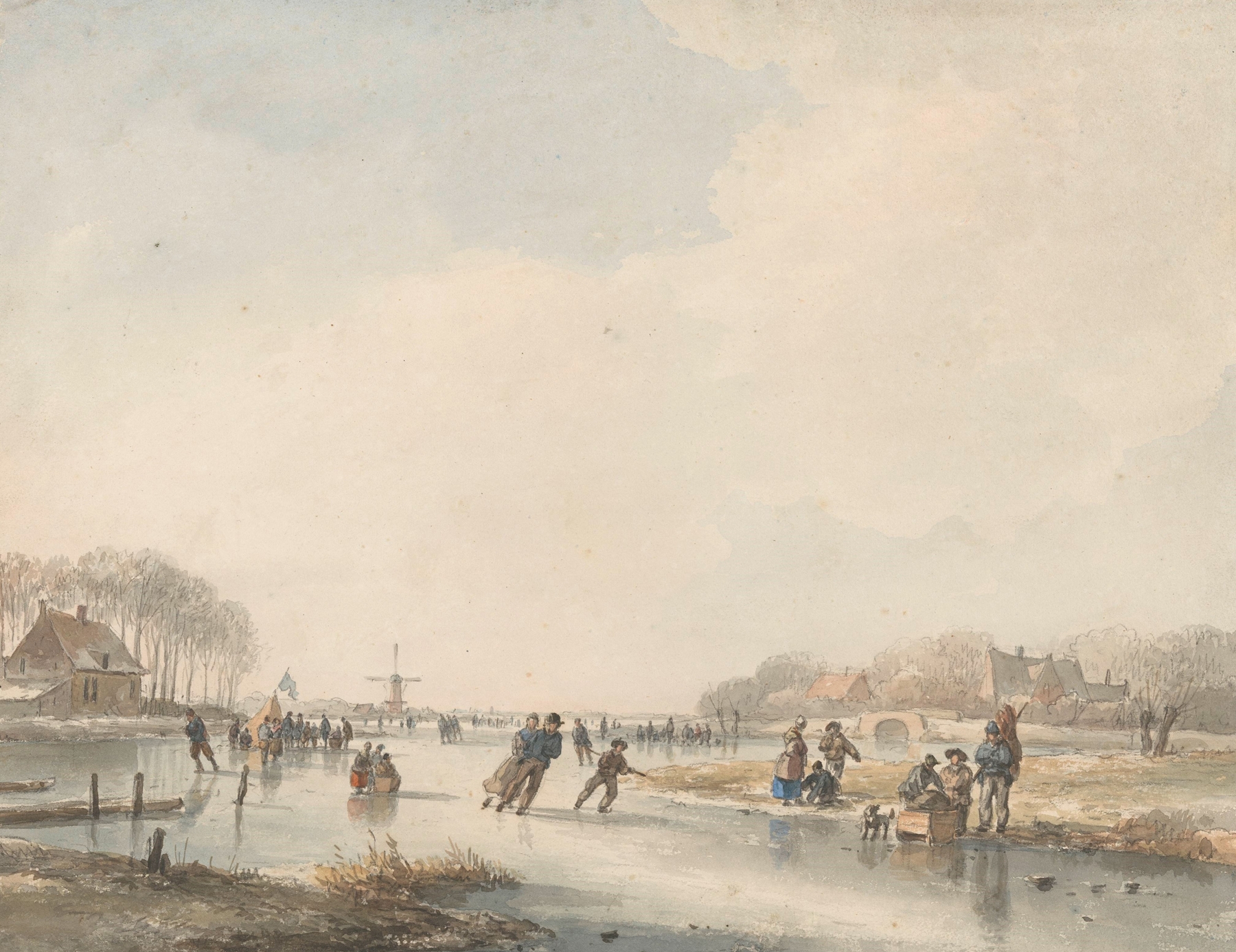
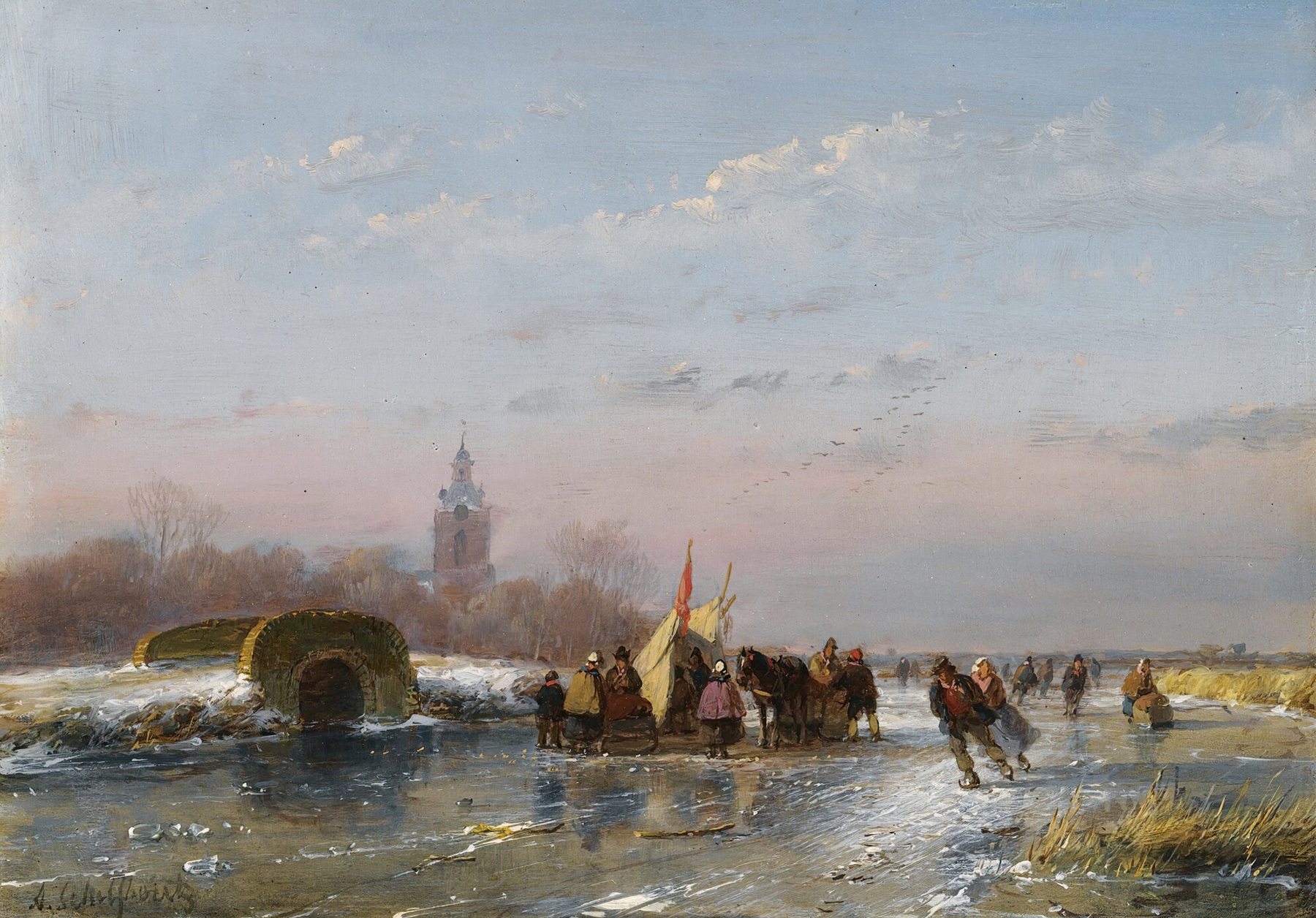
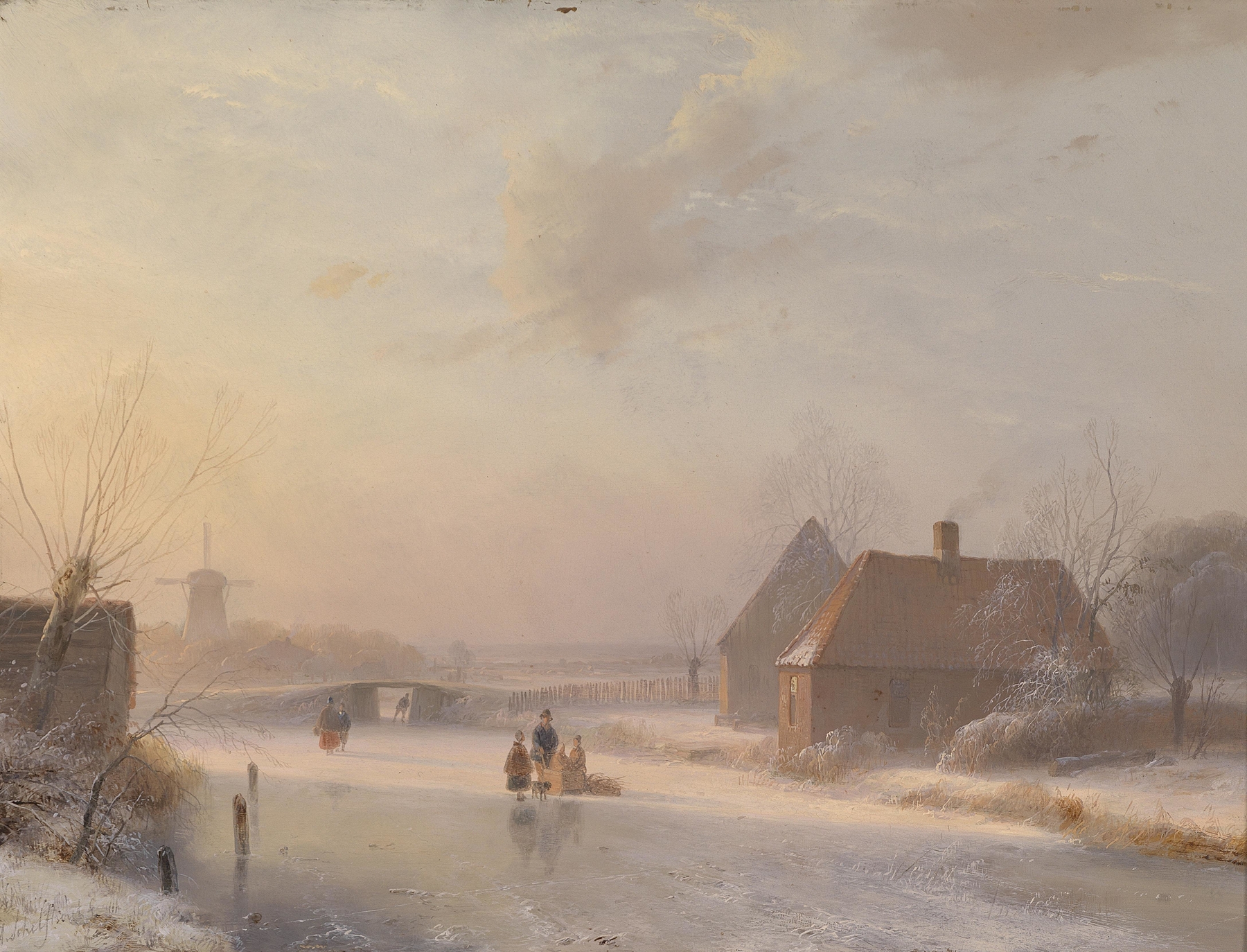
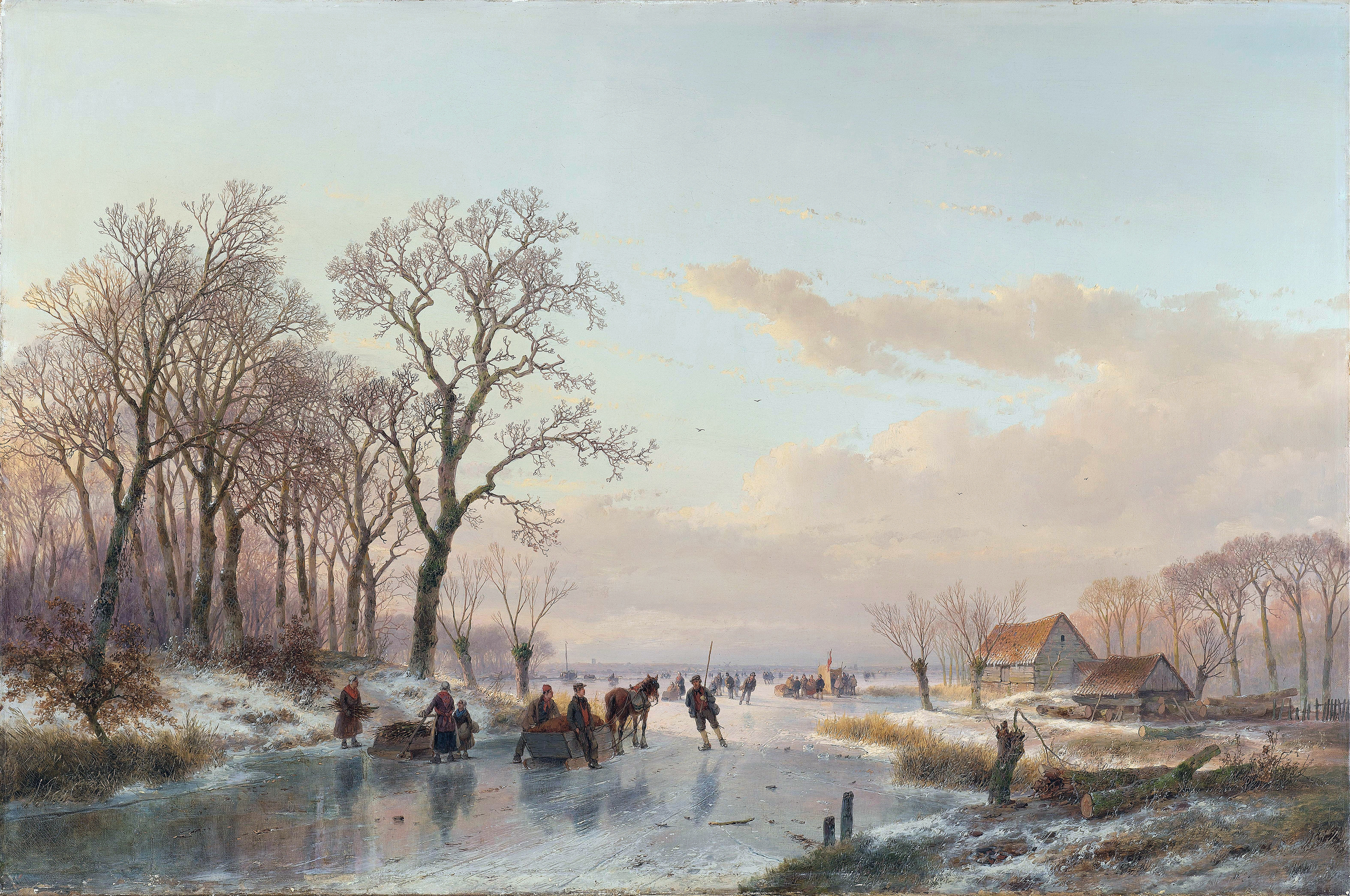
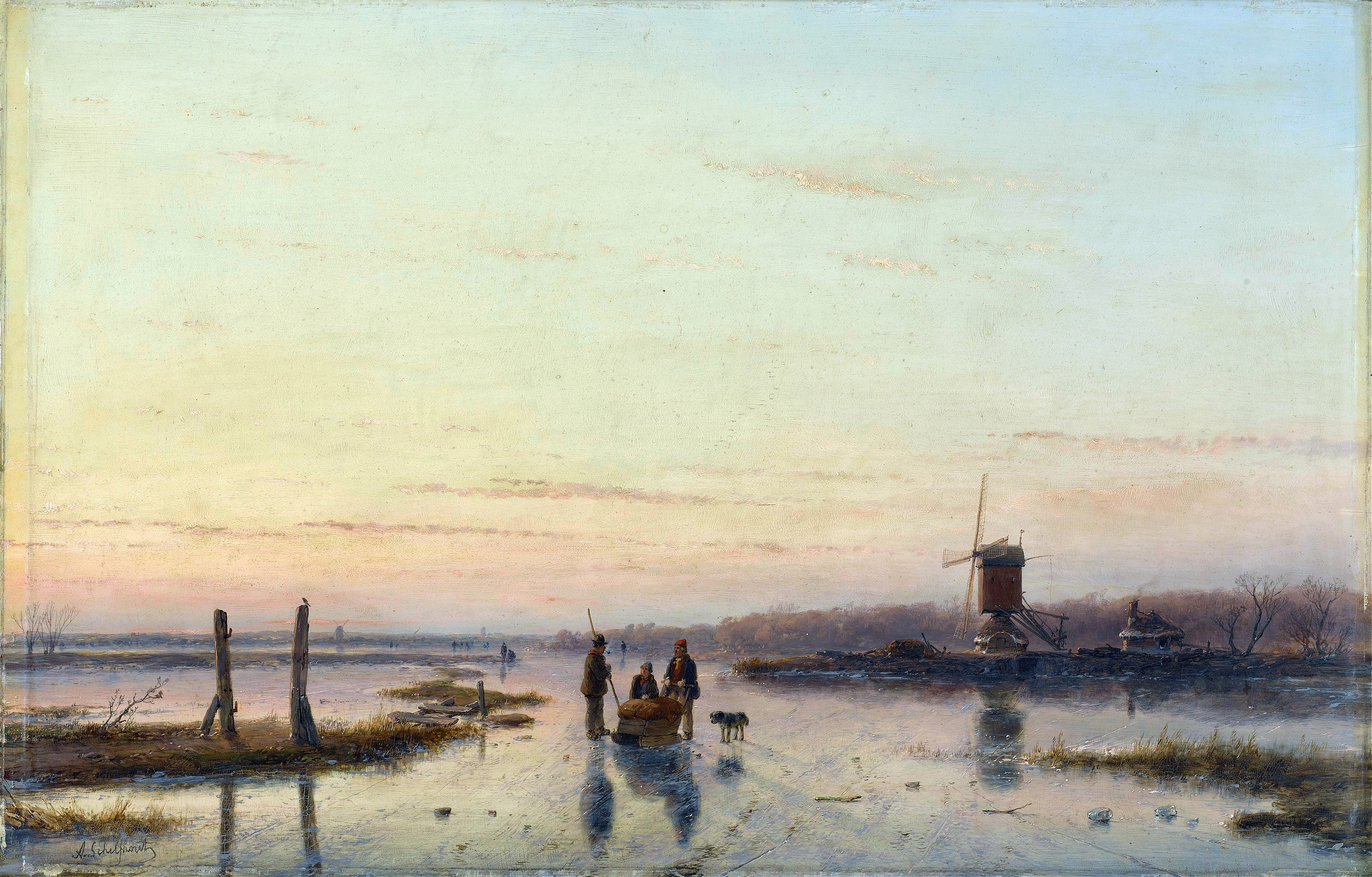
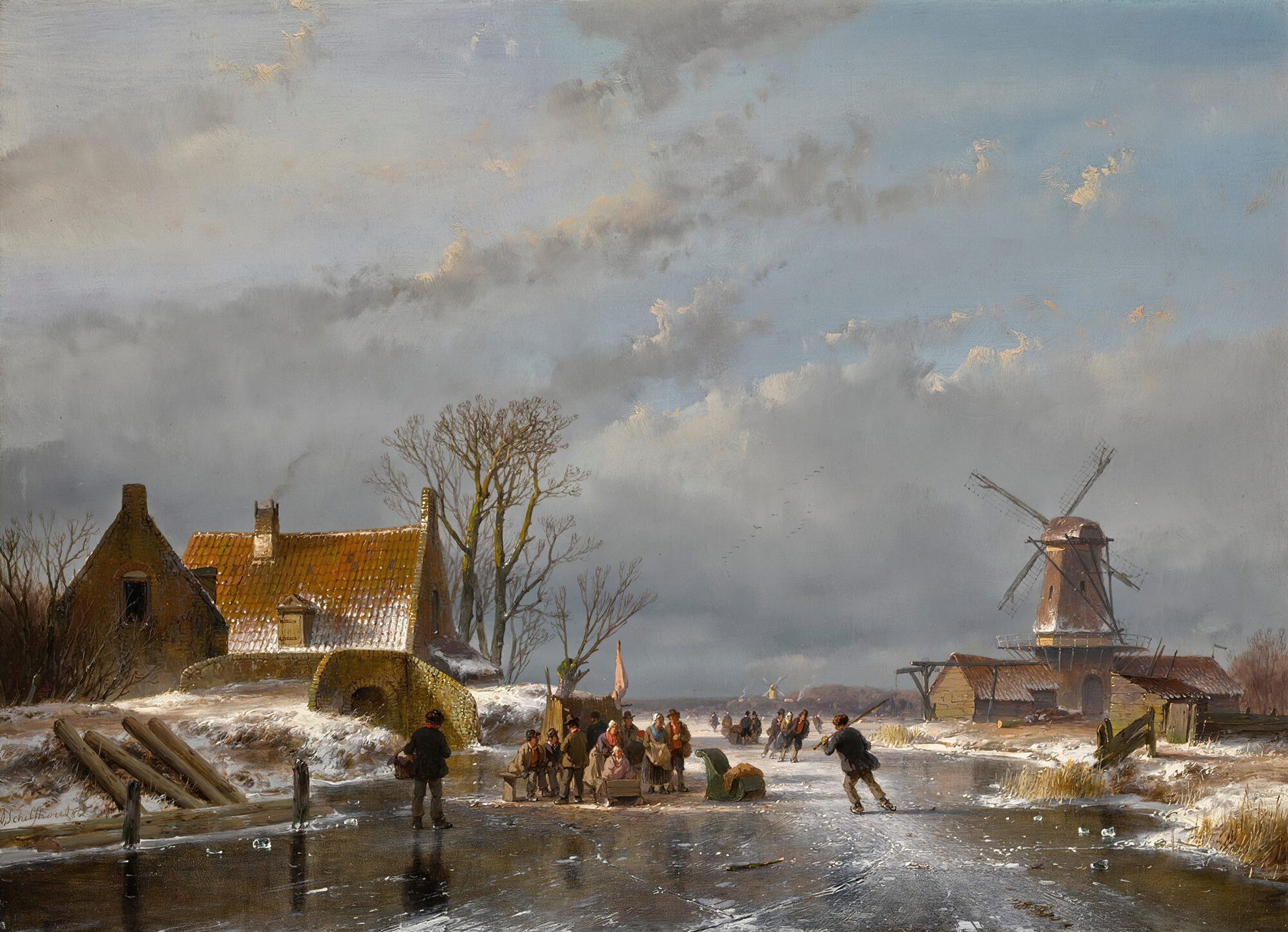
Could beauty survive in a century of chaos? In the serene winter landscape, a world of longing unfolds, inviting us to explore the delicate interplay between nature and human existence. Look to the left at the icy waters, where the gentle flow reflects the pale blue sky, punctuated by wisps of cloud. As you move your gaze towards the horizon, notice how the soft hues of pastel pink and white blend seamlessly, creating a tranquil atmosphere.
The composition is meticulously balanced, with the distant silhouettes of Dordrecht's architecture grounded in the foreground by figures engaging in a quiet dance of daily life amid the frozen expanse. Amidst this picturesque scene, contrasts emerge: the warmth of human activity stands in stark relief against the cold indifference of winter. The figures, bundled in their muted garments, embody a shared resilience, their movements suggesting a sense of community within the stillness. Each detail—the way the light plays on the snow, the delicate branches framing the scene—whispers of a deeper longing for connection and continuity in a world that feels both beautiful and transient.
In 1845, Schelfhout painted this work during a time when the Romantic movement was flourishing in Europe, championing the beauty of nature and the emotions it evokes. Living in The Hague, he drew inspiration from the Dutch landscape and sought to convey the profound impact of seasons on human life. This period in art history was marked by a growing appreciation for landscape painting as a medium, and Schelfhout’s evocative style captured the essence of winter’s quiet beauty, even as it echoed the uncertainties of the era.