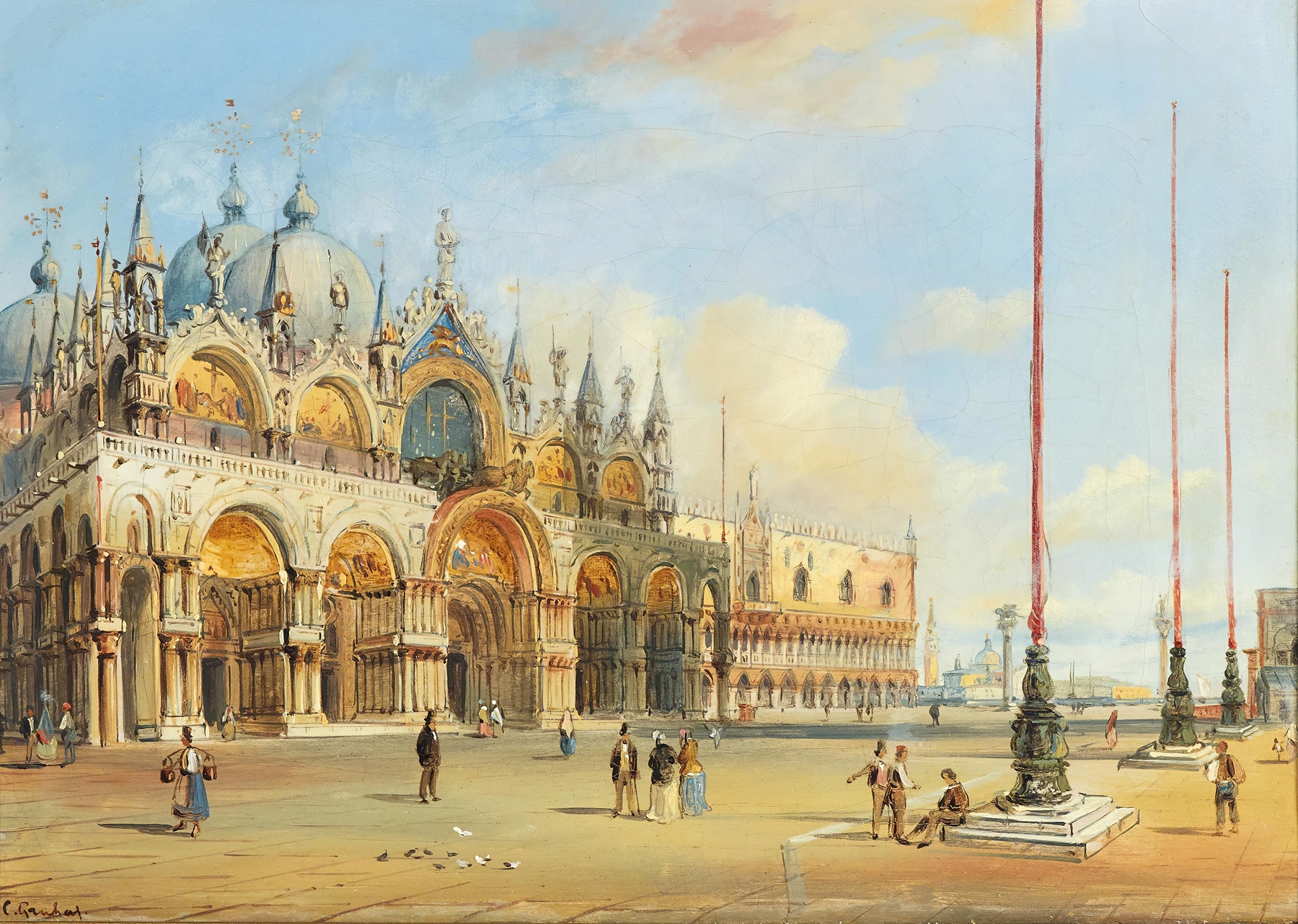
A View Of The Basilica Di San Marco — History & Analysis
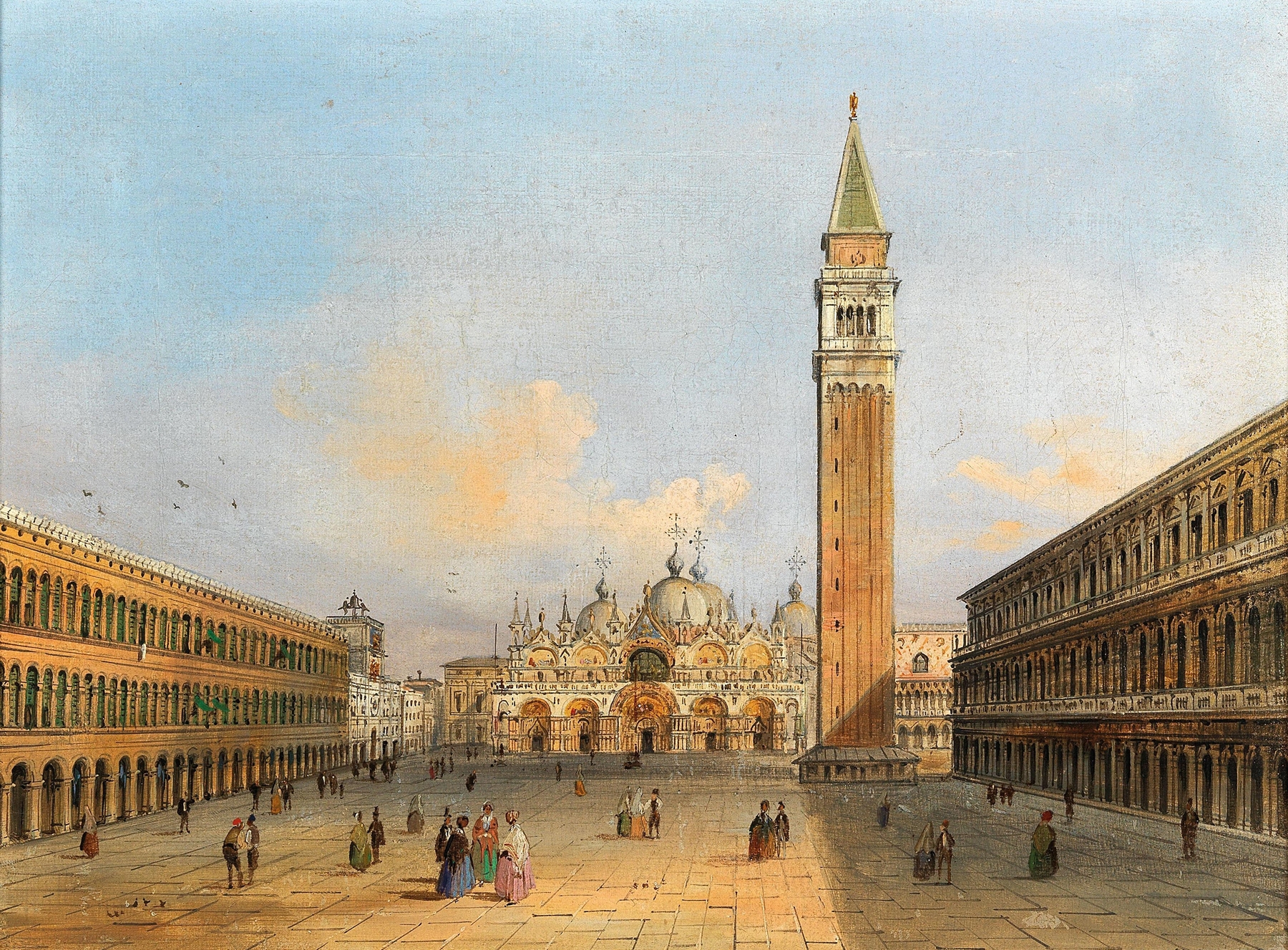
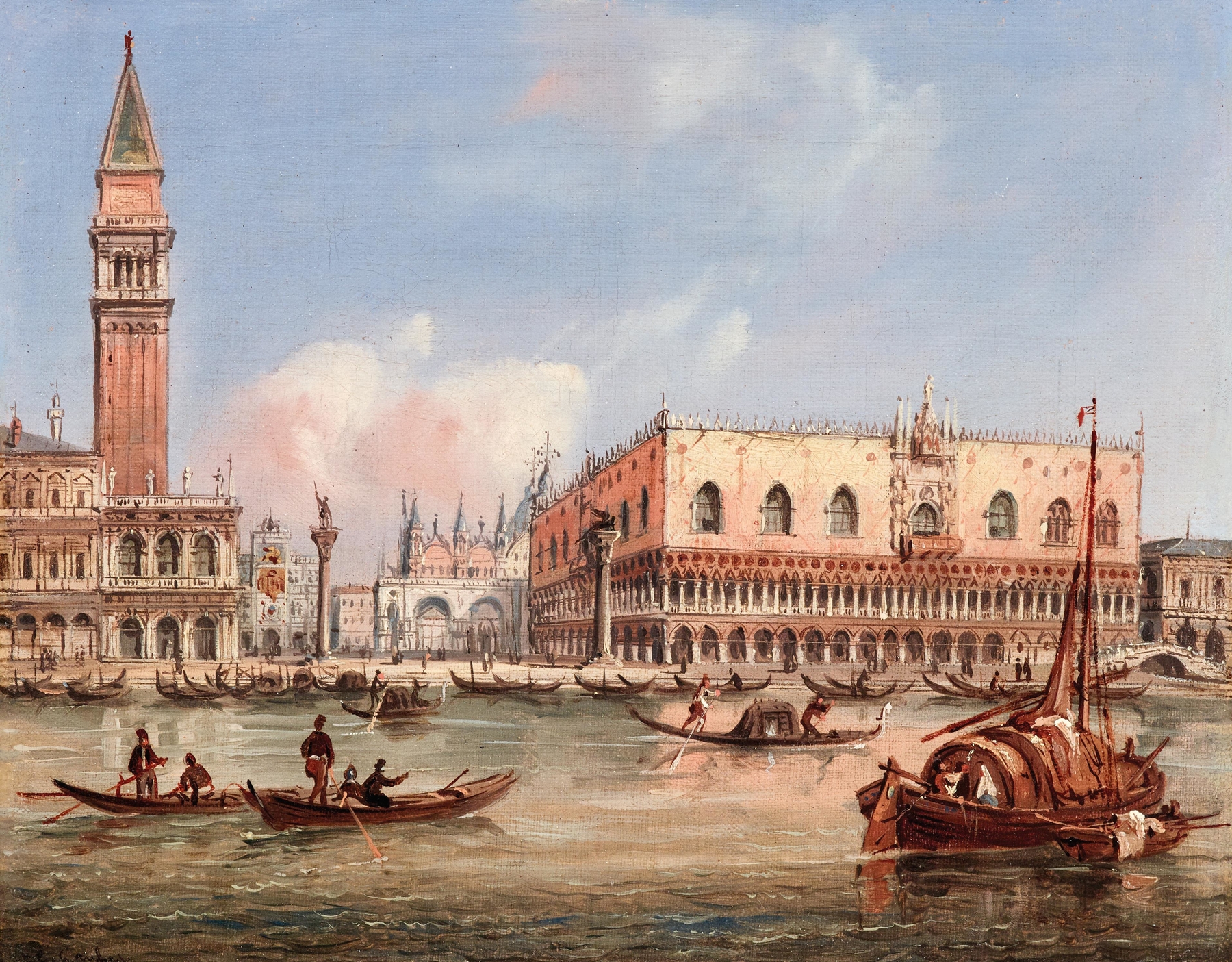
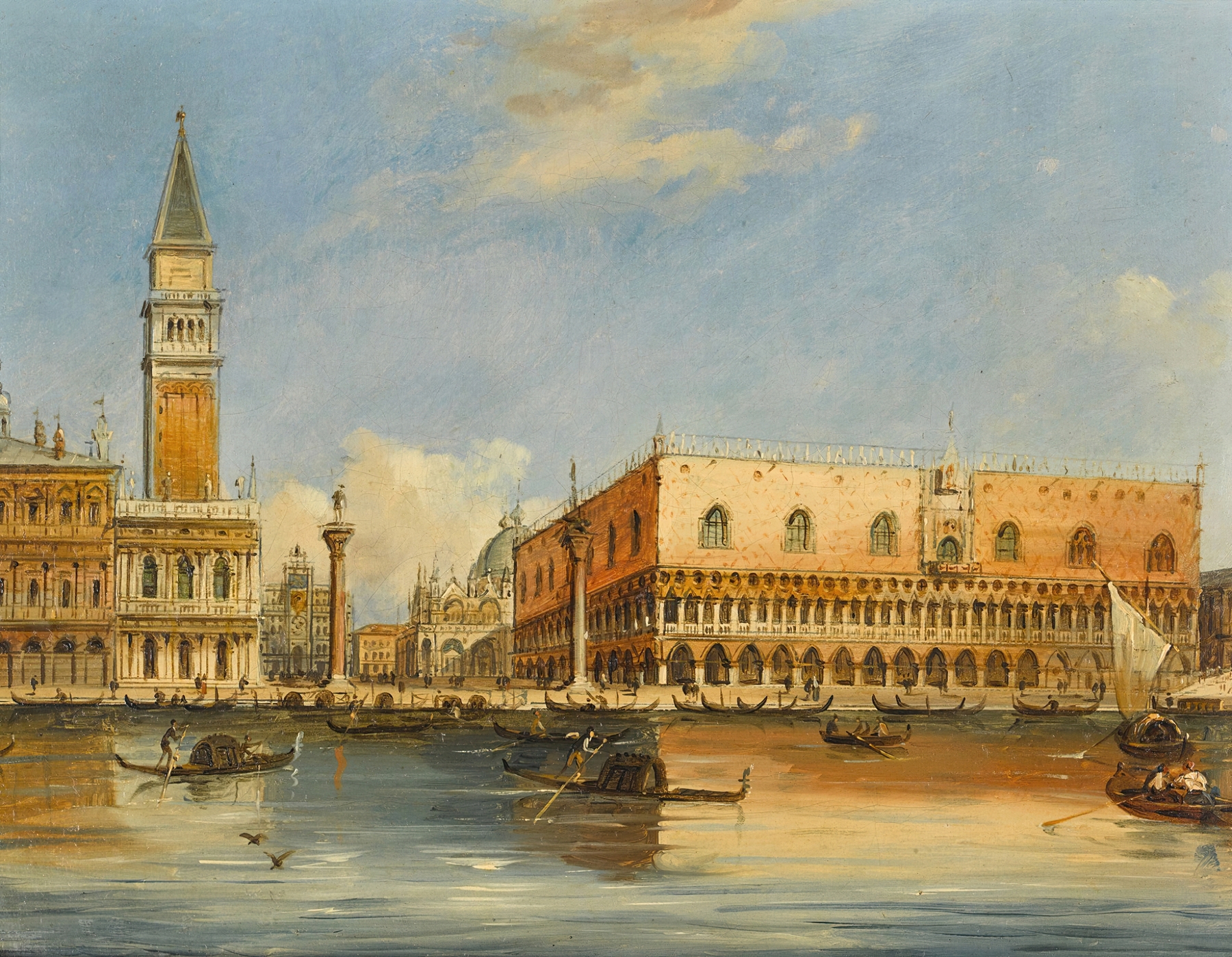
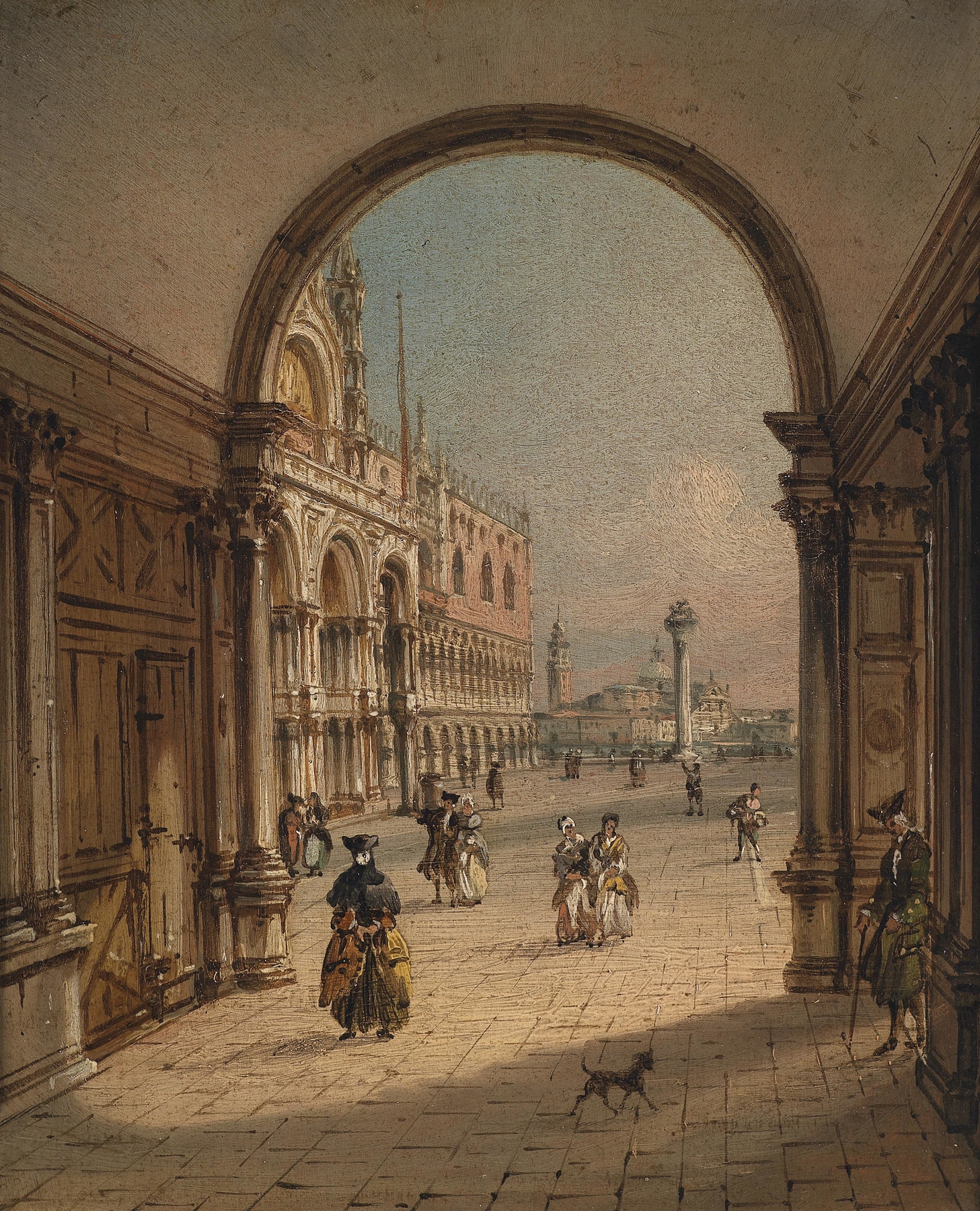
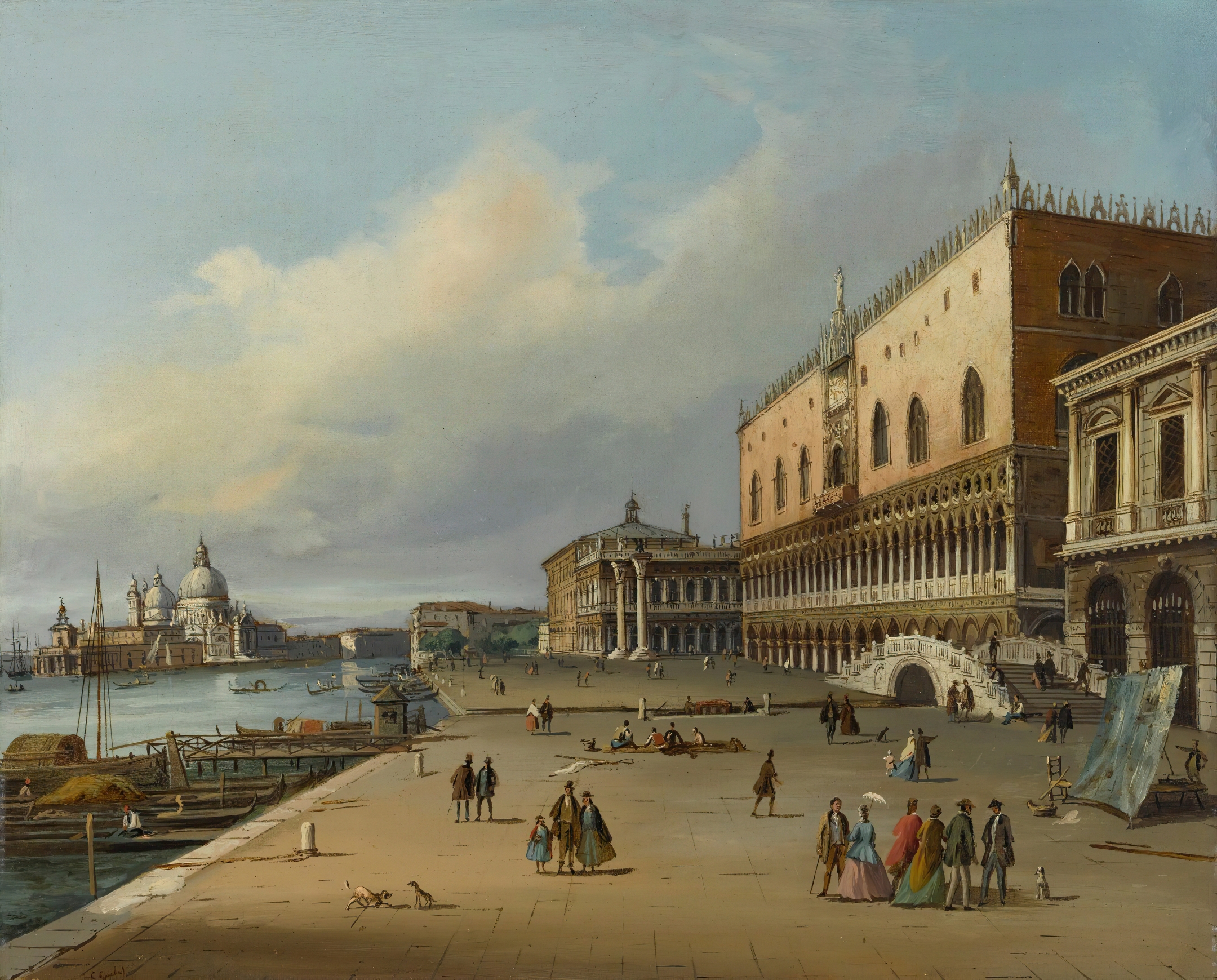
“Under the brush, chaos becomes grace.” Nostalgia hangs in the air, a whisper of what once was, inviting us to delve into a moment suspended in time. Look toward the center where the Basilica di San Marco rises majestically, its intricate domes and arches capturing the warm glow of a golden sunset. The artist's deft brushwork lends a softness to the ancient stone, transforming it into a living entity—its textures both revered and weathered. Notice how the sky bathes the scene in a blend of oranges and deep blues, creating a striking contrast that enlivens the foreground and enriches the Basilica’s rich palette.
Hidden within the grandiosity of this architectural marvel are small figures, barely visible, hinting at the lives intertwining beneath its grandeur. Their subtle gestures evoke the weight of history, while the delicate play of light and shadow suggests a quiet reverence, creating an emotional tension between the monumental and the personal. This juxtaposition speaks not only of the beauty of the structure but also of the transient nature of human experience—a fleeting moment captured beneath the timeless gaze of the Basilica.
During the time A View Of The Basilica Di San Marco was created, Carlo Grubacs was likely influenced by the romanticized depictions of Venice that dominated art in the late 18th to early 19th centuries. Working in Italy, Grubacs navigated a world where evolving artistic movements began to emphasize emotion and atmosphere, marking a shift away from strict realism. His work resonates with an innate desire to capture the essence of nostalgia and beauty that defined the era.