A view of the Rialto Bridge, Venice — History & Analysis
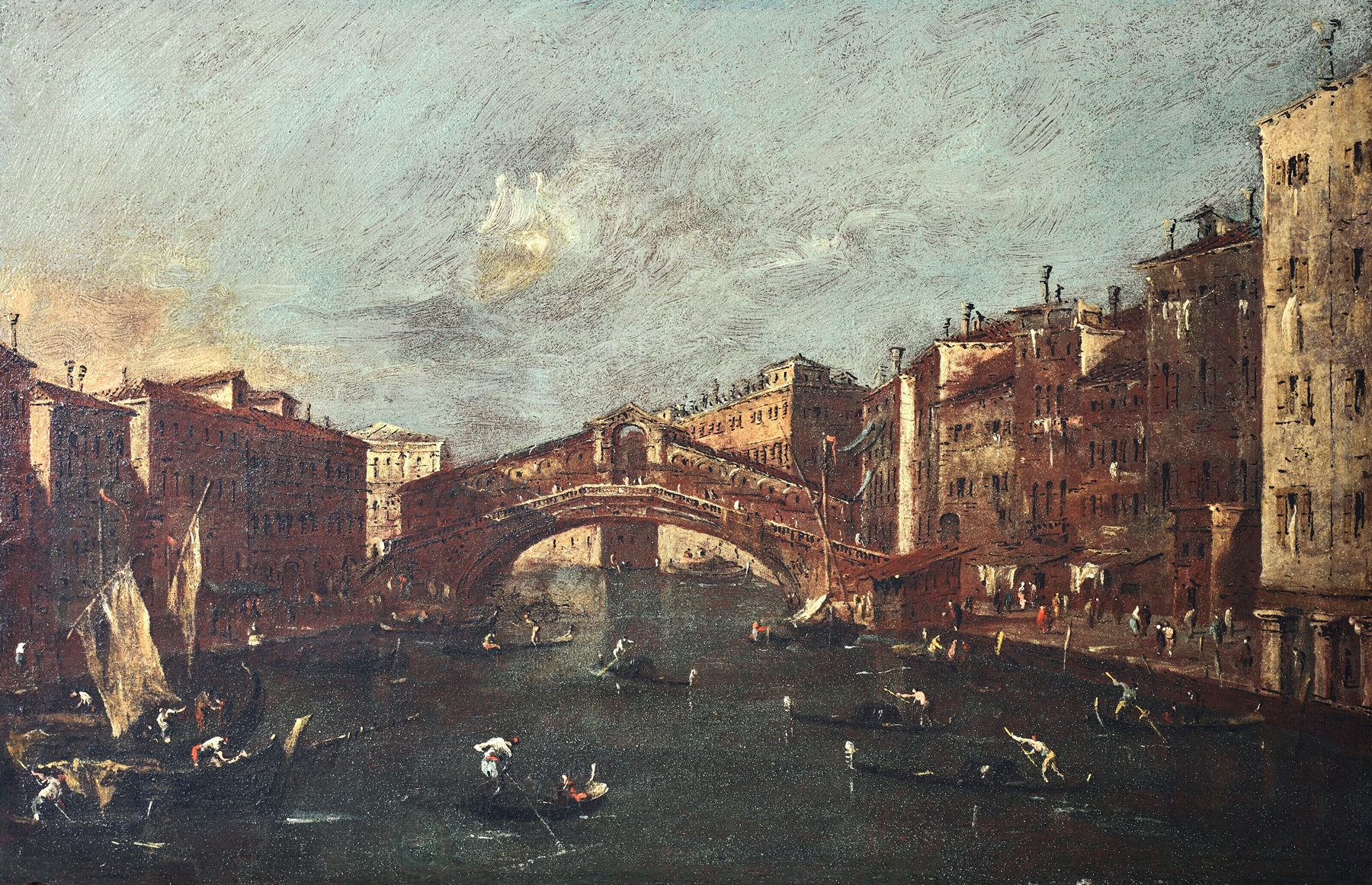
Can paint confess what words never could? In Giacomo Guardi's work, reflections shimmer with tales untold, inviting us to explore the layers beneath the surface. Look to the right at the gentle ripple of water, where the Rialto Bridge arches gracefully above the shimmering canal. The soft blues and greens intermingle with warm earth tones, offering a palette that feels both serene and vibrant. Notice how the delicate brushstrokes capture the light dancing on the water’s surface, creating a sense of movement that breathes life into the scene.
Each detail—the colorful buildings, the boats gliding silently, the figures in conversation—draws the viewer deeper into this iconic Venetian moment. The contrast between light and shadow reveals a poignant narrative. The luminous reflections in the water suggest a world rich with stories, while the darker hues hint at the mysteries that lurk below. Each element, from the billowing sails of the boats to the arching architecture, embodies a duality of existence—life above and below the surface.
This interplay prompts contemplation on the nature of memory and how experiences shape our perceptions, much like the reflections that blur and distort as they ripple. Painted in the late 18th century, Guardi was a prominent figure in Venetian art during a time of transition from the Baroque to the Romantic. His intricate depictions of Venice's landscapes came amid the city's decline as a major maritime power, yet he preserved its beauty and vibrancy on canvas. In this work, he encapsulated a moment in time, inviting viewers to partake in the allure of a city that was both fading and everlasting.