Veduta della Piazza di San Marco — History & Analysis
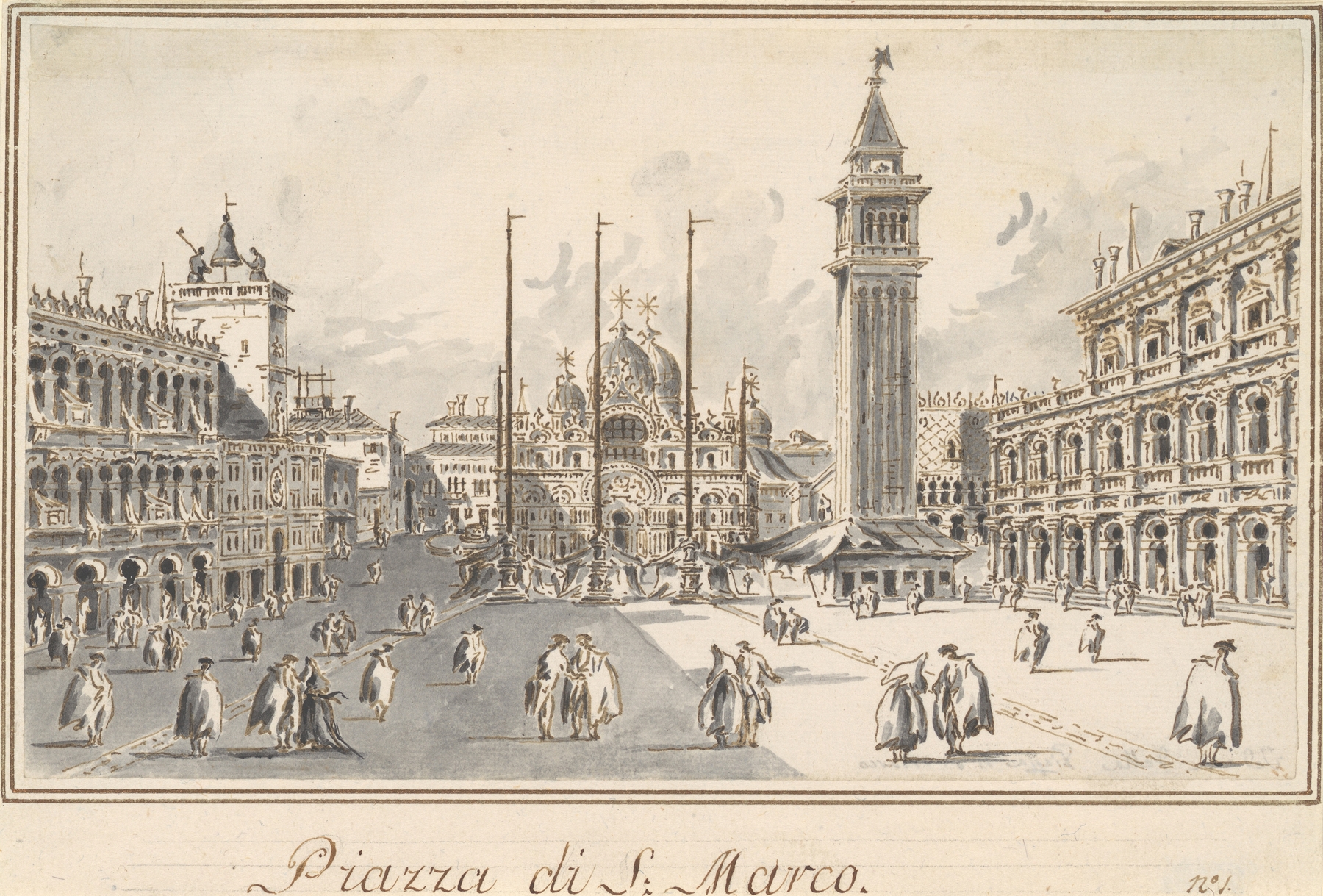
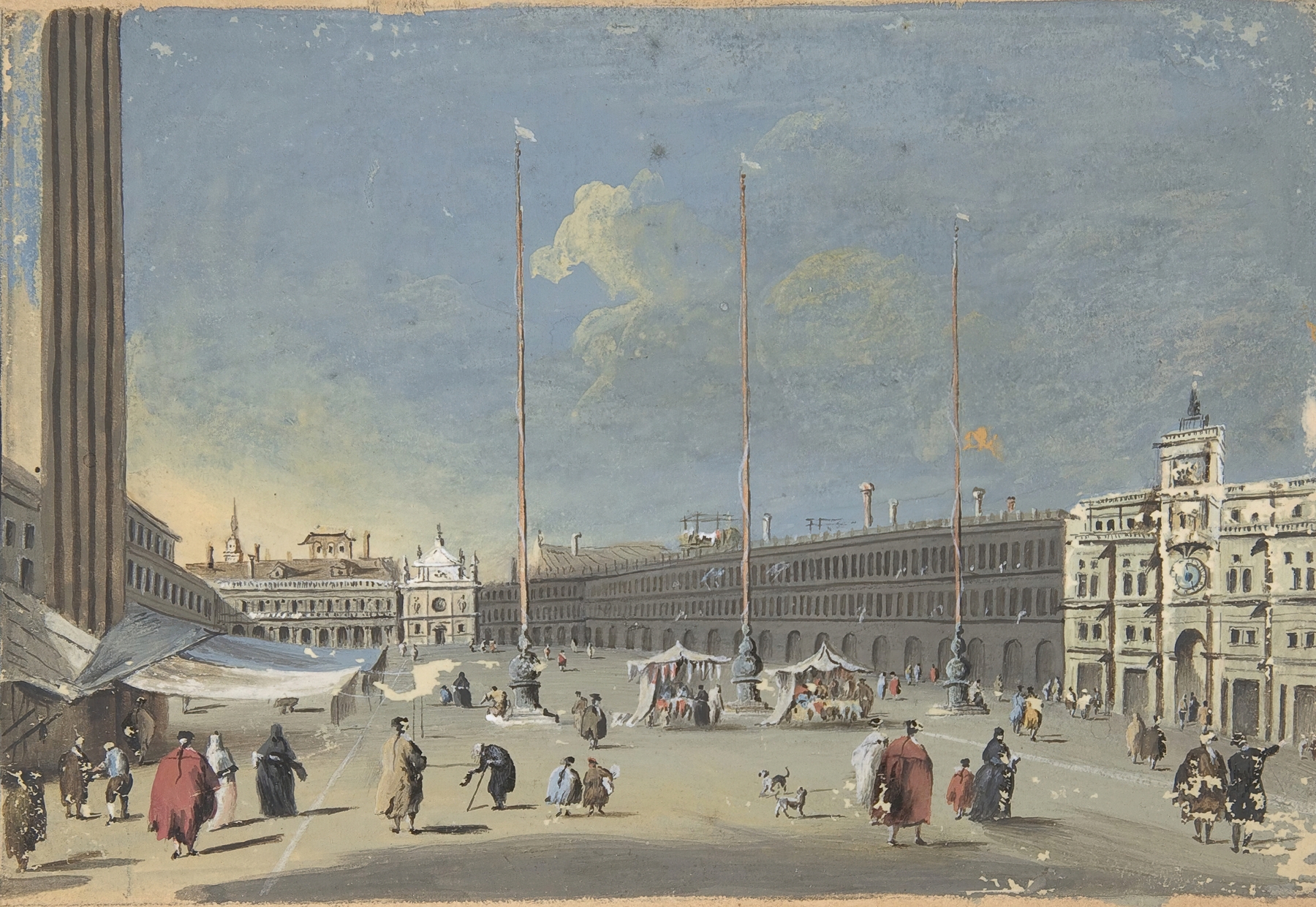
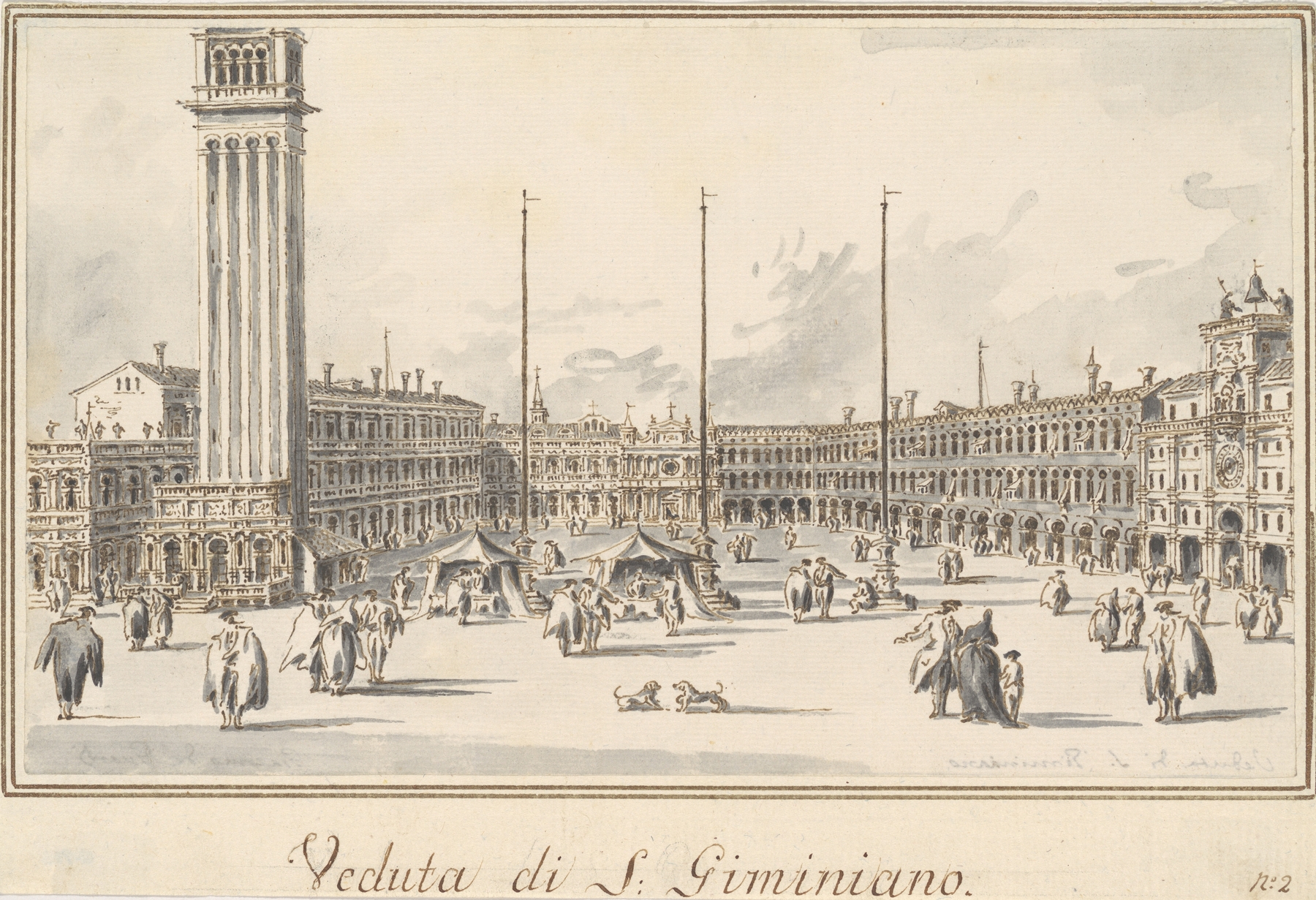
Can paint confess what words never could? In Veduta della Piazza di San Marco, brushstrokes transcend language, capturing a moment of transformation and serenity in the heart of Venice. Look to the center where the towering Campanile stands proud against a gentle azure sky, its shadow stretching like a guardian over the bustling square. Notice how the light dances across the cobblestones, illuminating the vibrant colors of the buildings that frame the scene.
Guardi's delicate brushwork creates a sense of movement within the stillness, as figures mill about, caught in their own stories amid the grandeur of their surroundings. Beneath the interplay of light and shadow lies a deeper commentary on the passage of time. The contrasting figures—some lost in conversation while others are absorbed in silent contemplation—evoke the transient nature of life in a city renowned for its beauty and decay. The subtle variations in the hues of the facades whisper of history, inviting the viewer to ponder the many transformations the square has witnessed over centuries.
In the late 18th century, Giacomo Guardi painted this scene during an era where Venice was grappling with both artistic evolution and political tumult. Unlike his contemporaries, he employed a more expressive style, favoring atmospheric effects that reflected the changing tides of his city. In this work, he not only immortalized a moment in time but also captured the very essence of Venice, where every stone tells a story of transformation and eternal beauty.