A Watermill — History & Analysis
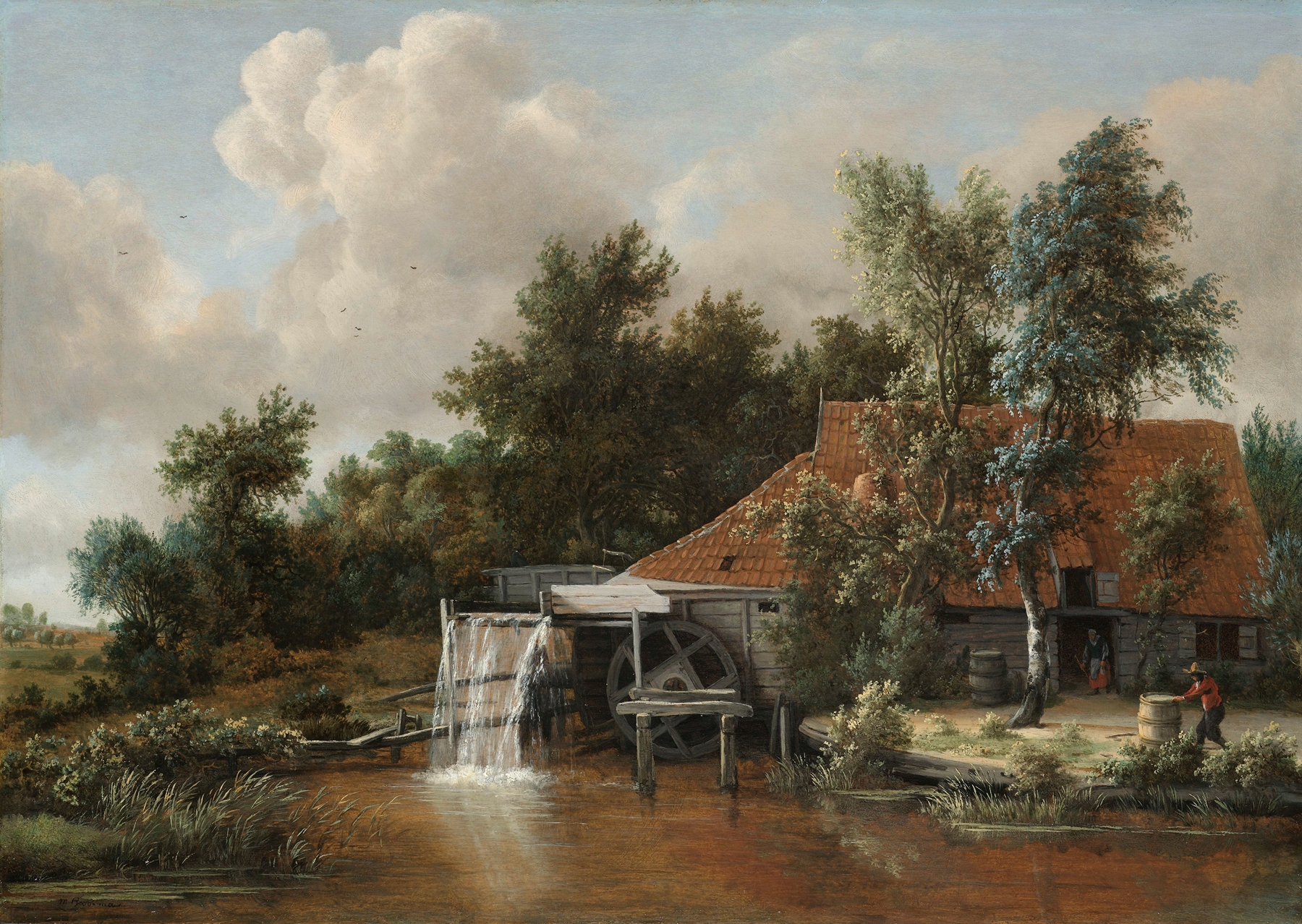
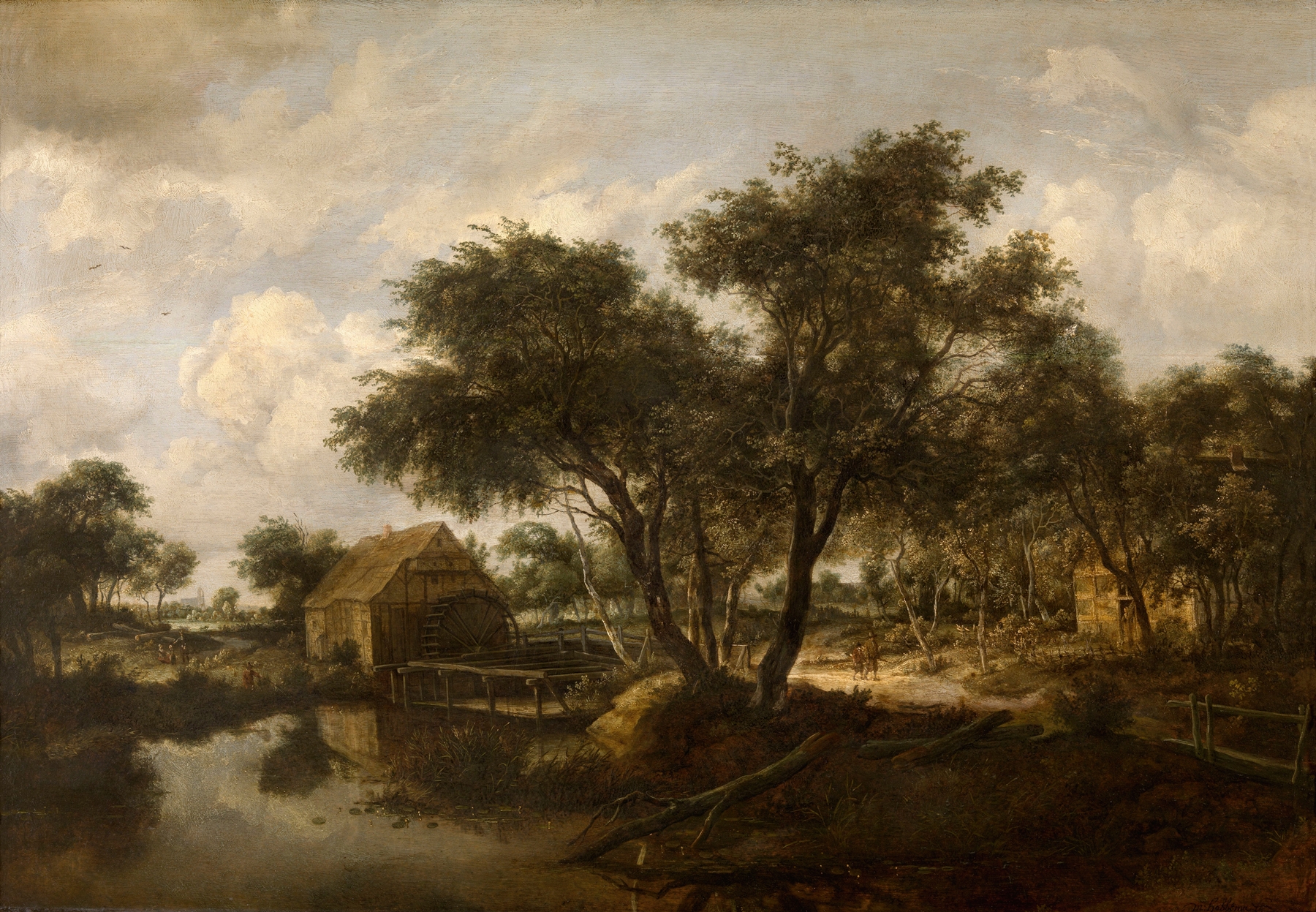
“The canvas doesn’t lie — it simply waits.” It holds the secrets of a landscape, longing to reveal the quiet beauty of a world untouched by time. Look to the left at the gently tumbling water that glimmers under the soft embrace of afternoon sunlight. Notice how Hobbema meticulously captures the interplay of light and shadow, with dappled greens surrounding the serene watermill, hinting at the life that thrives in this secluded haven. The composition flows seamlessly, leading the eye from the tranquil stream to the rustic structure, inviting you to examine every brushstroke with care.
As you delve deeper, consider the contrasts within the scene. The stillness of the water reflects not only the mill but also the passage of time, each ripple whispering tales of labor and solitude. The vibrant foliage surrounding the mill seems to yearn for the stories of the past, while the water, ever flowing, reminds us of the relentless march of life. This dichotomy evokes a bittersweet nostalgia, resonating with those who seek solace in nature’s embrace.
In the early 1660s, Meindert Hobbema was immersed in the Dutch Golden Age, a period characterized by a flourishing of landscape painting. Working primarily in Amsterdam, Hobbema's connection to the countryside grew, as he moved away from urban life, seeking inspiration in rural settings. His dedication to capturing the beauty of the natural world would ultimately place him among the masters of his time, as he sought to express a yearning for tranquility and connection through his art.