A Watermill — History & Analysis
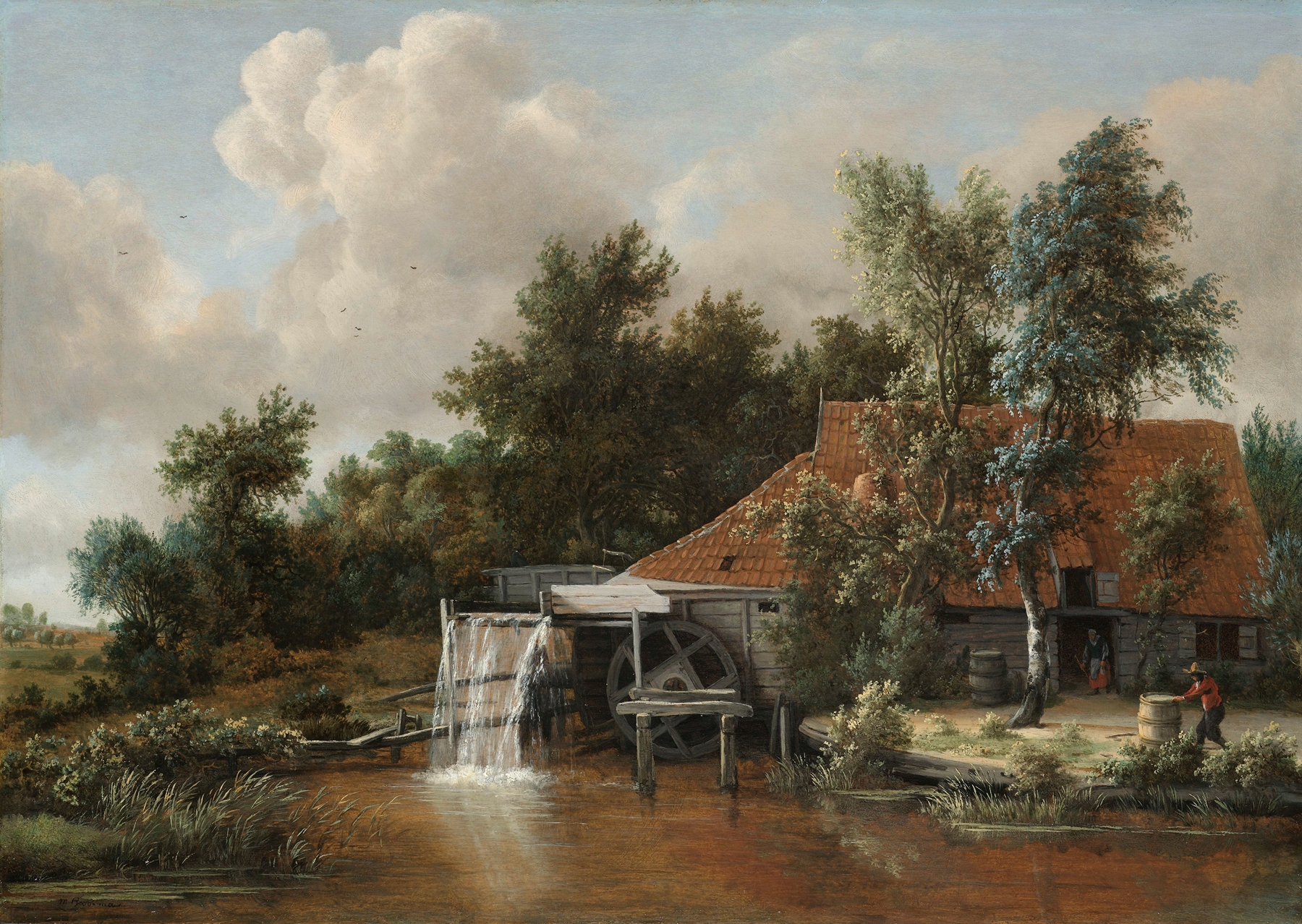
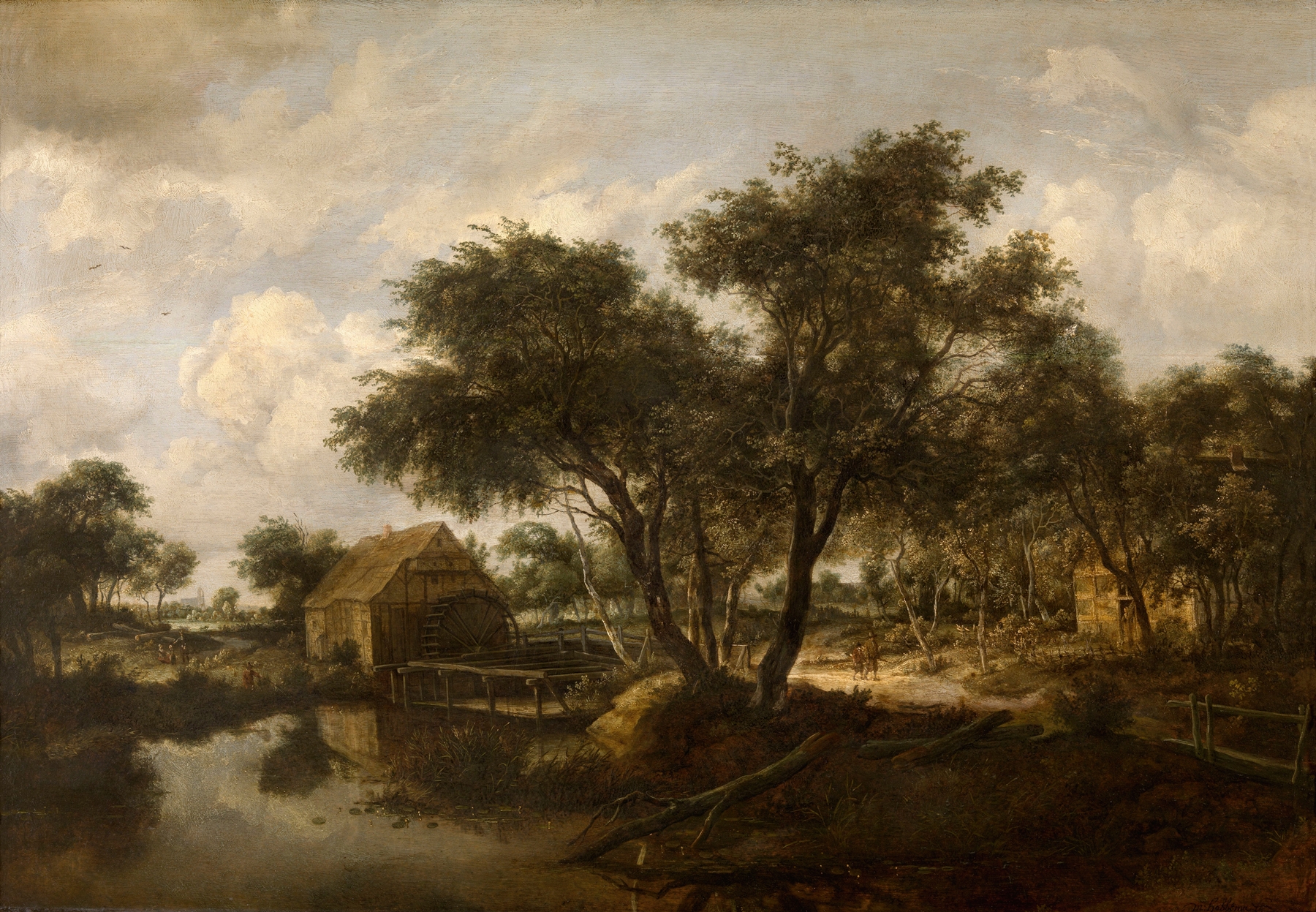
"Under the brush, chaos becomes grace." In A Watermill, the viewer is invited to witness nature’s symphony, where ecstasy flows effortlessly with every stroke of paint. Look to the left at the watermill, its sturdy wheel poised to embrace the cascading water. The sunlight dances upon the surface, creating a glittering cascade that contrasts with the dark wooden beams and the lush greenery enveloping it. The artist’s deft hand captures the vibrancy of the scene, each brushstroke breathing life into the grasses, reflecting an intricate blend of greens and browns that pulse with vitality.
Delve deeper, and you’ll discover a conversation between tranquility and industriousness. The flowing water, a symbol of life and continuity, juxtaposes the watermill's labor, embodying the harmony between nature and human endeavor. The distant figures, small in scale, engage in their daily tasks, evoking a serene coexistence, while a soft palette envelops the scene in an aura of peacefulness, inviting contemplation of life's simple pleasures.
Meindert Hobbema painted this pastoral scene around 1664, during a time when the Dutch Golden Age flourished and landscape painting gained prominence. Living in Amsterdam, he was influenced by the burgeoning appreciation for natural beauty and detailed realism in art, marking a pivotal moment in his career. The tranquility of the countryside, amidst a world of growing urbanization, resonated in his work, capturing the essence of a harmonious existence that still speaks to us today.