Aanbidding door de koningen — History & Analysis
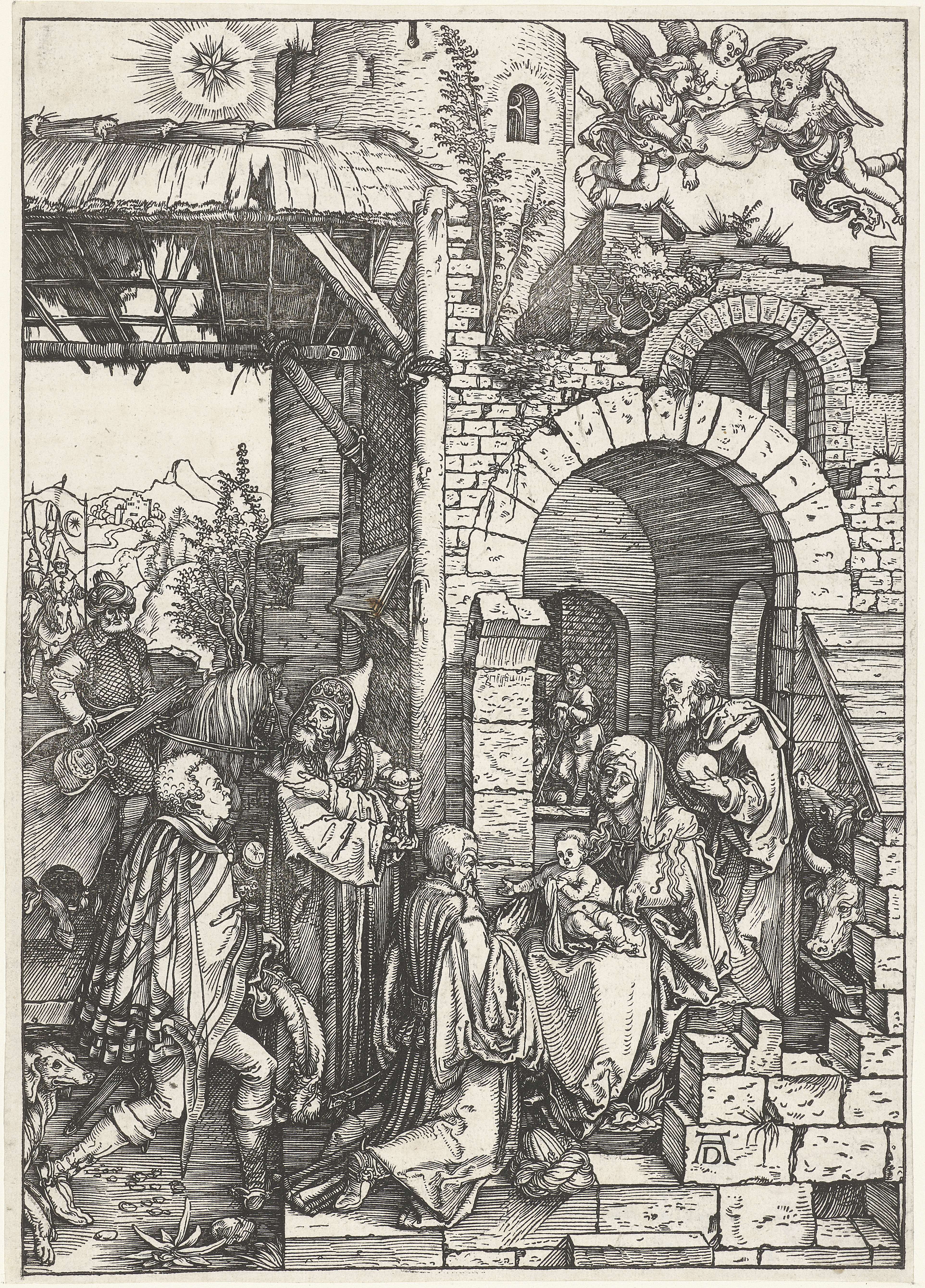
Can beauty exist without sorrow? The delicate interplay of light and shadow in *Aanbidding door de koningen* resonates with the profound yearning that often accompanies the search for grace and divinity. Focus on the central figures, where the kings present their gifts, their postures imbued with reverence and awe. Notice how the rich hues of gold and deep crimson drape over their bodies, creating a stark contrast against the pale, luminous visage of the infant. The intricacy of the garments speaks to both wealth and humility, inviting you to explore the texture and detail that Dürer so masterfully captured. The ethereal glow surrounding the Holy Child draws the eye, creating a focal point that radiates warmth, guiding the viewer through the composition. Yet, it is in the subtle details that deeper meanings unfold. The expressions on the kings’ faces reflect a complex tapestry of emotions—wonder interlaced with a hint of despair, as if they understand the gravity of their worship. The surrounding landscape, adorned with muted colors, hints at a world that exists beyond this moment of divine adoration, invoking a sense of longing for a connection to the everlasting. Each element, from the regal crowns to the humble offerings, suggests that beauty inherently carries the weight of sacrifice. Dürer created this piece between 1501 and 1505, during a period of personal and artistic evolution in Nuremberg. Emerging from the transitional phase of the Northern Renaissance, the artist was increasingly influenced by the intricacies of human emotion and the spiritual potency of his subjects. This work reflects his commitment to merging meticulous detail with profound thematic depth, establishing a legacy that would resonate far beyond his time.