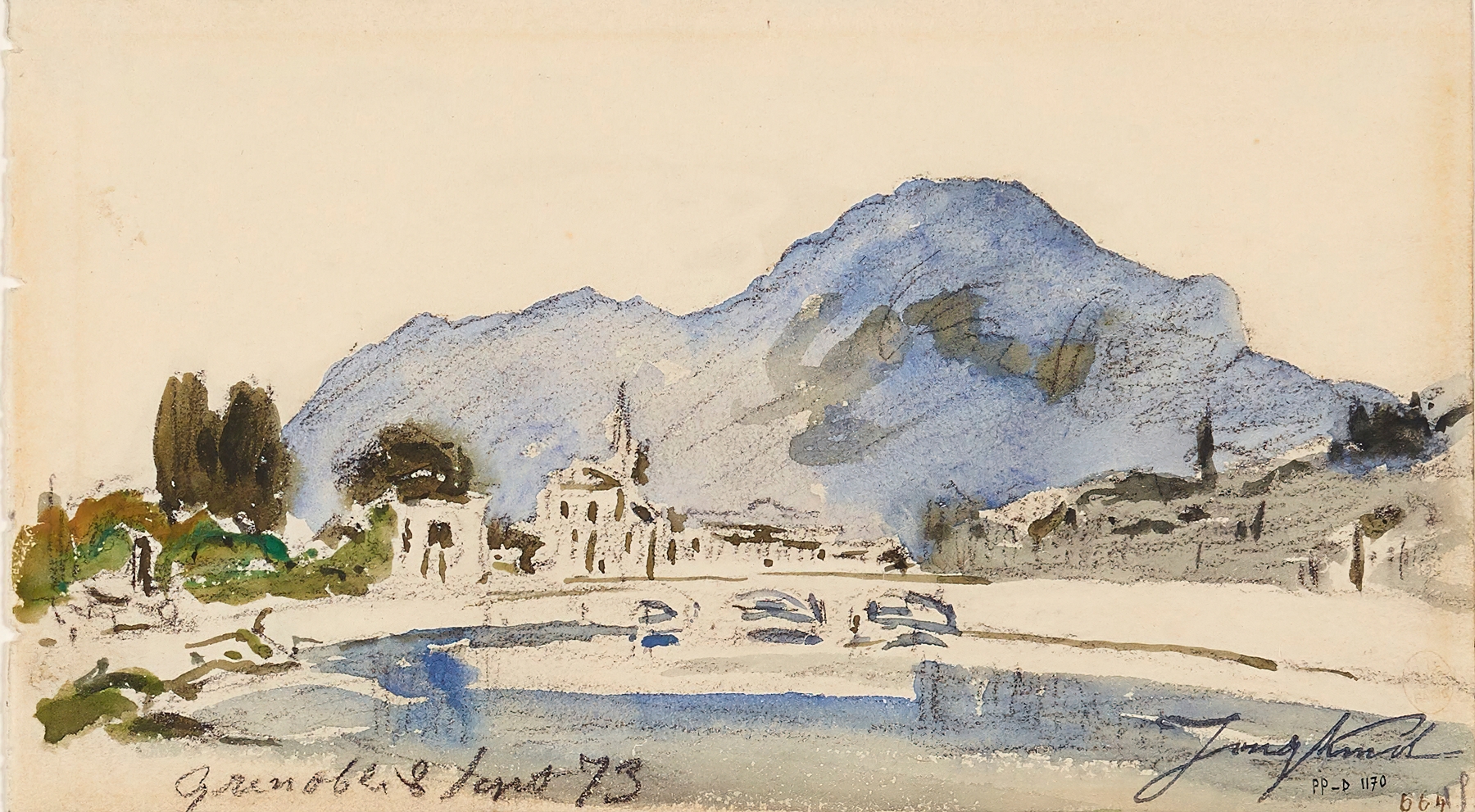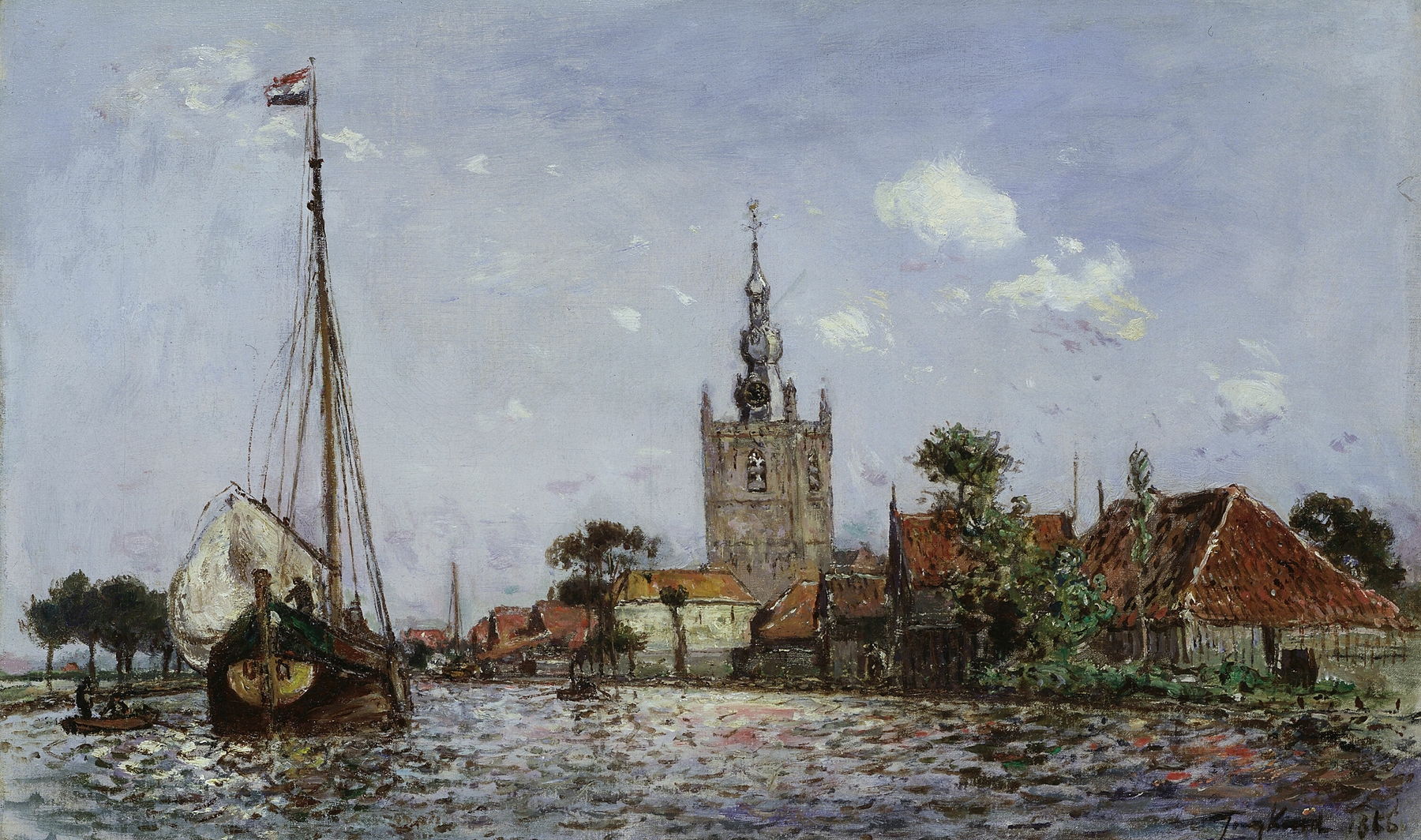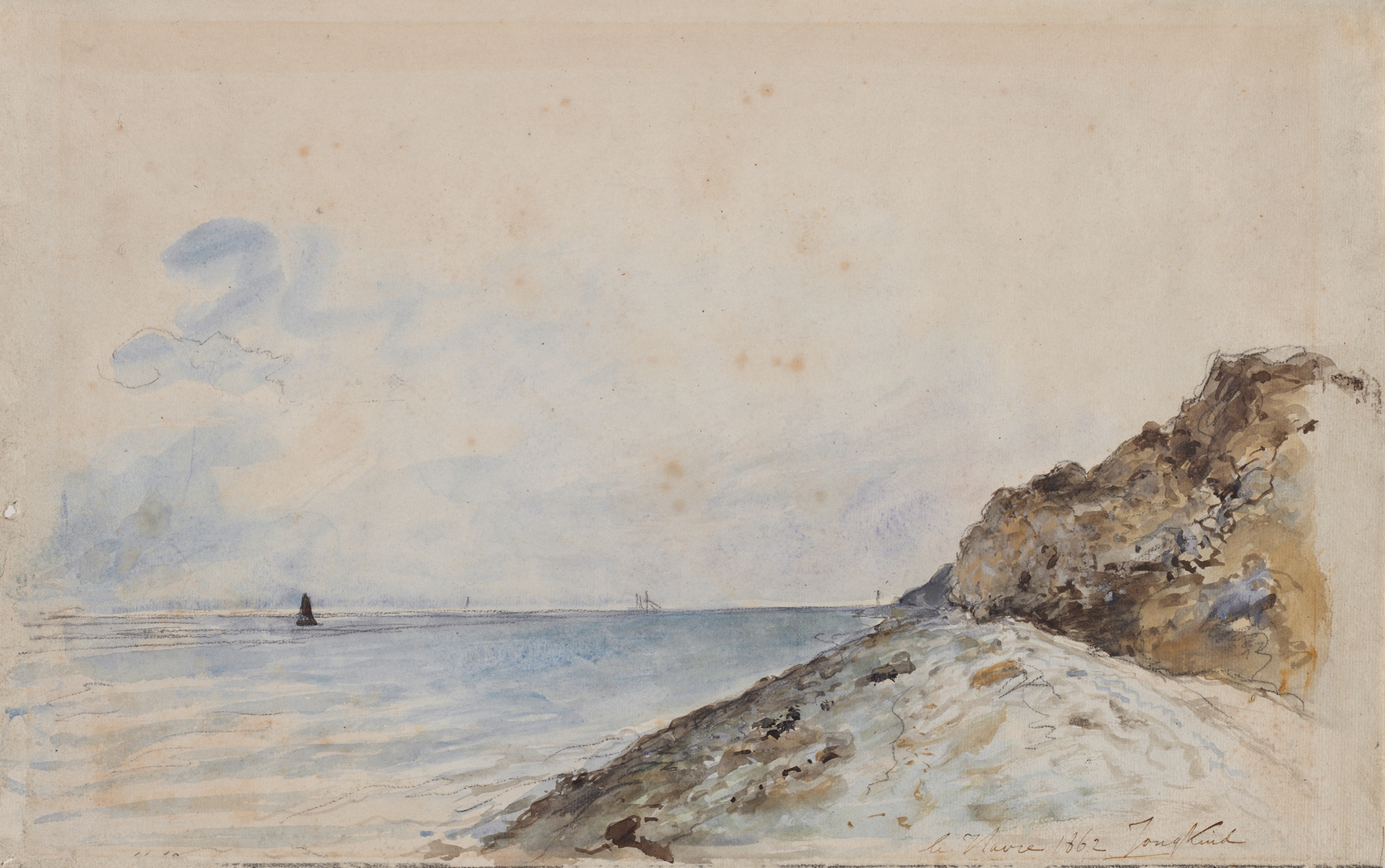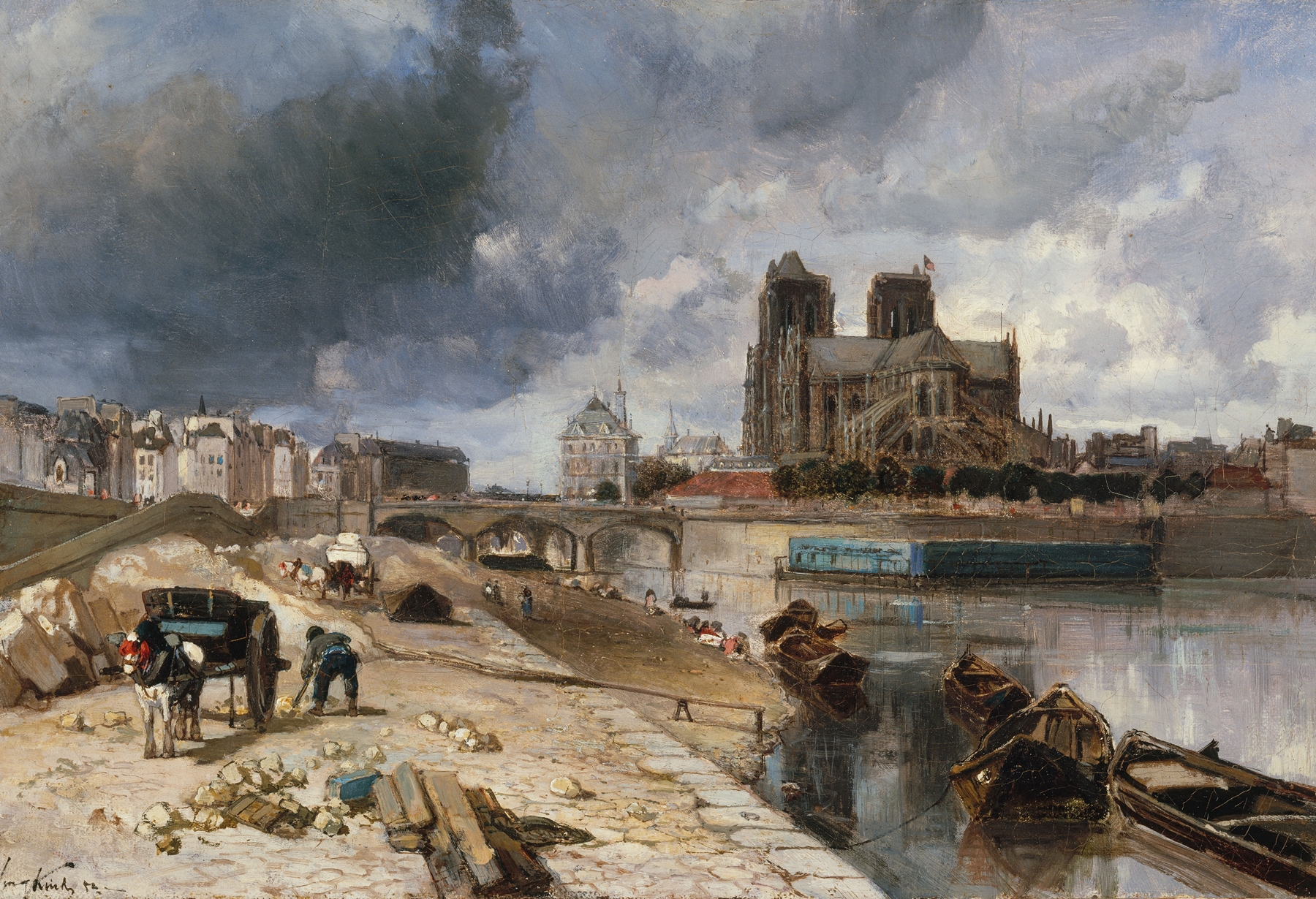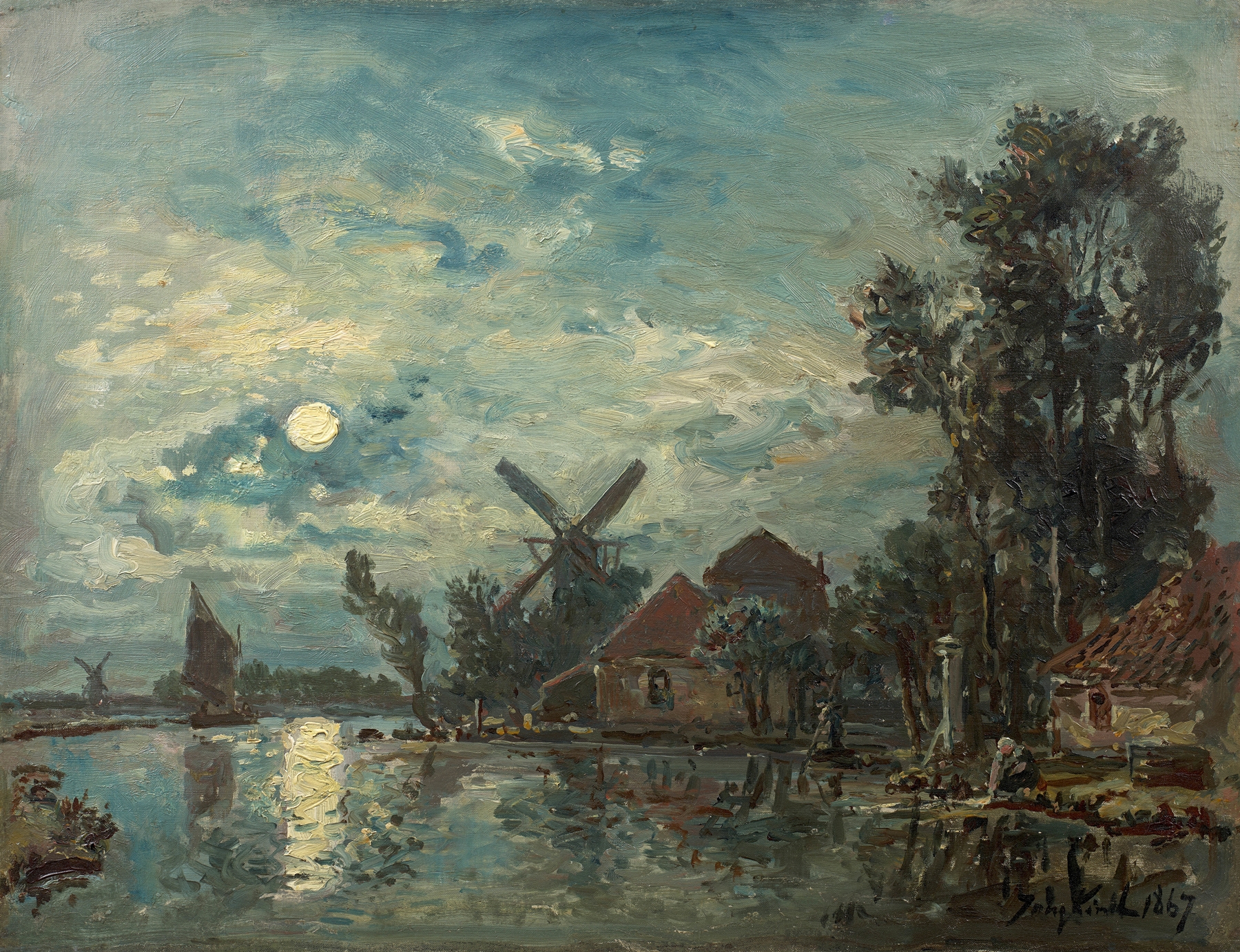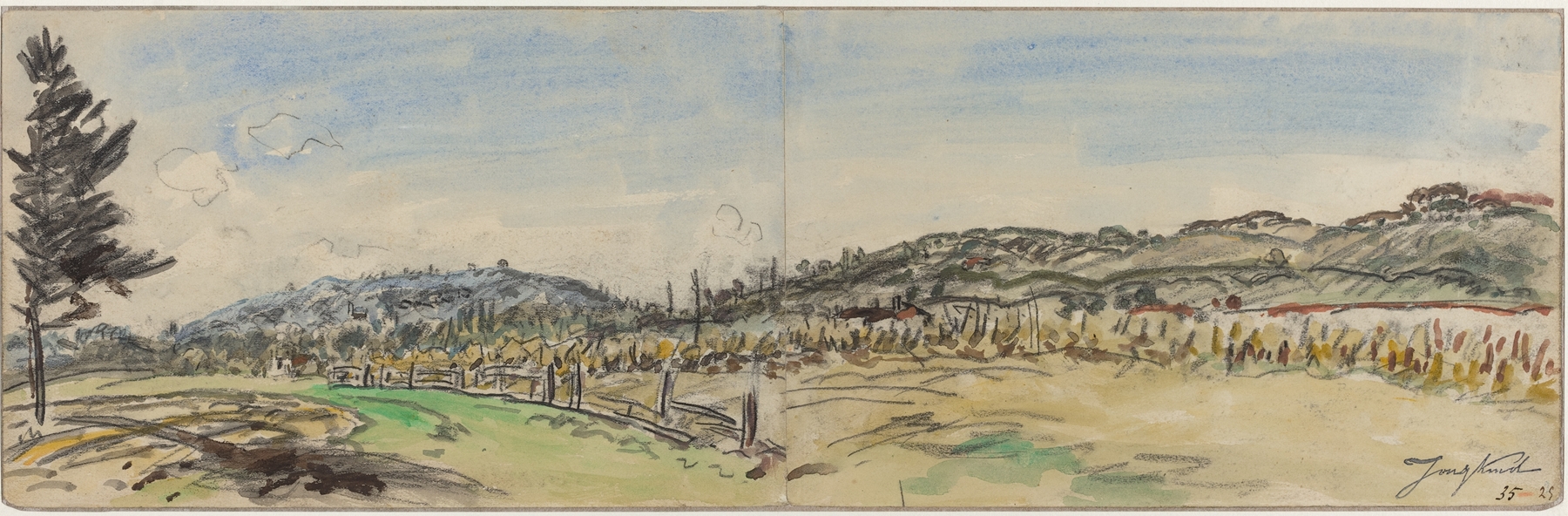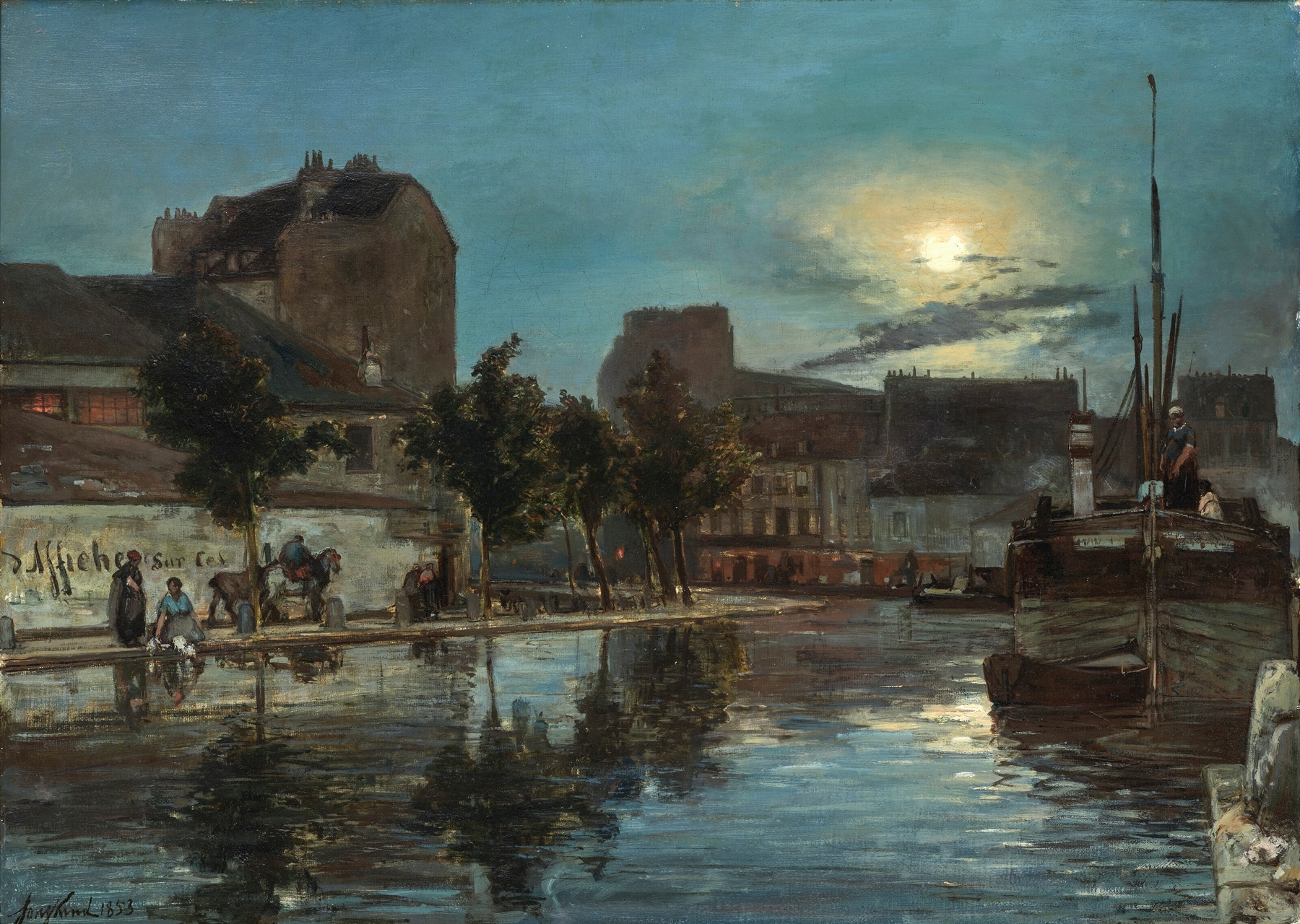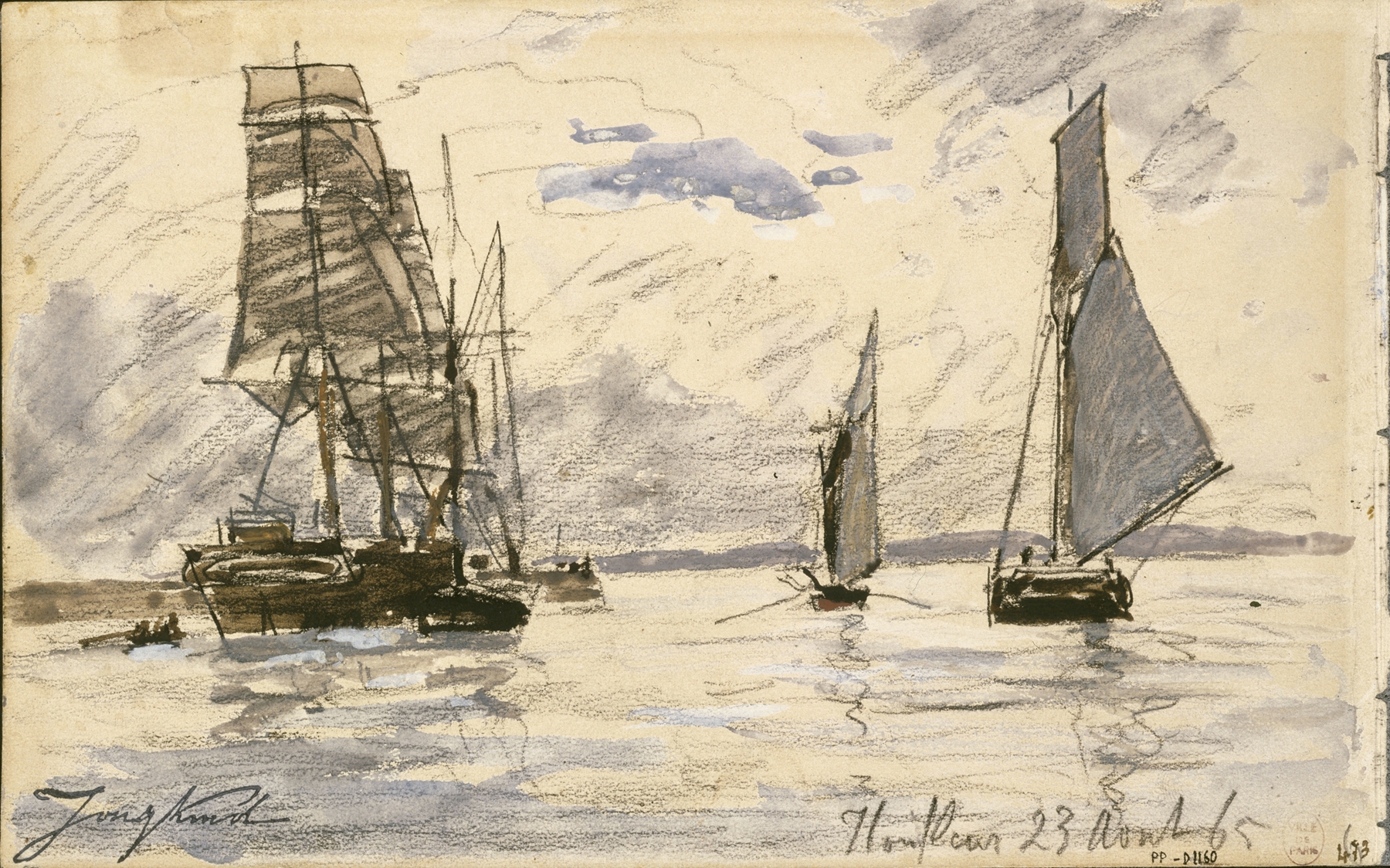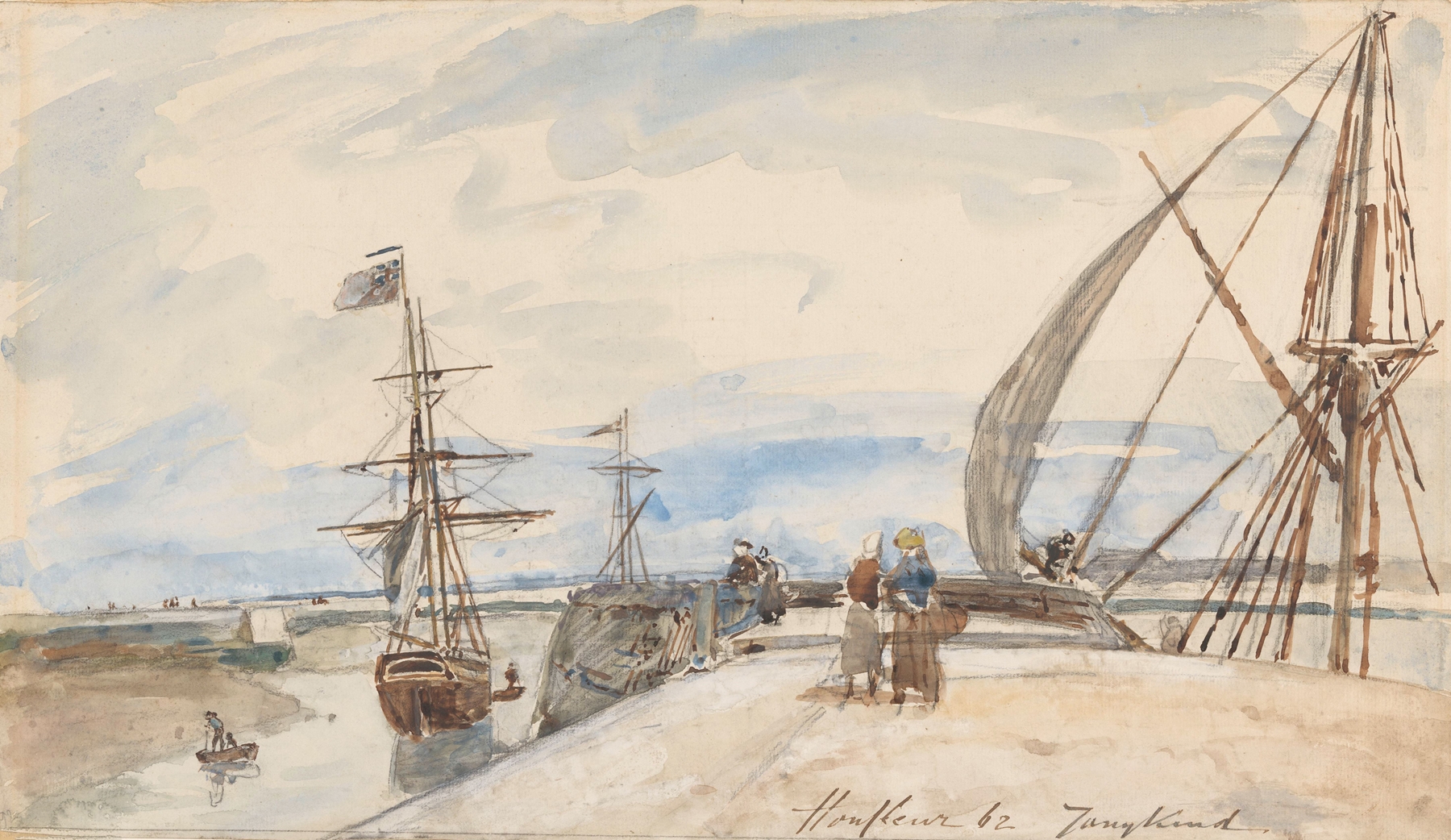
When did color learn to lie? In *Aanlegsteiger te Honfleur*, the vibrant hues cloak a deeper truth, a testament to obsession as both a muse and a tormentor. Look to the center, where the pier juts confidently into the water, its weathered planks textured against the shimmering surface. Notice how the interplay of blues and greens conspire with splashes of ochre to create a mood that oscillates between serenity and tension. The sun drapes itself over the scene, casting a golden light that dances on the rippling waves, inviting the eye to explore both foreground and horizon. Yet, beneath this harmonious facade lies an emotional tug-of-war. The boats, tethered yet restless, symbolize the artist's own struggle with freedom and constraint. The delicate balance of light and shadow suggests a world caught between reality and the imaginative pull of the sea. Each brushstroke speaks to Jongkind's fervor, capturing the way obsession can distort perception, making the ordinary appear extraordinary. In 1862, Jongkind was living in France, at a time when impressionism was beginning to emerge, and he was influenced by the changing tides of artistic thought. His dedication to plein air painting reflected a burgeoning desire to express nature’s ephemerality. This was a period of both personal experimentation and professional uncertainty, as he navigated the evolving landscape of contemporary art, forever striving to frame what lay beyond the surface.