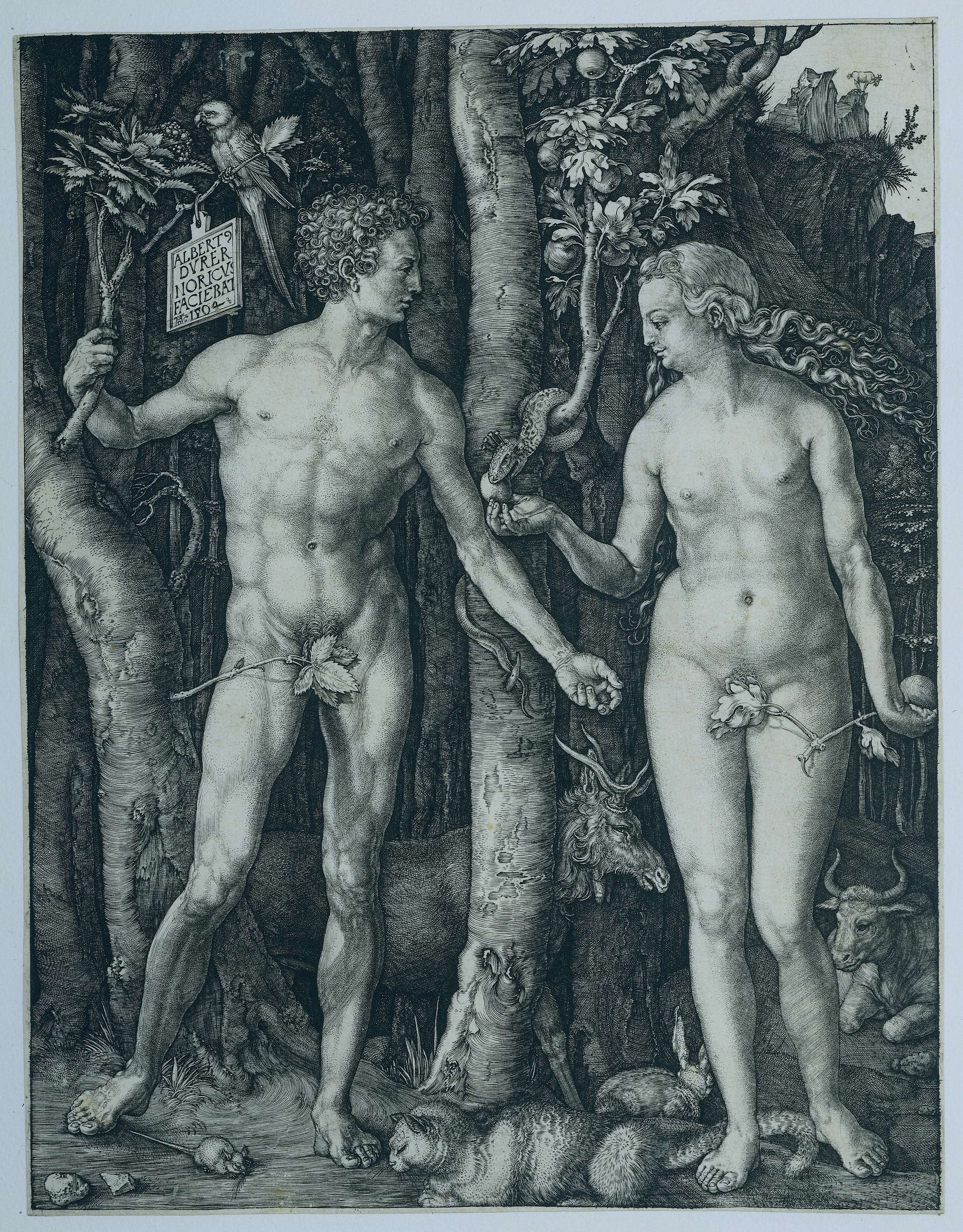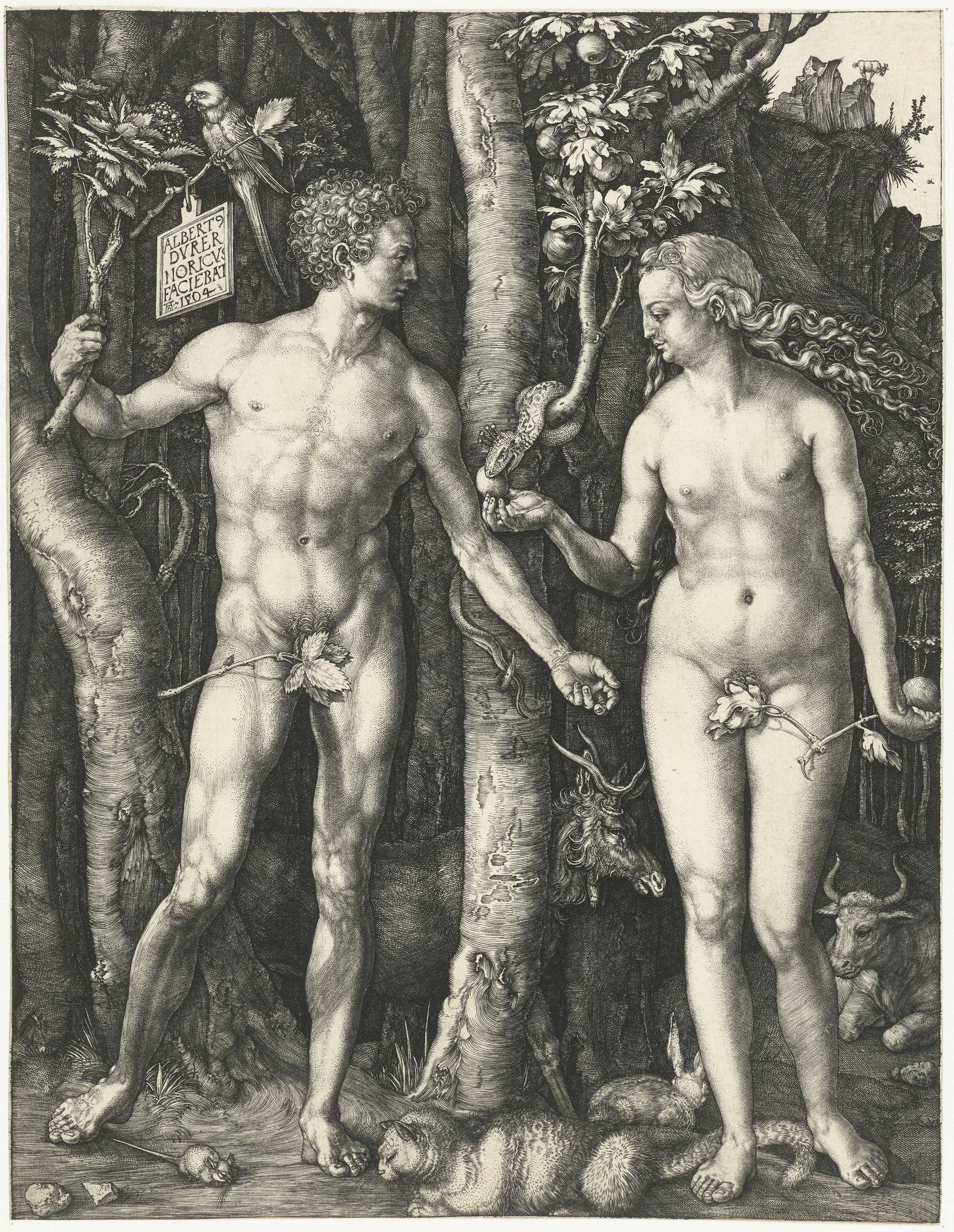
Can beauty exist without sorrow? Dürer’s *Adam en Eva* invites us to ponder the fragile balance between innocence and the inevitable fall from grace. Look to the center of the composition, where Adam and Eve stand in exquisite harmony, their bodies entwined amid a lush paradise. Notice how the delicate details of their skin glow under the soft light, enhancing their serene expressions. The intricately rendered foliage around them bursts with life, while the subtle use of color accentuates the warmth of their forms against the verdant backdrop. The juxtaposition of their perfect figures with the faint silhouette of the serpent lurking nearby foreshadows the tension that lies beneath the surface. In this masterpiece, innocence is portrayed as both a blessing and a precursor to loss. The curious gaze of Eve as she reaches for the forbidden fruit embodies the allure of temptation, while Adam’s protective stance reflects the weight of choice. Each element—the contrasting textures of skin and bark, the gentle curves of their bodies against the angled branches—articulates the complexity of human desire and the fragility of paradise. The composition vibrates with the tension between the beauty of creation and the looming shadow of transgression. Dürer created *Adam en Eva* in 1504 in Nuremberg, at a time when the artist was emerging as a leading figure in the Northern Renaissance. This period was marked by a growing interest in humanism and the revival of classical themes, and Dürer’s work reflected this intellectual climate. The painting is not only a testament to his technical prowess but also a commentary on the human condition, merging philosophical inquiry with aesthetic beauty at a pivotal moment in art history.