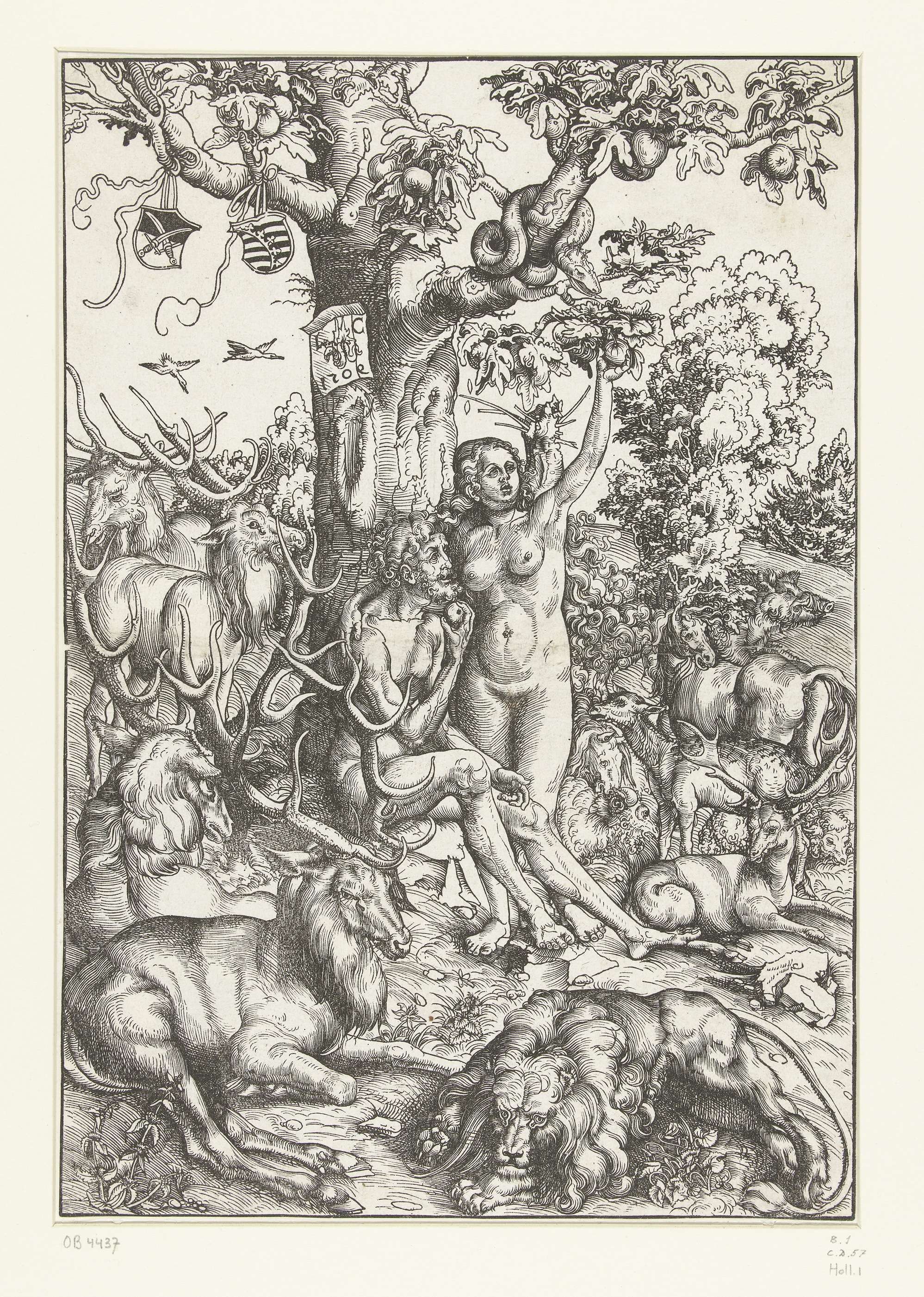
Adam en Eva omringd door dieren in paradijs — History & Analysis
What secret hides in the quiet of the canvas? In a world where chaos reigns, serenity beckons us to pause and reflect on the harmony between humanity and nature. Look to the center of the composition, where Adam and Eve stand in a gentle embrace, their forms radiating an unspoken peace. Notice how the artist employs soft, earthy tones to create a lush paradise, with verdant greens enveloping the figures, suggesting a profound connection to the land.
The intricate detailing of the surrounding animals, from delicate birds perched on limbs to the watchful gaze of a lion, invites the viewer to consider the balance and innocence of this idyllic moment. In this work, the juxtaposition of human vulnerability and the strength of nature unfolds. The serene expressions of Adam and Eve seem to convey both contentment and a fragile awareness of the delicate beauty surrounding them. The diverse fauna, each animal representing a facet of creation, hints at an underlying unity, while also foreshadowing the complexities of desire and temptation that lie ahead.
Lucas Cranach (I) painted this piece in 1509, during a time when the Renaissance was redefining humanity’s place in the universe. Working in Wittenberg, he was influenced by the burgeoning Reformation and the desire for religious and personal expression. This artwork reflects both the artistic innovation of the age and the philosophical contemplations of creation itself, capturing a moment before innocence is inevitably lost.