Zondvloed en ark van Noach — History & Analysis
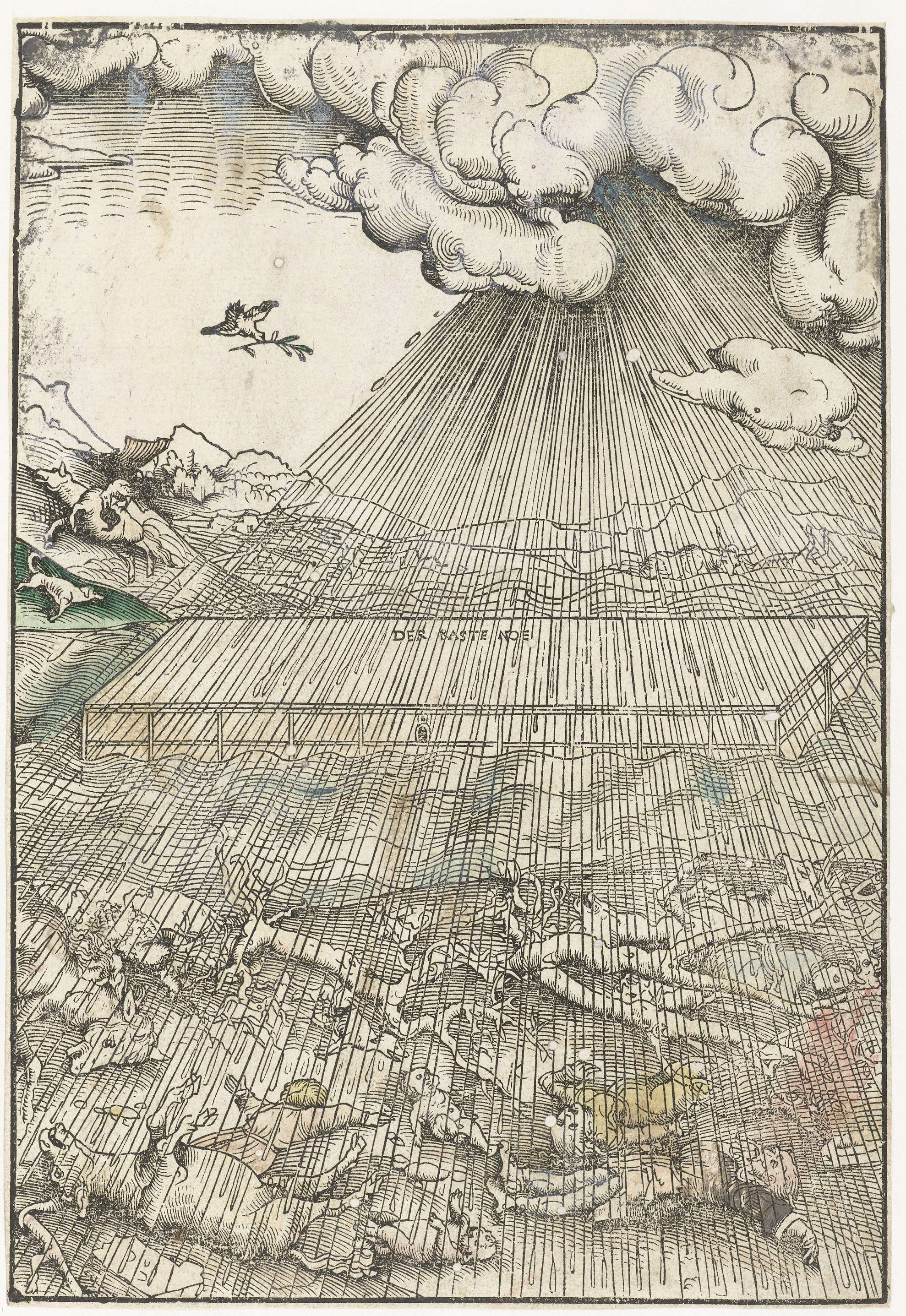
Who listens when art speaks of silence? In *Zondvloed en ark van Noach*, the palpable fear of humanity's fate looms over the canvas, inviting the viewer to ponder the weight of consequence and belief. Focus first on the figure of Noah, poised in the center, as he stands resolute against the encroaching chaos of the flood. The twisting forms of those around him—some in despair, others in frantic motion—contrast with his calm demeanor. Notice how the muted earth tones dominate the composition, interspersed with flashes of blue representing the rising waters, evoking a foreboding atmosphere. Light filters through the tumultuous sky, casting a haunting glow that highlights the tension between hope and hopelessness in the faces surrounding the ark. Delve deeper into the painting’s emotional landscape, where the despair in the eyes of the drowning figures contrasts sharply with Noah’s unwavering hope. The ark itself, a symbol of salvation, is dwarfed by the overwhelming elements, yet it stands as a testament to resilience amidst divine judgment. Each detail—the anguished gestures, the terrified expressions—serves as a reminder of the fragility of existence and the relentless grip of fear that binds humanity. Lucas Cranach (I) created this work between 1523 and 1526, a period marked by the Protestant Reformation, which stirred profound religious introspection throughout Europe. Set against this backdrop, the painting reflects his engagement with themes of faith and morality, while also engaging with the stylistic changes of the Northern Renaissance, emphasizing dramatic emotion and intricate detail in his storytelling.