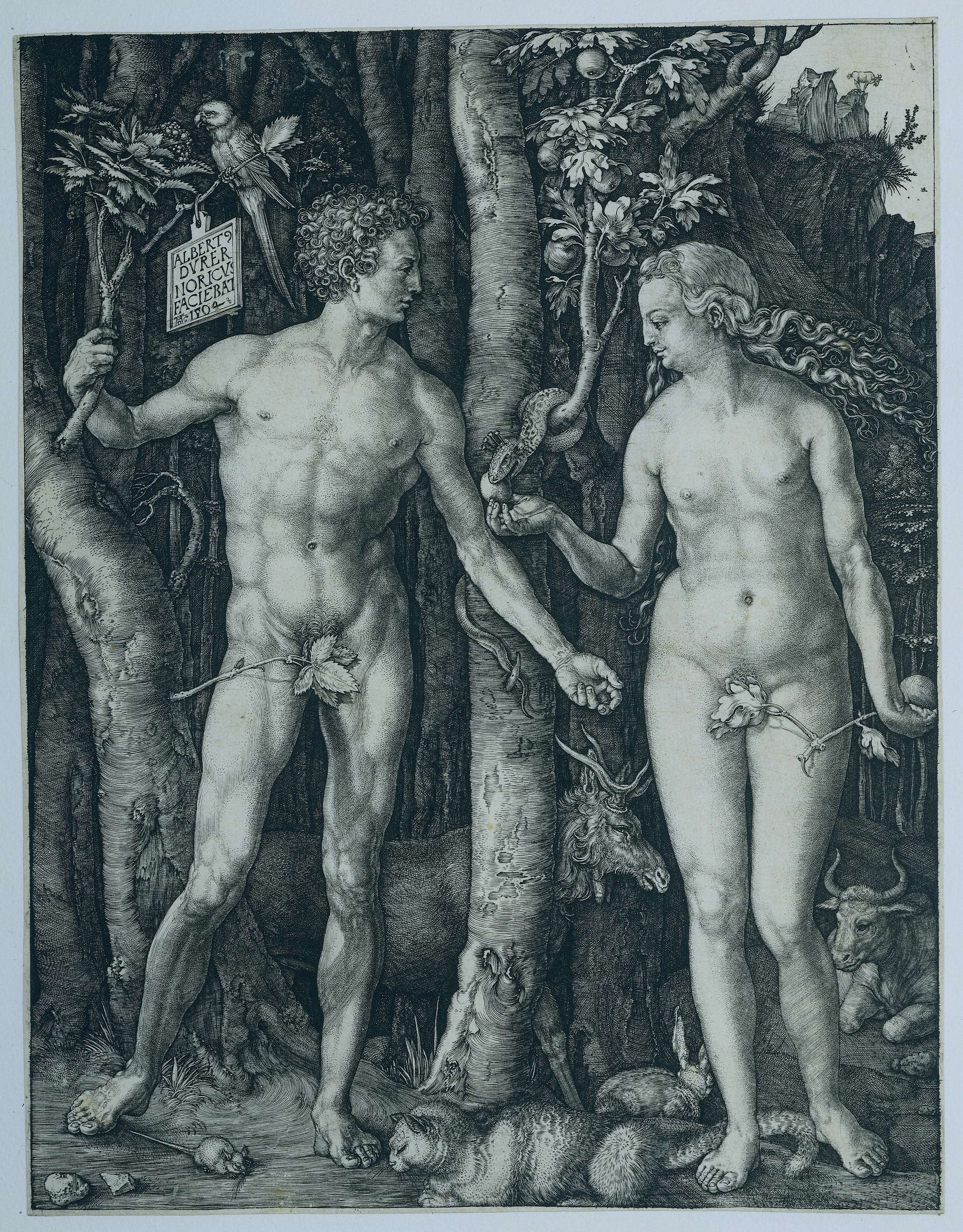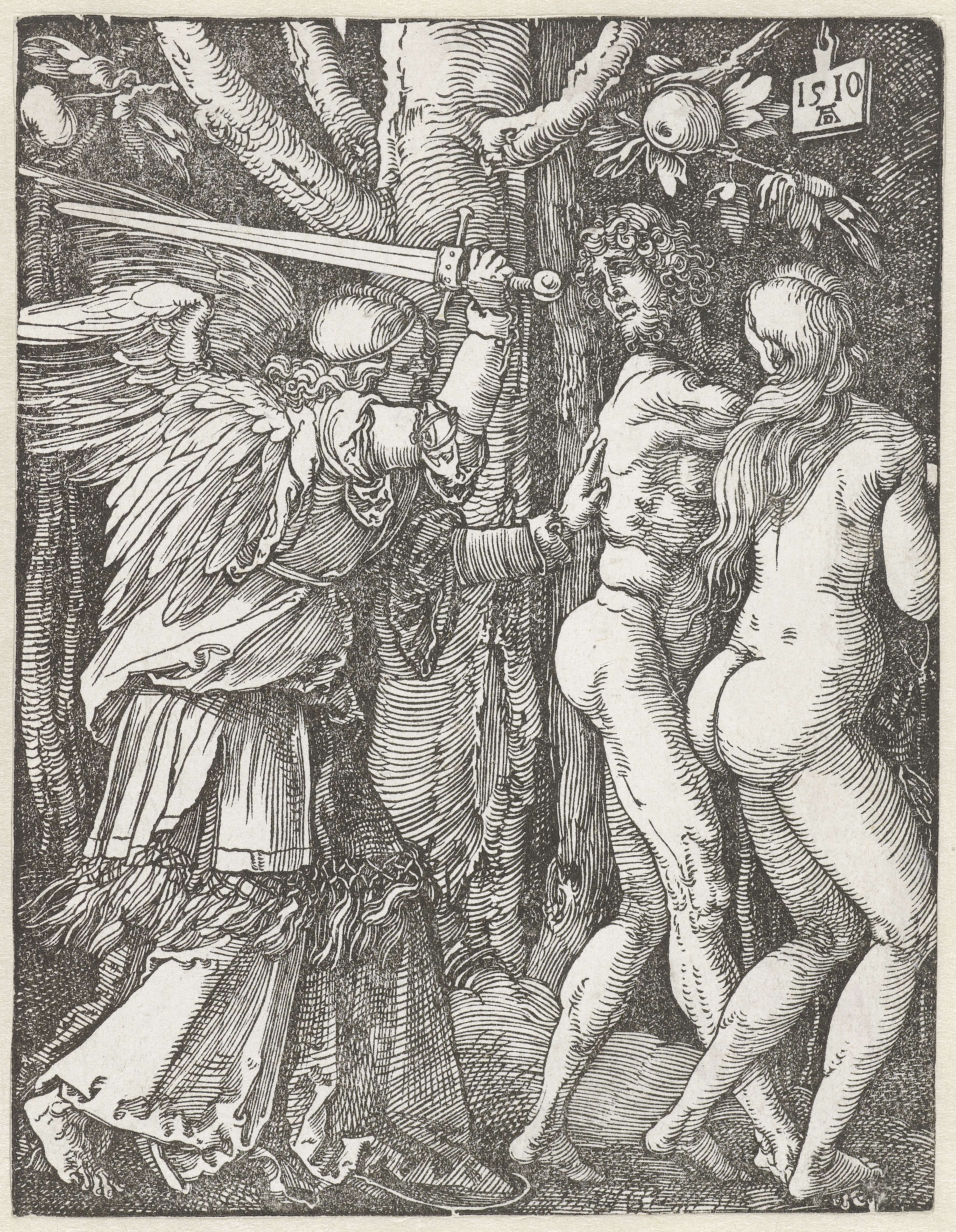
Can paint confess what words never could? In Albrecht Dürer’s *Adam en Eva verdreven uit het paradijs*, the sublime beauty of humanity and its profound loss are laid bare, invoking both admiration and sorrow. The figures of Adam and Eve, poised at the brink of their fateful expulsion, embody the poignant contrast of innocence lost and the weight of consequences. Look to the center of the composition, where the figures are dramatically rendered—Eve, with her cascading hair and trembling hands, seems to reach for the unreachable, while Adam’s face reflects an anguished realization. Notice how the light bathes their skin in warm hues, juxtaposing the cool blues and grays of the surrounding landscape, emphasizing their isolation in a once-familiar world. The meticulous detailing of foliage and the distant arch of the gate create a sense of foreboding, inviting the viewer to consider the complexity of their plight. Beneath the surface, themes of beauty and despair intermingle. The lush garden, filled with vibrant flora, symbolizes paradise and temptation, yet the looming presence of the serpent hints at the fragility of perfection. In their naked vulnerability, Adam and Eve reveal the duality of human nature—primal innocence starkly contrasted with the burden of knowledge. This emotional tension becomes a reflection of humanity’s eternal struggle between desire and consequence. Dürer painted *Adam en Eva verdreven uit het paradijs* in 1510, during a time when Northern Renaissance art was flourishing, channeling meticulous detail and emotional depth. The artist, in his workshop in Nuremberg, sought to explore complex narratives through a lens of naturalism. This work emerged amidst the shifting tides of religious thought, as the Reformation began to influence cultural and artistic expressions across Europe, positioning Dürer as a pivotal figure in a transformative era.