After the Passage of the Front — History & Analysis
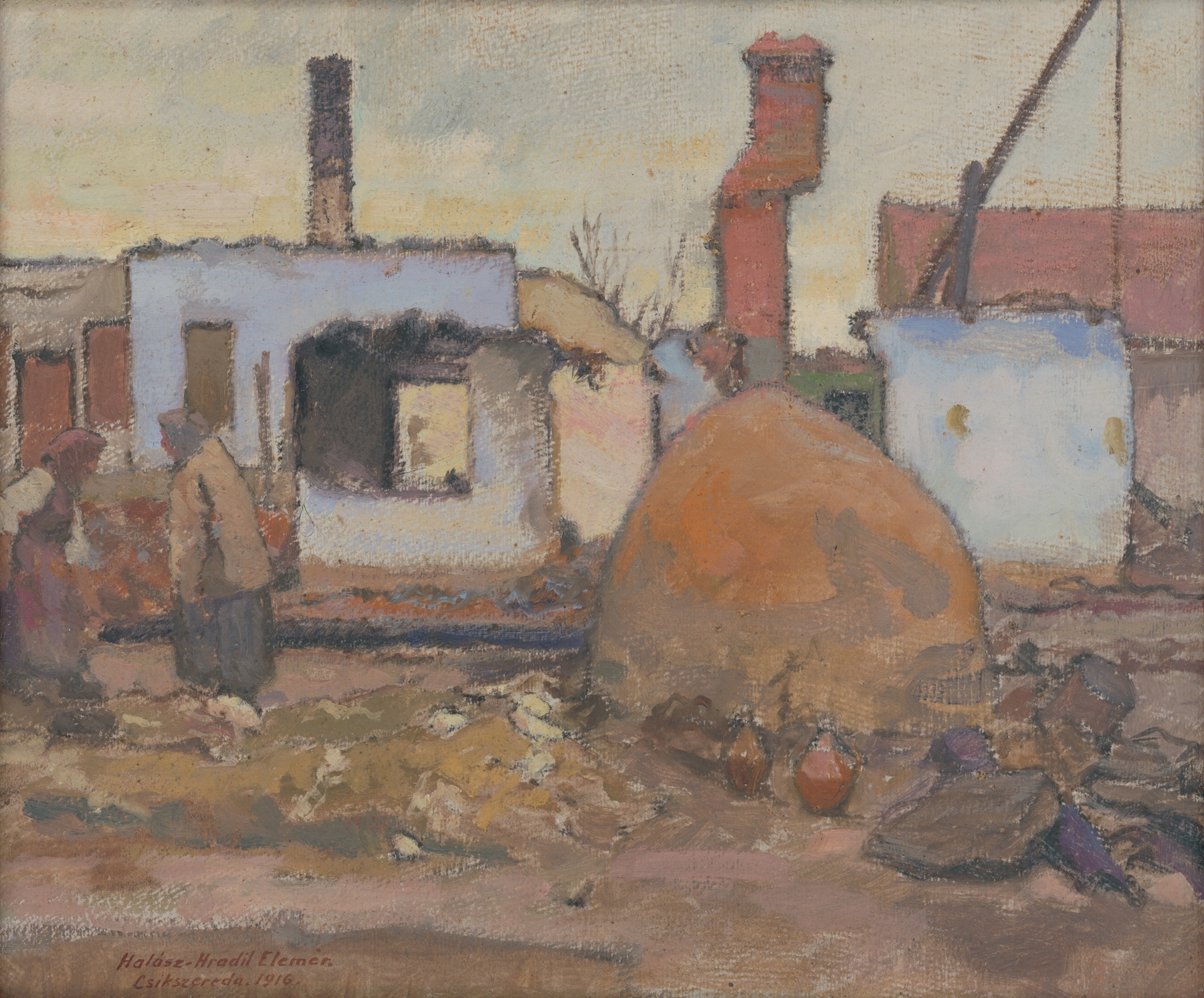
Could a single brushstroke hold eternity? In Elemír Halász-Hradil's After the Passage of the Front, vivid reflections swirl in a dance that transcends the confines of time and space, inviting the viewer to wade through the layers of meaning beneath the surface. Look to the center of the canvas, where a tumultuous battlefield is enveloped in rich hues of red and deep blue. The brushwork is both frenetic and deliberate; strokes collide and merge, suggesting movement and chaos.
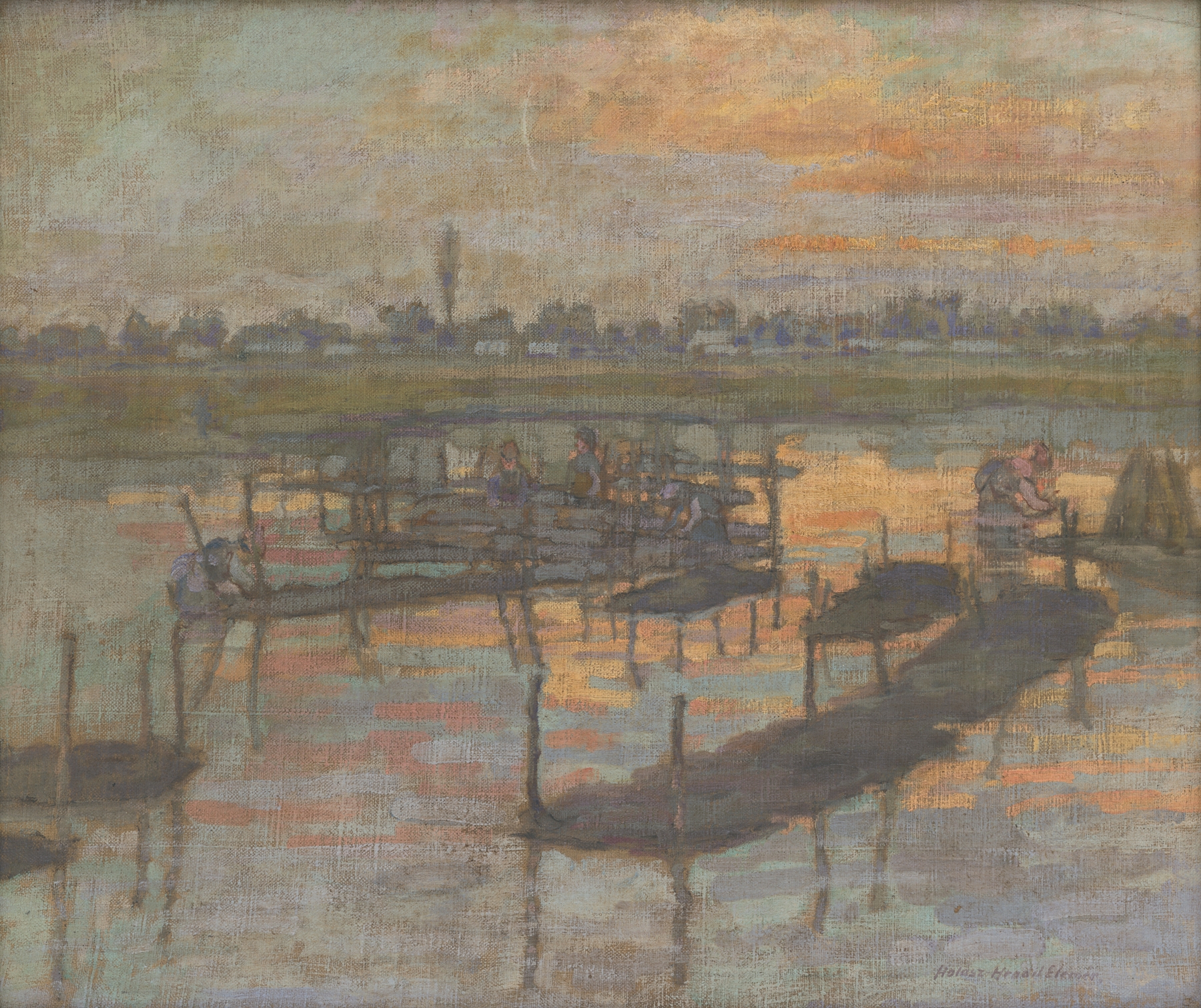
Notice how the light falls across the figures — soldiers and civilians alike — their faces illuminated by an otherworldly glow that hints at hope amidst despair. The composition balances the weight of darkness and light, guiding the eye away from the chaos to the shimmering reflections, where a sense of quiet introspection emerges. The emotional tension in this piece is palpable, as the artist contrasts the violence of war with the reflective serenity of water, a metaphor for both loss and resilience. Each figure appears suspended in a moment of contemplation, caught between the past and the uncertain future.
The reflections carry the weight of memory — they serve as a haunting reminder of what has been lost while suggesting the possibility of rebirth through reflection and understanding. Created during a tumultuous period in 1916, Halász-Hradil painted After the Passage of the Front while navigating the complexities of World War I in Europe. Living in Prague, he was deeply affected by the strife around him, and his work reflects a response to the horrors of conflict and the search for deeper meaning in human experience. This piece captures a moment of stark duality, where chaos and reflection coexist, echoing the artist’s profound understanding of the human condition.