Self-Portrait — History & Analysis
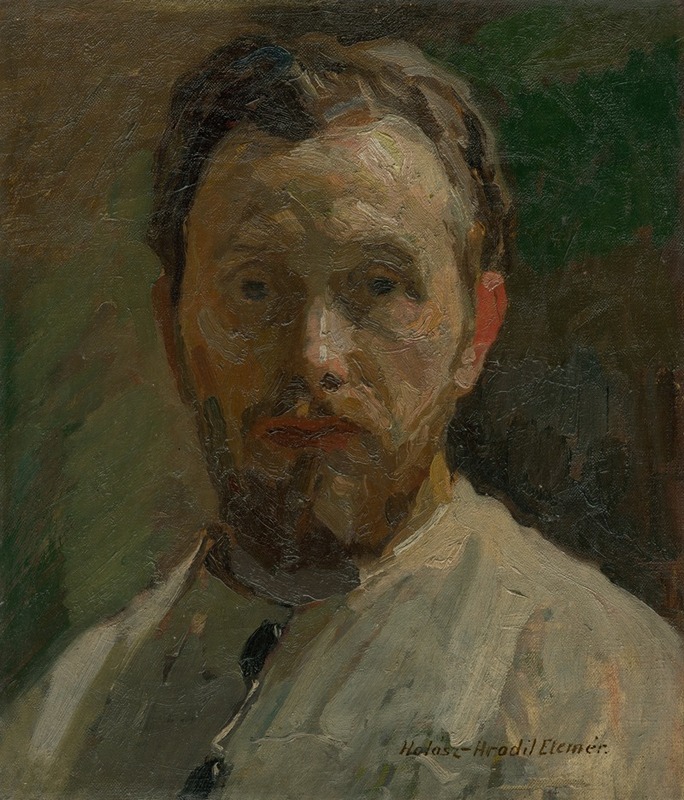
Could a single brushstroke hold eternity? In the depths of a canvas, where the artist's essence intertwines with the divine, a powerful presence emerges, inviting introspection. Look closely at the intense gaze that Halász-Hradil captures in the mirror of his own creation. Notice how the light falls upon the contours of his face, illuminating the soft shadows that whisper secrets of vulnerability and strength. The chiaroscuro technique brings depth, emphasizing not just the physical form but the emotional landscape of the soul.
The rich palette of earth tones and muted blues wraps the figure in an atmosphere both somber and contemplative, drawing you into the artist’s inner world. Amidst the painting's simplicity, tensions unfold. The juxtaposition of the artist's gaze—a blend of confidence and uncertainty—hints at the eternal struggle between self-perception and public persona. The subtle brushwork reveals details that speak to the fragility of existence, while the solidity of the composition suggests a yearning for immortality.
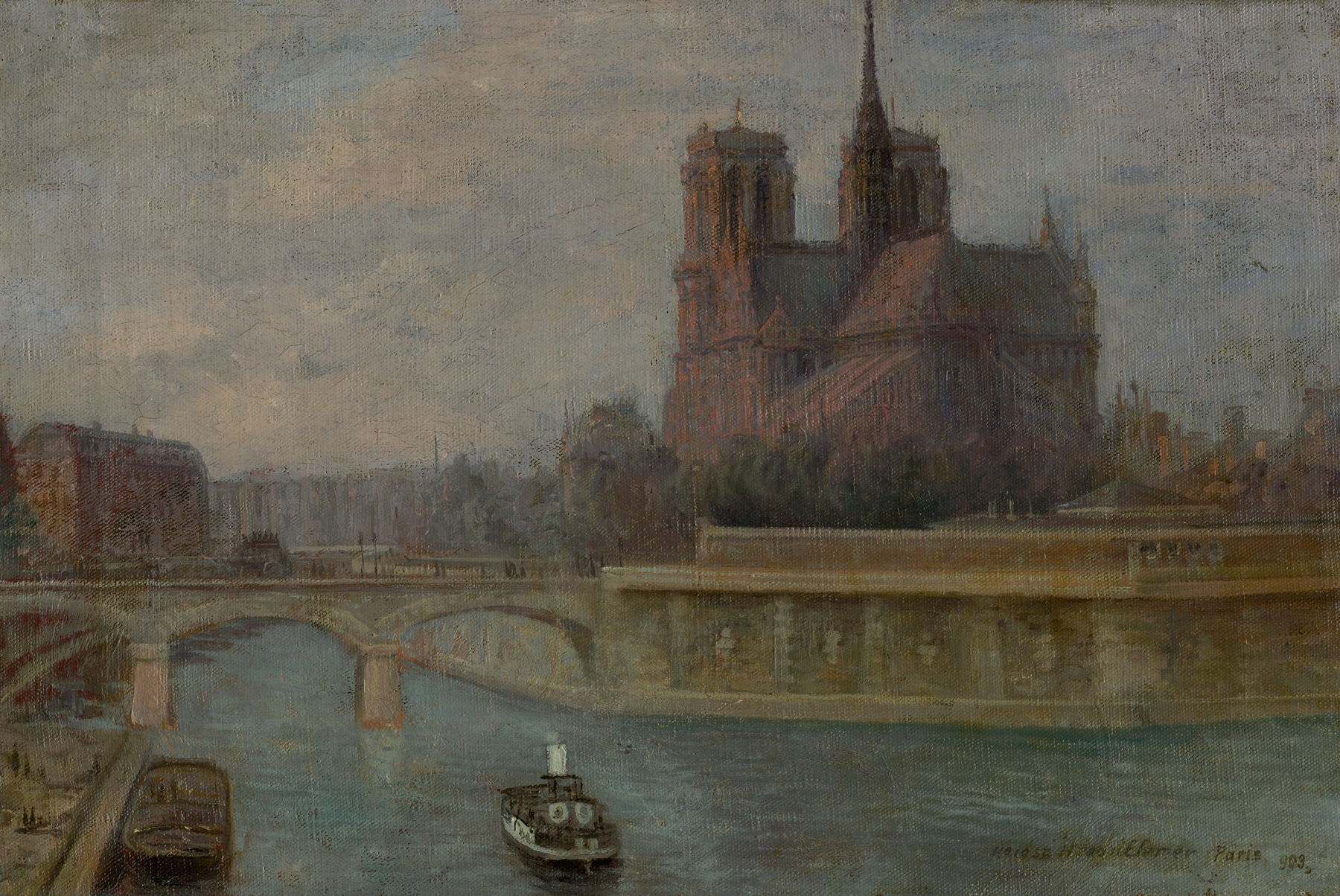
Every stroke becomes a prayer, a testament not only to the self but to the divine essence inherent in creativity. In 1903, Halász-Hradil painted this self-portrait during a time when he was exploring his identity within the broader context of the burgeoning modern art movement. Living in Paris, he sought to redefine the traditional boundaries of portraiture amidst an atmosphere ripe with innovation. As a pivotal moment in his career, this work encapsulates a dialogue between the personal and the universal, reflecting both his inner struggles and the evolving landscape of art.