Interior of St. Elisabeth Cathedral — History & Analysis
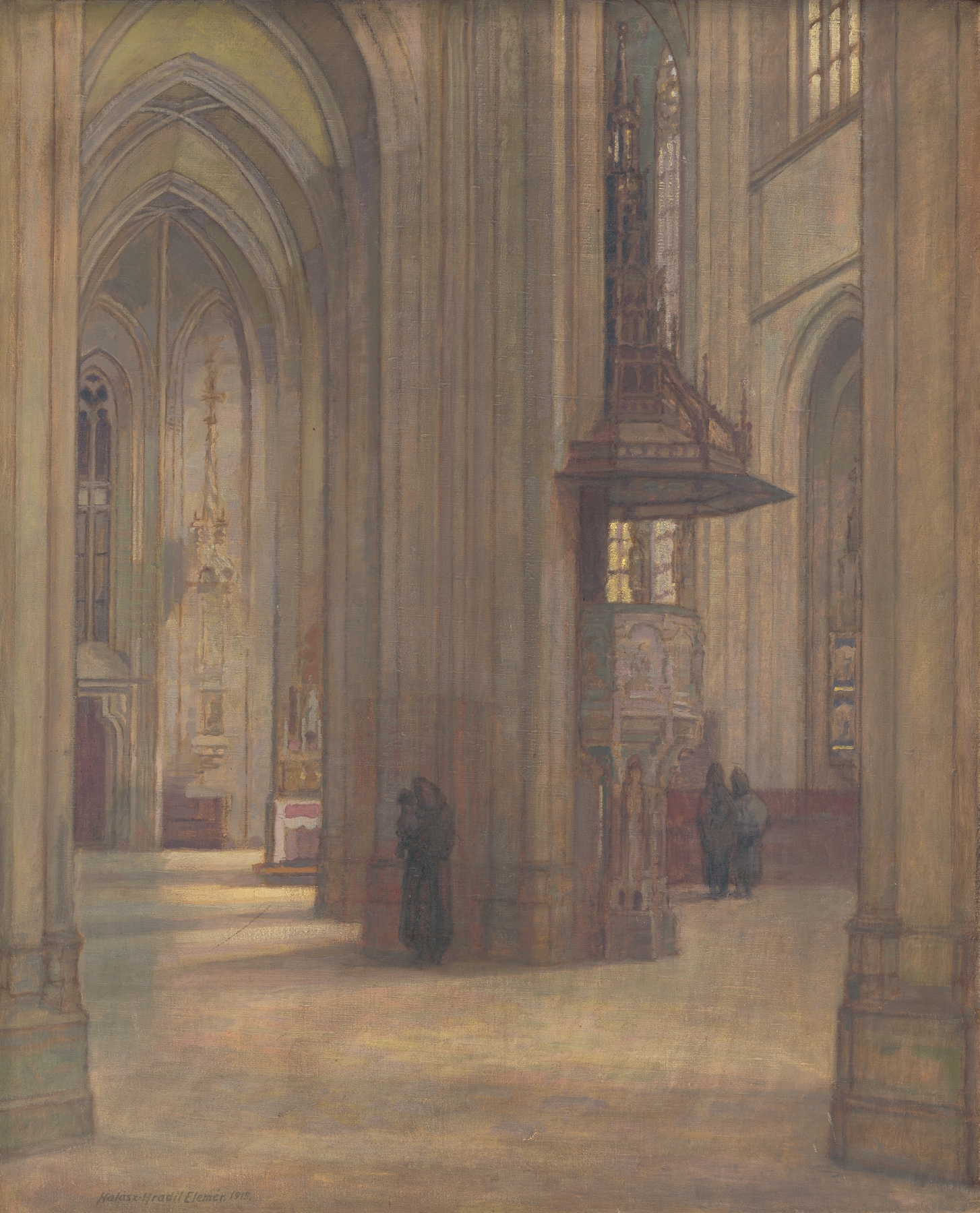
Is this a mirror — or a memory? Within the walls of Interior of St. Elisabeth Cathedral, the passage of time hangs heavy, whispering secrets of decay and devotion. Focus on the intricate play of light streaming through stained glass, illuminating the dust particles that dance in the air.
Look closely at the sweeping arches that reach toward the heavens, their softness contrasting the sharp lines of the stonework. The deep, muted colors evoke both reverence and a sense of melancholy, each hue a reminder of the past and the impermanence of beauty. Amidst the grandeur, small details beckon reflection: the cracked surfaces of the altar, the forgotten corners where shadows linger, and the fading frescoes that tell stories of saints and sinners alike. This interplay of hope and despair encapsulates the essence of human experience — a reminder that even sacred spaces are not immune to the relentless passage of time.
In 1919, Elemír Halász-Hradil painted this work amidst the turmoil of post-World War I Europe, a time when cultural rebirth and loss coexisted. The artist sought to capture the spirit of renewal while acknowledging the scars left by conflict. His exploration of both reverence and decay reflects a broader dialogue in the art world, where artists grappled with the remnants of the past and the longing for an uncertain future.