Allegorie met het wapenschild van het keizerrijk en twee wapenschilden van de stad Neurenberg — History & Analysis
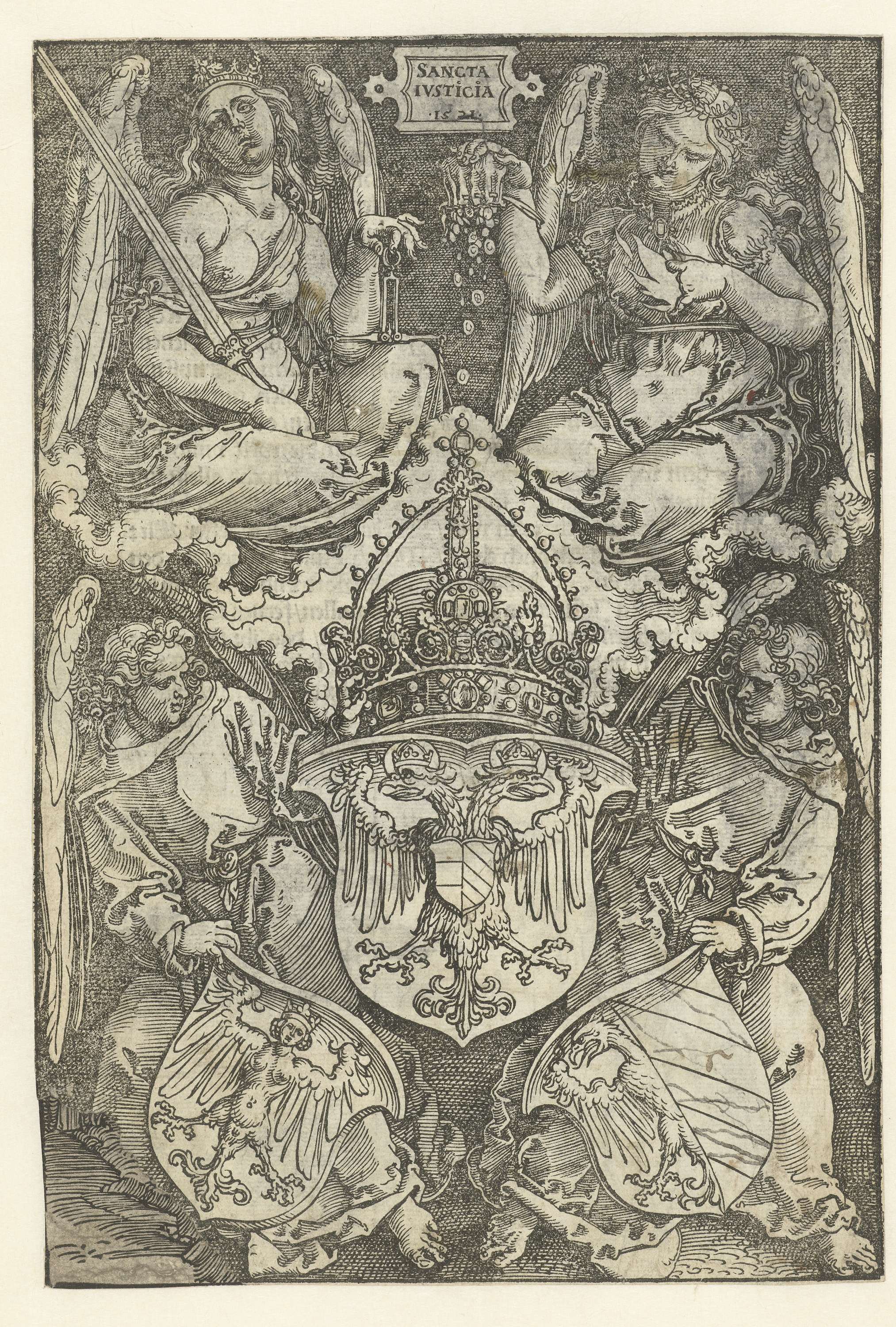
Can beauty exist without sorrow? In Allegorie met het wapenschild van het keizerrijk en twee wapenschilden van de stad Neurenberg, Albrecht Dürer wrestles with this profound question, weaving an intricate tapestry of symbolism and emotion that speaks to the loneliness residing within grandeur. Look to the center, where the imperial crest commands attention, surrounded by the two shields of Nuremberg. The meticulous detailing and vibrant colors evoke a sense of pride, yet the stillness of the composition carries an air of isolation.
Notice how the light caresses the surfaces, lending a soft glow that contrasts with the deep shadows lurking around the edges, creating a haunting beauty that invites contemplation. Within this powerful imagery lies a whisper of the burdens carried by power. The juxtaposition of the majestic crest with the city’s shields hints at the weight of responsibility and the loneliness that often accompanies heritage. The insignia's polished surface belies the troubled history of empires, alluding to the fragility of glory and the solitude found within it.
Each element, meticulously crafted, reflects Dürer’s understanding of how beauty can be both a celebration and a poignant reminder of what is lost. Created in 1521, this work emerged during a time of significant change for Dürer. Living in Nuremberg, he was deeply influenced by the evolving political landscape and the growing tensions of the Reformation. As he grappled with the implications of beauty and power, this piece crystallized a moment where art became a vessel for deeper existential exploration, reflecting both his personal struggles and the larger societal shifts around him.