
Allegory of the Catholic Faith — History & Facts
Her left arm lies on the edge of a table, where a golden chalice, a large open book, and a dark crucifix are carefully arranged. A crown of thorns rests atop the book, while a long strip of cloth, possibly a priest’s stole, emerges from beneath it and spills over the edge of the table. The platform is covered by a green and yellow patterned rug, its edge trailing onto the black-and-white checkerboard floor below.
Behind the woman, a large painting of the Crucifixion hangs on the wall, its somber figures emerging from the shadows. To the left, a richly colored tapestry with blue, gold, and green patterns is pulled aside, revealing a wooden chair draped with a blue cloth. The light in the room is soft but clear, picking out the gleam of the chalice, the delicate folds of the woman’s dress, and the reflective surface of the glass sphere.
Vermeer’s brushwork is precise, with smooth transitions in the modeling of the woman’s face and hands, and a crisp rendering of the objects on the table and the intricate patterns of the tapestry. The composition is carefully balanced, with the woman at the center, framed by the tapestry on one side and the Crucifixion painting on the other, while the checkerboard floor leads the viewer’s gaze into the scene. Allegory of the Catholic Faith was painted by Johannes Vermeer in the 1670s, during the period known as the Dutch Golden Age of painting. The work is classified as an allegory and is one of only two paintings by Vermeer considered to be history paintings, alongside The Art of Painting.
The subject draws on emblematic sources, including Cesare Ripa’s Iconologia, which describes Faith as a woman in white and blue, with gestures and attributes that appear in the painting. Within Vermeer’s career, Allegory of the Catholic Faith stands apart for its overtly symbolic content and its use of allegorical devices, distinguishing it from his more typical domestic interiors. The painting’s composition and symbolic program reflect the conventions of Dutch Golden Age allegory, while its luminous color and precise technique are characteristic of Vermeer’s style.
Sources: Metropolitan Museum of Art, record 32.100.18 · Wikidata Q467359 · Wikipedia: The Allegory of Faith
More Artworks by Johannes Vermeer

View of Delft
Johannes Vermeer

Girl with a Pearl Earring
Johannes Vermeer
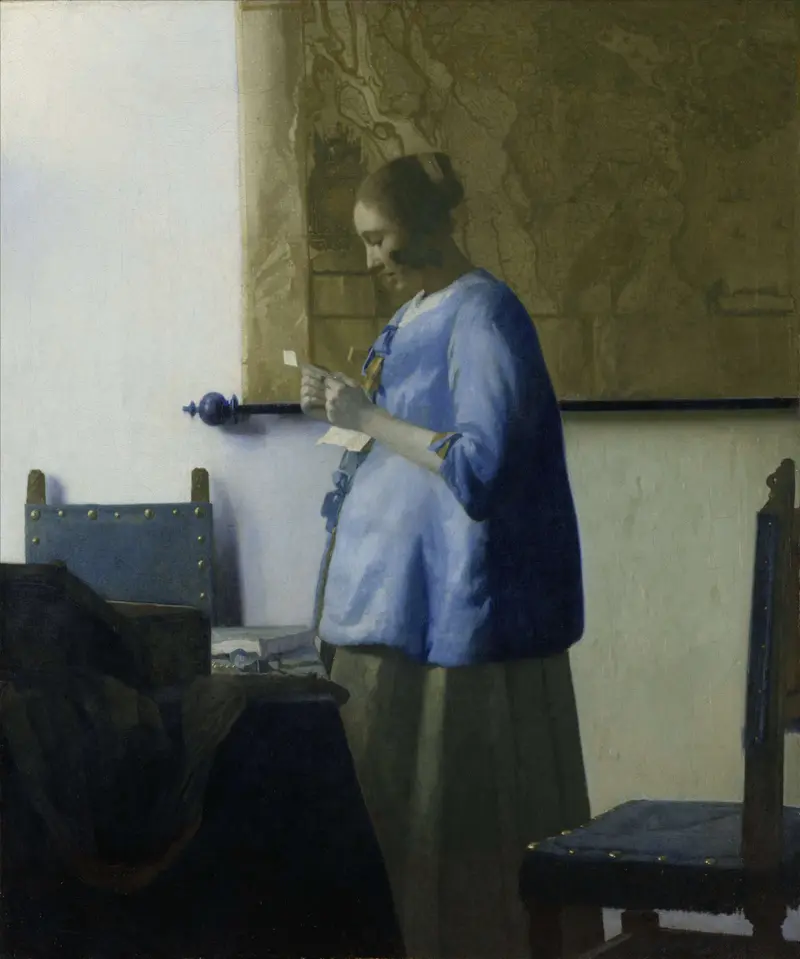
Woman in Blue Reading a Letter
Johannes Vermeer
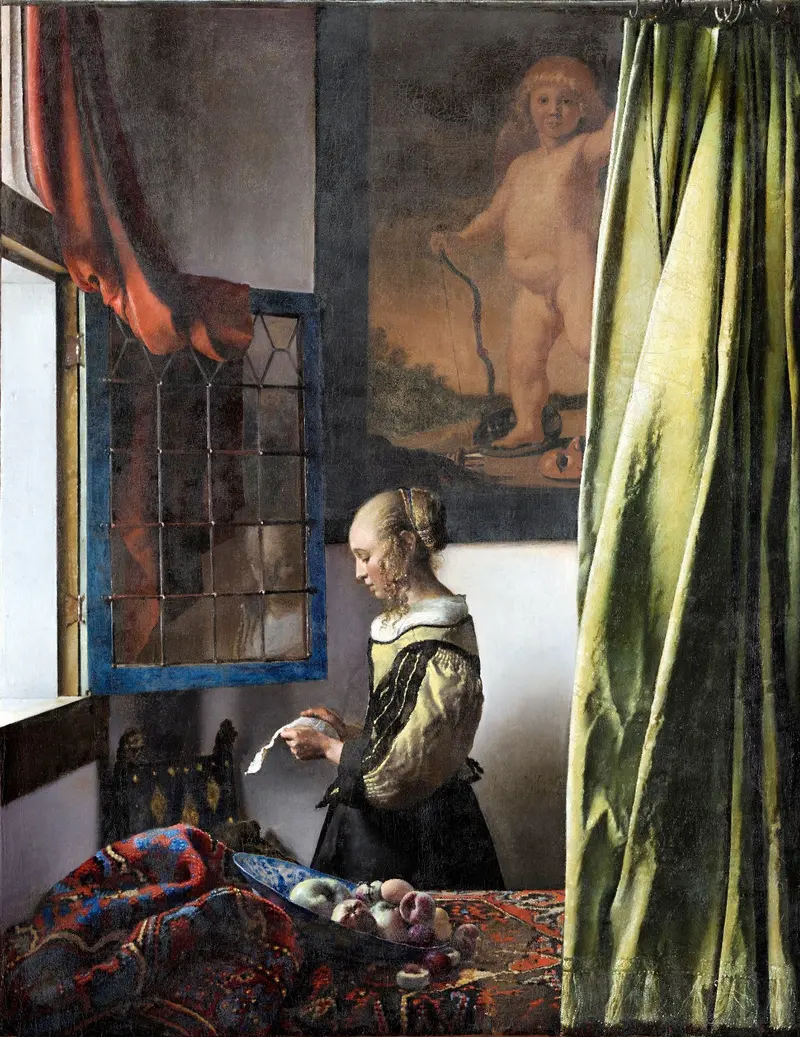
Girl Reading a Letter at an Open Window
Johannes Vermeer
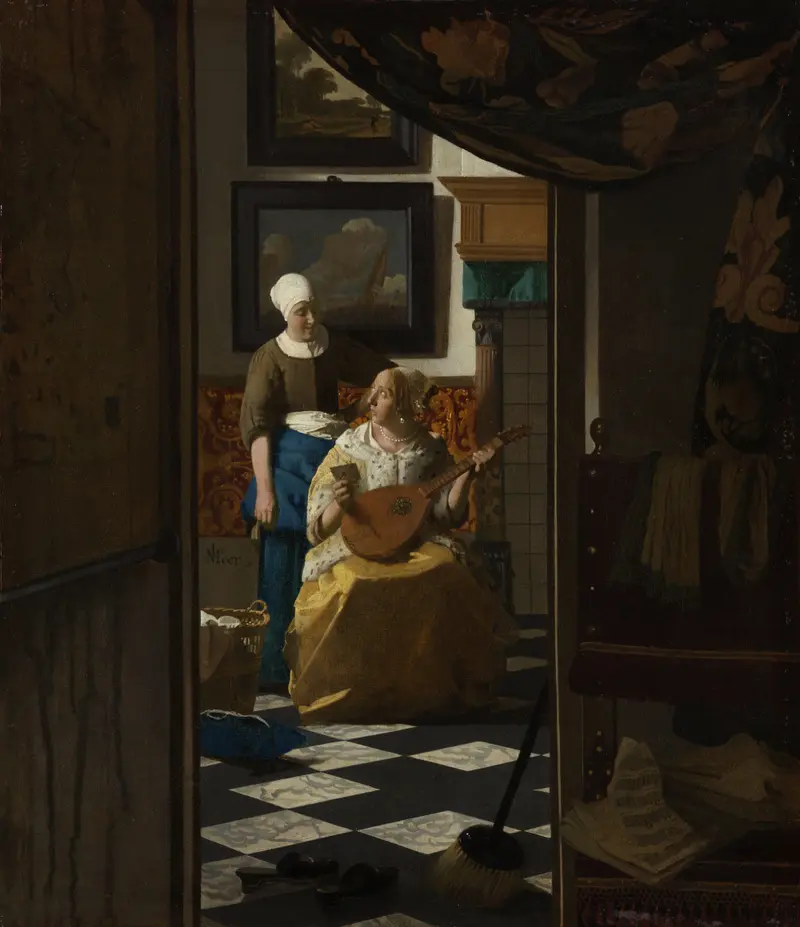
The Love Letter
Johannes Vermeer

The Music Lesson
Johannes Vermeer

A Girl Asleep
Johannes Vermeer
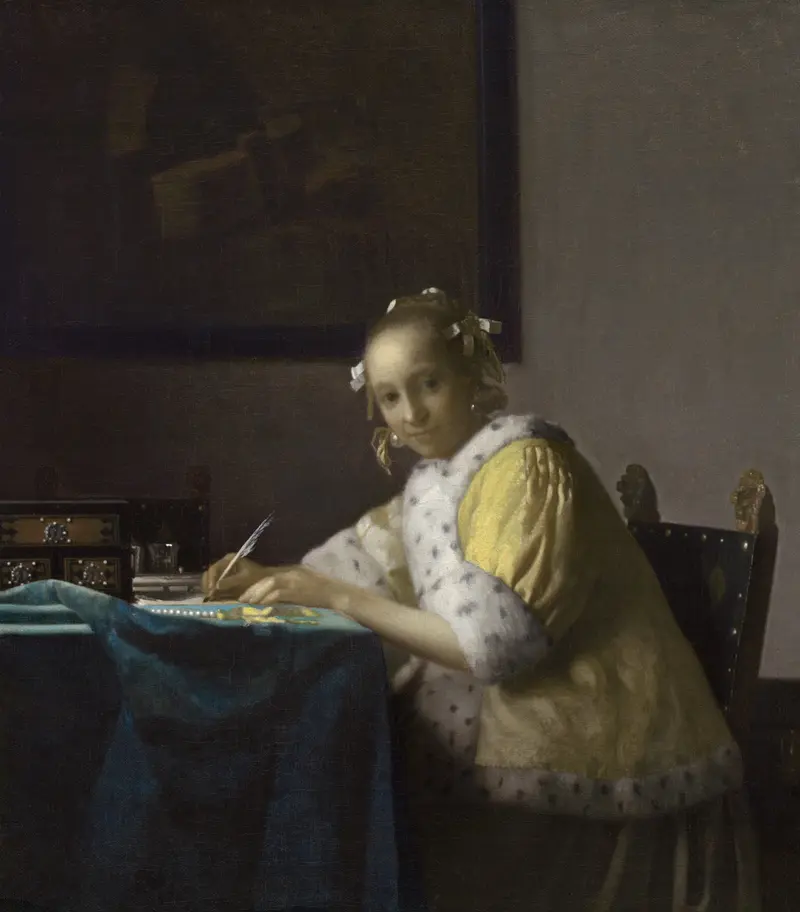
A Lady Writing a Letter
Johannes Vermeer
The Astronomer
Johannes Vermeer
The Lacemaker
Johannes Vermeer





