The Milkmaid: meaning and analysis
A hastily applied line of black paint under the maid’s left arm shows how Johannes Vermeer (1632–1675) began The Milkmaid: he blocked in the scene in light and dark tones first, and only then developed the detail, later painting out a jug rack and a fire basket. The small oil on canvas, made around 1660 in the Dutch Golden Age, shows a maid pouring milk in a brightly lit room. It belongs to the Rijksmuseum in Amsterdam, which also knows it as Het melkmeisje and once listed it as De keukenmeid.
- A jug rack left unfinished: on the wall behind the woman’s head Vermeer sketched in black paint a plank with knobs for hanging jugs by the handle, and did not develop it further. Vermeer’s own house had a pantry with a similar rack.
- A fire basket underneath: the basket noticed earlier at lower right is a willow “fire basket”, in which a bowl of glowing coals kept newborns warm and dried nappies. Vermeer’s estate inventory lists one, and the painter later covered it with the foot stove, Delft tiles and floor.
- Dots of light: the Rijksmuseum points out that Vermeer let light play over the surface of objects in hundreds of coloured dots.
- A cracked pane and a mouldy wall: the museum says the crack in the window and the mould on the wall make the picture seem very real.
- A short palette: ColourLex’s summary of the pigment studies lists natural ultramarine with lead white for the blues, lead-tin yellow for the yellow bodice and madder lake over charcoal black for the red skirt.
- Two dates: the Rijksmuseum’s record says c. 1660, but its 2022 press release dates the painting to 1657–58.
Sources: Rijksmuseum: The Milkmaid, collection record SK-A-2344 · Rijksmuseum: press release on the new research (8 Sept 2022) · Rijksmuseum story: Extraordinary ordinary · Rijksmuseum: persistent record (titles, provenance, acquisition) · ColourLex: The Milkmaid, pigment analysis · Wikidata Q167605
Questions and answers about the painting
What is the meaning of The Milkmaid?
The Rijksmuseum presents it as a quiet picture of ordinary work: a maidservant absorbed in pouring milk, standing like a statue in a brightly lit room while everything except the stream of milk is still. Some scholars, notably Walter Liedtke, read the foot stove and the Cupid tiles beside it as hints of love and desire, and the museum itself asks what the objects around her say about her. Its director, Taco Dibbits, said that painting out the jug rack and fire basket gave the room more calm and left nothing to distract from her concentrated work.
Source: Rijksmuseum: The Milkmaid, collection record SK-A-2344 · Rijksmuseum story on the objects around the milkmaid · Essential Vermeer: The Milkmaid, catalogue entry · Rijksmuseum: press release, Dutch version (8 Sept 2022)
What did the scans of Vermeer’s painting find under the paint?
They found a quick black underpainting, a jug rack and a fire basket. Rijksmuseum researchers, working with the Mauritshuis and the University of Antwerp, announced the results in September 2022 after scanning the painting with macro X-ray fluorescence (Macro-XRF) and reflectance imaging spectroscopy (RIS). A thick black line under the woman’s left arm shows that Vermeer first blocked in the scene in light and dark tones. On the wall Vermeer sketched a jug rack and left it unfinished, and at lower right covered a fire basket with the foot stove, tiles and floor.
Source: Rijksmuseum: press release on the new research (8 Sept 2022) · Rijksmuseum story: The secrets of The Milkmaid · University of Antwerp (AXIS): MA-XRPD scanning of Vermeer’s paintings at the Rijksmuseum
Where is Vermeer’s painting of the maid pouring milk today?
The Milkmaid hangs in the Gallery of Honour of the Rijksmuseum in Amsterdam, according to the museum’s record on 17 November 2026 (inventory number SK-A-2344); displays change, so check with the museum before a visit. It is one of four Vermeers in the museum, which bought the painting in 1908. Another famous Vermeer, Girl with a Pearl Earring, is in the Mauritshuis in The Hague.
Source: Rijksmuseum: The Milkmaid, collection record SK-A-2344 · Rijksmuseum: “Six Vermeers” (2023 page, the museum’s four Vermeers) · Rijksmuseum: press release on the new research (8 Sept 2022)
How much is Vermeer’s painting worth?
No current value is on record: the Rijksmuseum’s record gives no valuation, only the prices of past sales. The painting fetched 175 guilders at an Amsterdam sale on 16 May 1696, 1,550 guilders in 1798 and 2,125 guilders in 1813. In 1908 the museum bought it for 550,000 guilders as part of a group of 39 paintings from the heirs of the Six family, with the support of the Vereniging Rembrandt.
Source: Rijksmuseum: The Milkmaid, collection record SK-A-2344 · Rijksmuseum: persistent record (titles, provenance, acquisition)
How big is Vermeer’s canvas of the kitchen maid?
The Milkmaid is small: 45.5 cm high and 41 cm wide, oil on canvas, according to the Rijksmuseum’s record. Vermeer, who lived and worked in Delft, left only about 35 paintings. The museum dates it c. 1660 in its record and 1657–58 in its 2022 press release.
Source: Rijksmuseum: The Milkmaid, collection record SK-A-2344 · Rijksmuseum: Vermeer exhibition 2023, text on the painter
Is Vermeer’s maid pouring milk in the public domain?
Yes. Vermeer died in 1675, so his paintings are free of copyright everywhere, and the Rijksmuseum’s record lists the work as public domain. A faithful photograph of a public-domain painting adds no new copyright in the United States or the European Union, so you can download this image and use it in personal or commercial projects. Public Domain Images for Commercial Use explains how.
Source: Wikidata Q41264 (Vermeer died in 1675) · Rijksmuseum: The Milkmaid, collection record SK-A-2344
More Artworks by Johannes Vermeer

Girl with a Pearl Earring
Johannes Vermeer

View of Delft
Johannes Vermeer
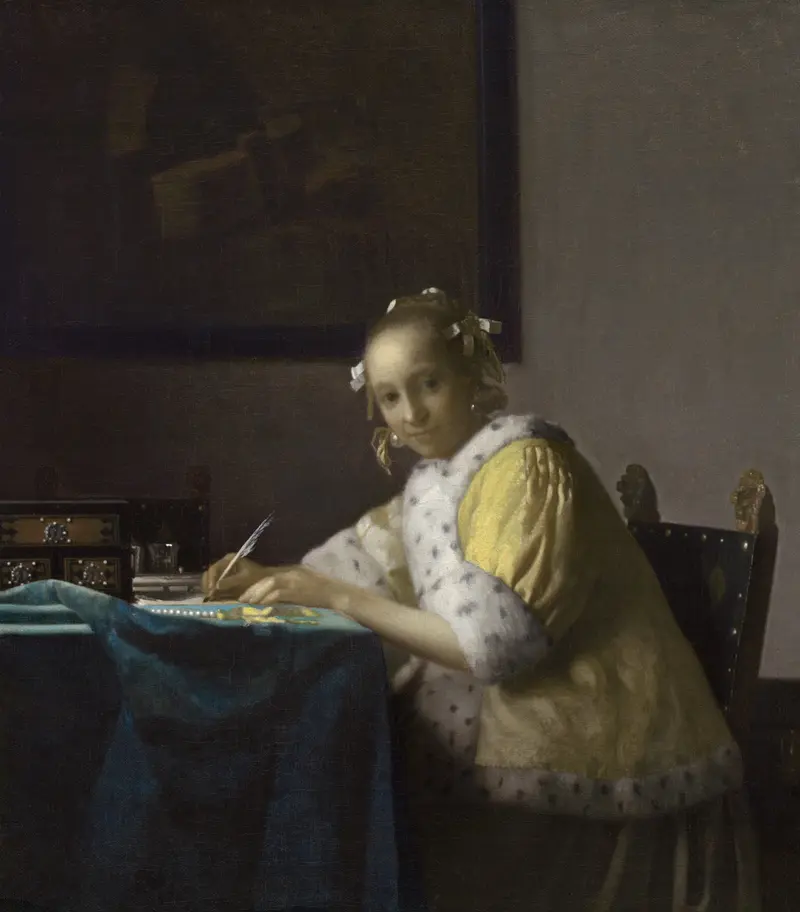
A Lady Writing
Johannes Vermeer
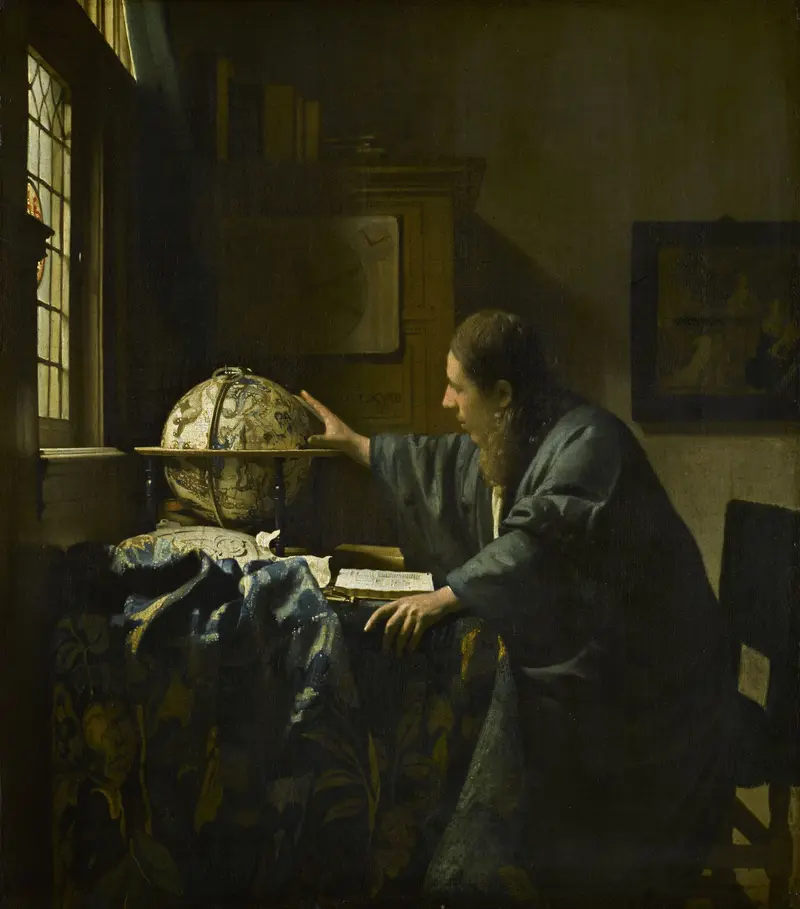
The Astronomer
Johannes Vermeer
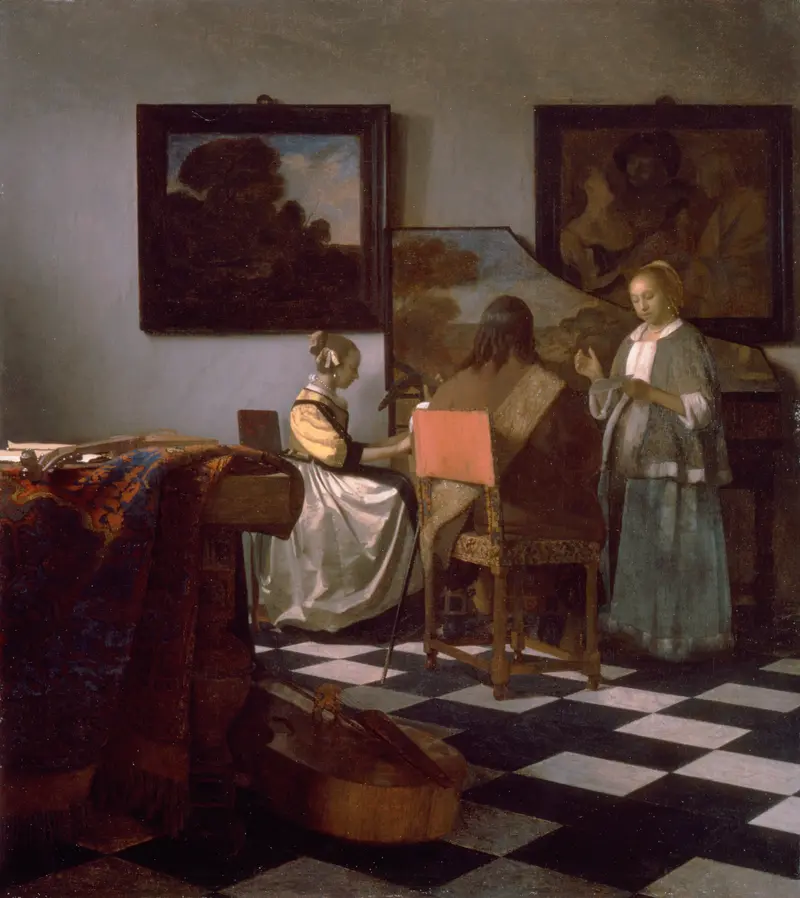
The Concert
Johannes Vermeer
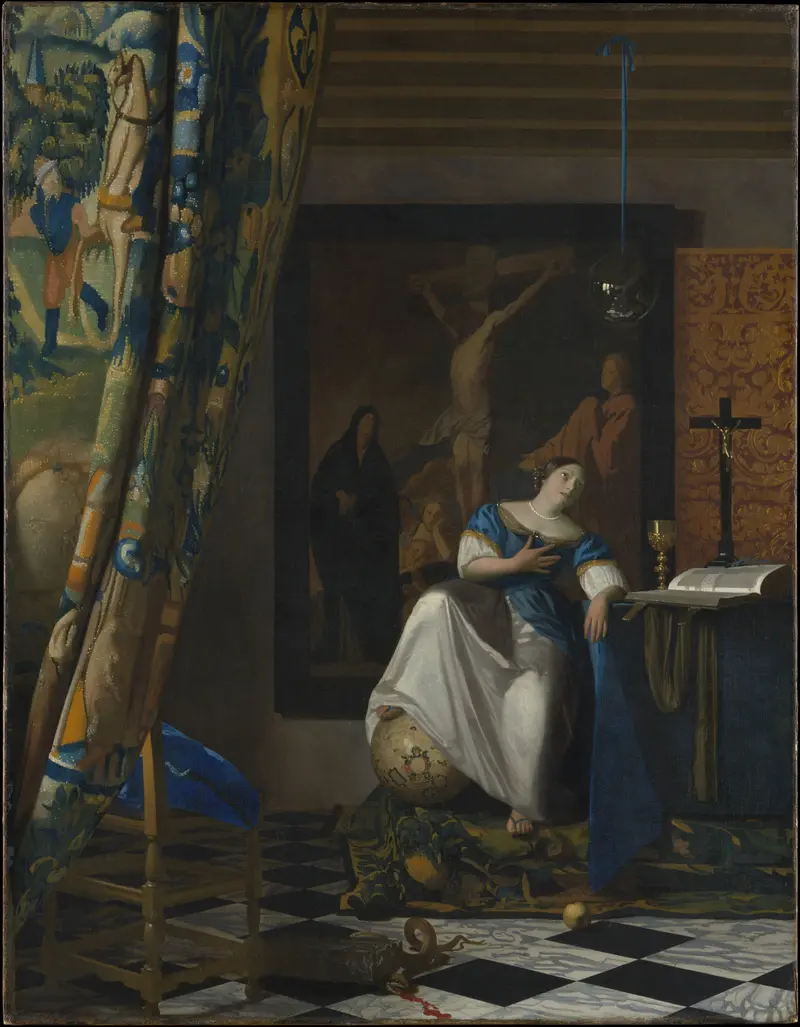
Allegory of the Catholic Faith
Johannes Vermeer
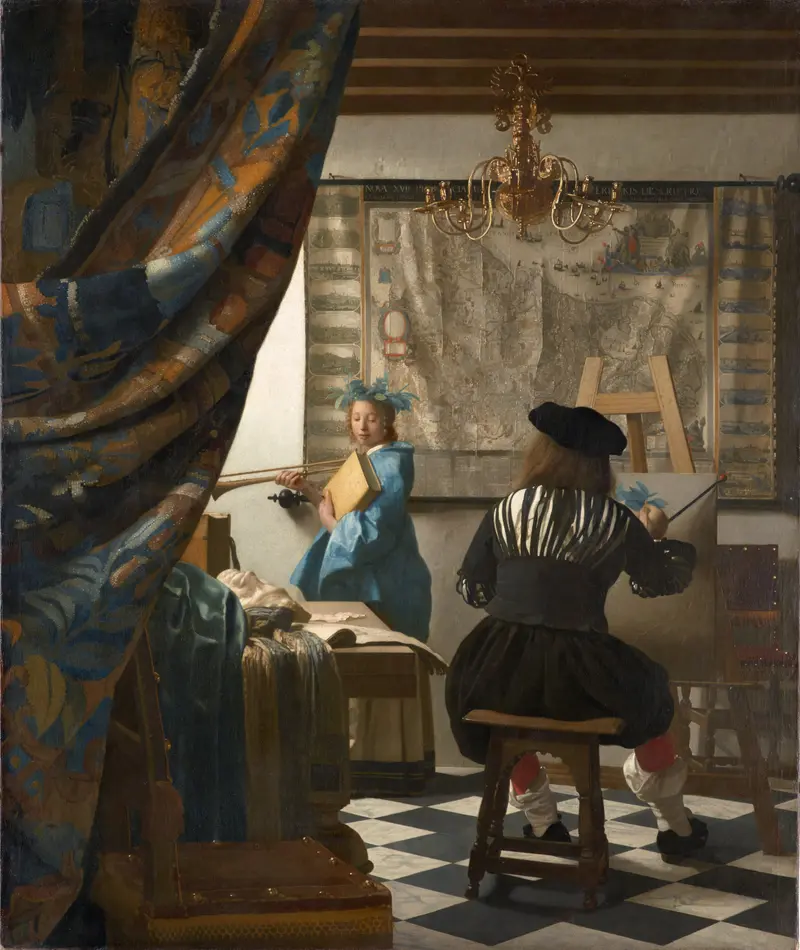
The Art of Painting
Johannes Vermeer

The Music Lesson
Johannes Vermeer
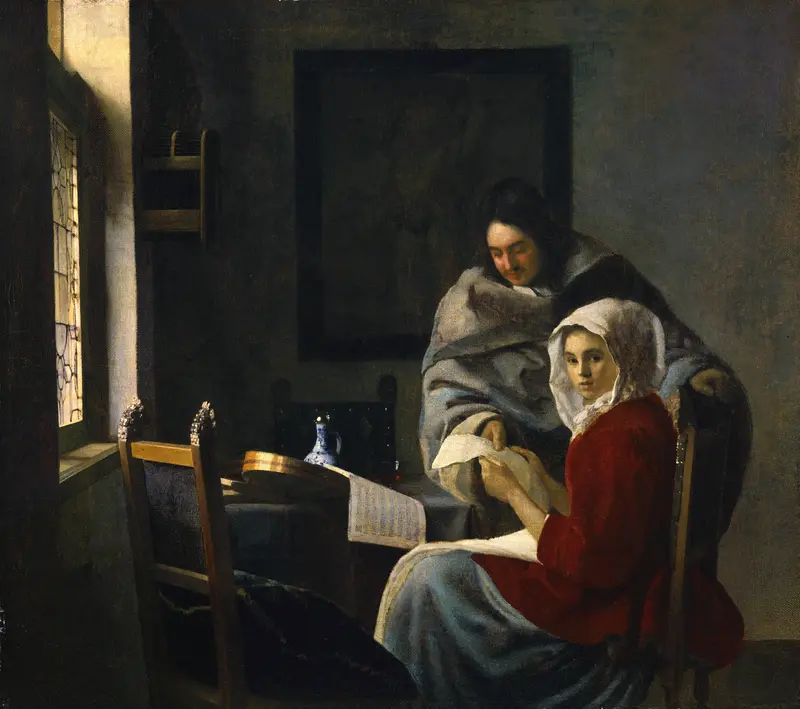
Girl Interrupted at Her Music
Johannes Vermeer
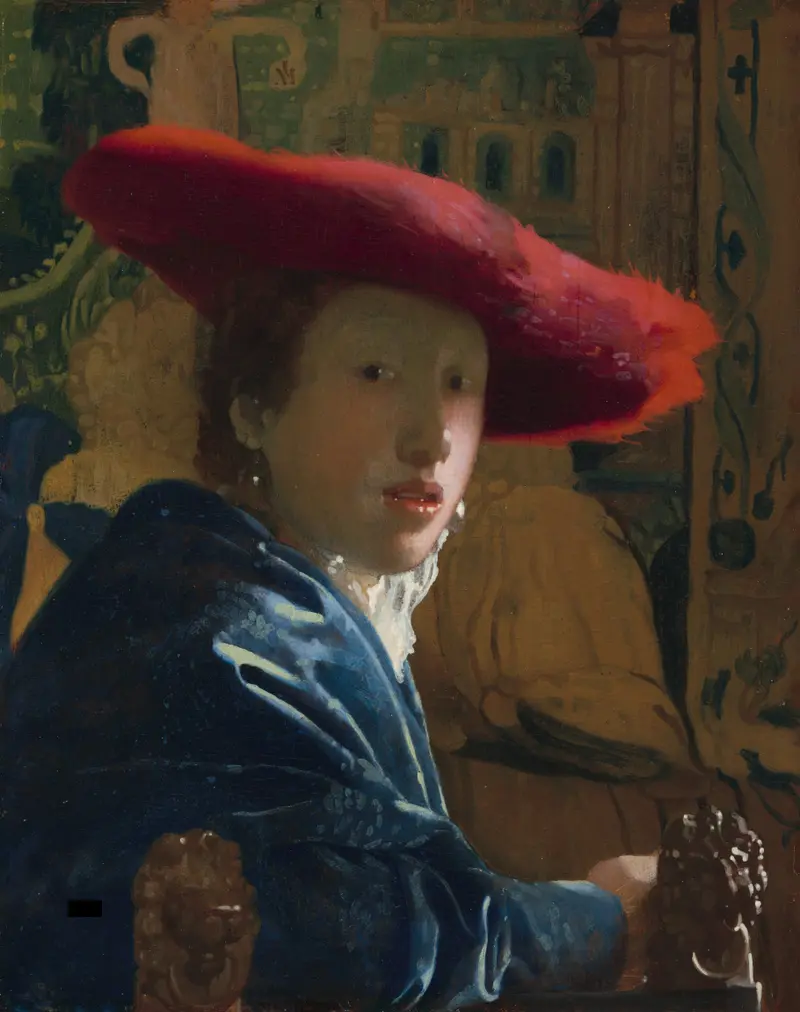
Girl with a Red Hat
Johannes Vermeer