
Woman Holding a Balance — History & Facts
A woman stands in a quiet, shadowed room, holding a delicate balance in her right hand, her gaze lowered to the empty scales. She wears a blue jacket trimmed with white fur and a white headscarf, her figure softly illuminated by daylight entering from a window at the upper left, just outside the frame but signaled by a golden curtain. On the table in front of her, a jewelry box lies open, its lid propped up, with strings of pearls and gold coins spilling out onto the surface beside a blue cloth that catches the light in deep folds.
A small mirror hangs on the wall to the left, reflecting only a sliver of the room’s interior, while the woman’s left hand rests gently on the table’s edge, steadying herself as she weighs the balance. Behind her, a large framed painting dominates the wall, depicting the Last Judgment with Christ at the top, his arms raised, surrounded by figures in a dramatic, golden-lit cloudscape. Vermeer’s brushwork is smooth and precise, with subtle transitions of light and shadow modeling the woman’s face and hands, while the textures of fabric and wood are rendered with careful attention.
The scene is filled with small details: the glint of gold, the shimmer of pearls, the fine lines of the balance, and the soft play of light across the woman’s skin and clothing. Woman Holding a Balance was painted by Johannes Vermeer in 1665, during the period known as the Dutch Golden Age of painting. The painting is considered a work of genre art, depicting an everyday scene with symbolic overtones. According to the National Gallery of Art, technical examination has shown that the balance in the woman’s hand is empty, a detail that has shaped interpretations of the work’s meaning.
Some art historians, as noted in the museum’s sources, have interpreted the scene as a vanitas, a call to balance material wealth with spiritual reflection, or as a representation of divine justice. The painting was once known as Woman Weighing Gold, but closer study confirmed that the scales are empty, shifting the focus from material wealth to the act of weighing itself. Pigment analysis has revealed Vermeer’s use of ultramarine for the blue cloth and lead white for the wall, demonstrating his mastery of color and light.
Woman Holding a Balance was part of the collection sold from the estate of Jacob Dissius in Amsterdam in 1696, fetching a price that reflected its high regard among Vermeer’s works at the time.
Sources: National Gallery of Art, record 1942.9.97 · Wikidata Q969367 · Wikipedia: Woman Holding a Balance
More Artworks by Johannes Vermeer

View of Delft
Johannes Vermeer

Girl with a Pearl Earring
Johannes Vermeer
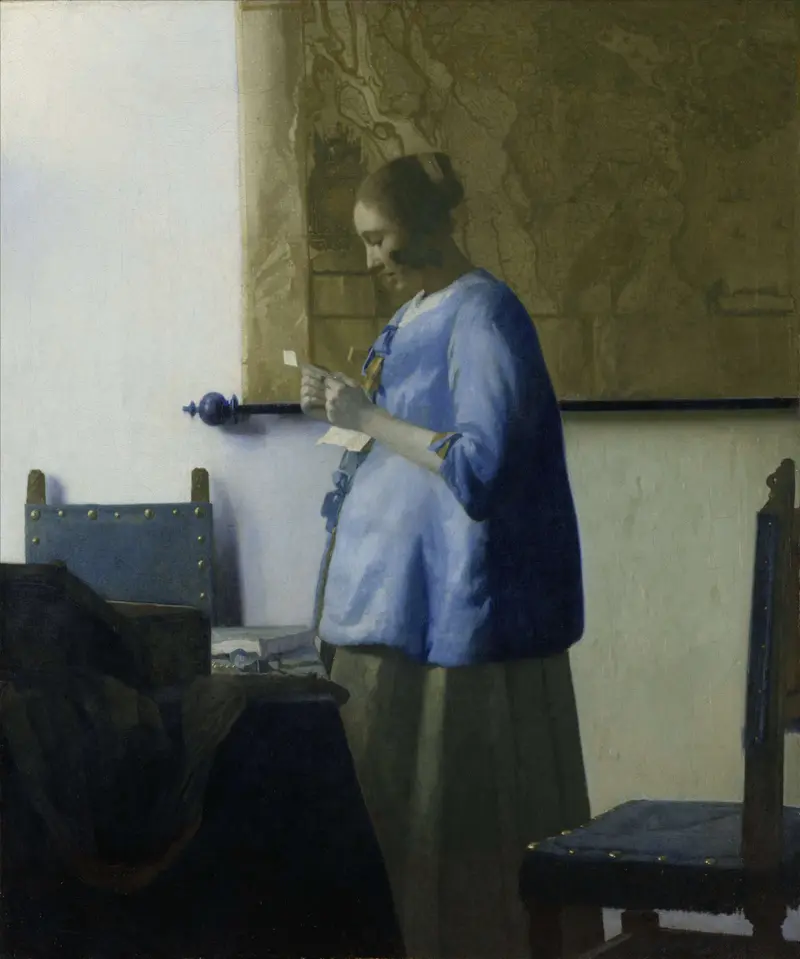
Woman in Blue Reading a Letter
Johannes Vermeer
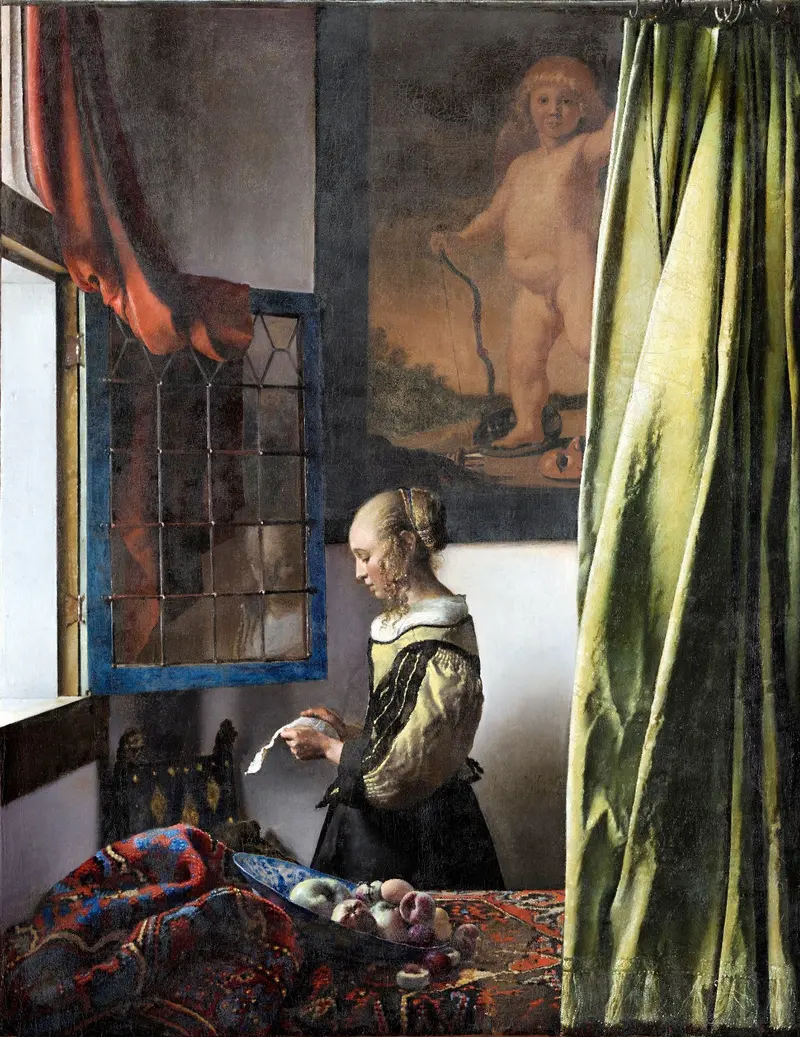
Girl Reading a Letter at an Open Window
Johannes Vermeer
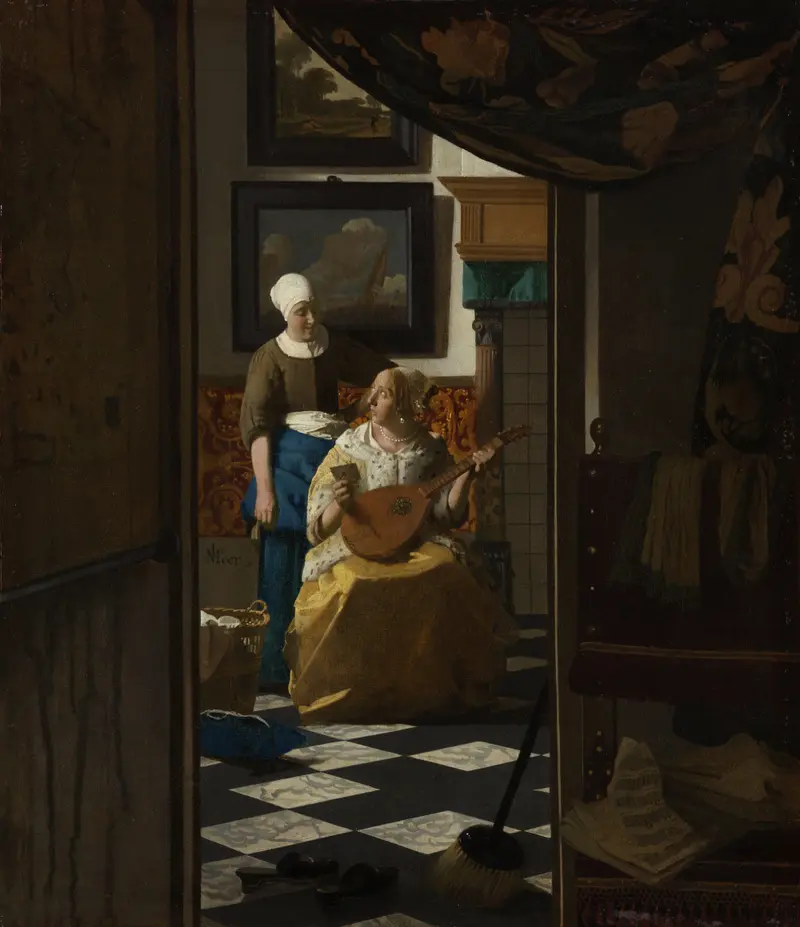
The Love Letter
Johannes Vermeer

The Music Lesson
Johannes Vermeer

A Girl Asleep
Johannes Vermeer
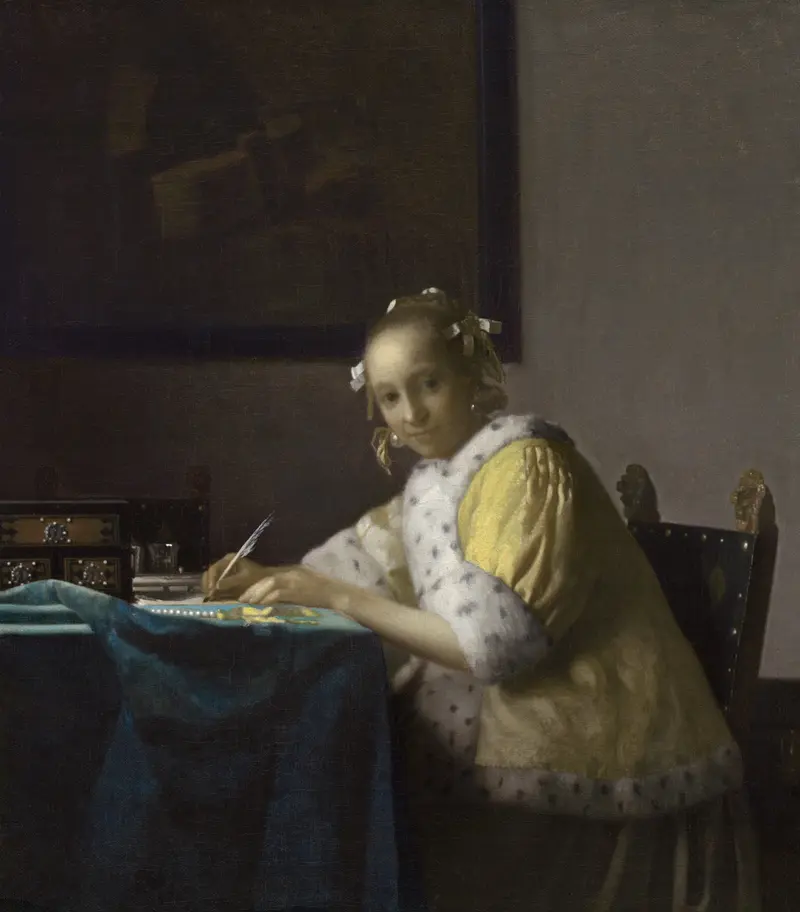
A Lady Writing a Letter
Johannes Vermeer
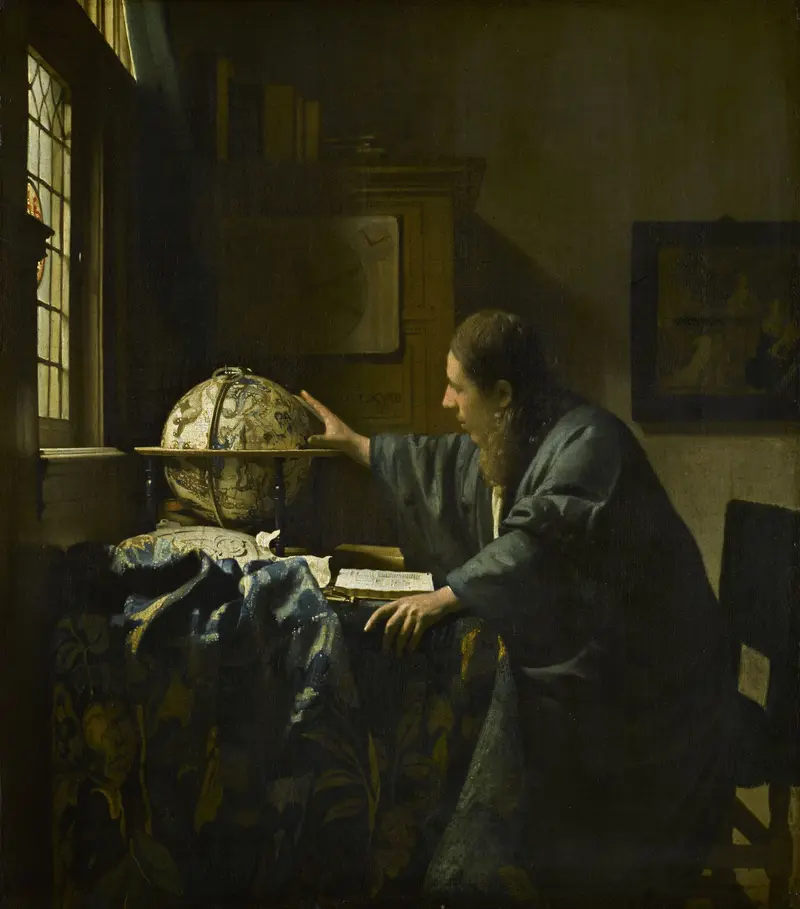
The Astronomer
Johannes Vermeer
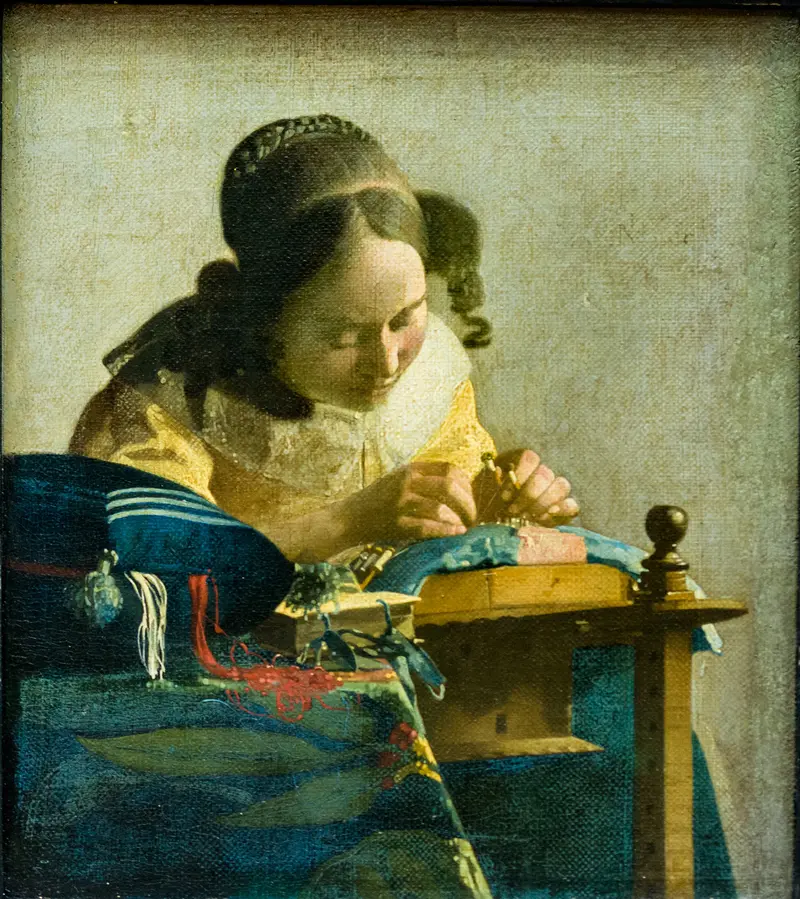
The Lacemaker
Johannes Vermeer
More Genre Scene Art

Banquet of the Officers of the St George Civic Guard
Frans Hals

Rembrandt and Saskia in the Scene of the Prodigal Son
Rembrandt van Rijn

Bal du moulin de la Galette
Pierre-Auguste Renoir

Quadrille at the Moulin Rouge
Henri de Toulouse-Lautrec

A Burial at Ornans
Gustave Courbet

When Will You Marry?
Paul Gauguin