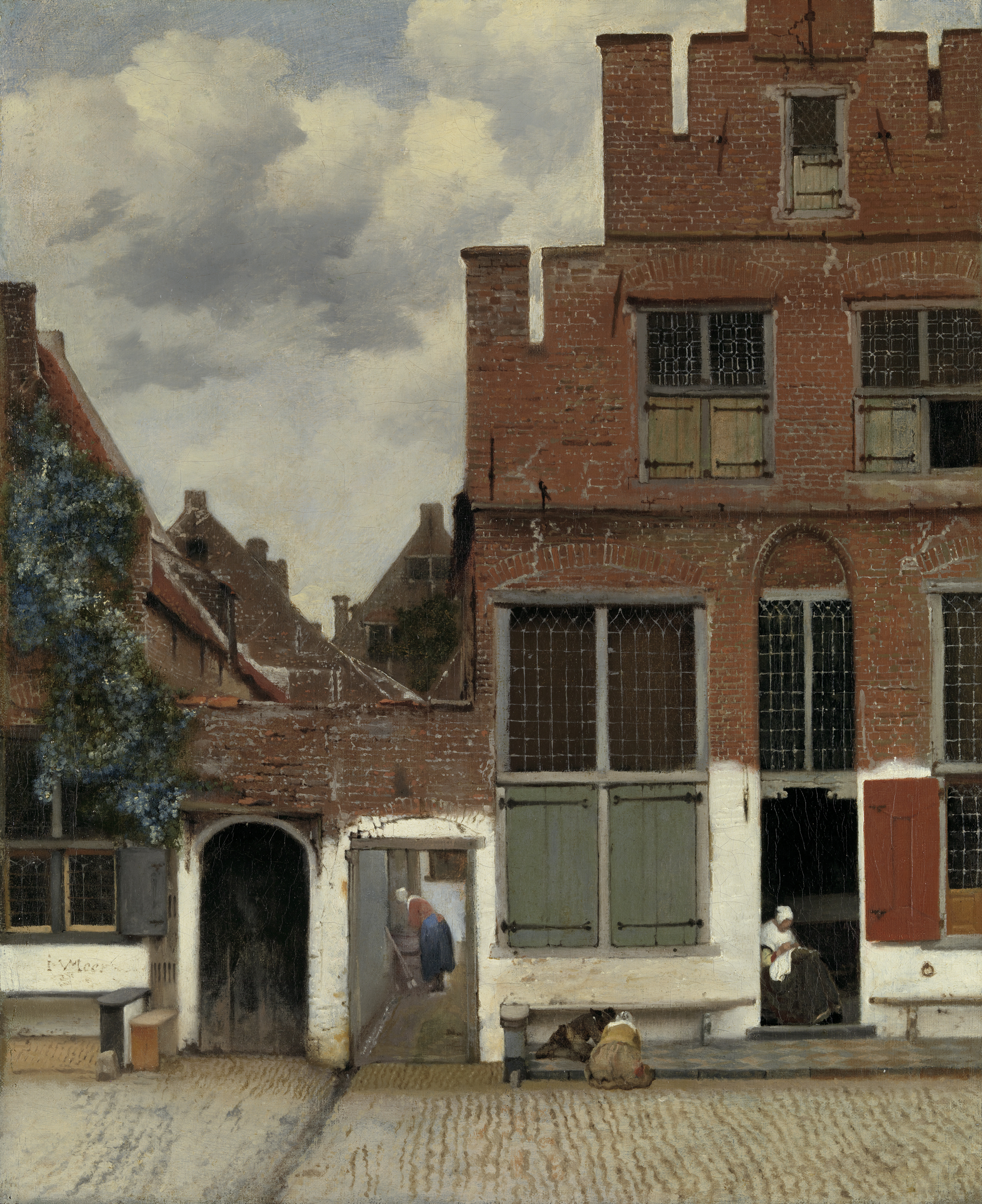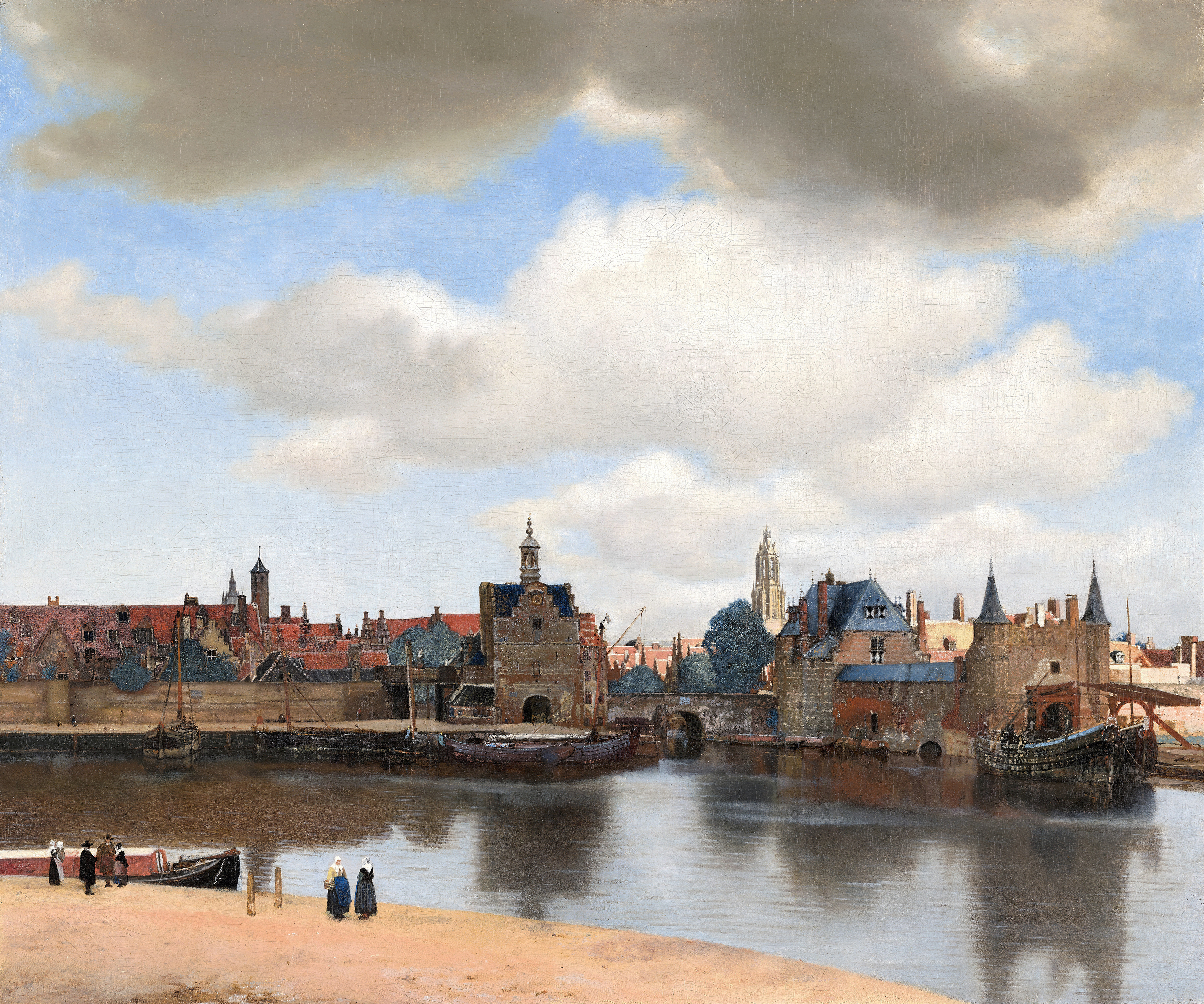

Who listens when art speaks of silence? In the stillness of *View of Delft*, the city breathes with a hushed reverence, inviting us to witness its serene beauty. Look to the left at the delicate interplay of light and shadow that dances across the rooftops and glimmers on the water’s surface. The intricate details of the buildings, rendered in soft blues and warm ochres, draw your eye towards the horizon where the sky meets the calm river. Notice how the artist masterfully captures the play of sunlight, illuminating the sailboats and creating a sense of depth that pulls you into this tranquil scene. Beneath the surface, the juxtaposition of light and dark serves as a metaphor for the duality of urban life—its bustling activity contrasted by a moment of quiet reflection. The gentle ripples in the water mirror the clouds above, suggesting an unspoken connection between the sky and the ground, tranquility and chaos. Every brushstroke whispers stories of the inhabitants, their lives interwoven with the very fabric of Delft, urging us to ponder what lies beyond the visible. During the early 1660s, while residing in Delft, the artist was at the height of his powers, navigating personal challenges and the burgeoning art market. This period found him balancing the demands of family life with his dedication to exploring the nuances of pigment and light. As the Dutch Golden Age flourished, Vermeer’s oeuvre began to gain recognition, culminating in works that would resonate through centuries, capturing the awe of the ordinary with an extraordinary lens.