
Girl with a Pearl Earring: meaning and location
No original title for this canvas is known, and twentieth-century books gave it plain descriptions such as Head of a Young Girl or, in Dutch until 1995, Meisje met de tulband (Girl with a Turban). The Mauritshuis in The Hague now calls it Girl with a Pearl Earring (Meisje met de parel) and classes it as a tronie: a painting of an imaginary figure, not a portrait. Johannes Vermeer (1632–1675) painted it around 1665, in the Dutch Golden Age.
- A tronie, not a portrait: the Mauritshuis describes a girl in exotic dress, with an oriental turban and a large pearl earring, as an imaginary figure; who she was, the museum says, remains a mystery.
- A pearl made of paint: the pearl is an illusion built from translucent and opaque touches of white paint, and the hook that would hold it to the ear is missing.
- What the 2018 scans found: behind the girl Vermeer painted a green curtain that has since faded from view, and he gave her tiny eyelashes that the naked eye cannot see.
- A costly blue: the blue of the headscarf is natural ultramarine, made from lapis lazuli from what is now Afghanistan, a pigment more precious than gold in the 17th century.
- A two-guilder bargain: in 1881 Arnoldus des Tombe bought it at a Hague auction for 2 guilders plus a 30-cent premium; after his death in December 1902 it emerged that he had bequeathed it to the Mauritshuis.
Sources: Mauritshuis: “Girl with a Pearl Earring Stood in Front of a Curtain” (The Low Countries, 28 April 2020) · Europeana record from the Mauritshuis (inv. 670) · Google Arts & Culture: Mauritshuis description · Essential Vermeer: catalogue entry (quotes the Mauritshuis Bulletin, 2004) · Essential Vermeer: titles used for the painting (archived) · Wikidata Q185372
Questions and answers about the painting
What is the meaning of Girl with a Pearl Earring?
It is a study rather than a story: the Mauritshuis calls the work a tronie, a painting of an imaginary figure rather than a portrait. The museum describes a girl in exotic dress, with an oriental turban and a large pearl earring, and singles out Vermeer’s mastery of light: the soft modelling of the face, the glints on the moist lips and the shining pearl. A tronie is a study of a head, an expression or a distinctive costume, not a commissioned likeness.
Source: Google Arts & Culture: Mauritshuis description · Europeana record from the Mauritshuis (inv. 670) · Essential Vermeer: catalogue entry
Who was the girl in Vermeer’s painting, and is the novel true?
Nobody knows: the Mauritshuis says that who exactly the girl was remains a mystery, and as a tronie the picture was not meant as a portrait of a named sitter. Some critics have speculated that she was Vermeer’s first daughter, Maria, but that is a guess. Tracy Chevalier’s 1999 novel of the same name is historical fiction, and the 2003 film directed by Peter Webber is based on it, so their story of how the picture was painted is not a record of the real model.
Source: Mauritshuis: “Girl with a Pearl Earring Stood in Front of a Curtain” · Essential Vermeer: catalogue entry · Wikidata Q1192107 (the novel) · Wikidata Q392441 (the 2003 film)
Where is the original Vermeer painting kept?
Girl with a Pearl Earring is kept at the Mauritshuis in The Hague, in the Netherlands, where it is inventory number 670; it has belonged to the museum since the Des Tombe bequest of 1903. In summer 2026 the museum lent it to the Nakanoshima Museum of Art in Osaka (21 August – 27 September) while the Mauritshuis was closed for alterations; it was rehung in The Hague on 5 October 2026. Check the Mauritshuis website before you visit.
Source: Wikidata Q185372 (collection, inventory number 670) · Essential Vermeer: provenance (bequest of 1903) · ICOM UK, republishing the Mauritshuis press release (12 January 2026) · NL Times, 5 October 2026 (painting rehung in The Hague) · Tokyo Art Beat: Osaka exhibition listing
When was Vermeer’s painting made, and how big is the canvas?
Girl with a Pearl Earring dates from around 1665 and is a small oil painting on canvas, 44.5 cm high and 39 cm wide. Scholars date it between 1665 and about 1667: Albert Blankert gave 1665, Arthur Wheelock c. 1665–1666, and Walter Liedtke and Wayne Franits c. 1665–1667. Vermeer signed it in the upper left corner with IVMeer, in a pale paint that is easy to miss.
Source: Wikidata Q185372 (c. 1665, 44.5 × 39 cm) · Essential Vermeer: dates and signature · Mauritshuis: “Girl with a Pearl Earring Stood in Front of a Curtain”
What did the 2018 research on Vermeer’s painting reveal?
A team led by Mauritshuis conservator Abbie Vandivere examined the painting in February and March 2018, in the project Girl in the Spotlight. It found that Vermeer painted the girl in front of a green curtain, now faded, and gave her tiny eyelashes. He also shifted the ear, the top of the headscarf and the back of the neck while painting, worked from the background to the foreground, and used two kinds of lead white for the skin. The pearl is an illusion of white paint, with no hook.
Is Vermeer’s painting in the public domain?
Yes. Vermeer died in 1675, so his paintings are free of copyright everywhere. A faithful photograph of a public-domain painting adds no new copyright in the United States or the European Union, so you can download this image and use it in personal or commercial projects. Public Domain Images for Commercial Use explains how.
Source: Wikidata Q41264 (Johannes Vermeer, died 15 December 1675)
More Artworks by Johannes Vermeer

View of Delft
Johannes Vermeer
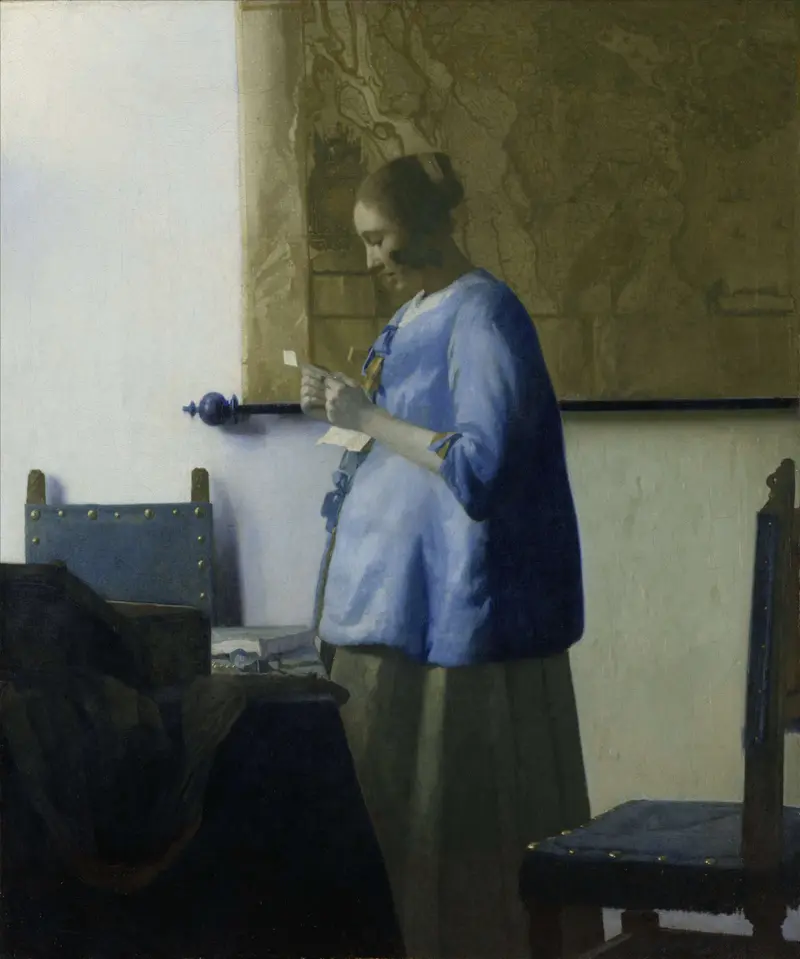
Woman in Blue Reading a Letter
Johannes Vermeer
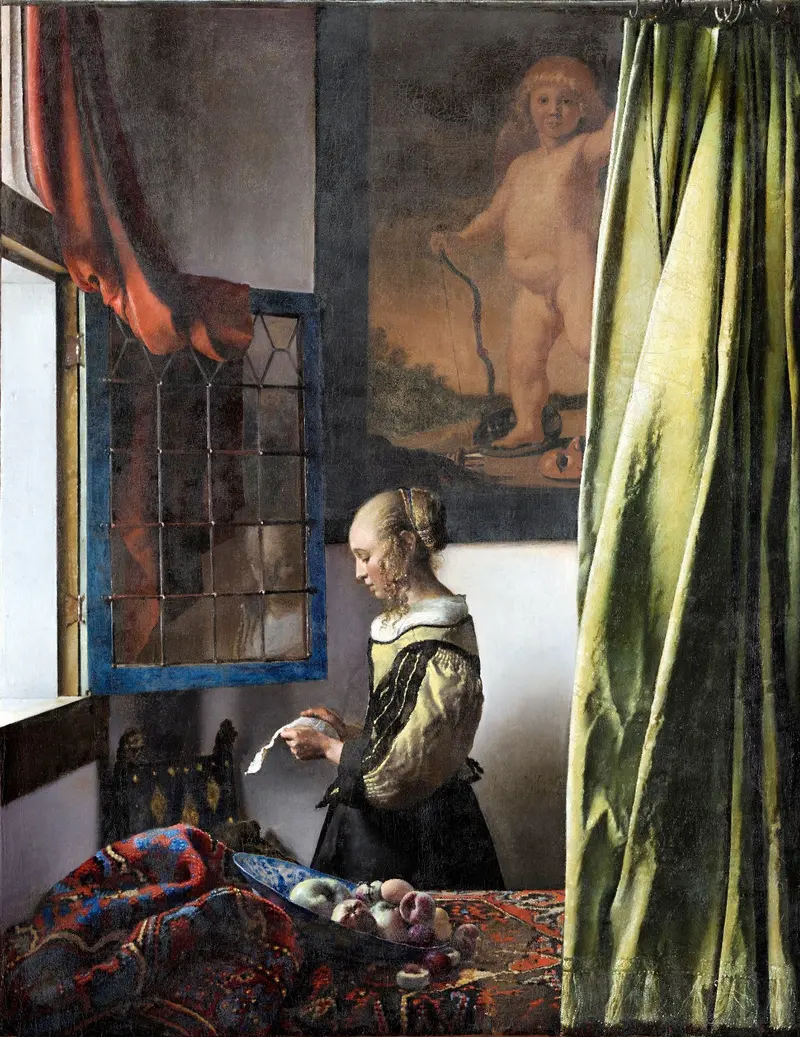
Girl Reading a Letter at an Open Window
Johannes Vermeer
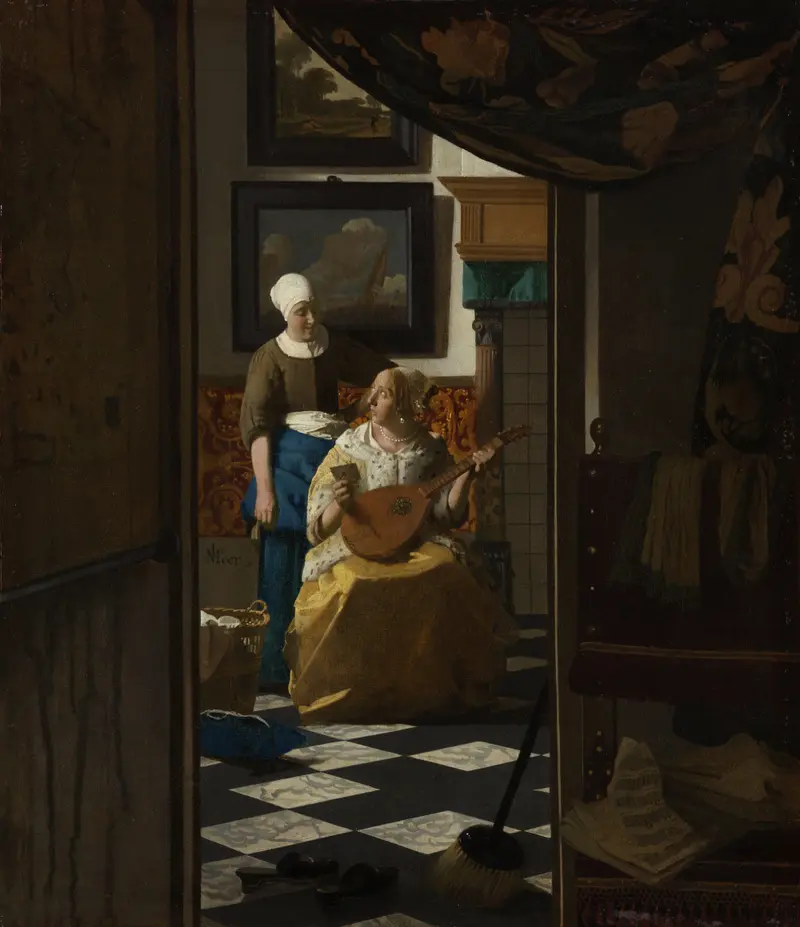
The Love Letter
Johannes Vermeer
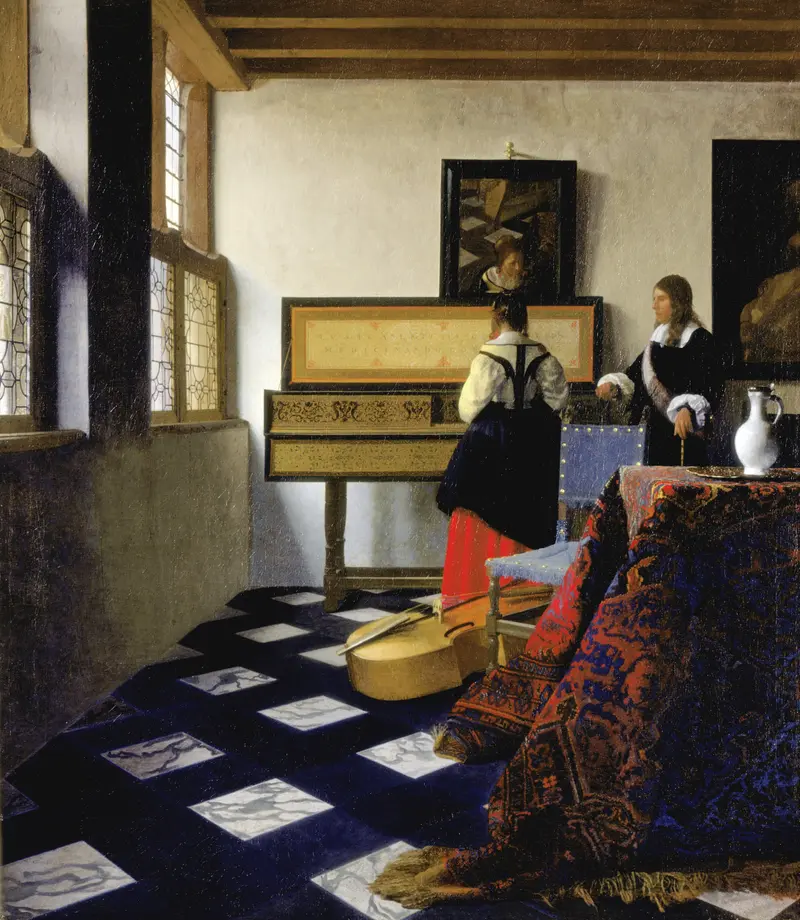
The Music Lesson
Johannes Vermeer

A Girl Asleep
Johannes Vermeer
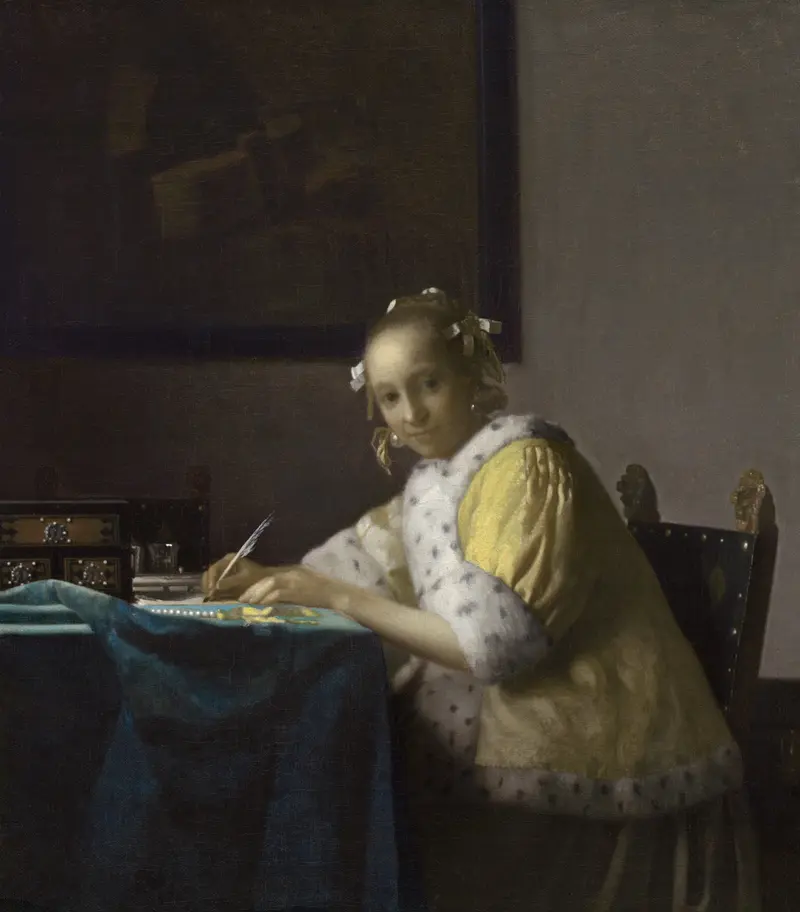
A Lady Writing a Letter
Johannes Vermeer
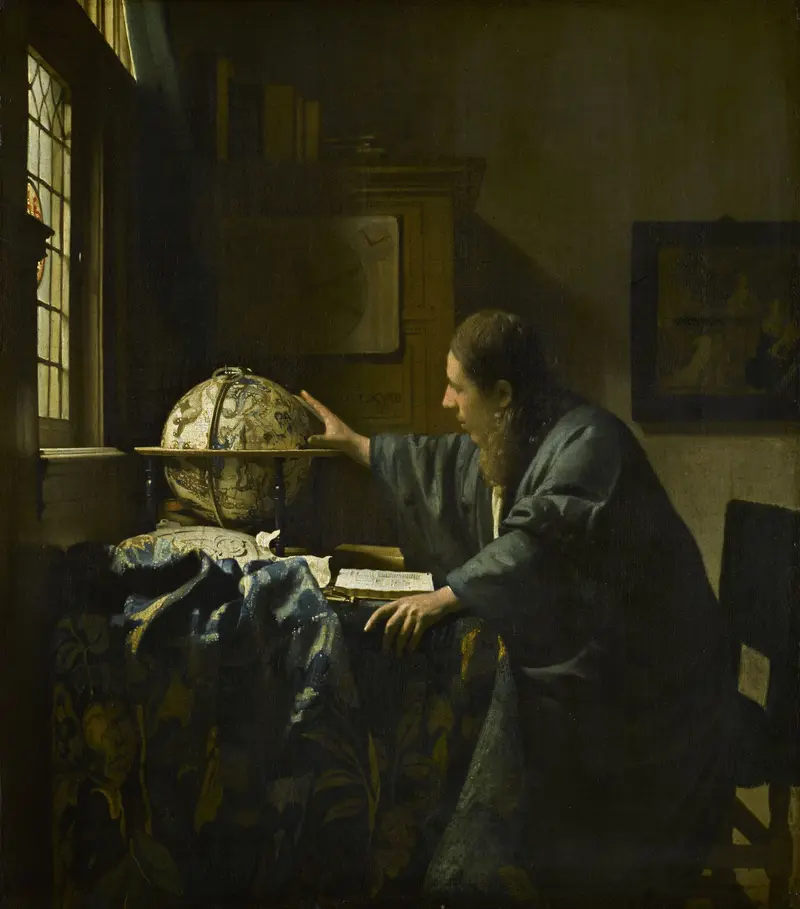
The Astronomer
Johannes Vermeer
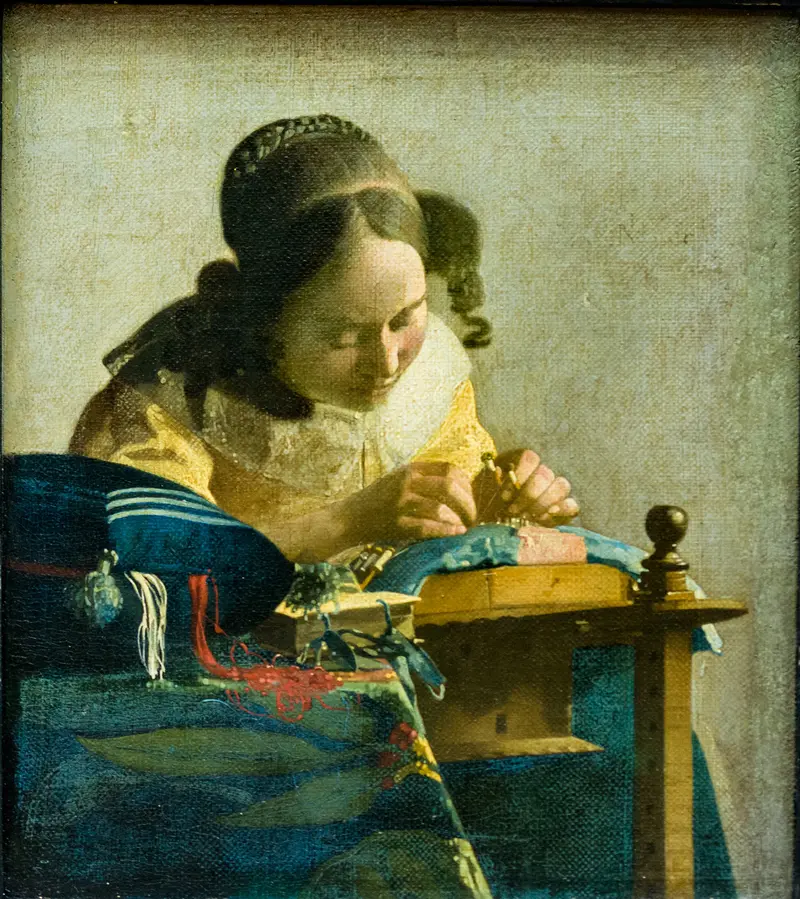
The Lacemaker
Johannes Vermeer
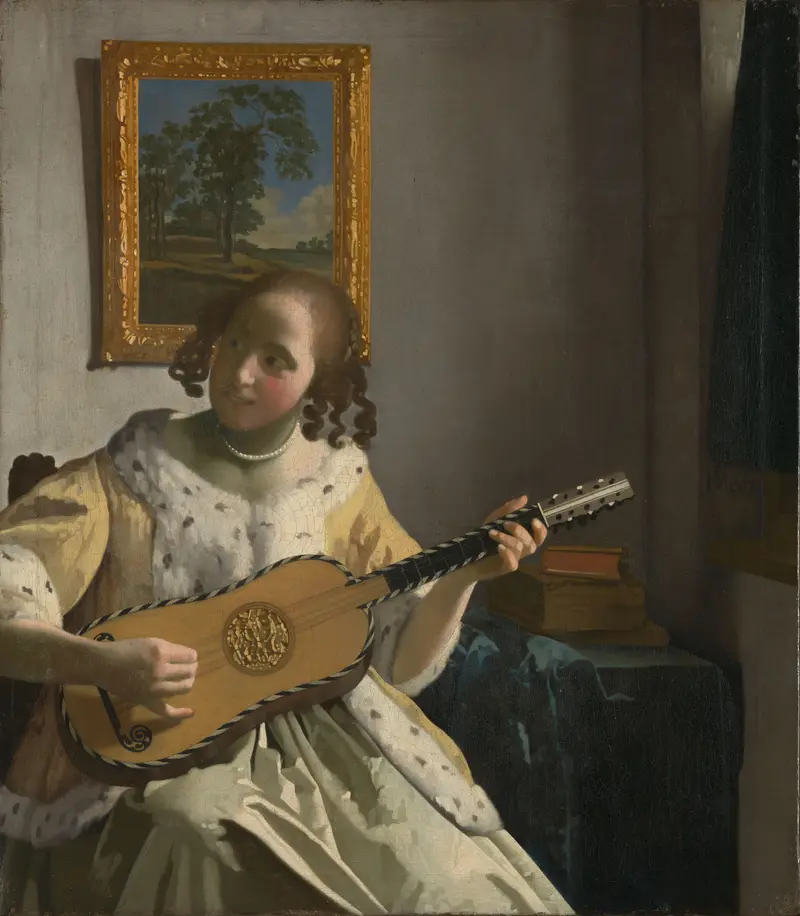
The Guitar Player
Johannes Vermeer





