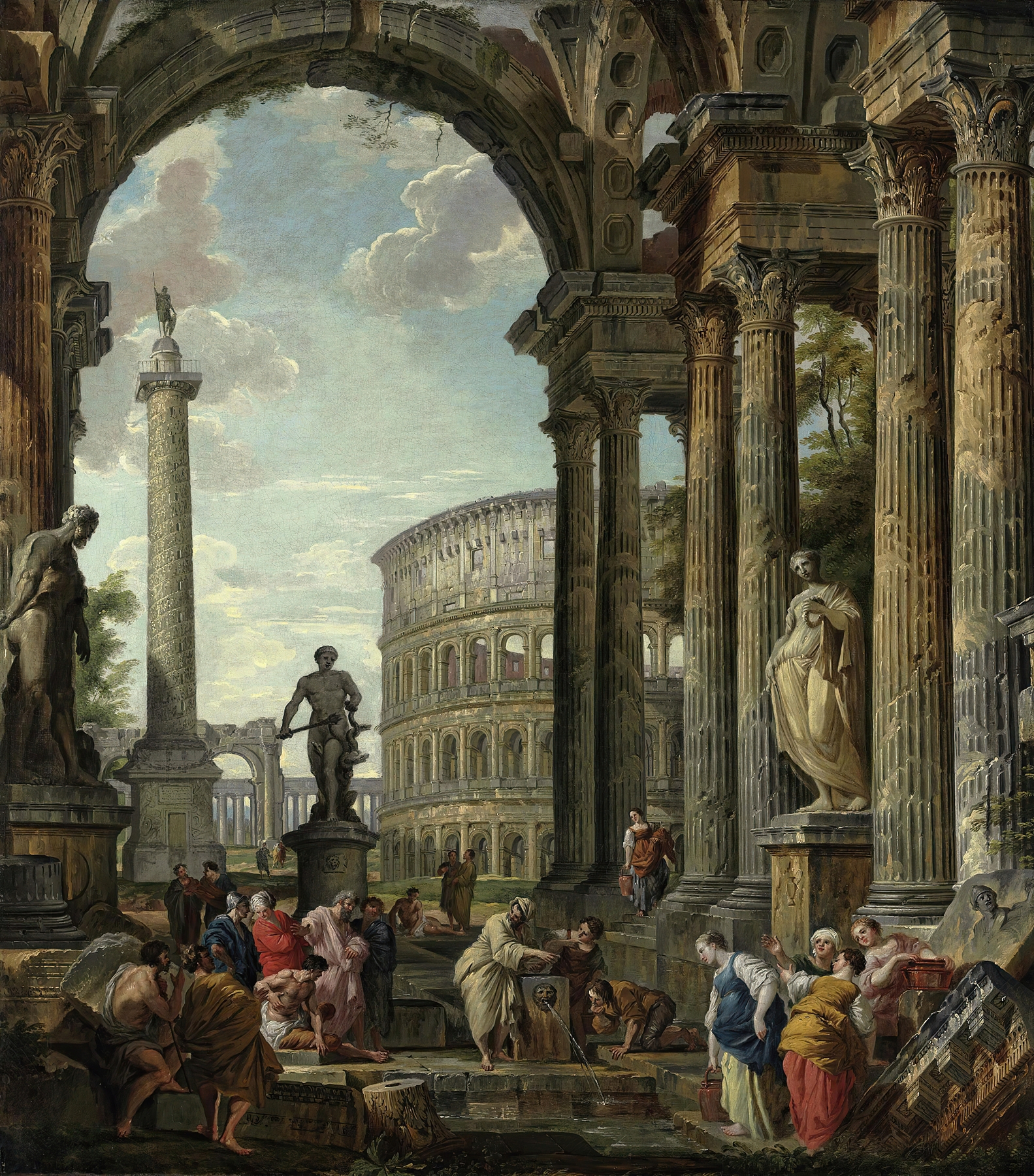
An architectural capriccio with the philosopher Diogenes and other figures — History & Analysis
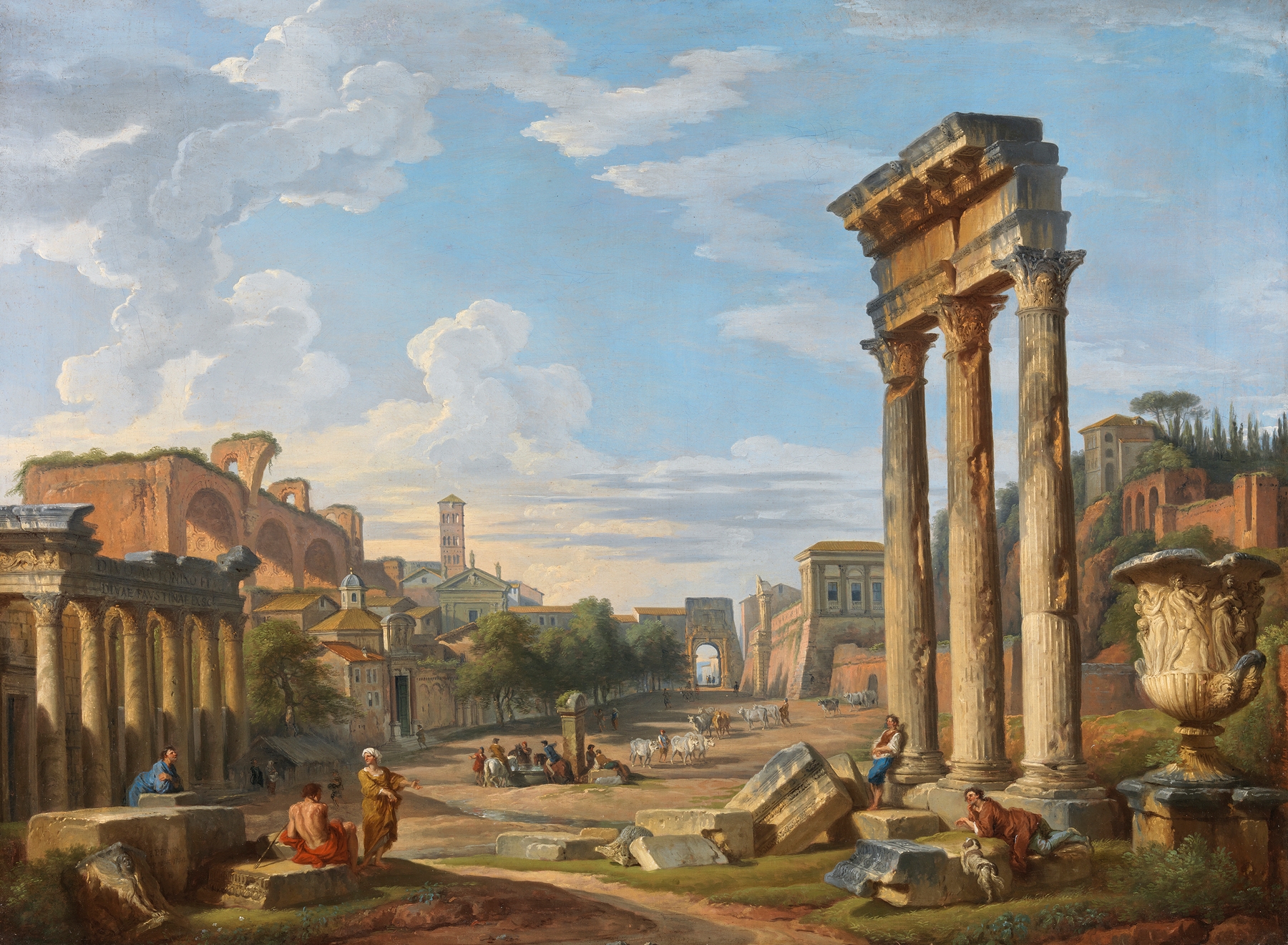
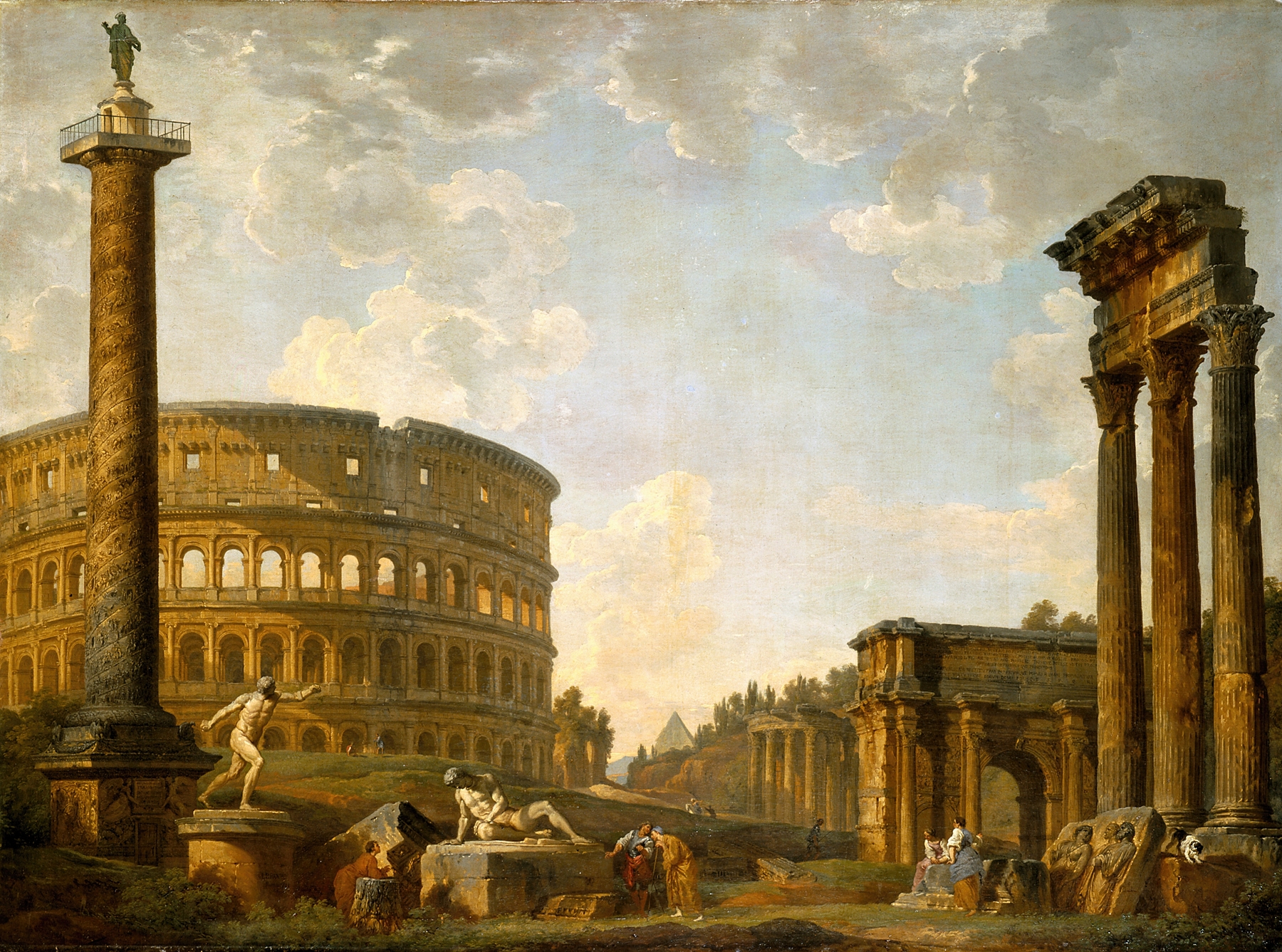
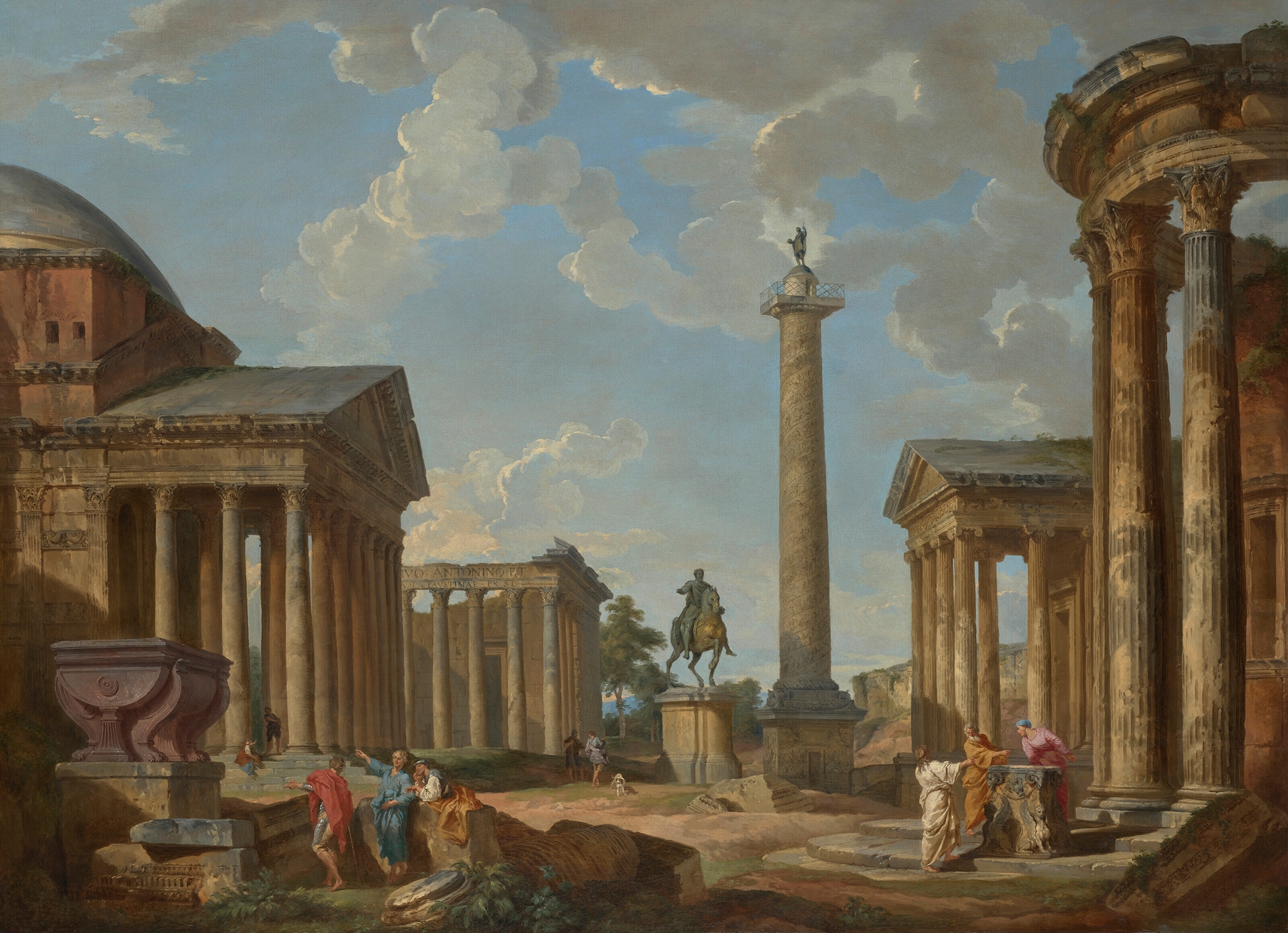
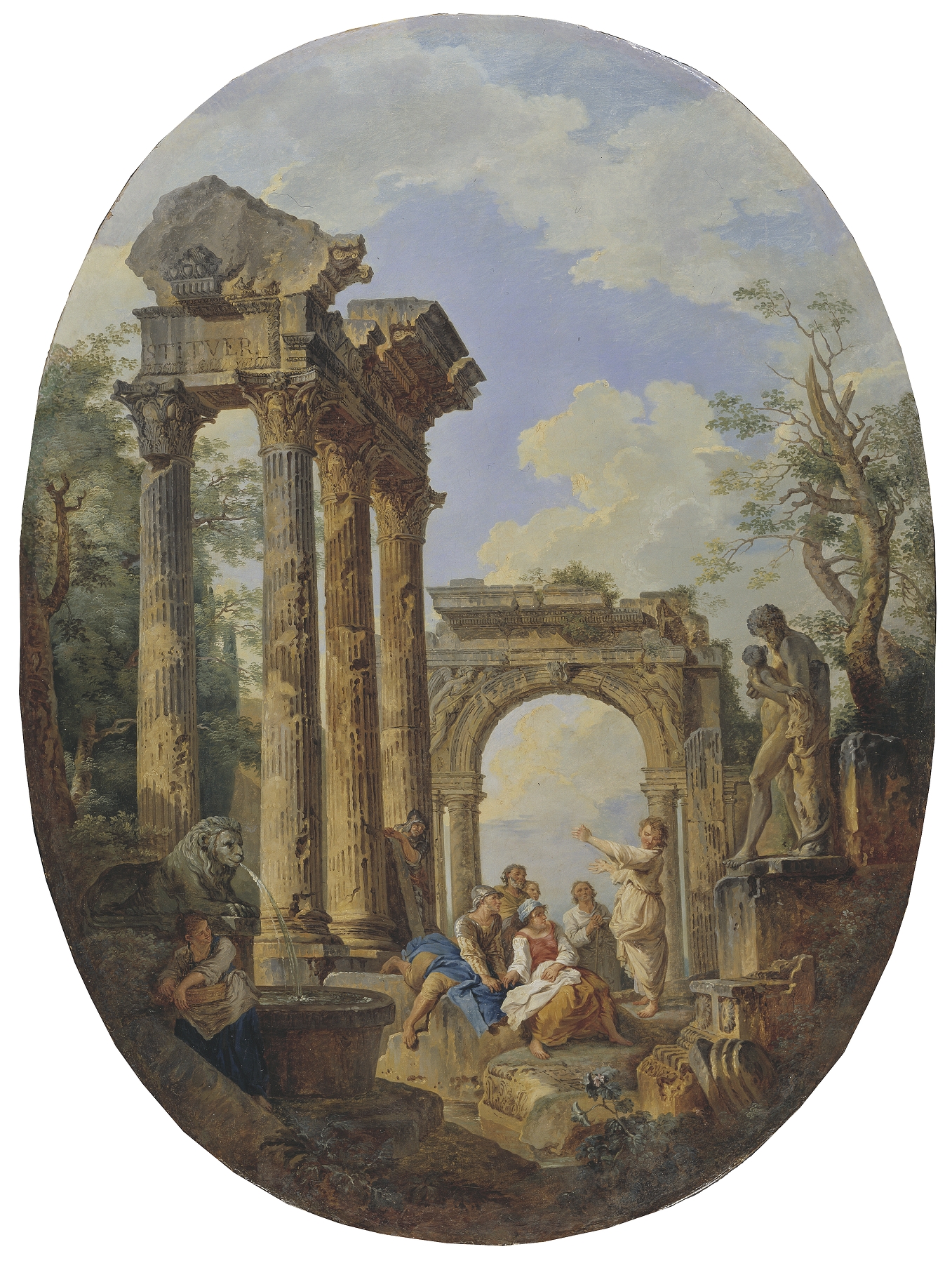
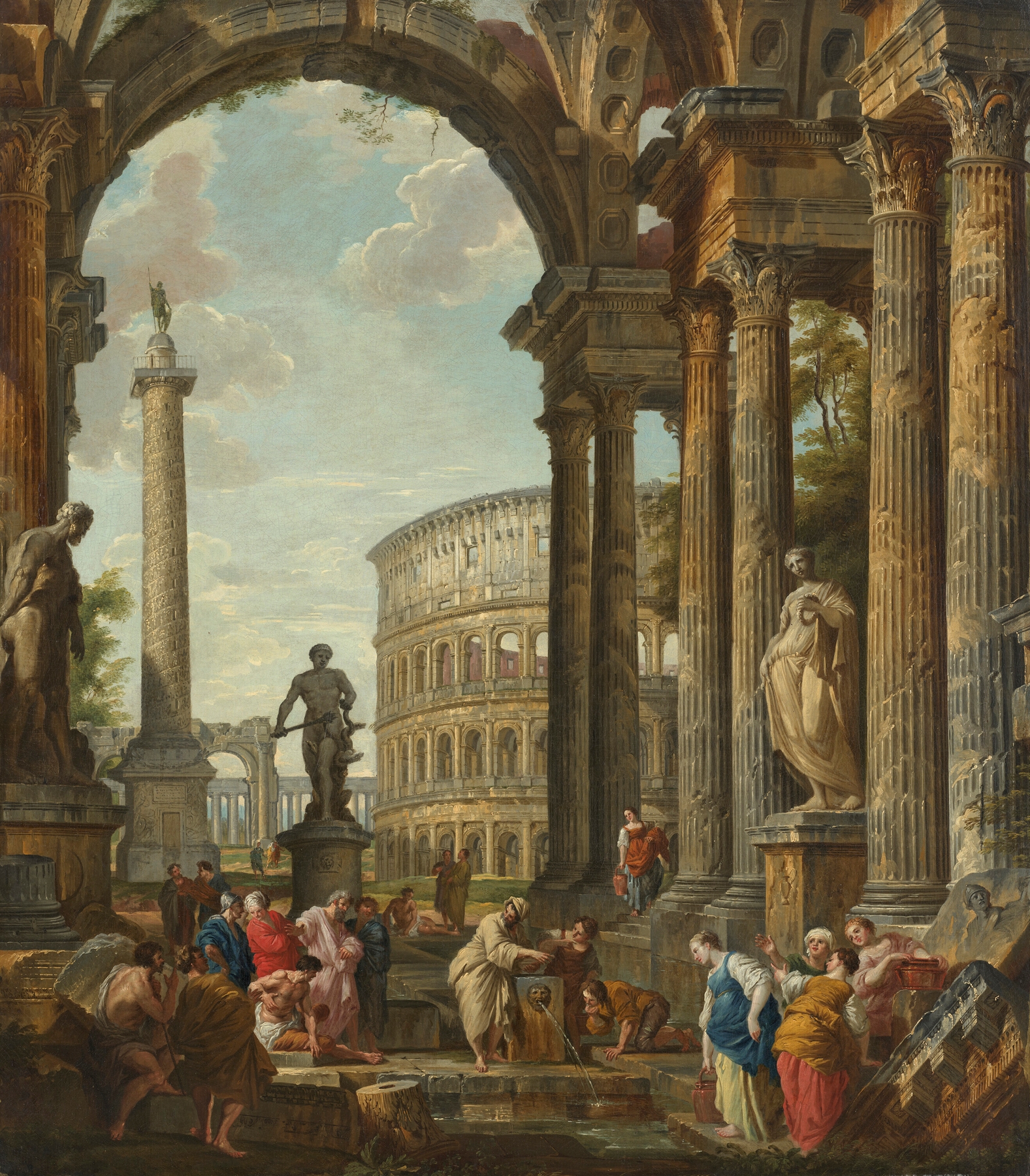
“Between color and silence, truth hides.” In the realm of art, each brushstroke is an awakening, a revelation waiting to unfold. Look to the right at the towering columns, framing the gathering of figures in intriguing conversation. Their postures are relaxed yet animated, inviting viewers to eavesdrop on a lively philosophical debate. The delicate interplay of light and shadow envelops the scene, creating a sense of depth that draws the eye into the architectural wonder.
Notice how the warm hues of ochre and gold contrast with the cool blues and greens, enhancing the vibrancy of the figures amidst the muted grandeur of their surroundings. Deep beneath the surface, this capriccio unveils the tension between wisdom and folly, as Diogenes embodies both the sage and the social outcast. The juxtaposition of his rugged simplicity against the refined opulence of the classical structures speaks to the eternal conflict between materialism and enlightenment. Each character's expression hints at personal philosophies, inviting us to reflect on our own beliefs within a society that often prioritizes appearance over substance.
Giovanni Paolo Panini created this piece during the 18th century, a time when the allure of the Grand Tour captivated European elites. While living in Rome, he delved into themes of architecture and philosophy, finding inspiration in the ruins and the conversations they sparked. This work underscores not only Panini's mastery of perspective and composition but also the era's burgeoning fascination with the interplay between art, thought, and the architectural heritage of antiquity.