An der Wümme mit Gänsen — History & Analysis
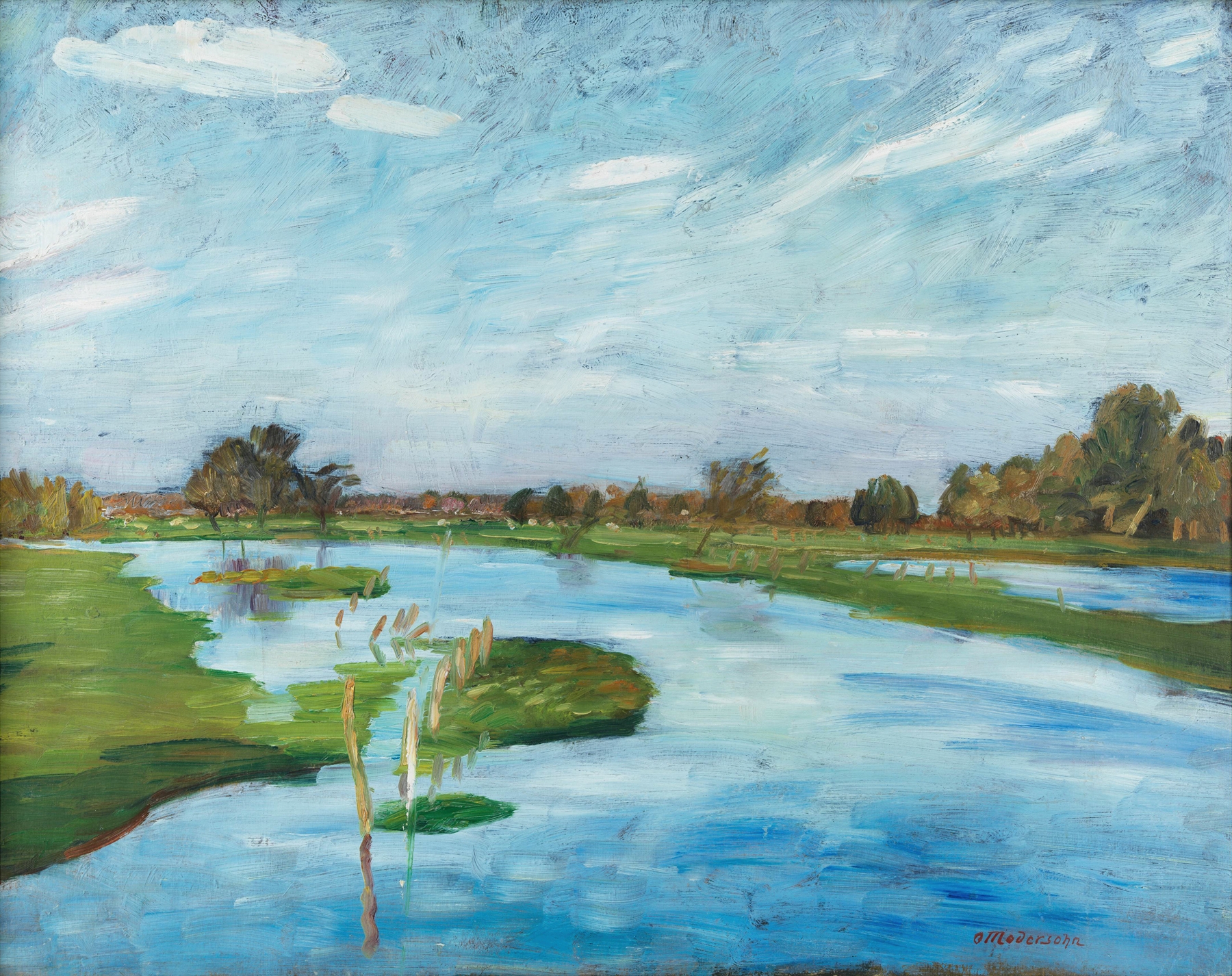
“Sometimes beauty is just pain, disguised in gold.” In the quiet reverie of memory, landscapes become more than mere scenery; they reflect the essence of what we lose and cherish. Focus on the gentle curve of the river that meanders through the canvas, its surface shimmering under a soft, golden light. Notice how the geese float gracefully, their white forms contrasting with the deep greens and browns of the lush banks. The strokes are fluid and expressive, capturing the essence of nature with both intensity and tenderness.
The interplay of light and shadow creates a sense of depth, inviting the viewer into this tranquil moment. The painting holds a duality—serenity intertwined with a hint of melancholy. The calmness of the water suggests the passage of time, while the geese, symbols of memory and migration, evoke fleeting moments of life that can never be recaptured. Each brushstroke tells a story of longing, capturing the ephemeral beauty of a moment that remains vivid yet distant.
In 1912, Otto Modersohn created this piece while living in Worpswede, a small artists' colony in northern Germany. At this time, he was deeply influenced by the surrounding landscapes and the intimate connection to nature. The early 20th century was a period of artistic exploration, where many were searching for authenticity in their work, reflecting their personal experiences and the changing world around them. Modersohn's approach in this painting encapsulates both his love for the natural world and his own inner reflections.