An Old Woman Cooking Eggs — History & Analysis
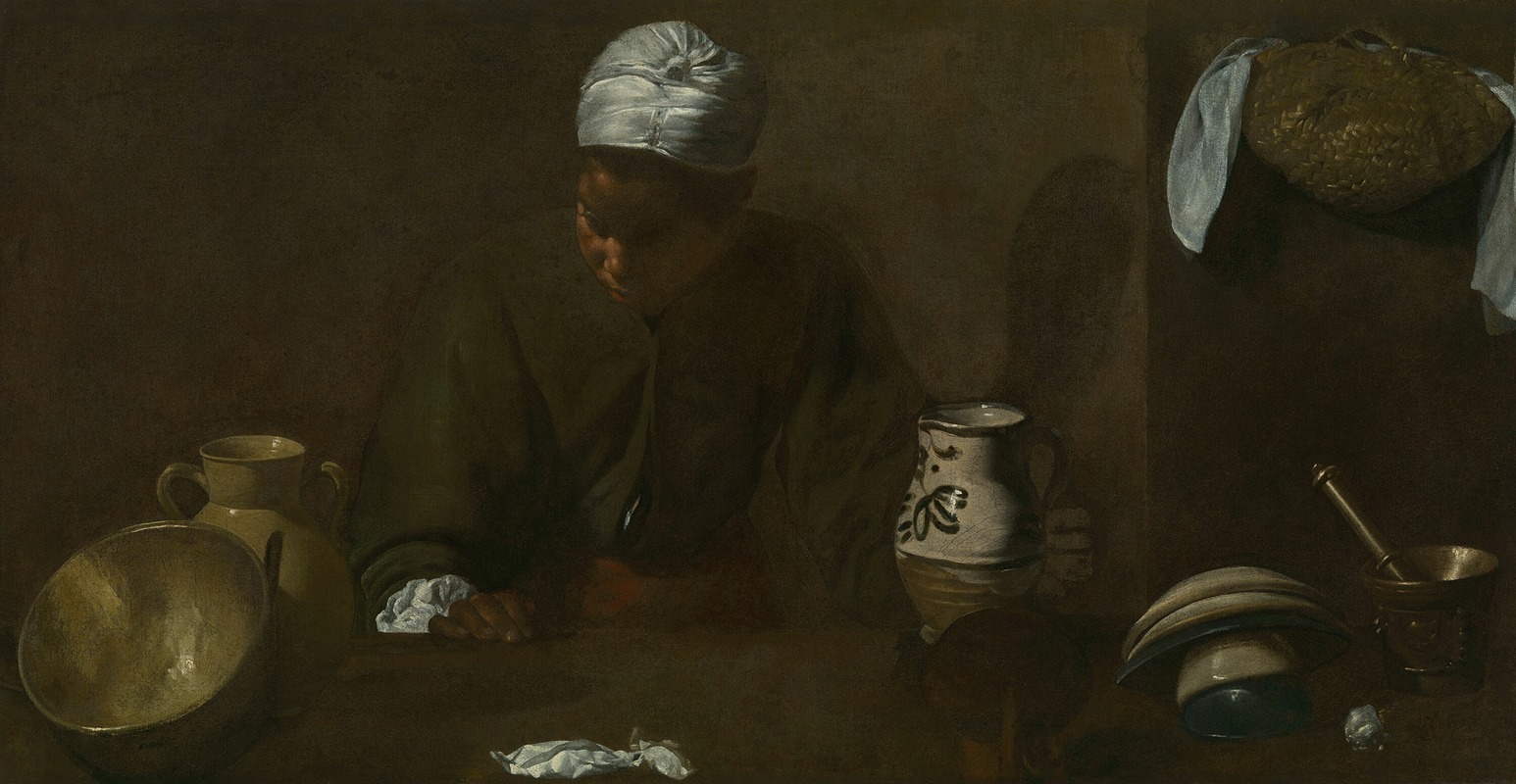
“Between color and silence, truth hides.” The weight of legacy rests upon the shoulders of those who toil in the shadows, unseen yet vital. In the stillness of an ordinary kitchen, the act of cooking transcends mere sustenance; it becomes a meditation on life itself. Focus on the old woman at the center of the canvas, her hands deftly maneuvering around a simple earthen pan. Notice how her weathered face, illuminated by a warm, soft light, reveals stories etched by time.
Look closely at the rich, earthy palette that Velázquez employs—deep browns and muted yellows contrast against the starkness of the surrounding space, drawing your gaze to her concentrated expression and the delicate eggs she prepares. In this intimate moment, the artist invites contemplation of both the mundane and the profound. The eggs, symbolic of new beginnings and sustenance, lie in stark contrast to the woman’s aged hands, suggesting a cyclical nature of life. The silence surrounding her is palpable, evoking the weight of years spent in labor, which speaks to a greater narrative of resilience and daily trials.
The unassuming setting becomes a sanctuary where the ordinary transforms into the extraordinary through the lens of dedication. Diego Velázquez painted this work in 1599 while he was in Seville, a time when he was establishing his reputation as a master of portraiture and genre scenes. The artist's focus on everyday life during this period reflected a shift in the art world, as the Baroque movement began to embrace realism and the human experience. This piece marks a significant moment in Velázquez’s career, showcasing his keen ability to infuse depth and emotion into the simplest of subjects.