Kitchen Scene — History & Analysis
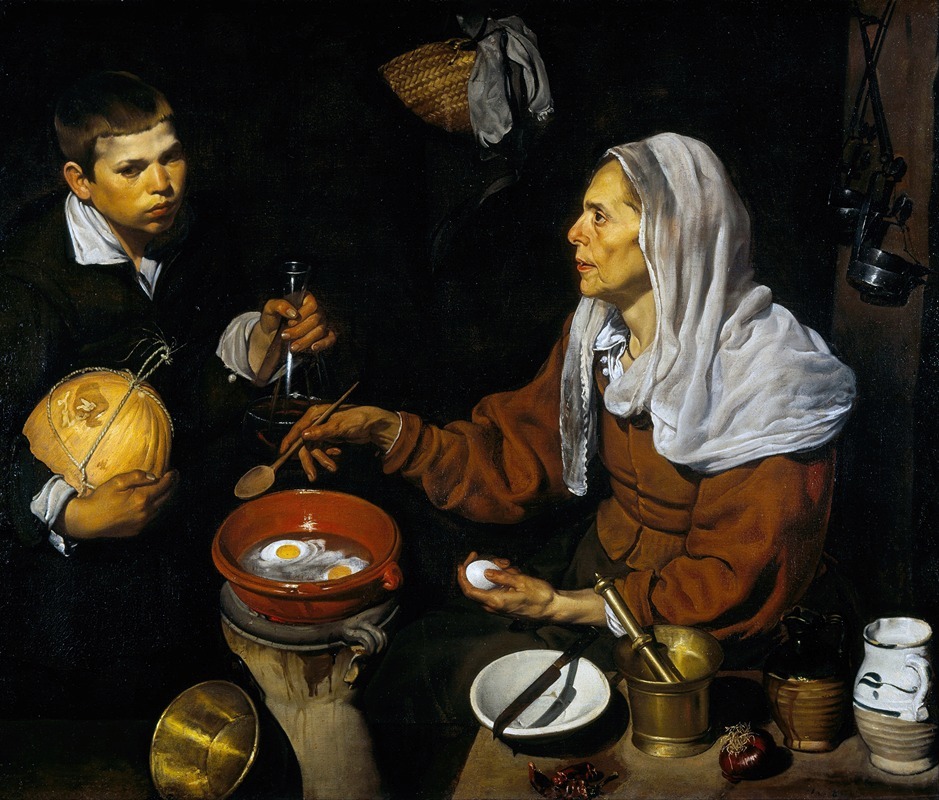
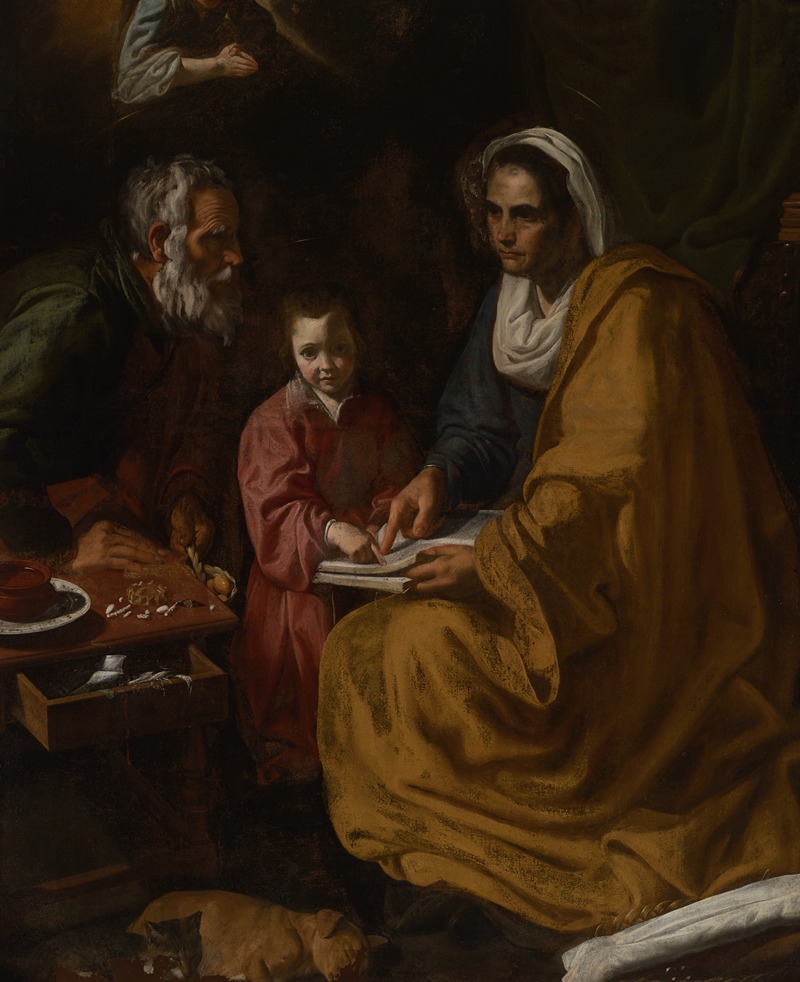
“Every silence here is a confession.” In the heart of a bustling kitchen, desire simmers just beneath the surface, as mundane tasks unravel hidden stories of longing and ambition. Look to the left at the figures engaged in their daily chores, their postures a language of toil and urgency. The rich, earth-toned palette envelops the scene, creating warmth and intimacy. Notice how the light spills through the open window, cascading softly across the woman stirring a pot, her concentration palpable.
Each stroke of the brush provides texture to the ingredients laid upon the table, transforming the ordinary into a canvas of vitality. Yet, amidst the clatter of utensils and the hum of activity, subtle contrasts emerge. The palpable yearning in the gaze of the boy, who stands silently, observing the adult world unfold, speaks to an innocence wrestling with the desire for connection and purpose. The juxtaposition of vibrant hues against the shadows captures not just the bustling life of the kitchen but the silent aspirations of those within it, weaving a narrative of hope and ambition.
During the years between 1618 and 1620, the artist created this piece in Spain, firmly established in the court of King Philip IV. At this time, Velázquez was gaining recognition as a portraitist yet was also exploring themes of everyday life. The tension between the grandeur of royal patronage and the humble, intimate moments captured in works like this reflects a pivotal shift in the Spanish Baroque period, establishing him as a master of both realism and narrative depth.