Annunciatie — History & Analysis
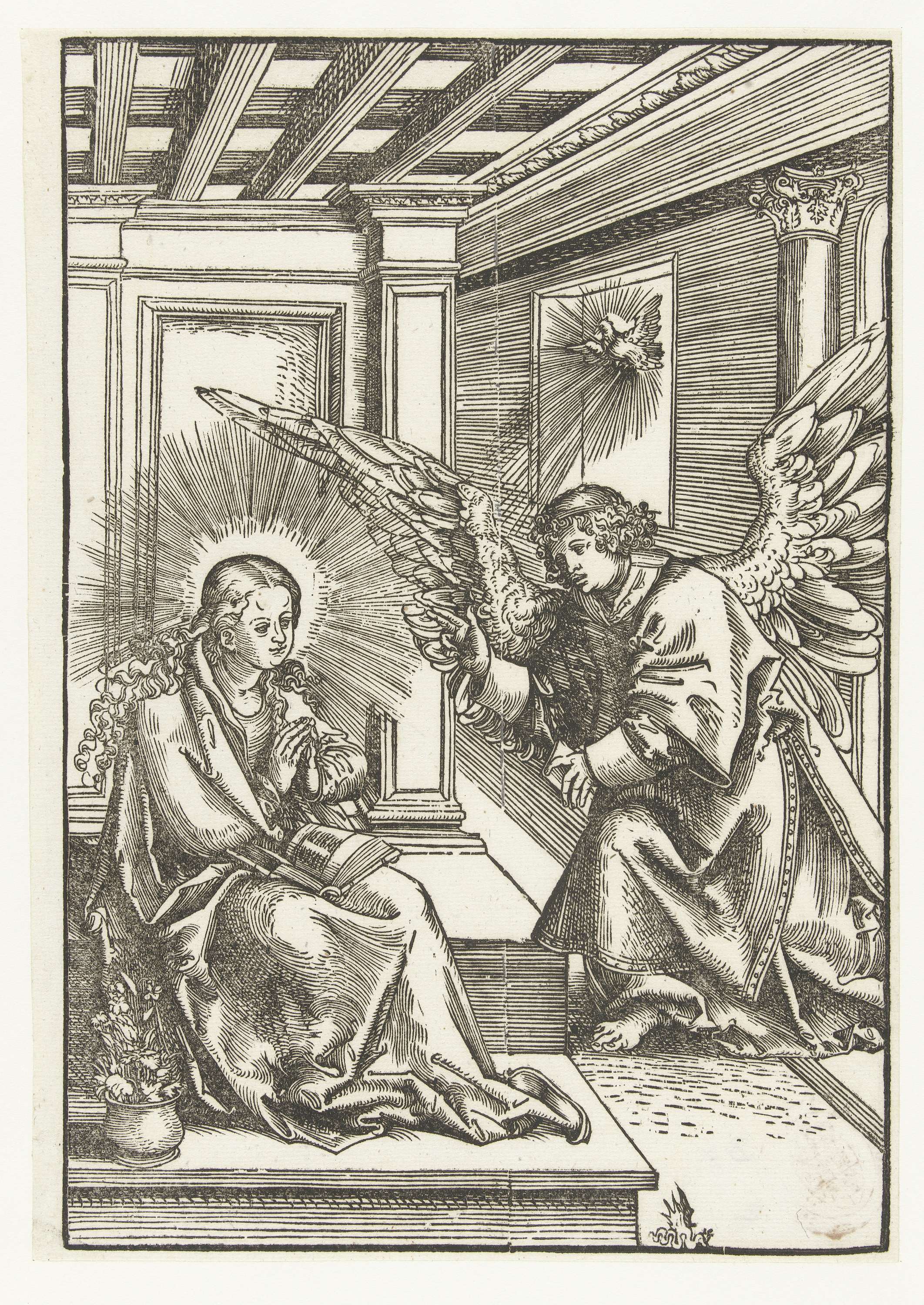
When did color learn to lie? The beauty of a vibrant hue can often mask deeper truths, leaving us to question the authenticity of what we see. In Annunciatie, the viewer's gaze is immediately drawn to the figure of the Virgin Mary, resplendent in vivid blue and gold. Look closely, and the expert use of oil paint reveals a delicate interplay of light and shadow, illuminating her serene expression while casting an air of reverence.
The archangel Gabriel stands beside her, his wings unfurled like whispers of divine intent, yet a tension lingers in the space between them, rendered through Cranach’s meticulous attention to detail. Betrayal simmers beneath the surface of the scene. The opulent colors envelop the viewer in a sense of warmth and comfort, yet they simultaneously highlight the stark contrast between Mary’s calm composure and Gabriel’s forceful presence. The lush surroundings, blooming with life, mirror the pivotal moment of divine intrusion—her fate hanging in the balance.
The duality of beauty and impending change creates an emotional tension that compels reflection on the nature of acceptance and destiny. Created during a time of great transformation in the late 15th century, Cranach painted this work amidst the burgeoning Renaissance, where classical themes and personal faith converged. His career flourished in Wittenberg, where he became a prominent figure in the Protestant Reformation. The artist's exploration of religious subjects, infused with human emotion, culminated in pieces like this, where spirituality and the human experience intertwine with palpable complexity.