Apple Trees on a Hillside near Saint-Lô — History & Analysis
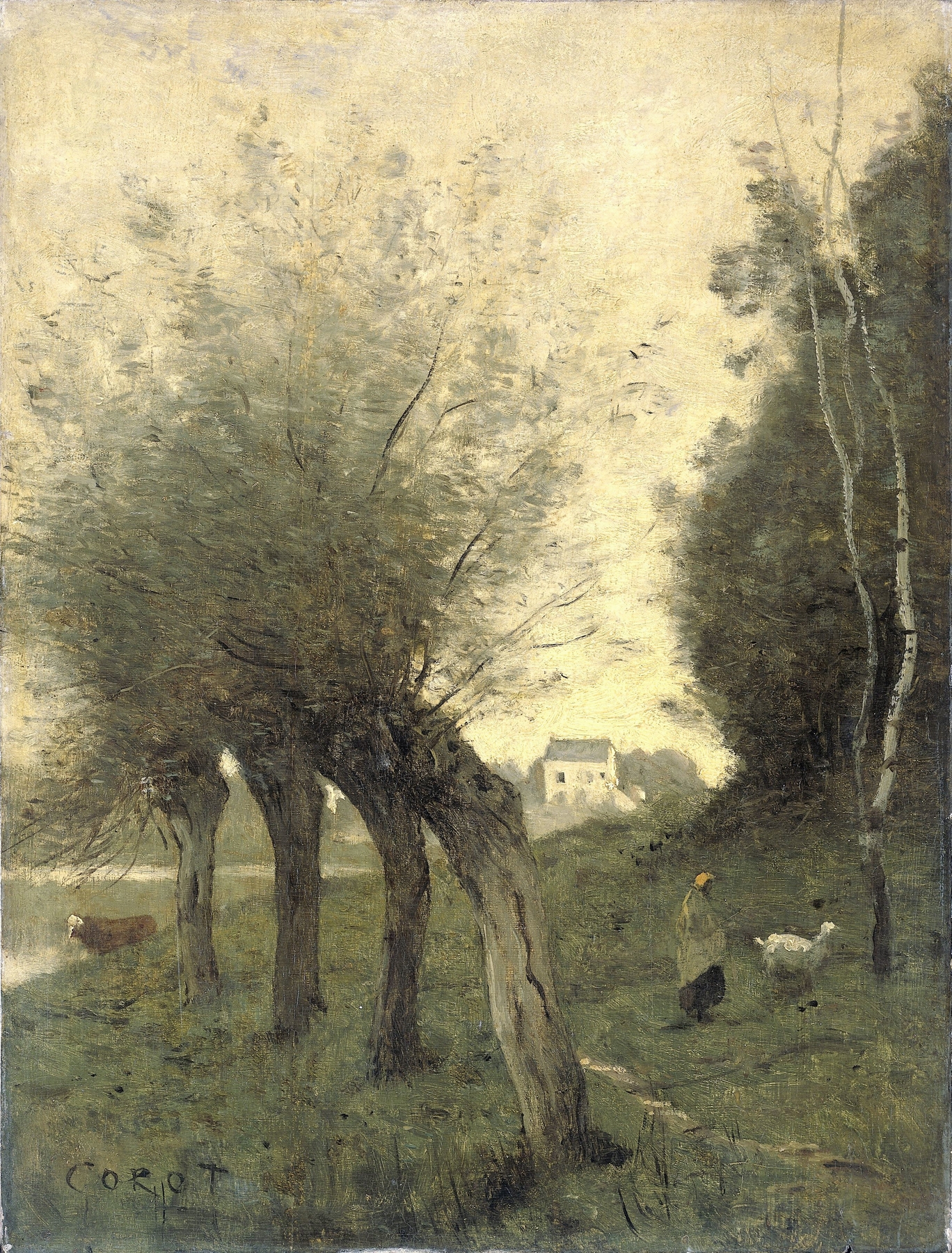
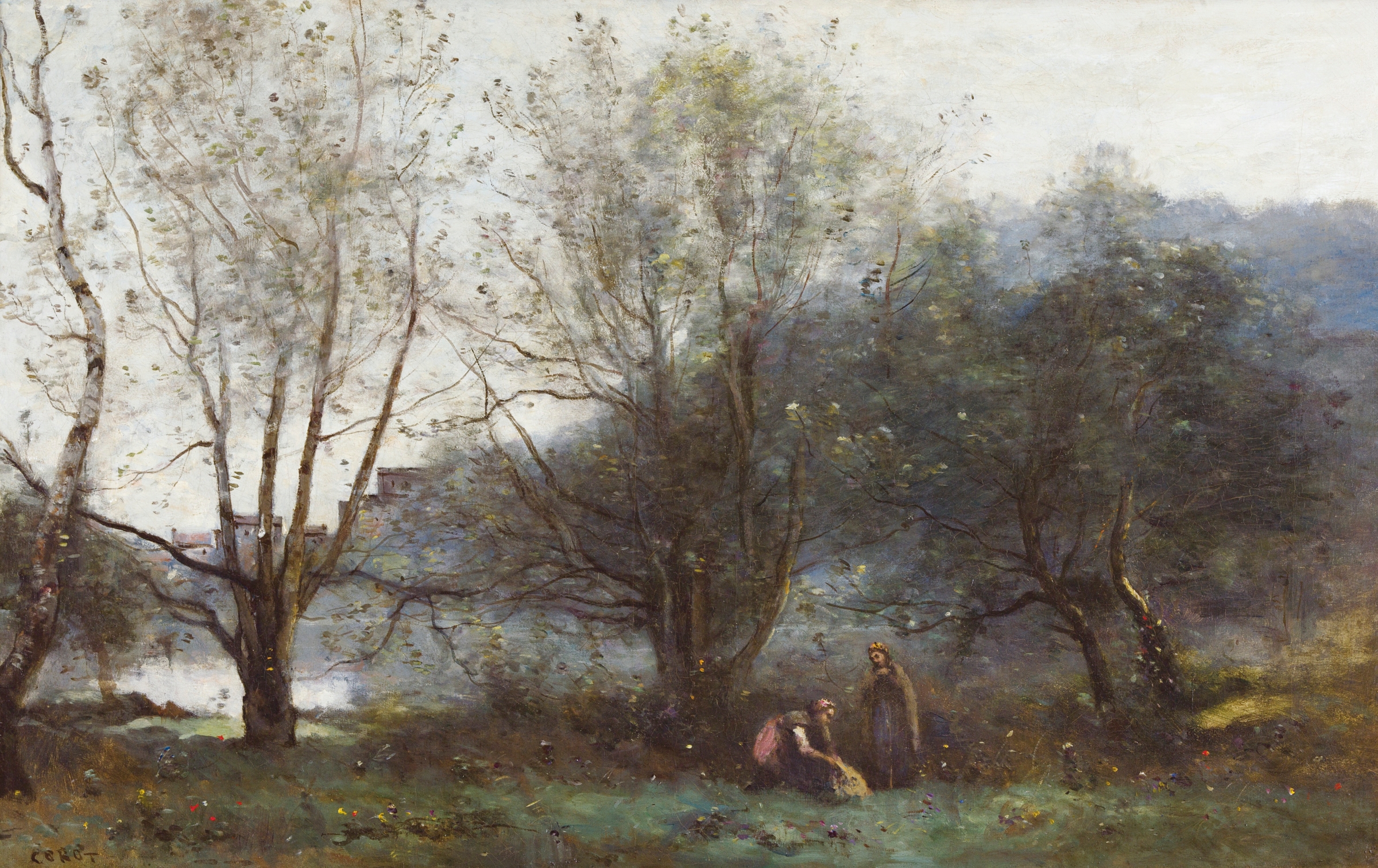
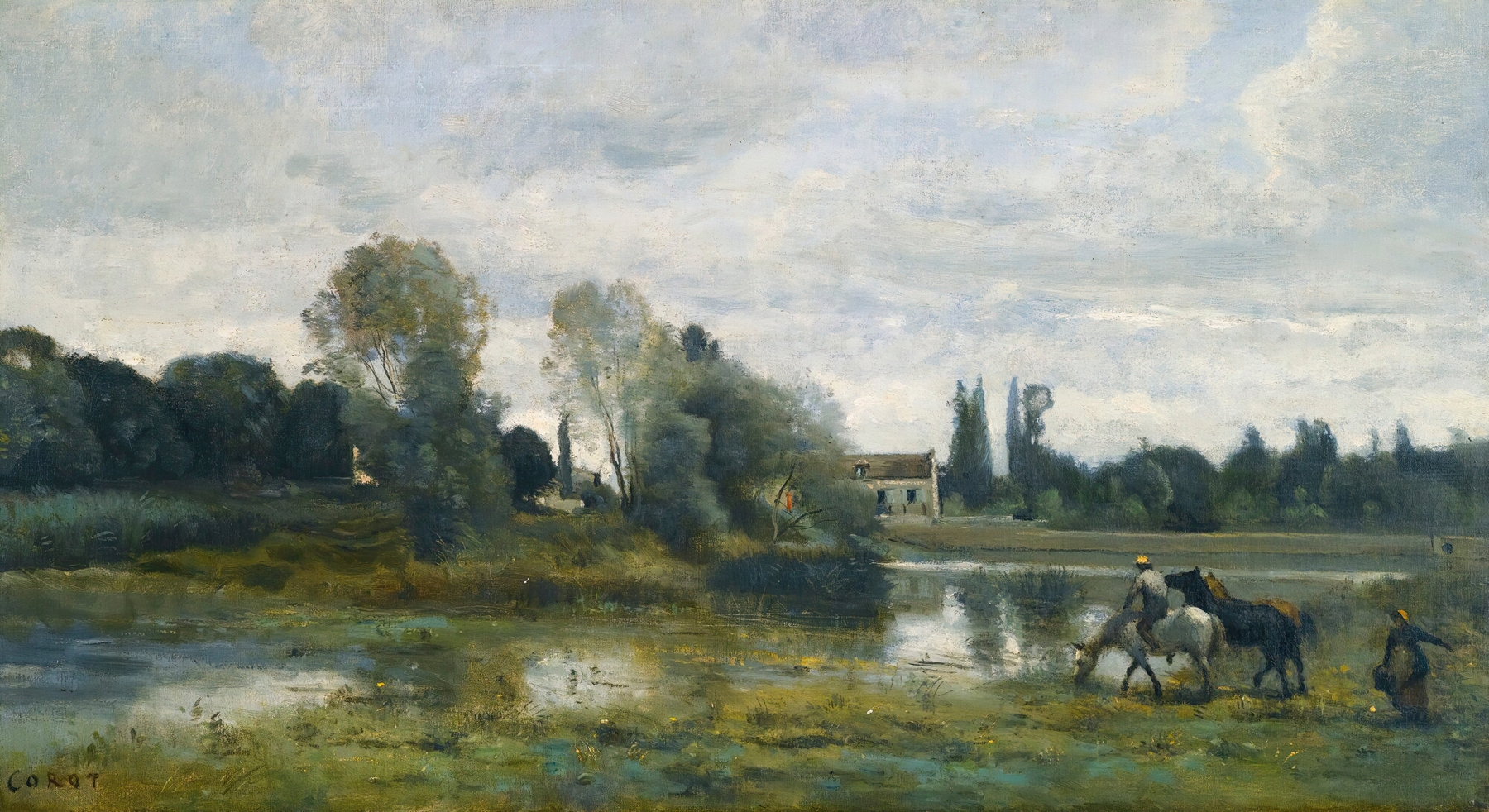
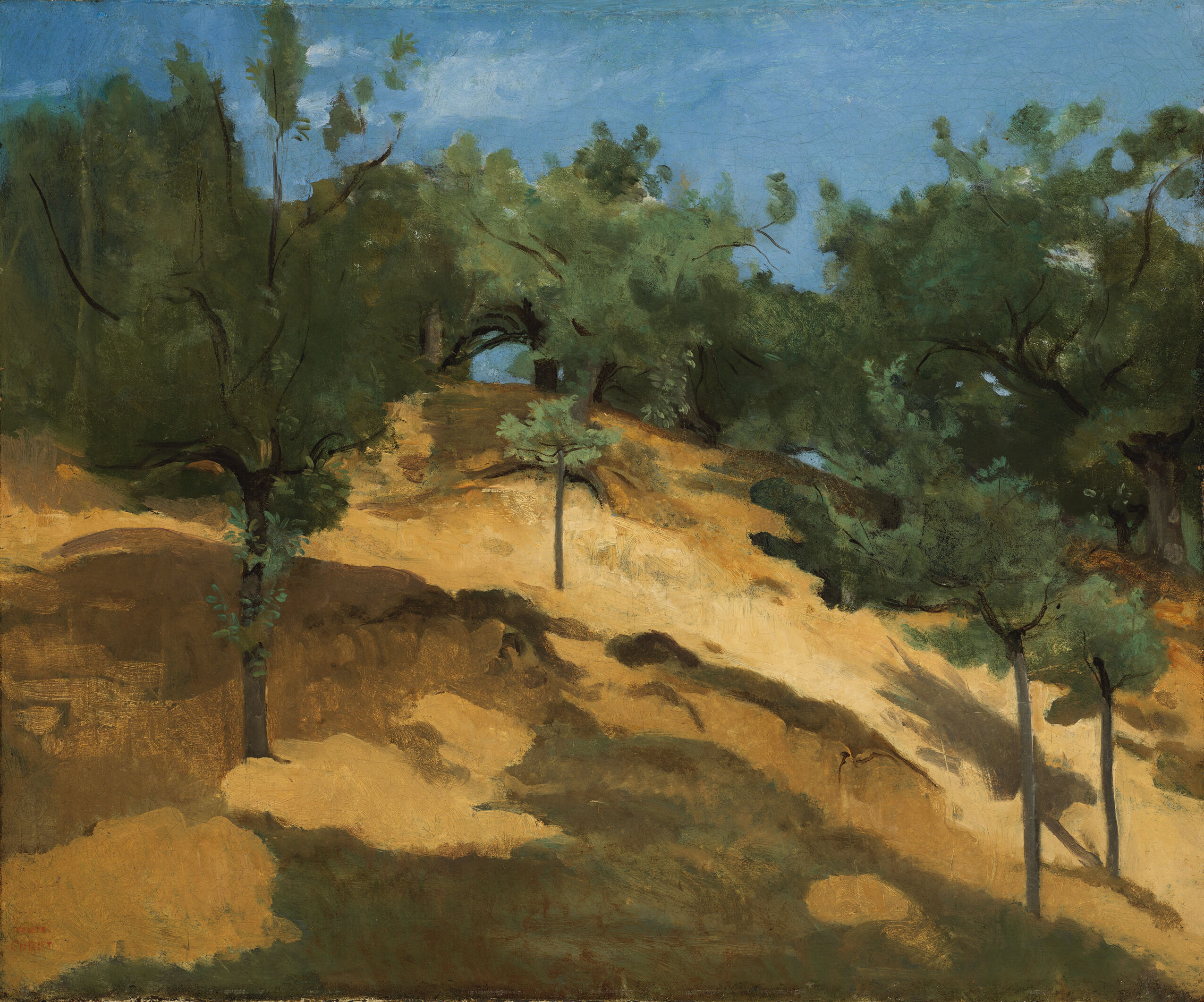
Could beauty survive in a century of chaos? In Apple Trees on a Hillside near Saint-Lô, nature stands resilient, a silent witness to the betrayals of time and humanity. Look to the left, where the apple trees stretch toward the horizon, their gnarled branches an intricate dance of greens and browns. The light filters through the leaves, casting dappled shadows on the hillside, inviting the viewer to wander into this serene landscape. The soft, muted palette—delicate blues merging with earthy tones—imbues the scene with a sense of nostalgia, as if remembering a forgotten past.
Corot’s brushwork, fluid yet deliberate, enhances the sense of tranquility that envelops the viewer. Yet beneath this pastoral beauty lies an undercurrent of emotional tension. The trees, though picturesque, whisper of abandonment, as their bent forms suggest resilience in the face of neglect. The harmonious coexistence of nature and distance hints at a deeper betrayal—not only of the landscape, but of the human spirit's estrangement from its roots.
Each stroke contains a silent plea, a reminder that beauty can persist in forgotten places, even when surrounded by decay. In the early 1850s, Corot created this work while navigating the evolving landscape of French art, where the transition from classicism to impressionism was underway. During this period, he sought to capture the fleeting qualities of light and atmosphere, reflecting a desire for emotional authenticity. The world was experiencing upheaval, yet through his brush, Corot painted a sanctuary, a moment of stillness amid the turmoil.