Appledore No. 2 — History & Analysis
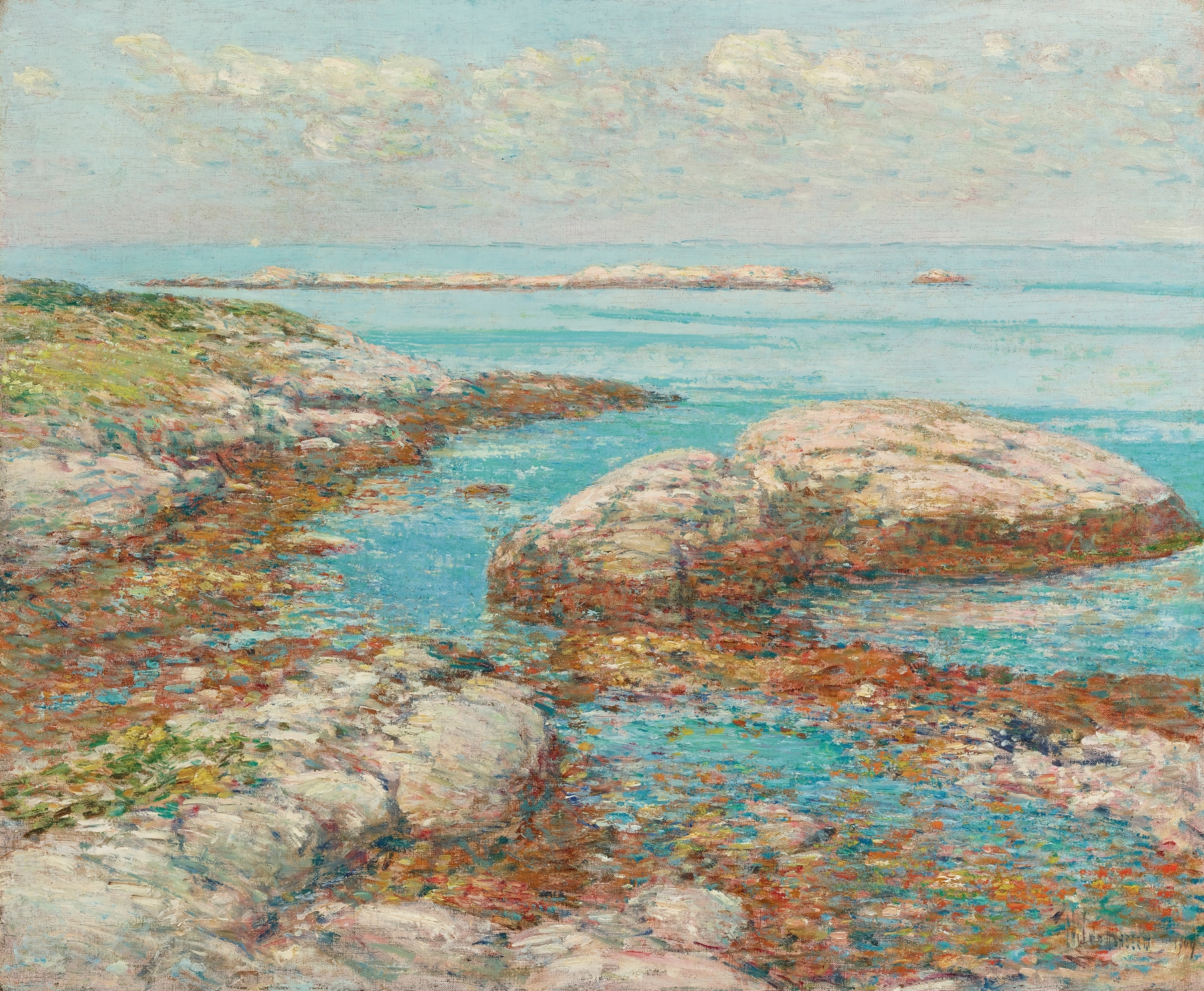
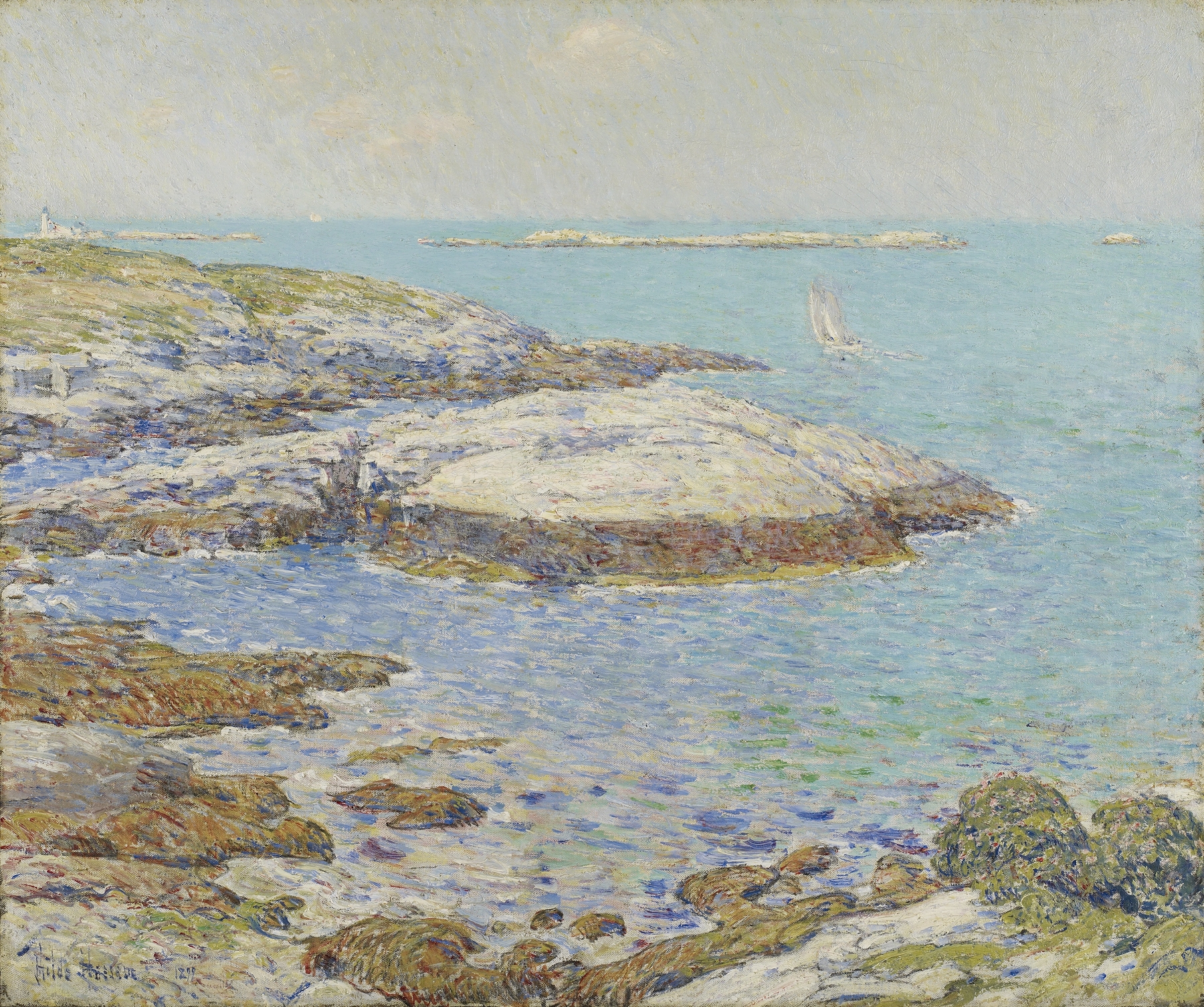
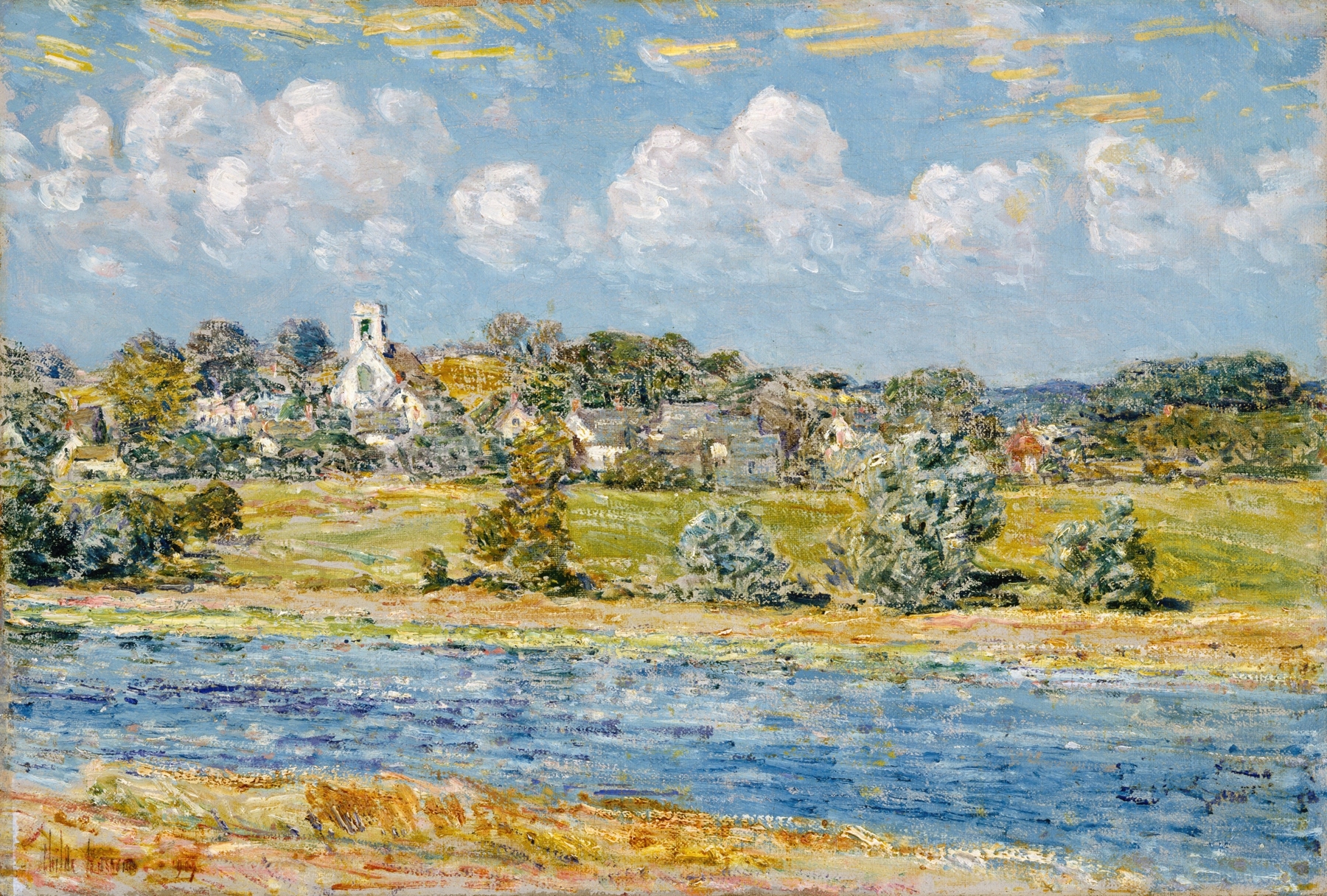
Can paint confess what words never could? In Appledore No. 2, a serene void whispers of a fleeting moment, where nature and human presence intertwine in a delicate balance. Look to the left at the gentle brushstrokes that form the lush foliage, a riot of greens punctuated by soft strokes of light. The horizon draws the eye to a tranquil sea, shimmering with hues of blue that reflect the sky’s own mood.
Notice how the light dances upon the water, creating a shimmering path that invites contemplation, while the composition's soft curves cradle the viewer’s gaze, guiding it effortlessly across the canvas. Beneath the surface of this idyllic scene lies a tension between the vibrant life of the landscape and the underlying stillness it conveys. The interplay of colors suggests a moment caught between time, evoking feelings of nostalgia and longing. The seemingly empty spaces infuse the painting with a sense of void, where what is not depicted speaks as loudly as the visible — a reminder of what we leave behind and the untold stories of the natural world.
Created in 1912 while Hassam was immersed in his exploration of American Impressionism, Appledore No. 2 reflects his experiences on the picturesque Appledore Island, part of the Isles of Shoals. At this time, the artist was in the midst of a prolific phase, having just returned from a trip to Europe, where he absorbed the techniques of the Impressionists. This period marked a significant evolution in his work, as he sought to capture the essence of light and atmosphere through bold brushwork and vibrant palettes.