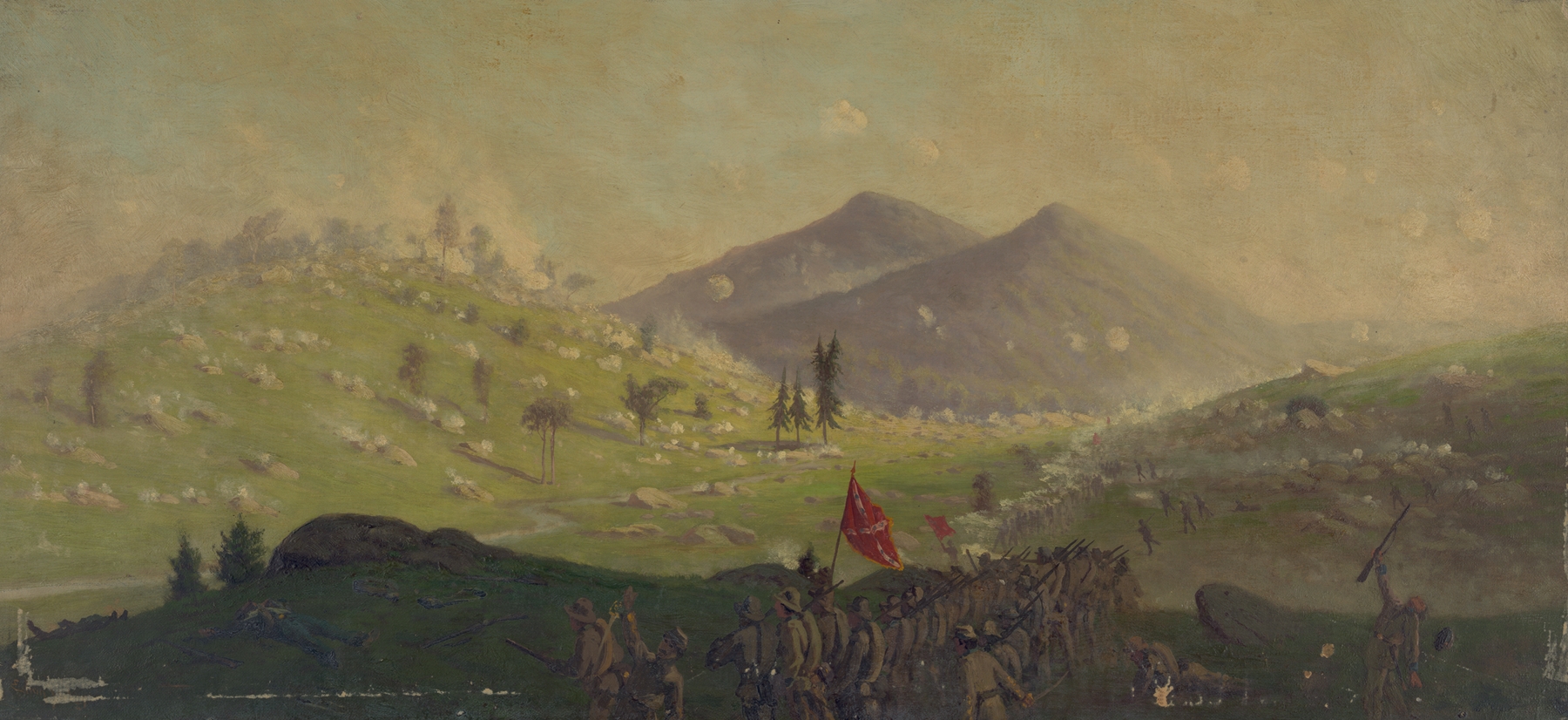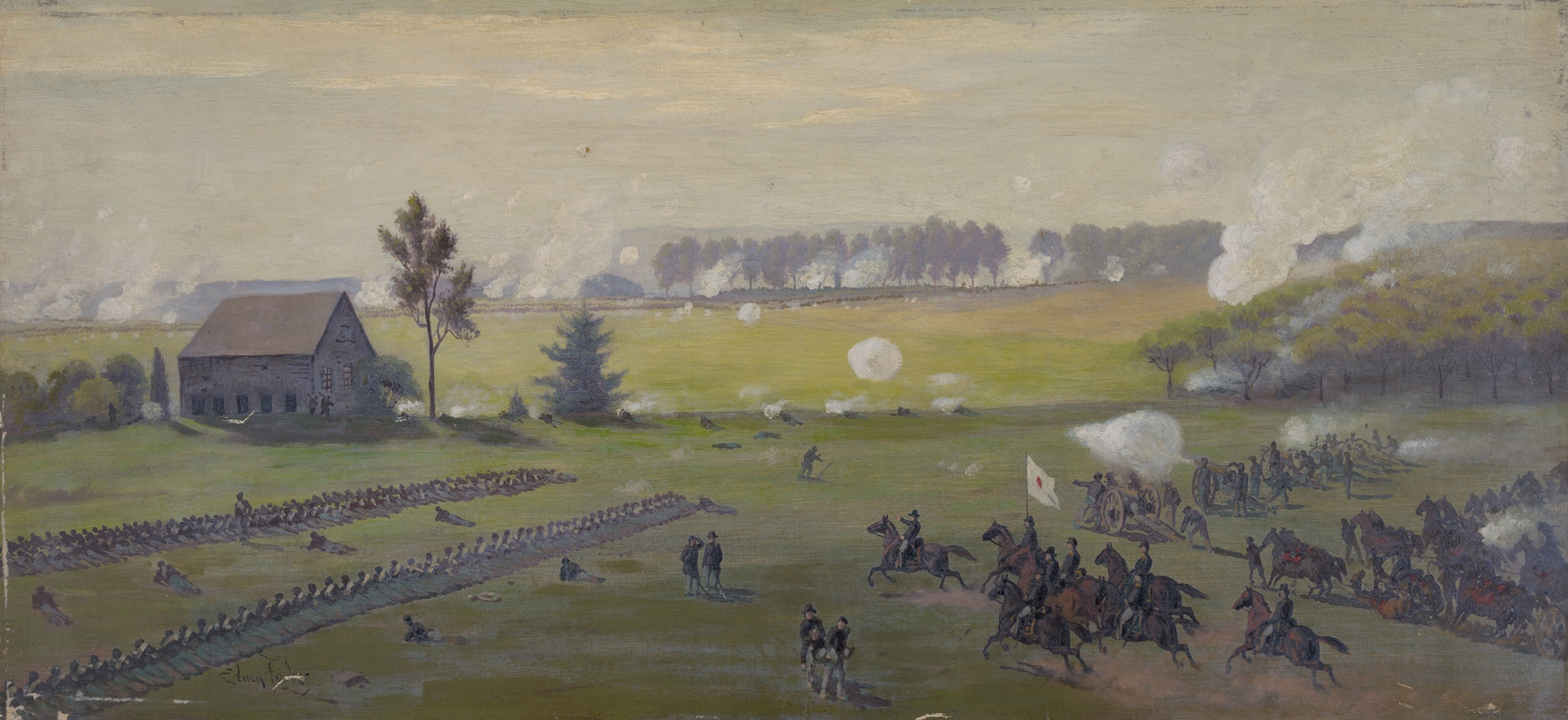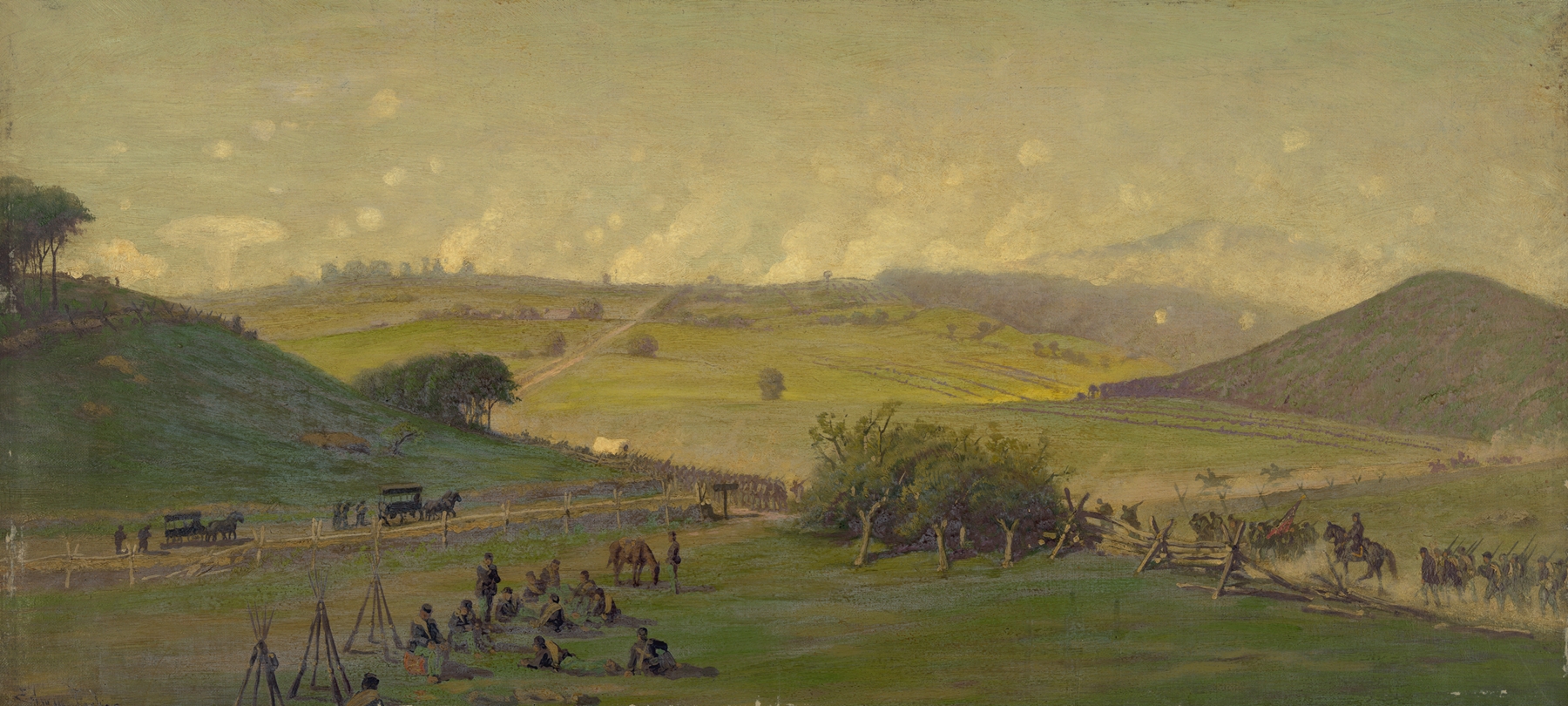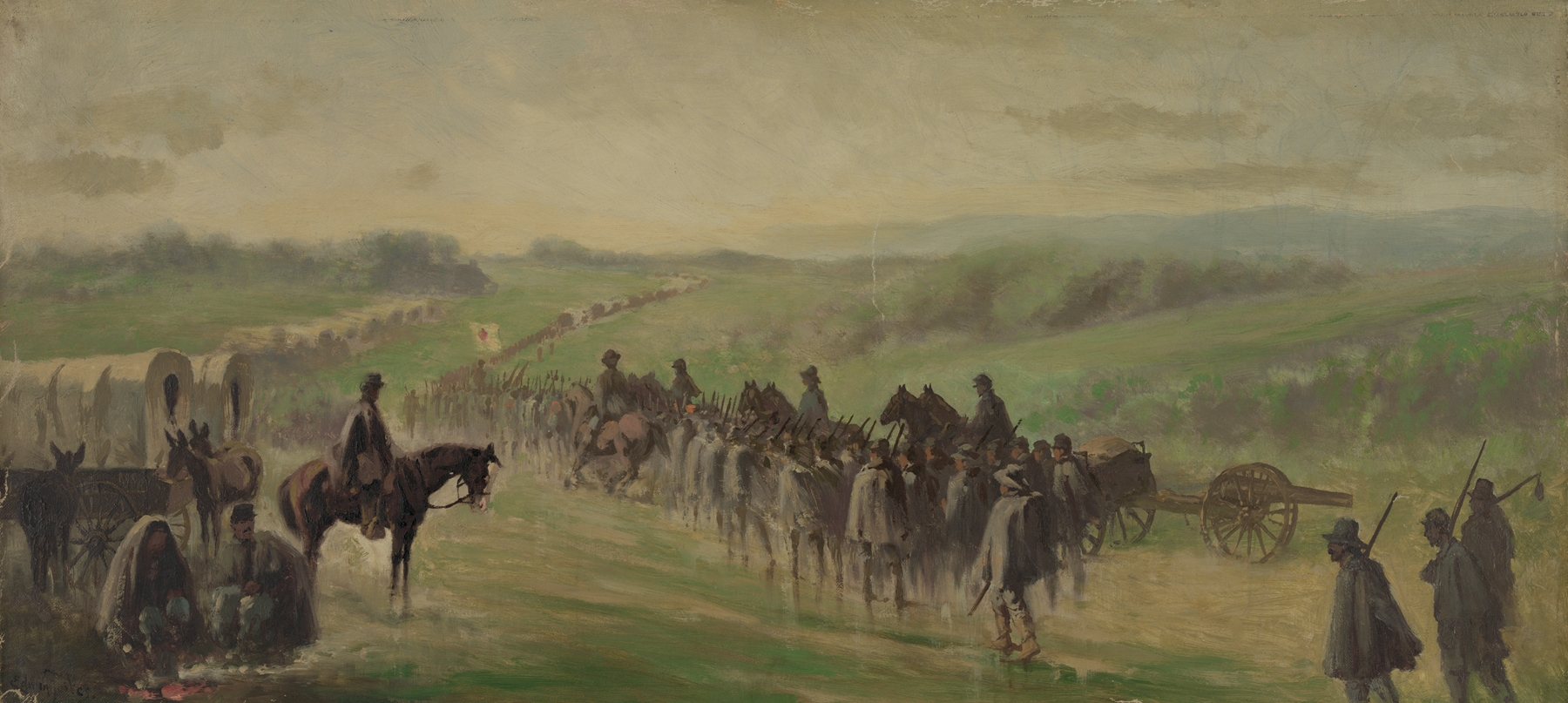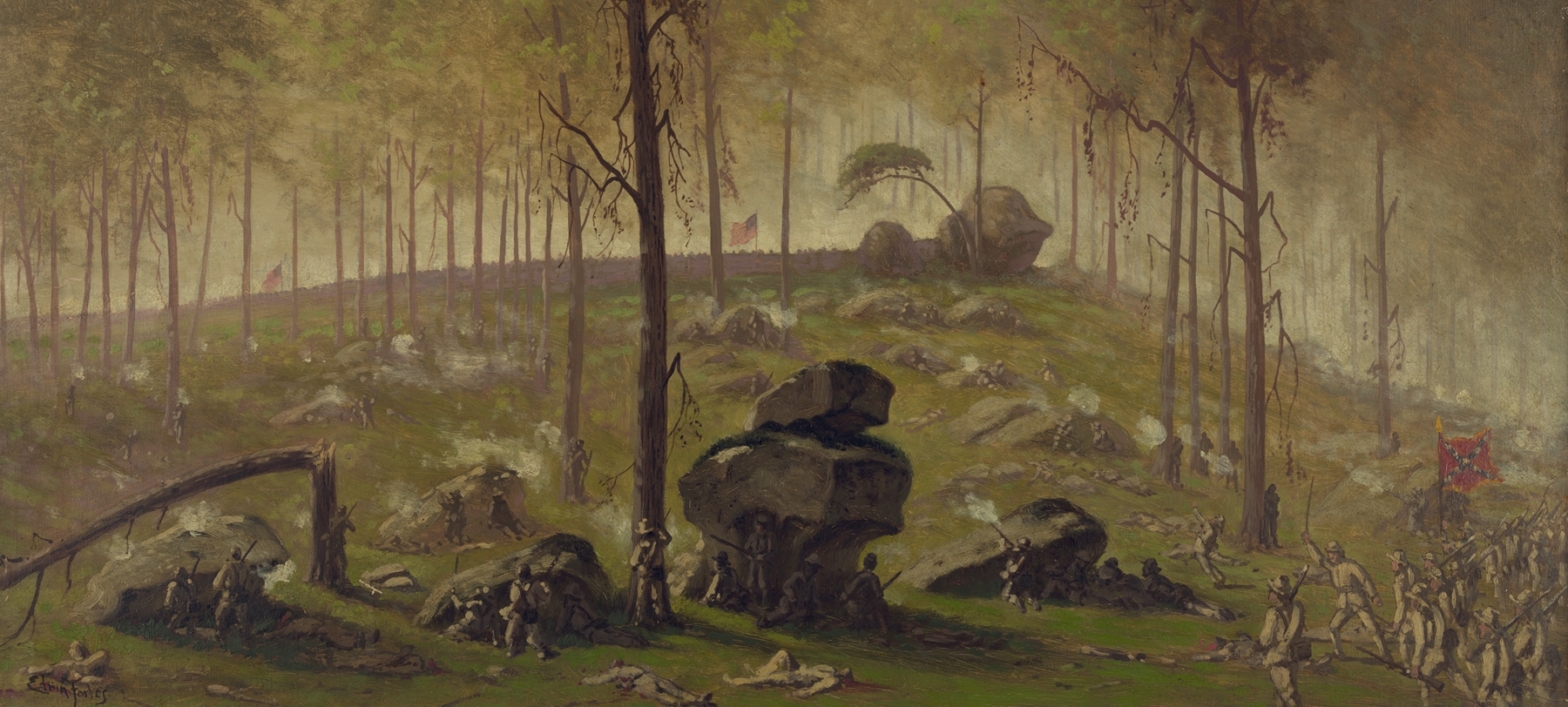
Attack of Johnston’s Div., C.S.A. on the breastworks on Culps Hill defended by Wadsworth’s Div — History & Analysis
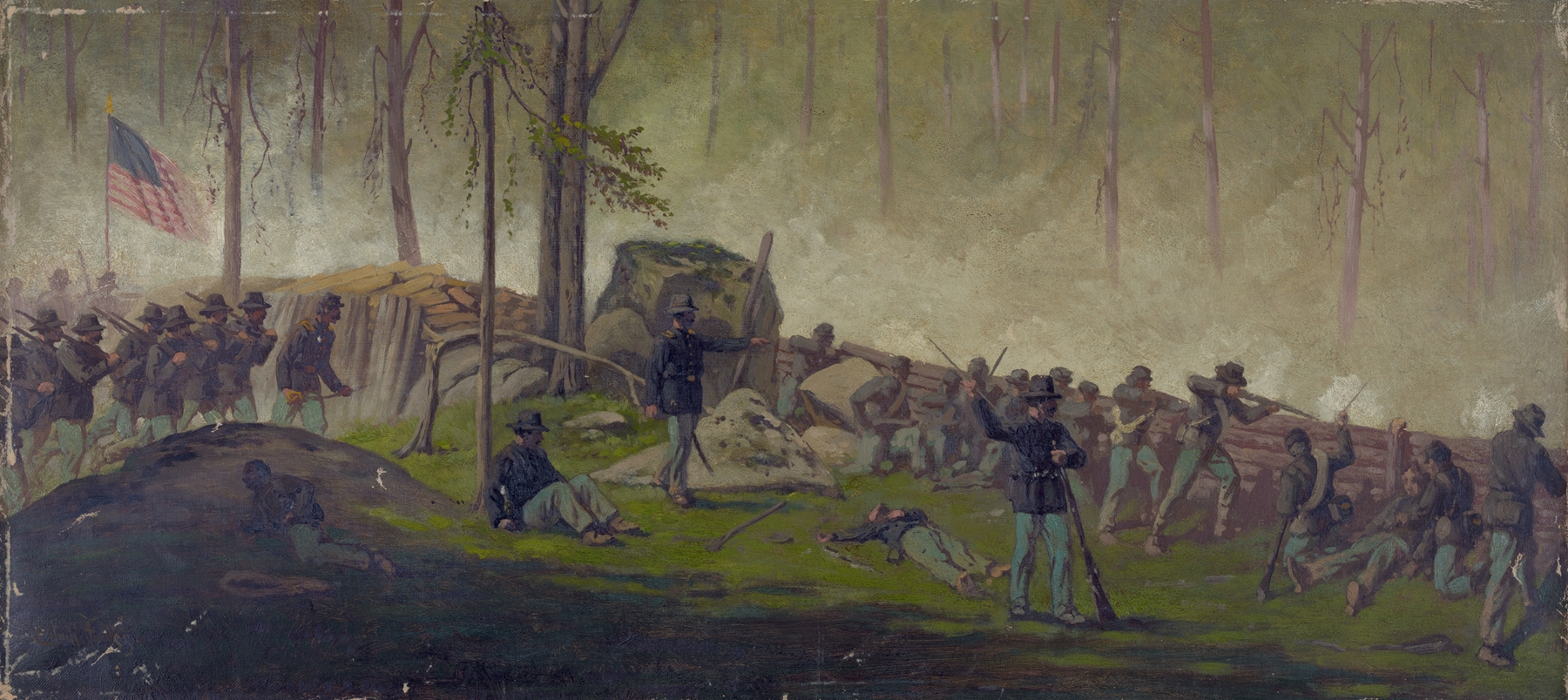
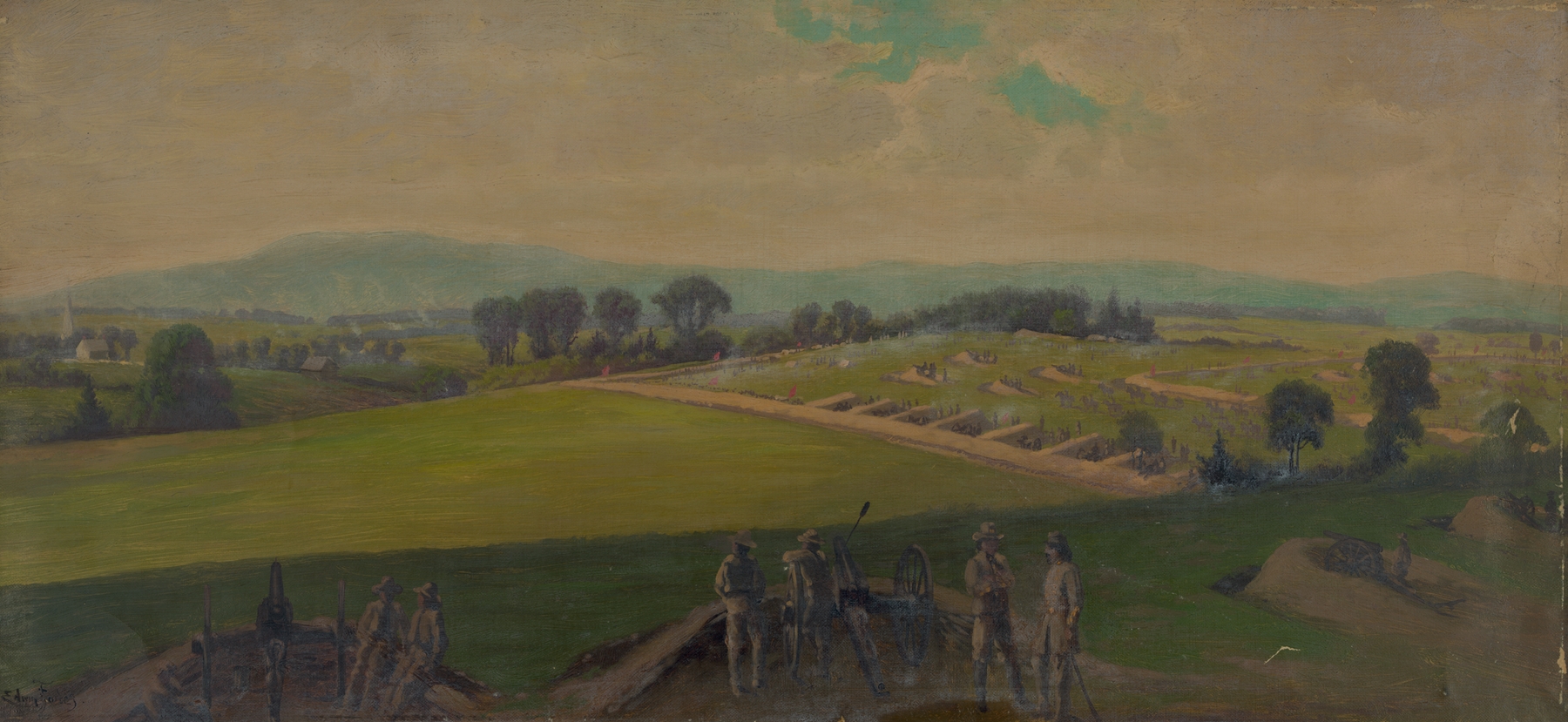
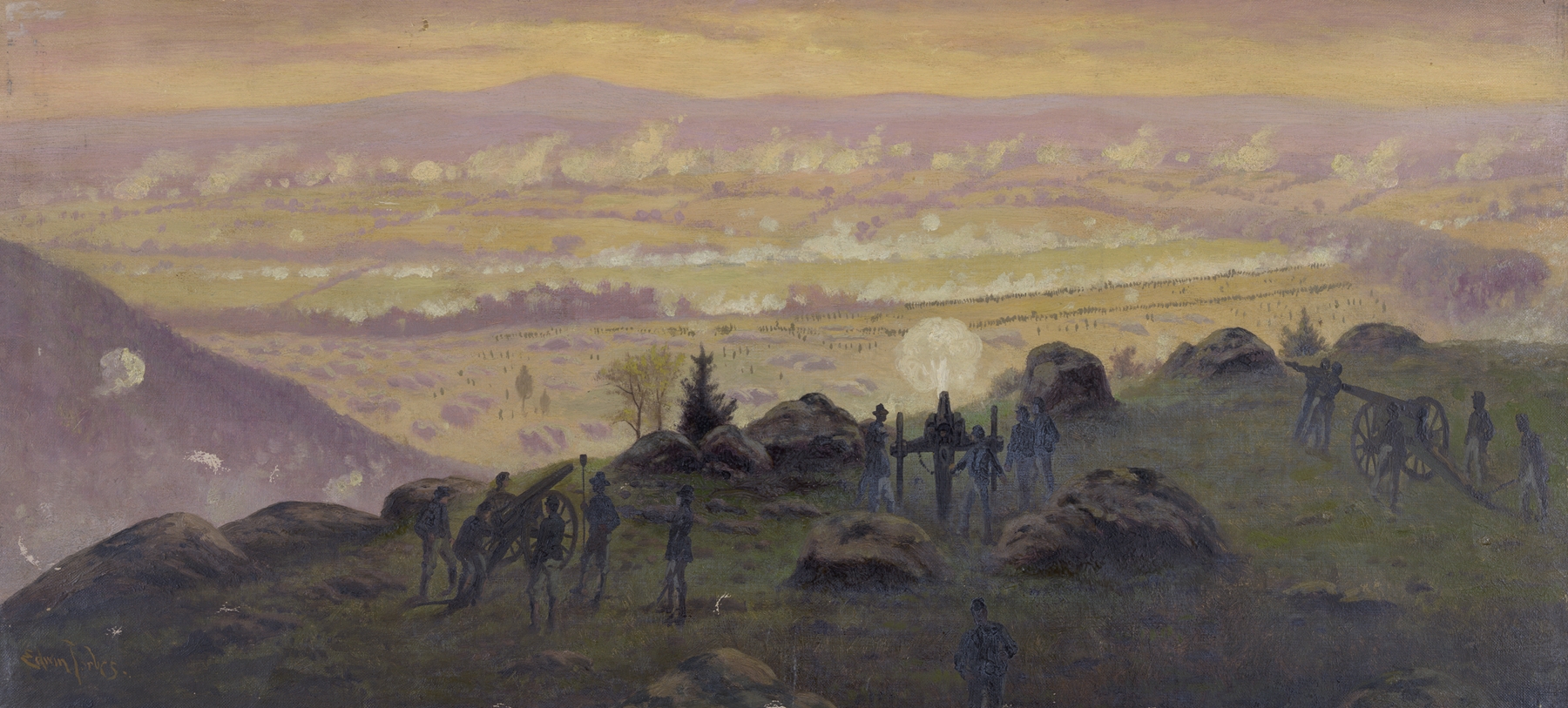
“To paint is to remember what time wants us to forget.” In a world marked by conflict and chaos, the act of creation becomes an act of preservation, a sacred awakening of memories long buried. Focus first on the center of the canvas, where the fierce clash unfolds between the Confederate soldiers charging forward and Union defenders bracing against the looming threat. The sharp contrast of uniforms—deep blues and muted grays—visibly embodies the divided nation. Notice how the artist employs a palette of earth tones to ground the scene, while bursts of vivid color draw attention to the chaos of battle, emphasizing both desperation and valor amid turmoil. Beneath the surface of this conflict lies a deeper tension of human experience: the fragility of life set against the backdrop of war’s relentless advance. The anguished expressions of the soldiers reveal the psychological weight of their struggle, each face a testament to bravery and fear intertwined. In the distance, a darkening sky looms, suggesting that history’s reckoning is inevitable, lending a haunting quality to the moment. Created between 1865 and 1876, this work emerged during a period of profound reflection for the nation as it grappled with the aftermath of the Civil War. Edwin Forbes, an illustrator and war correspondent, sought to document the visceral reality of battle and the emotional toll it exacted on both soldiers and civilians. This era marked a pivotal transition in art, as artists began to explore deeper truths behind the visual representation of conflict, moving beyond mere documentation into realms of memory and legacy.