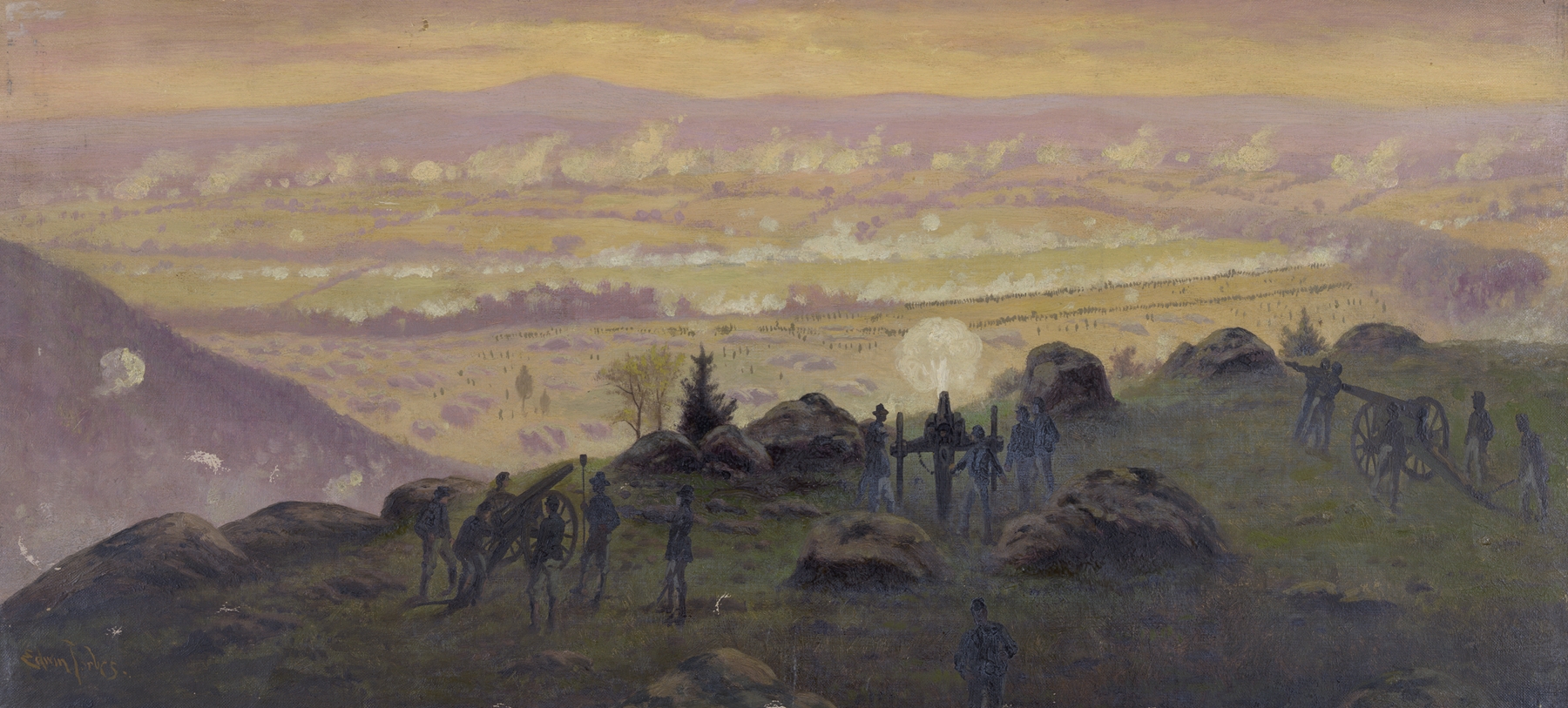
View from the summit of Little Round Top at 7;30 P.M. July 3rd, 1863 — History & Analysis
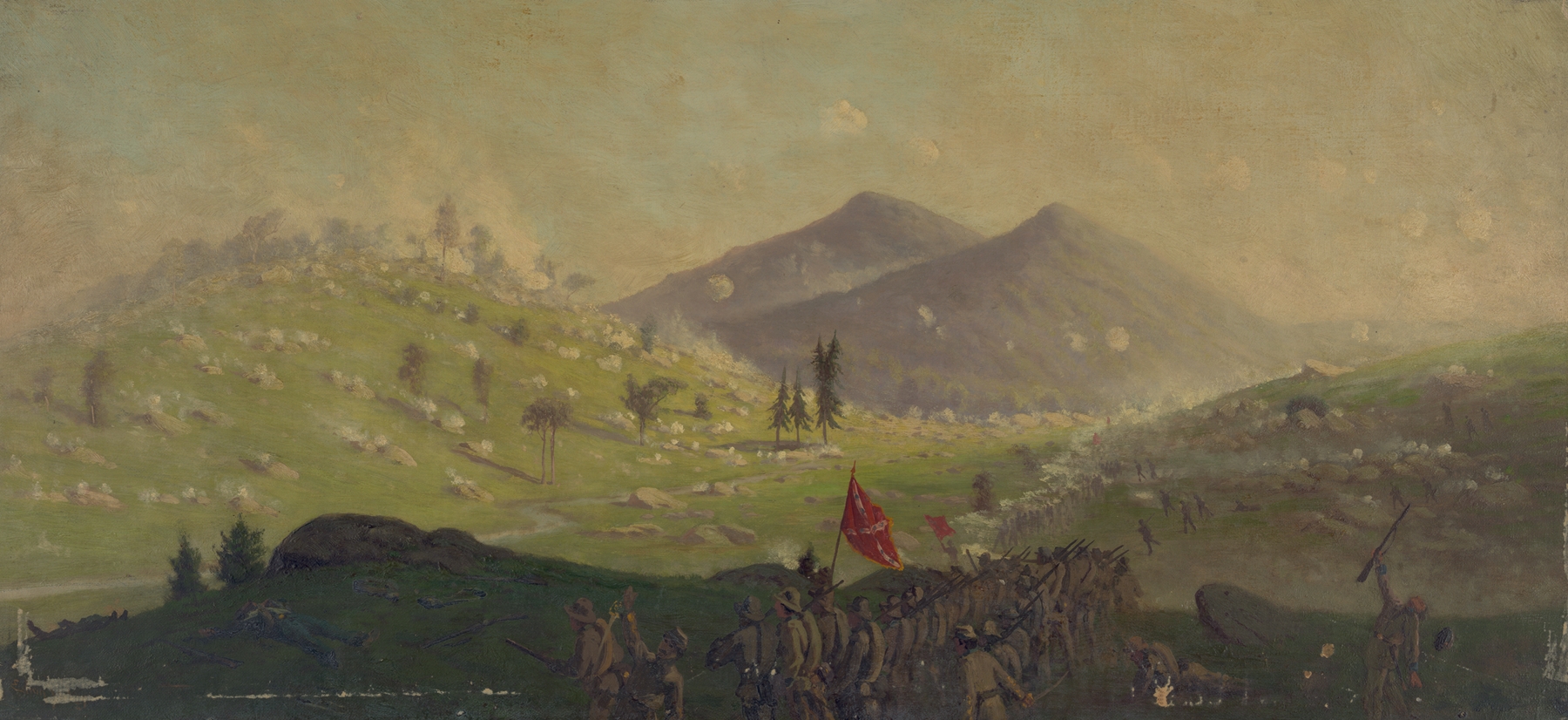
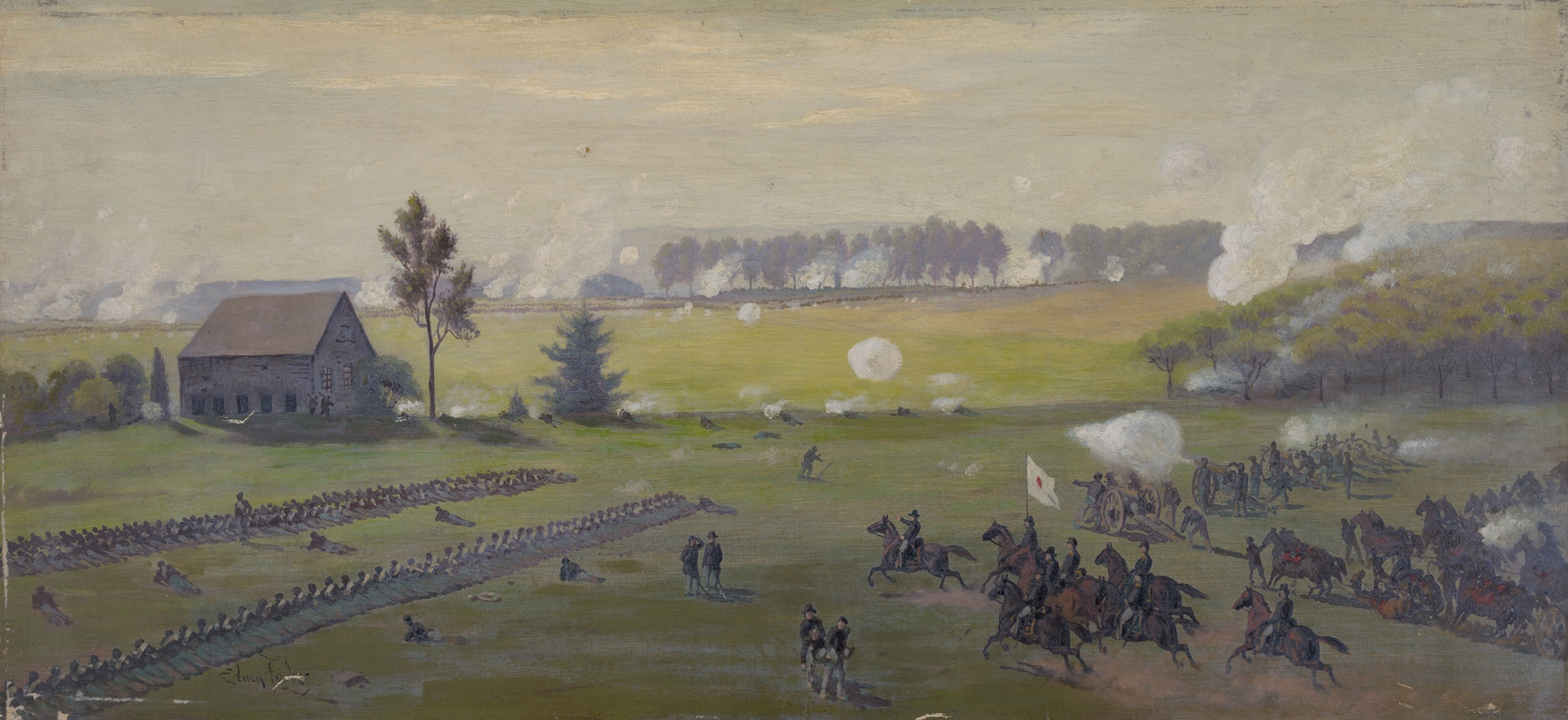
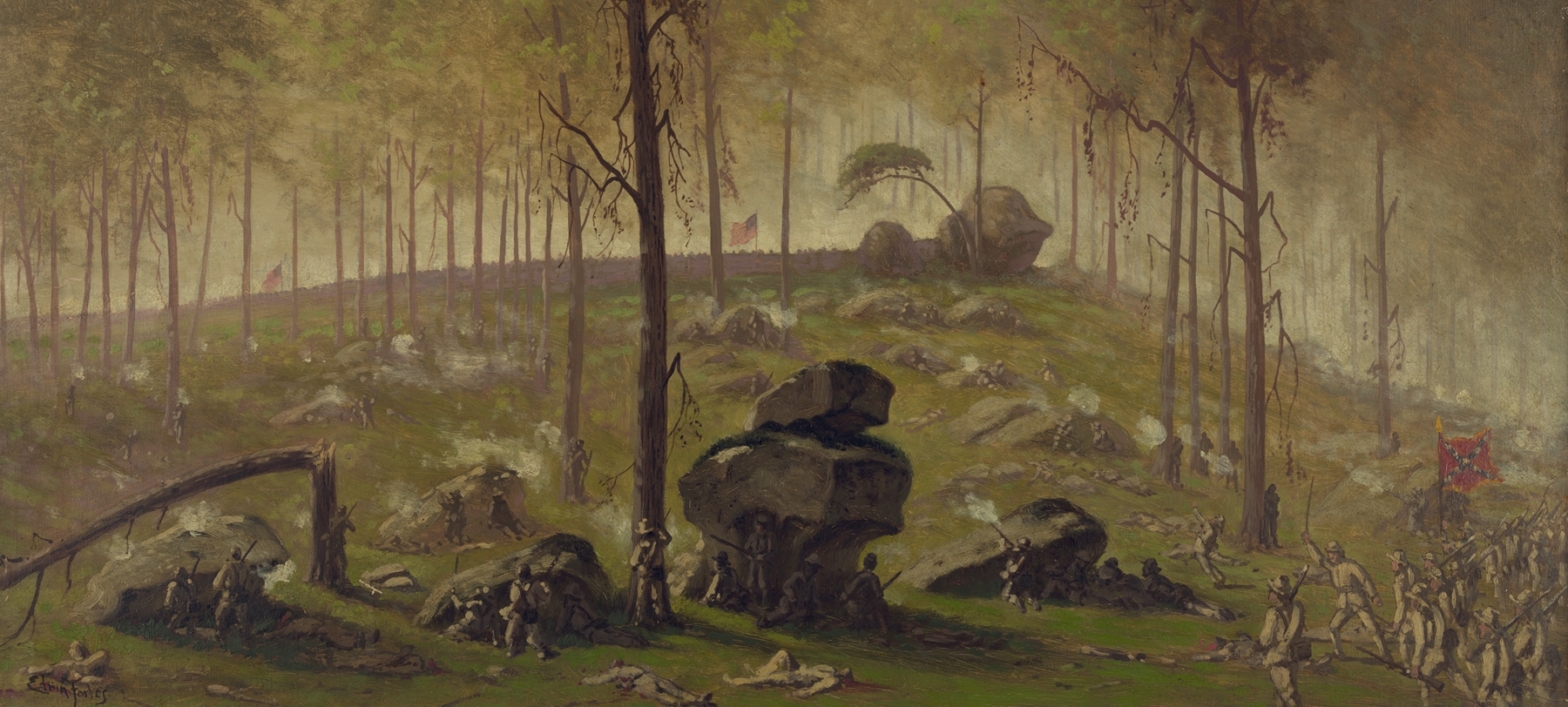
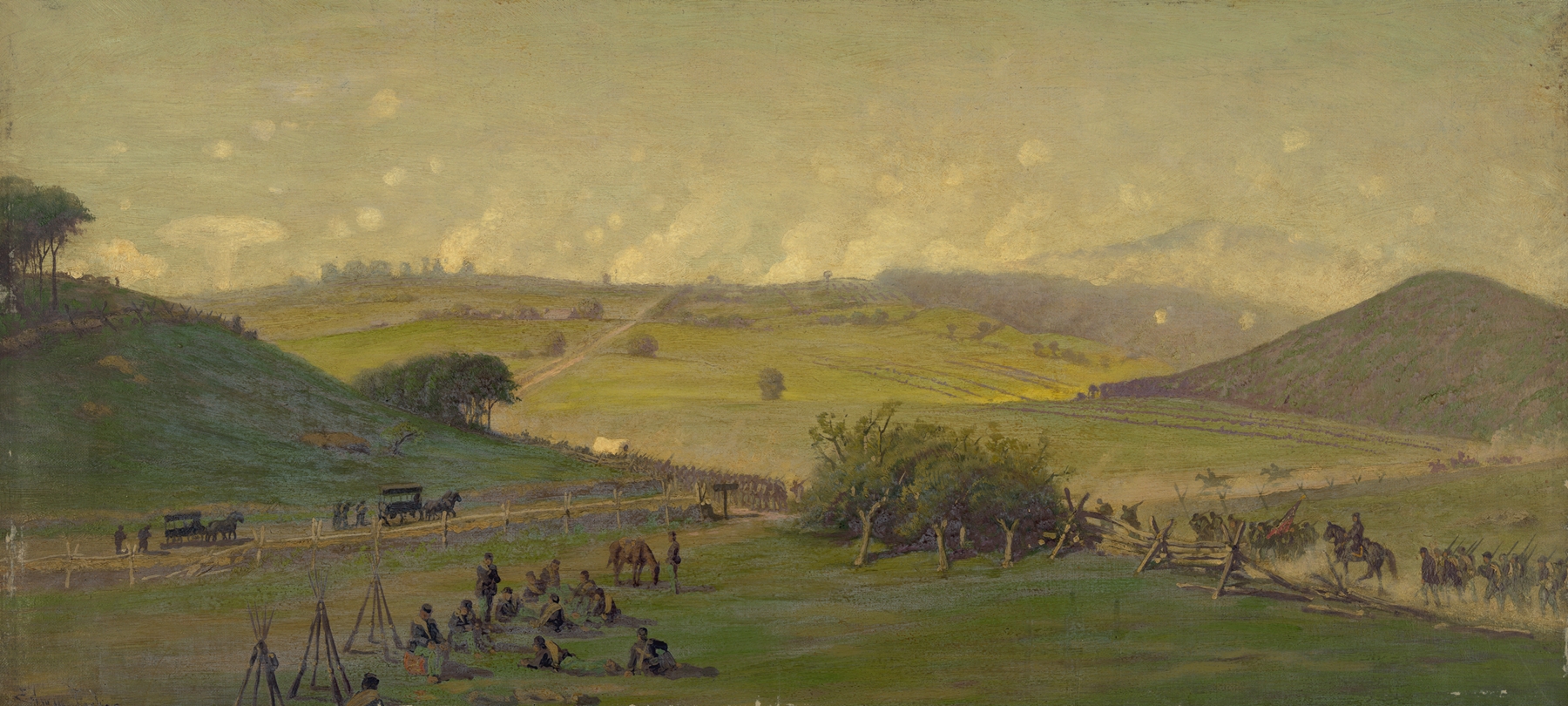
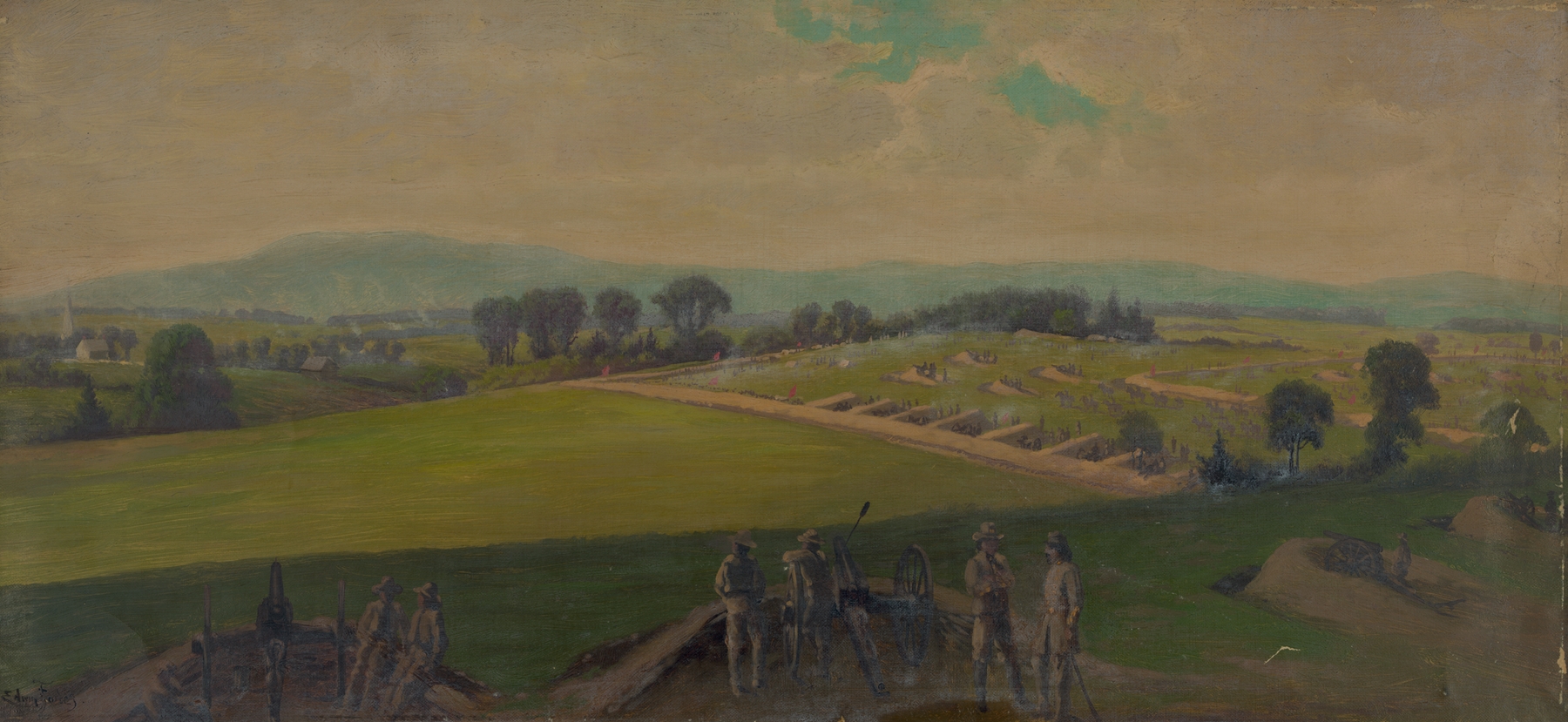
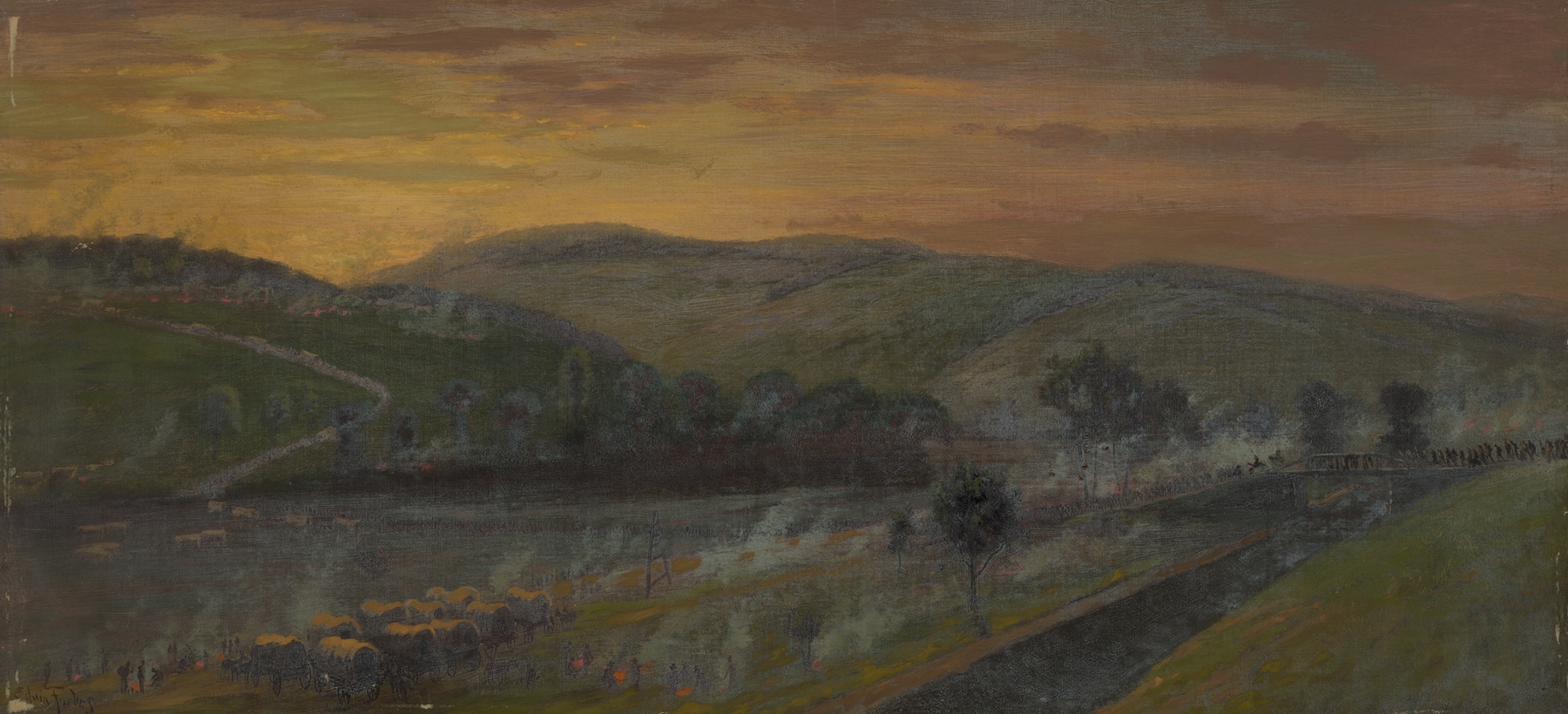
“Under the brush, chaos becomes grace.” In the quiet aftermath of battle, the stillness of nature often conceals the turmoil that once erupted. Silence envelops the viewer, inviting contemplation of what has transpired and what remains unsaid. Look to the horizon, where the sun dips low, casting a warm golden light over the undulating hills. The foreground is marked by an array of muted greens and browns, detailing the rugged terrain of Little Round Top.
Notice the way the light falls upon the jagged rocks and gentle slopes, hinting at both the beauty of the landscape and the tragedy it witnessed. Forbes captures a moment of profound serenity, contrasting the vibrancy of life with the shadows of loss. The composition speaks volumes; the interplay of light and shadow suggests a lingering tension between peace and the echoes of conflict. A solitary tree stands firm at the edge, its gnarled branches reaching out like silent witnesses to history's weight.
Each brushstroke conveys a sense of preservation, transforming chaotic memories into a graceful tableau, inviting the viewer to reflect on the complexities of war and nature's resilience. Edwin Forbes painted this work between 1865 and 1895, a period marked by the aftermath of the American Civil War. At this time, he was deeply engaged in capturing the experiences of soldiers and the landscapes that bore witness to their struggles. The artist's focus on historical accuracy and emotional depth contributed to a greater understanding of the war's impact, both on the land and its people, as he sought to immortalize moments that shaped a nation.