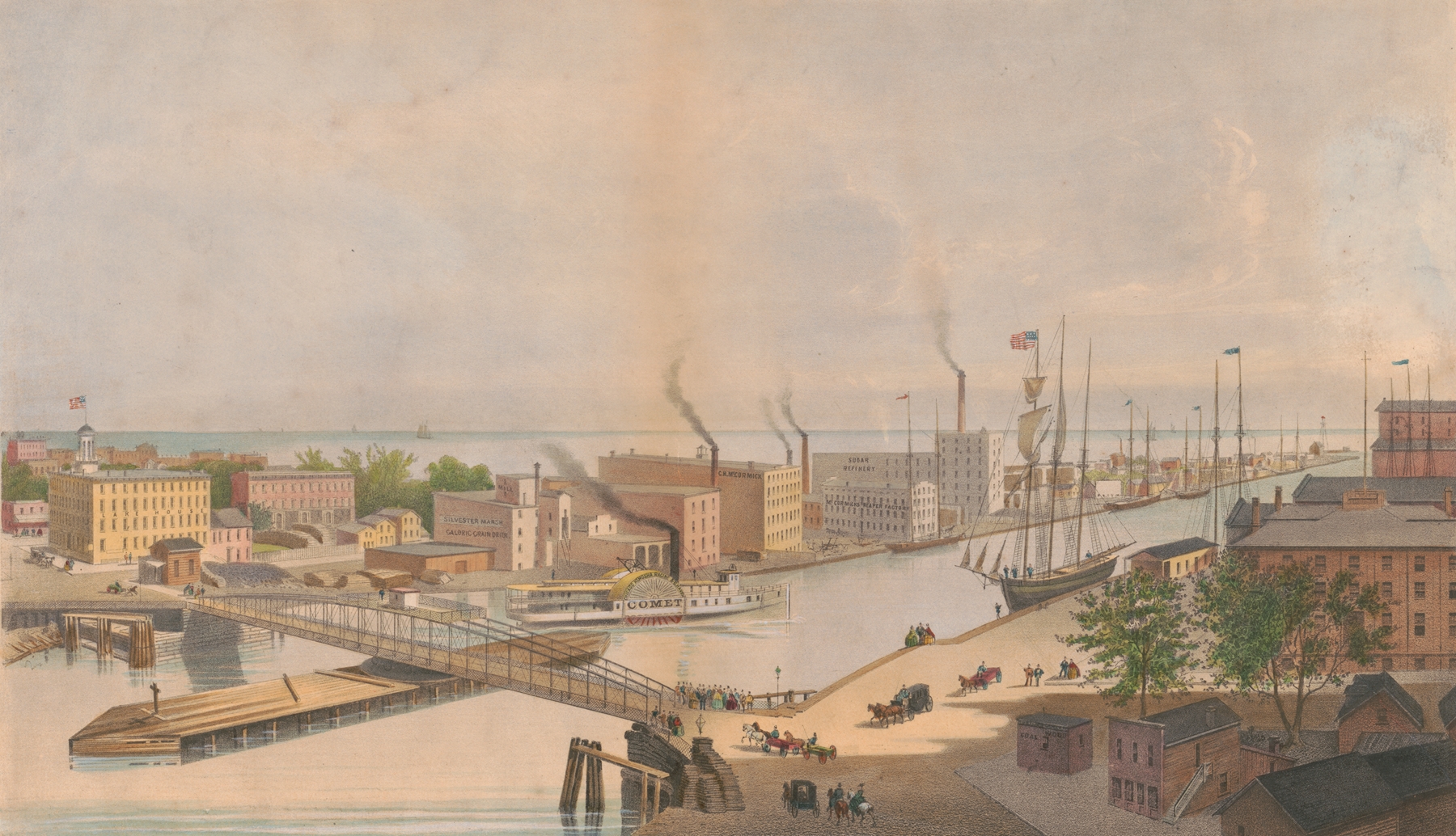
View of Rush St. bridge & c. from Nortons Block River St. E. Whitefield’s views of Chicago — History & Analysis
“The canvas doesn’t lie — it simply waits.” In this moment of quiet anticipation, a world unfolds beneath the brushstrokes of a master, inviting reflections of longing and nostalgia. The spirit of Chicago, captured in 1861, whispers through the streets and water, a testament to the relentless passage of time. Look to the left at the verdant banks lining the river, where Forbes masterfully blends lush greens with earthy browns, evoking a sense of life and vitality. Notice how the delicate interplay of light and shadow dances across the water’s surface, creating a shimmering path that draws the eye toward the iconic Rush Street Bridge.
The composition’s balance is striking, with the bridge’s arch leading the viewer into the heart of the city, while soft clouds hang in a cerulean sky, hinting at a tranquil moment in the bustling urban landscape. Yet beneath the surface, a deeper longing resonates. The bridge, both a literal and metaphorical connection, speaks to the aspirations of a growing city, while the muted colors reflect a yearning for stability amid change. Forbes captures not just a view, but the very essence of hope; the bustling life of the city is juxtaposed against the stillness of the river, suggesting that progress is often accompanied by a haunting sense of what is left behind.
The meticulous details invite contemplation on the relationship between nature and urbanity, an everlasting dialogue. Edwin Forbes painted this scene during a transformative period in American history, as the Civil War loomed and Chicago underwent rapid industrialization. Working in the city in 1861, he sought not only to document a landscape but to communicate a deeper narrative about society's evolution. At this crossroads of history, Forbes's work stands as a bridge itself, capturing a moment just before the city fully embraced its dramatic future.