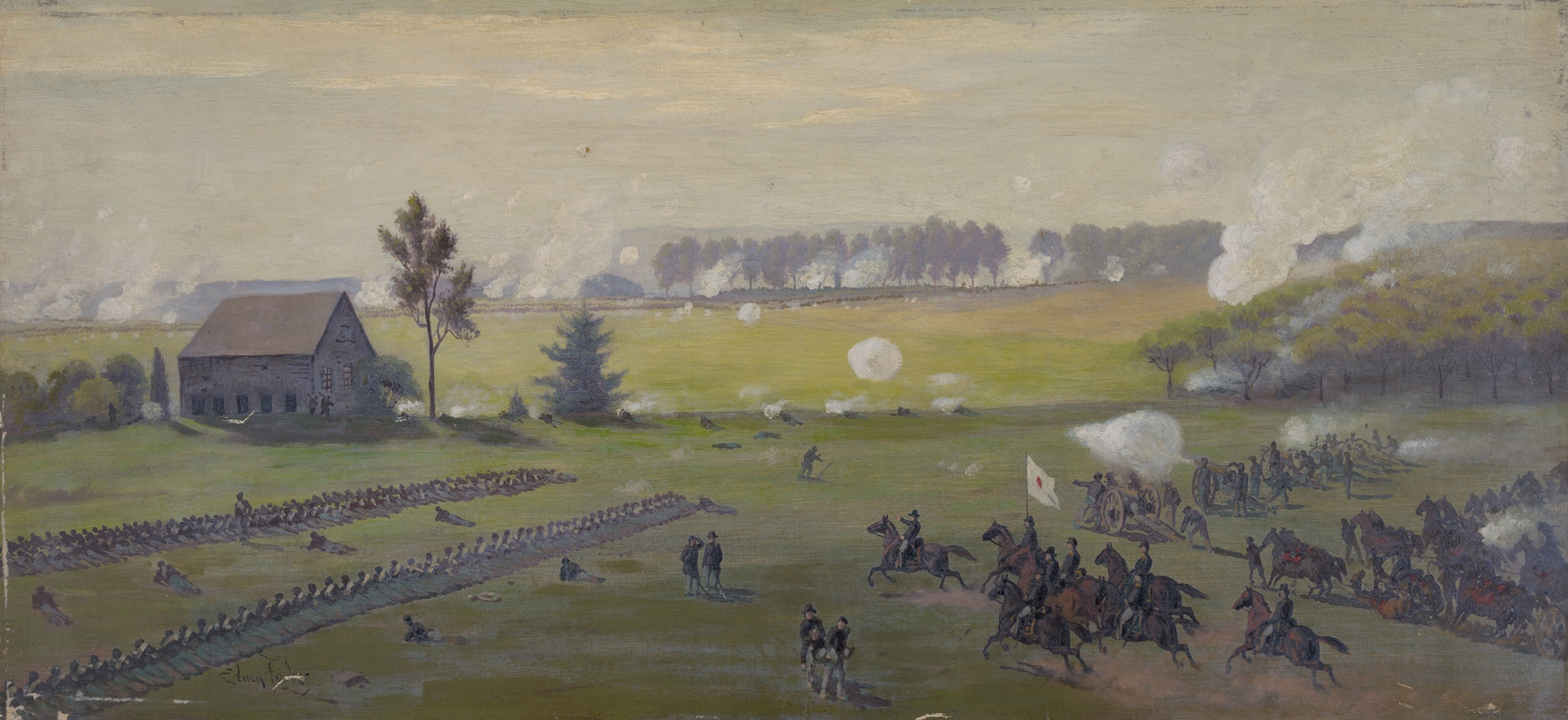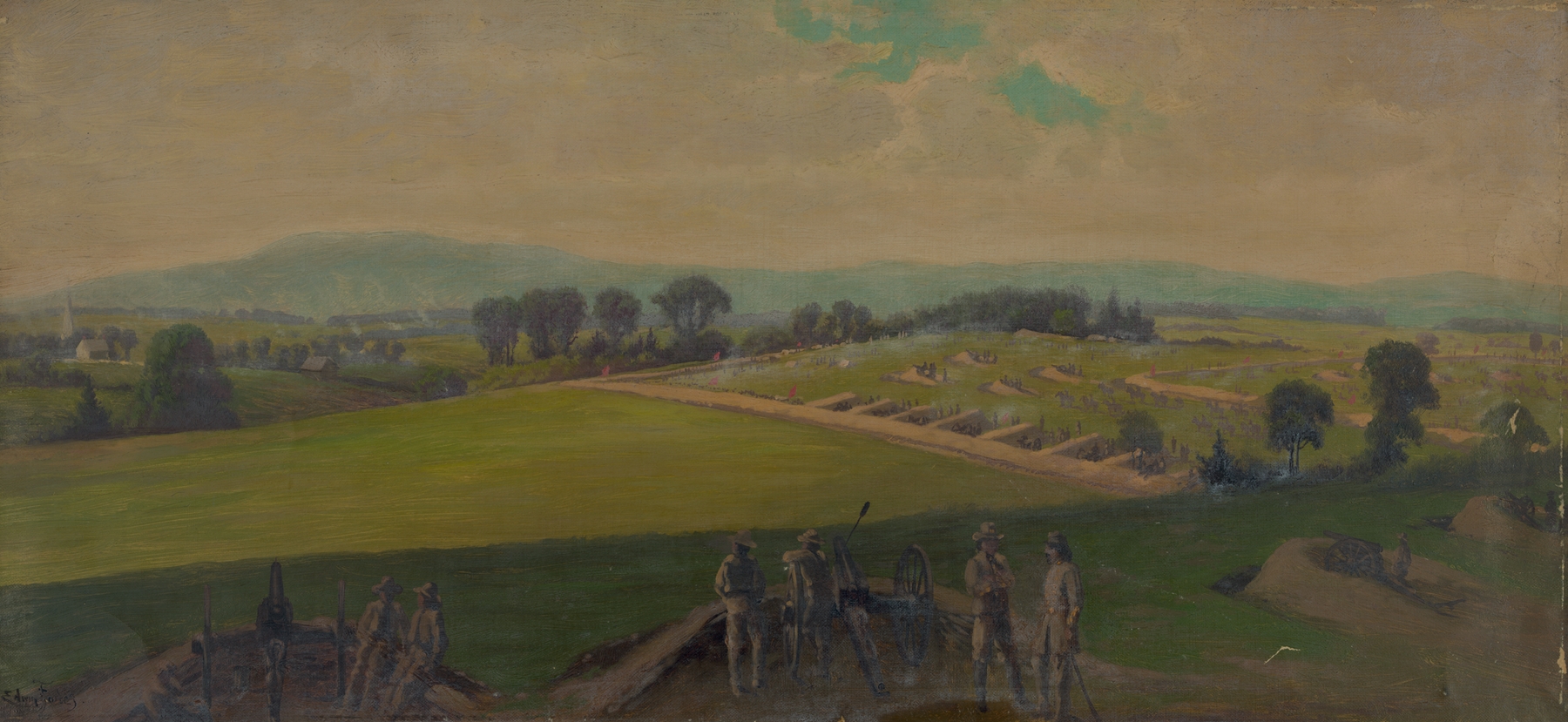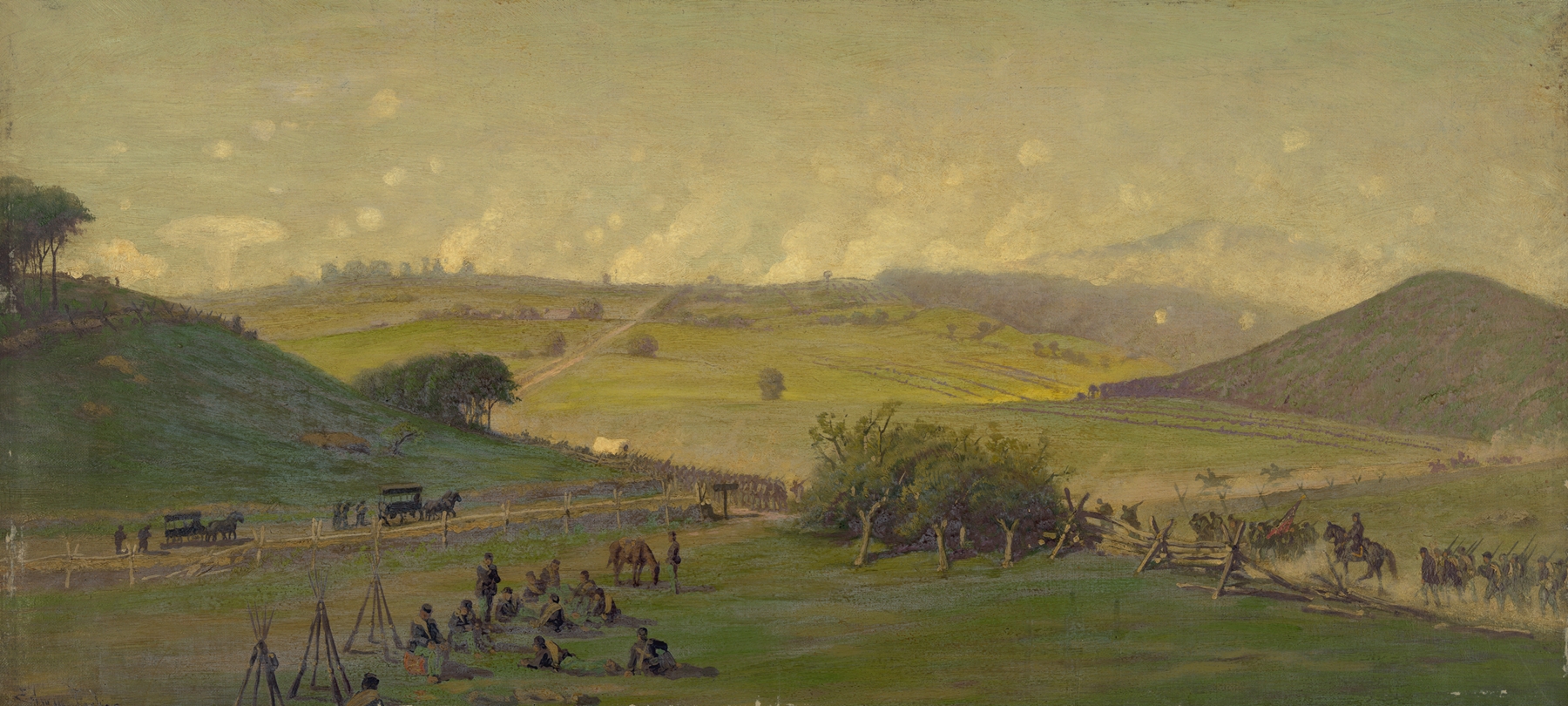
General view of the Union lines on the morning of July 3rd, 10 AM, during the attack of Johnston’s Div. C.S.A. — History & Analysis
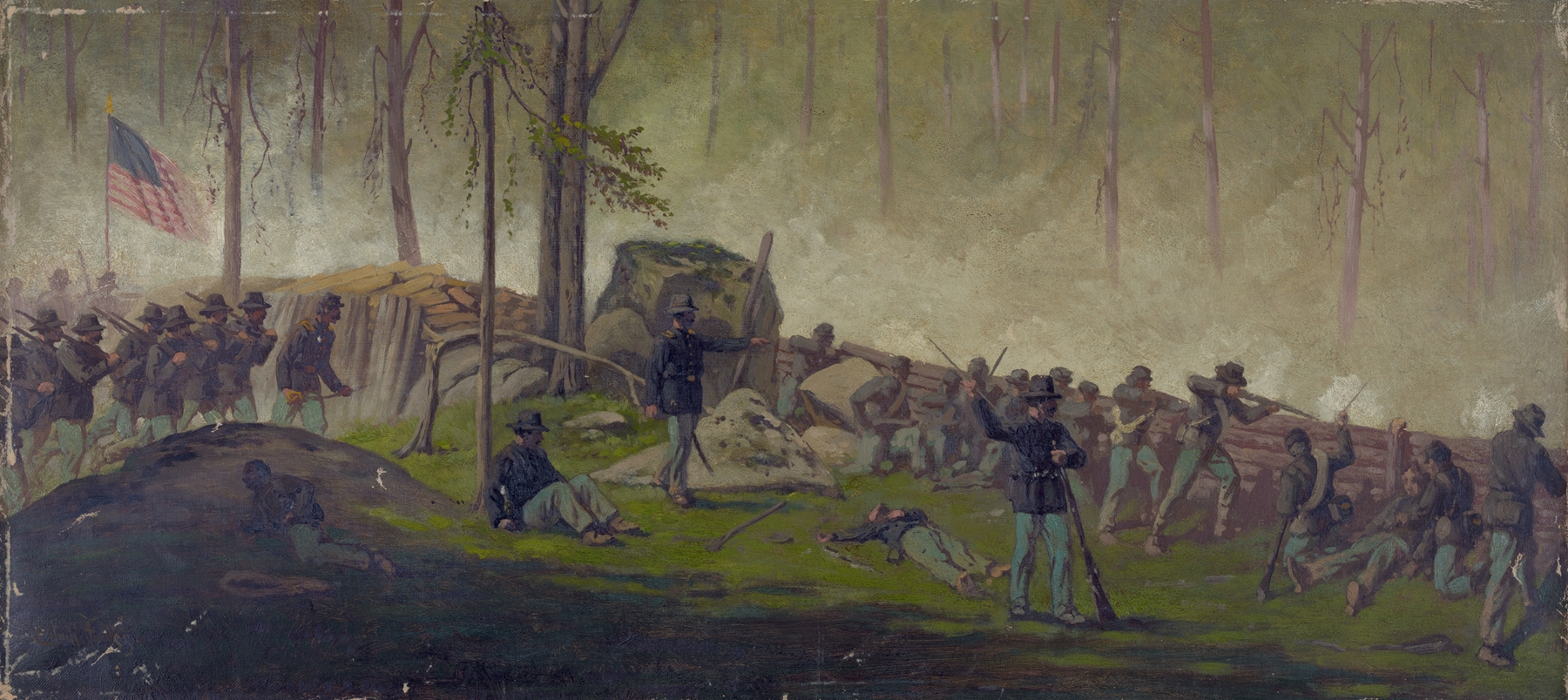
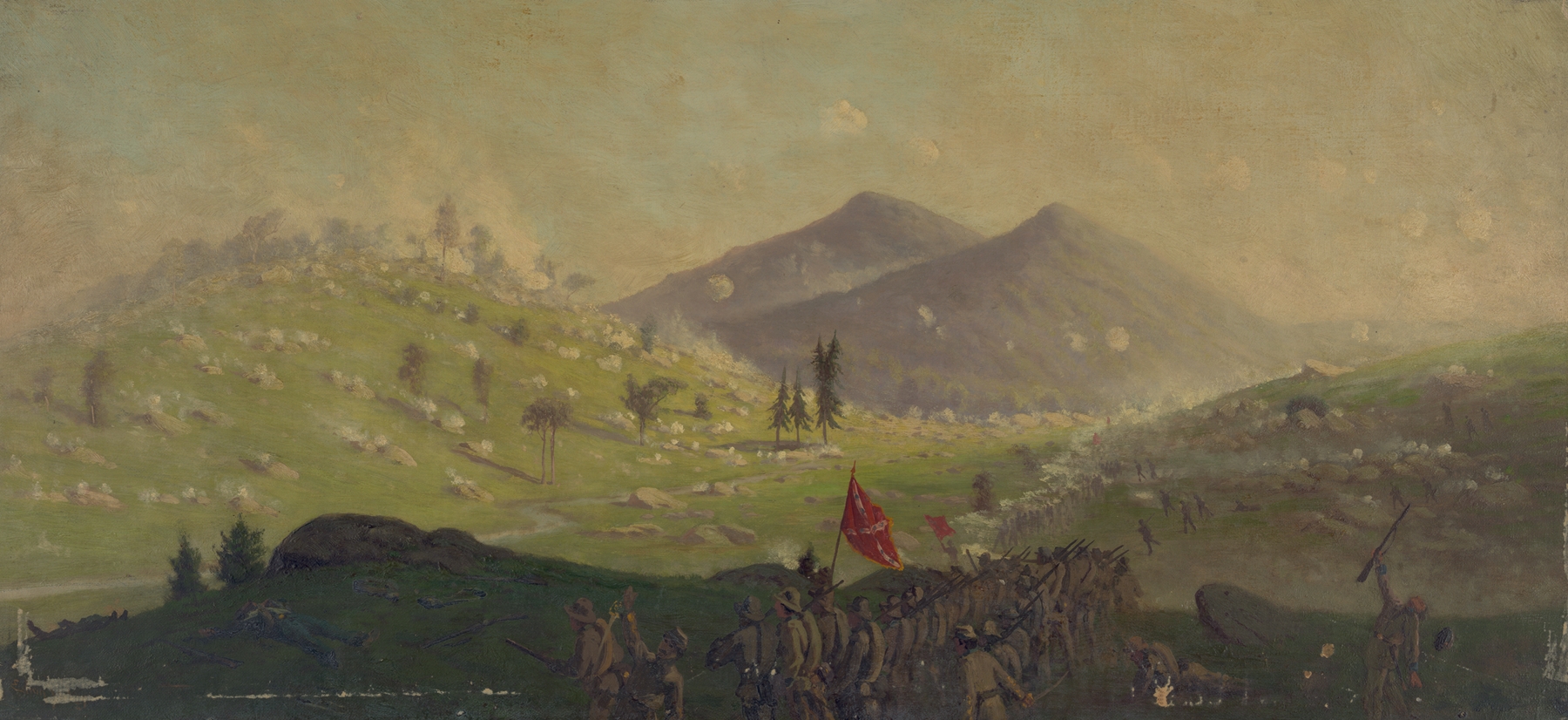
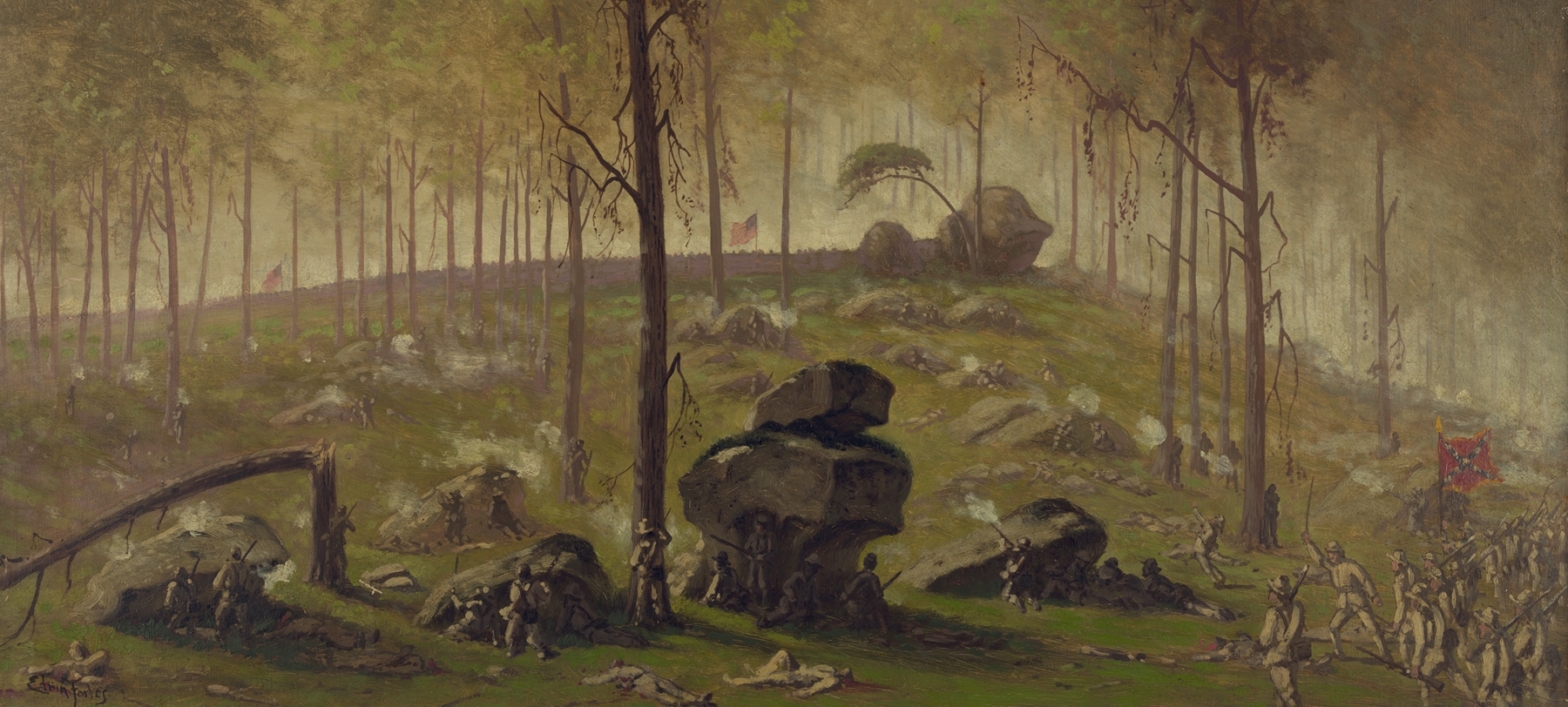
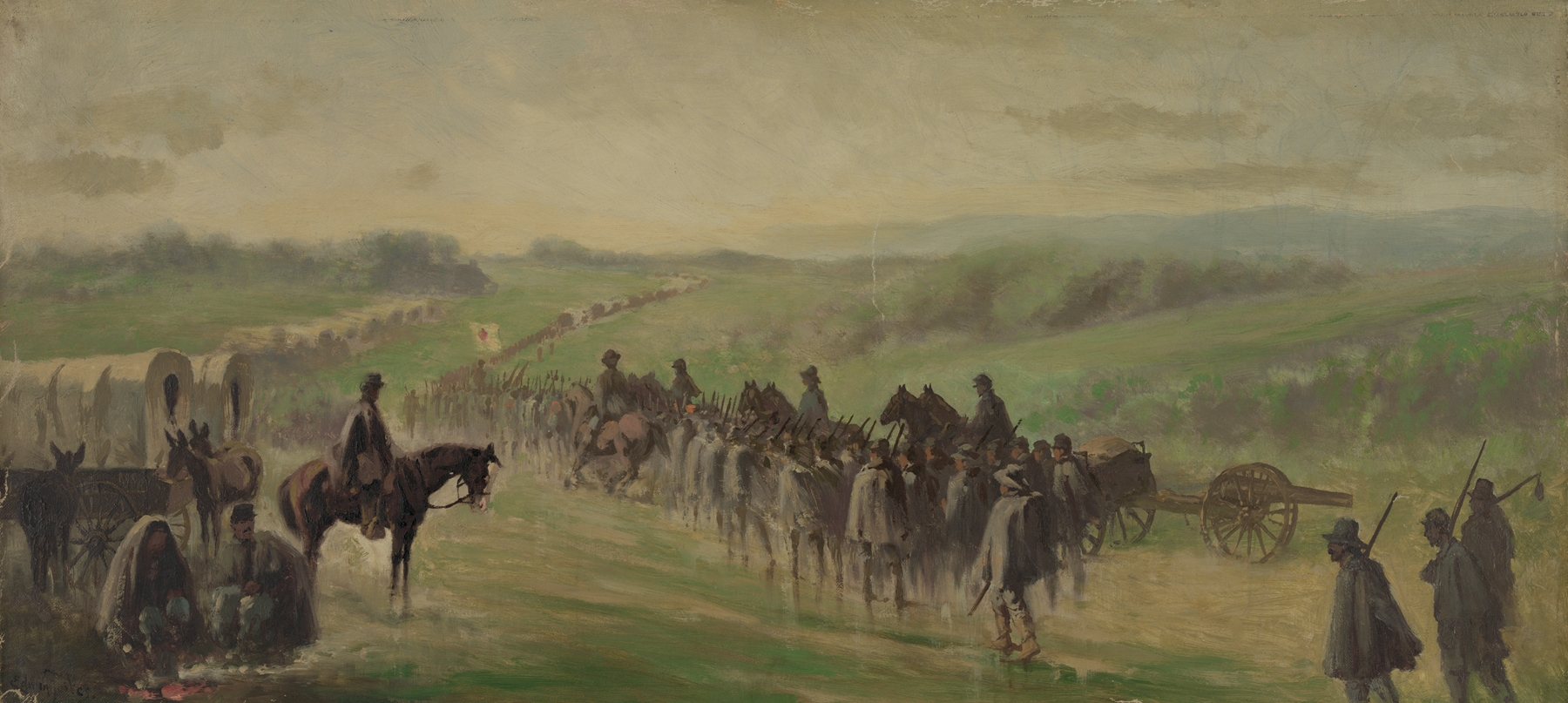
“Under the brush, chaos becomes grace.” This statement eerily encapsulates the striking violence and turmoil woven into the fabric of history, as depicted in this compelling work of art. Look closely at the foreground, where a tangle of Union soldiers stands resolute amid the remnants of battle. The vibrant palette of earthy browns and deep greens contrasts sharply with the blood-red stains that scar the landscape, capturing both the devastation and determination of the moment. Notice how the light infiltrates through the clouds, casting an ethereal glow on the figures, emphasizing their tense postures and the palpable anxiety that hangs in the air.
Amidst the chaos, the painting reveals powerful emotional tensions: the juxtaposition of hope and despair, bravery and fear. On one hand, the soldiers, who are depicted with remarkable detail and realism, embody courage as they brace for the impending assault. On the other hand, the scattered remnants of a previous confrontation—the broken flags and distant cries—serve as a haunting reminder of the violence that has already transpired, suggesting a cycle that is far from over.
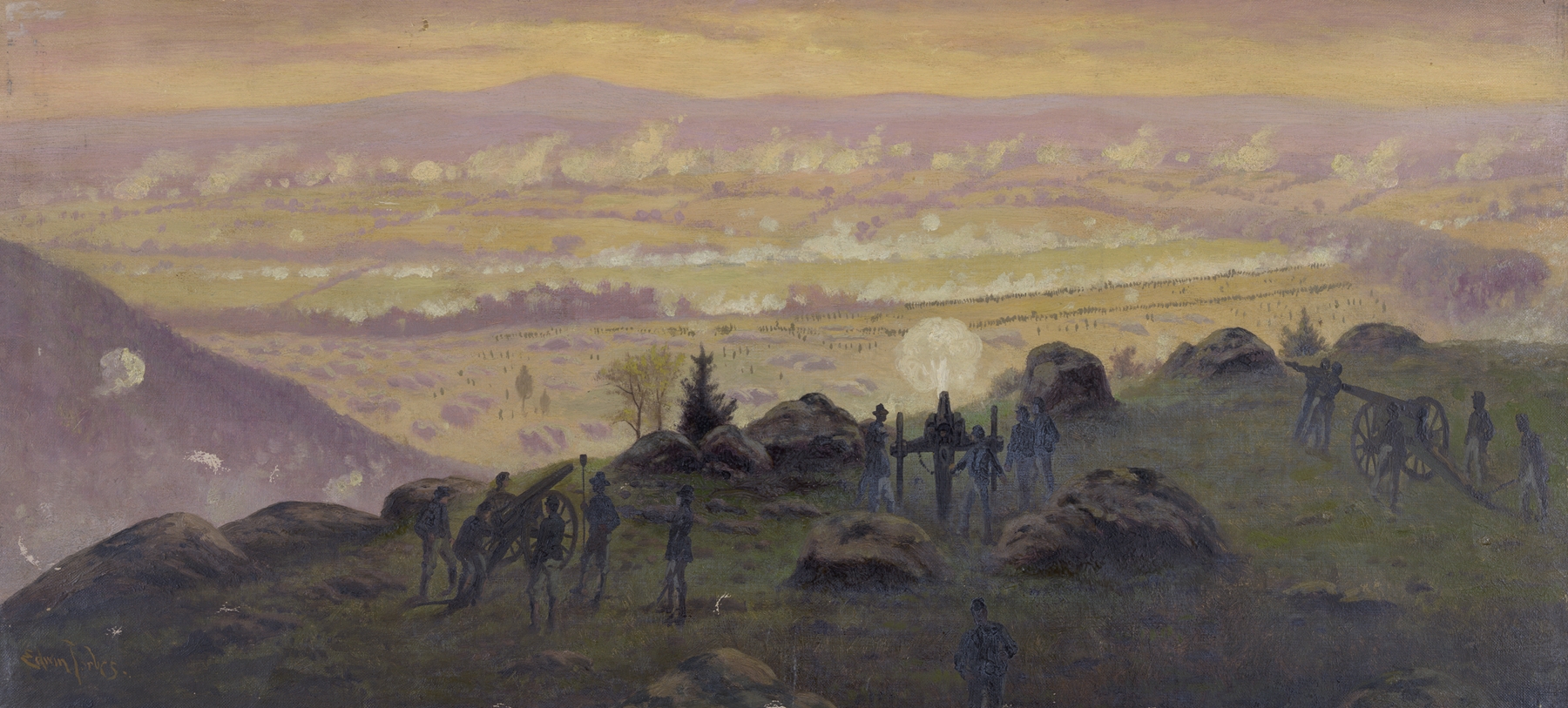
Created between 1865 and 1895, this artwork emerged from the hands of a man whose life was deeply intertwined with the tumultuous events of his time. Edwin Forbes, a war correspondent and artist, captured the visceral essence of the Civil War through his sketches and paintings, offering a poignant commentary on the era's violence and loss. His work not only reflects his own experiences but also serves as a somber testament to the collective memory of a nation grappling with its scars.