Australia Felix — History & Analysis
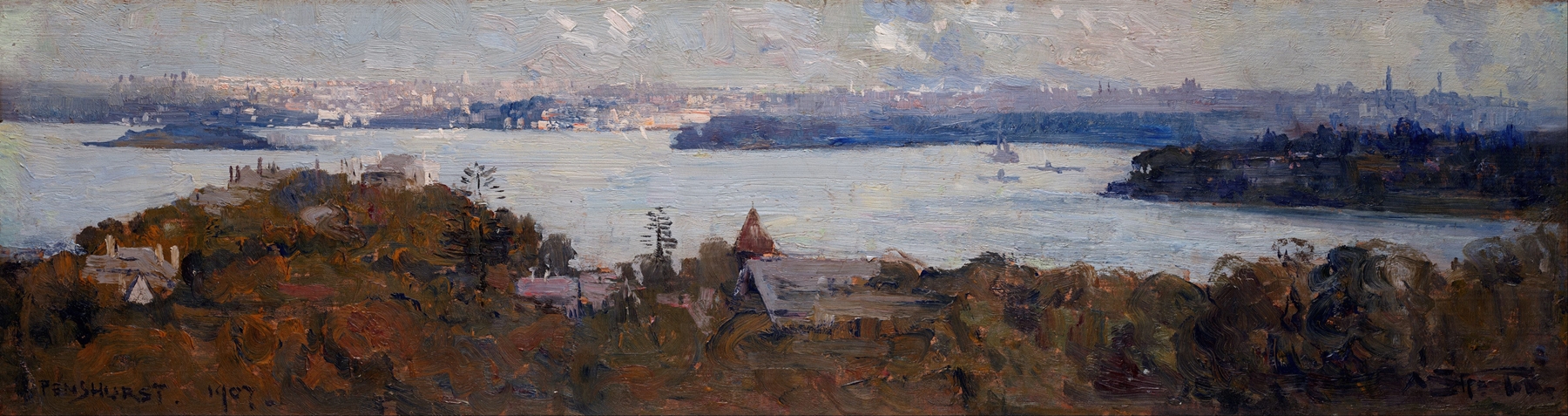
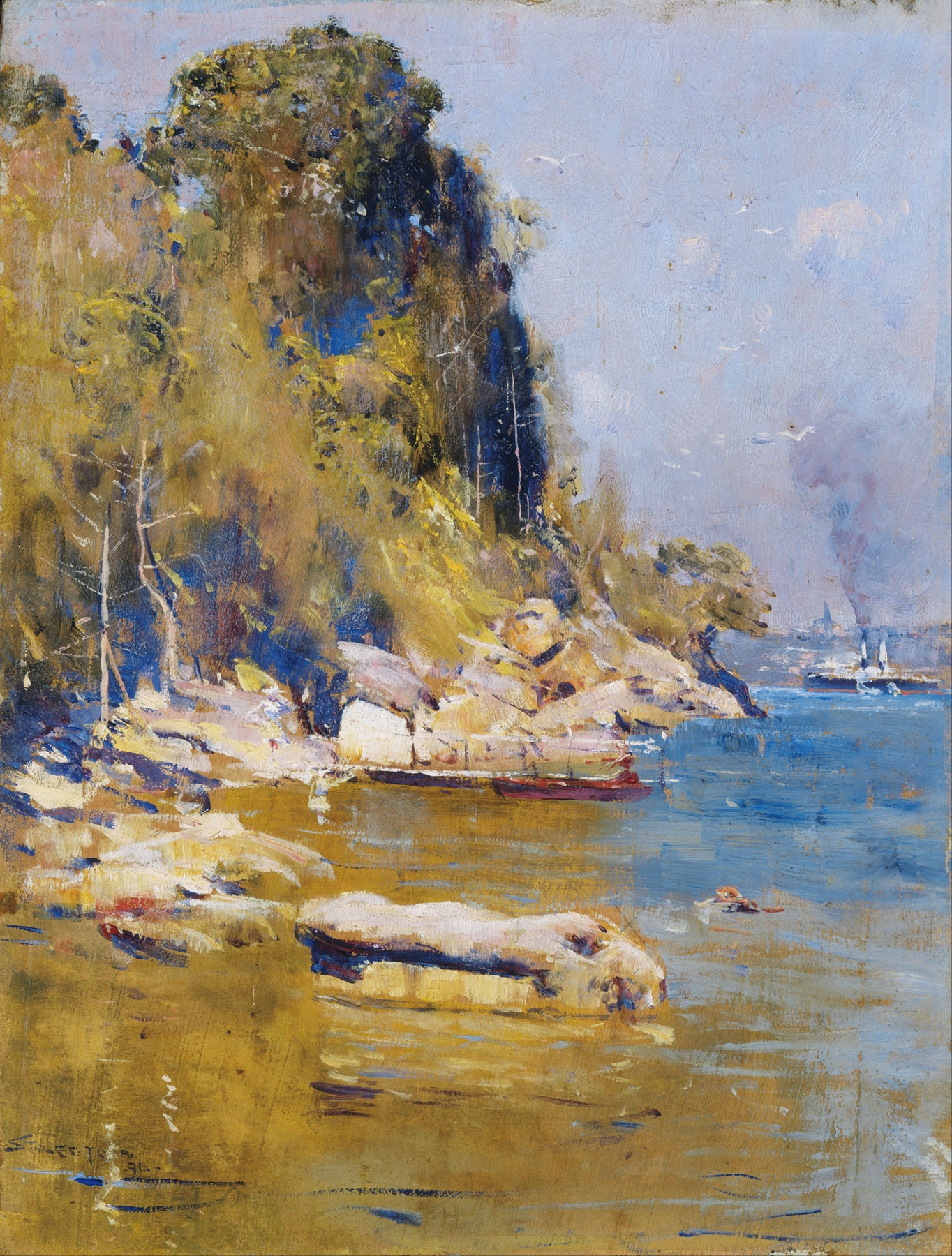
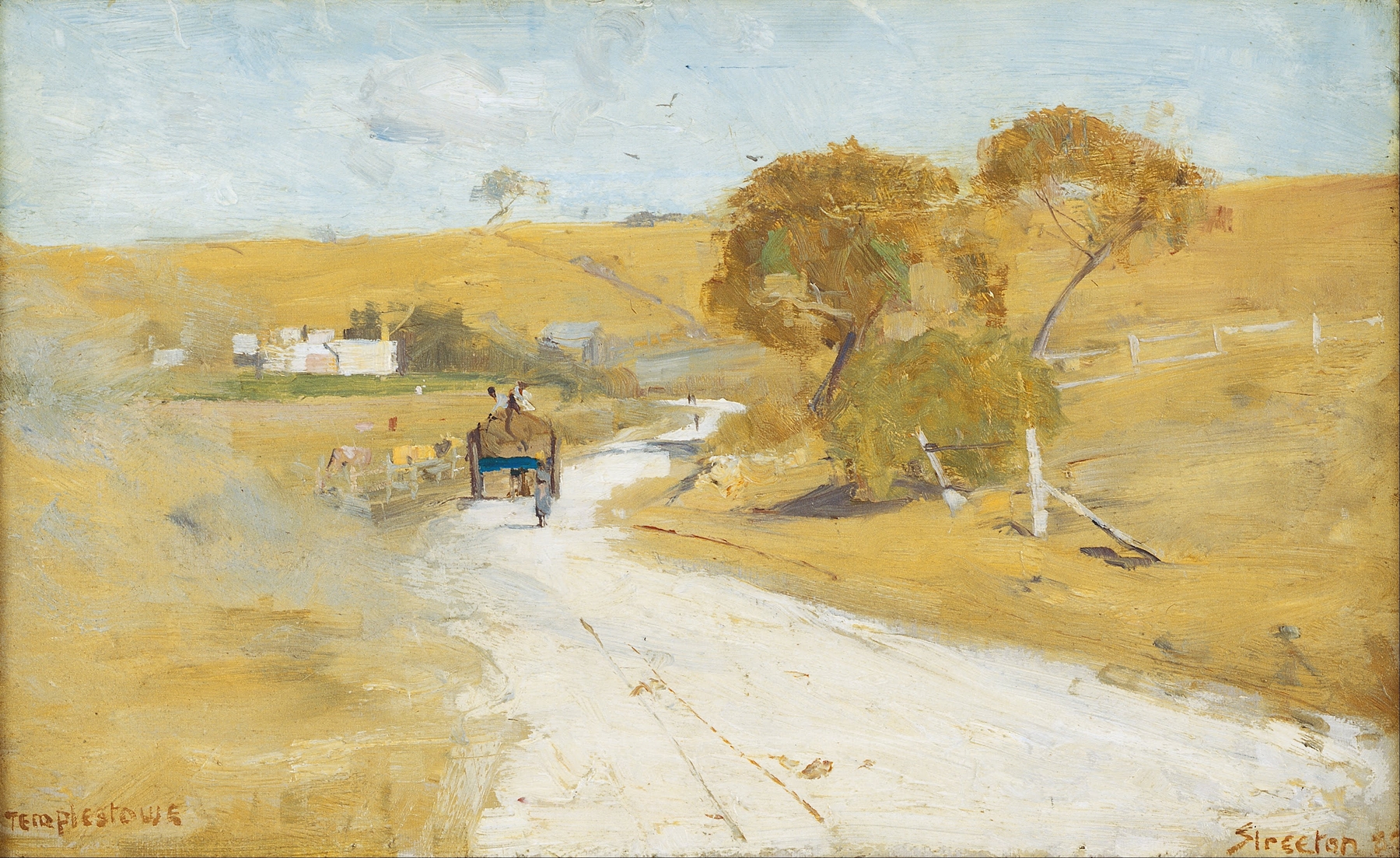
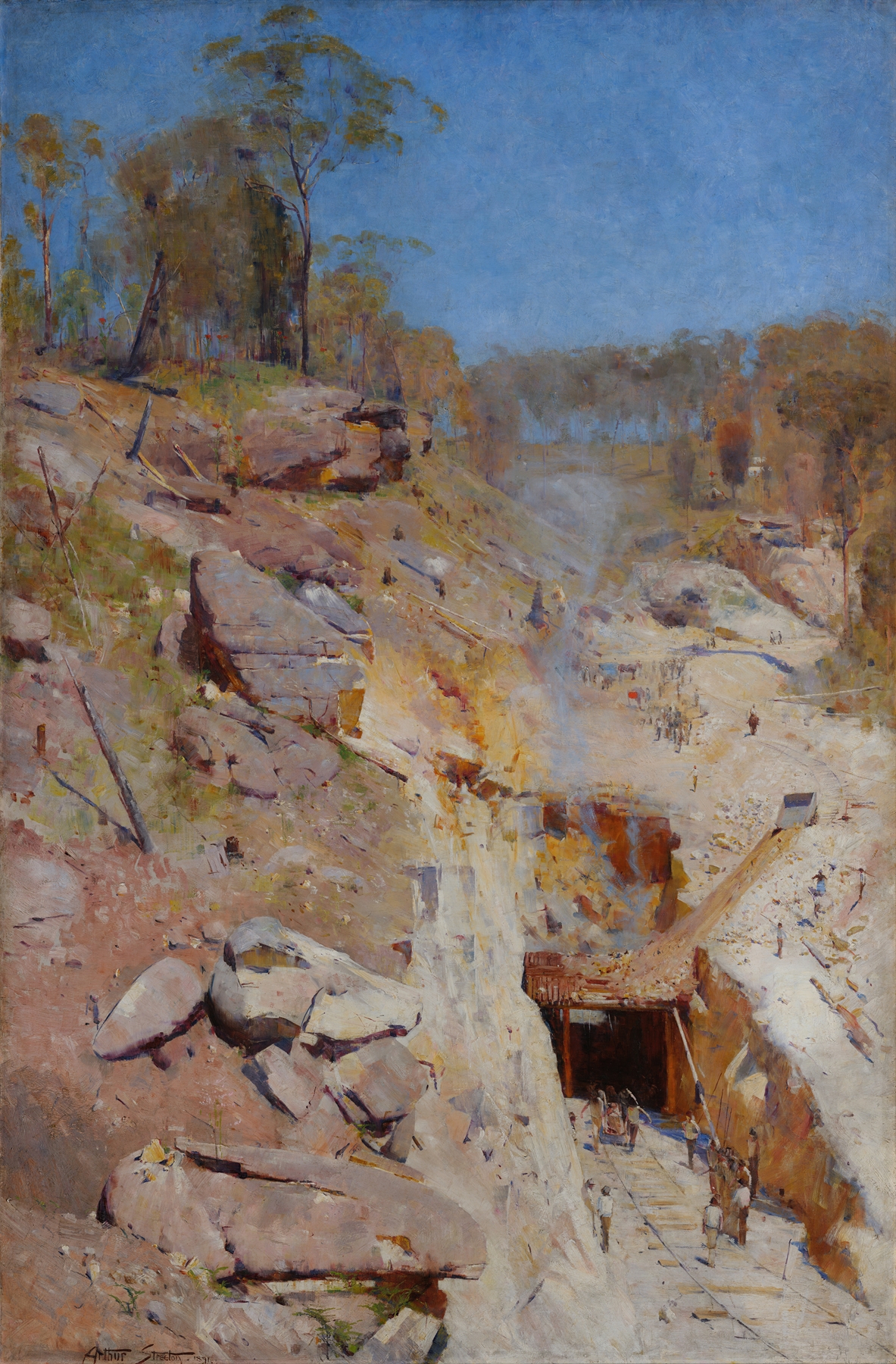
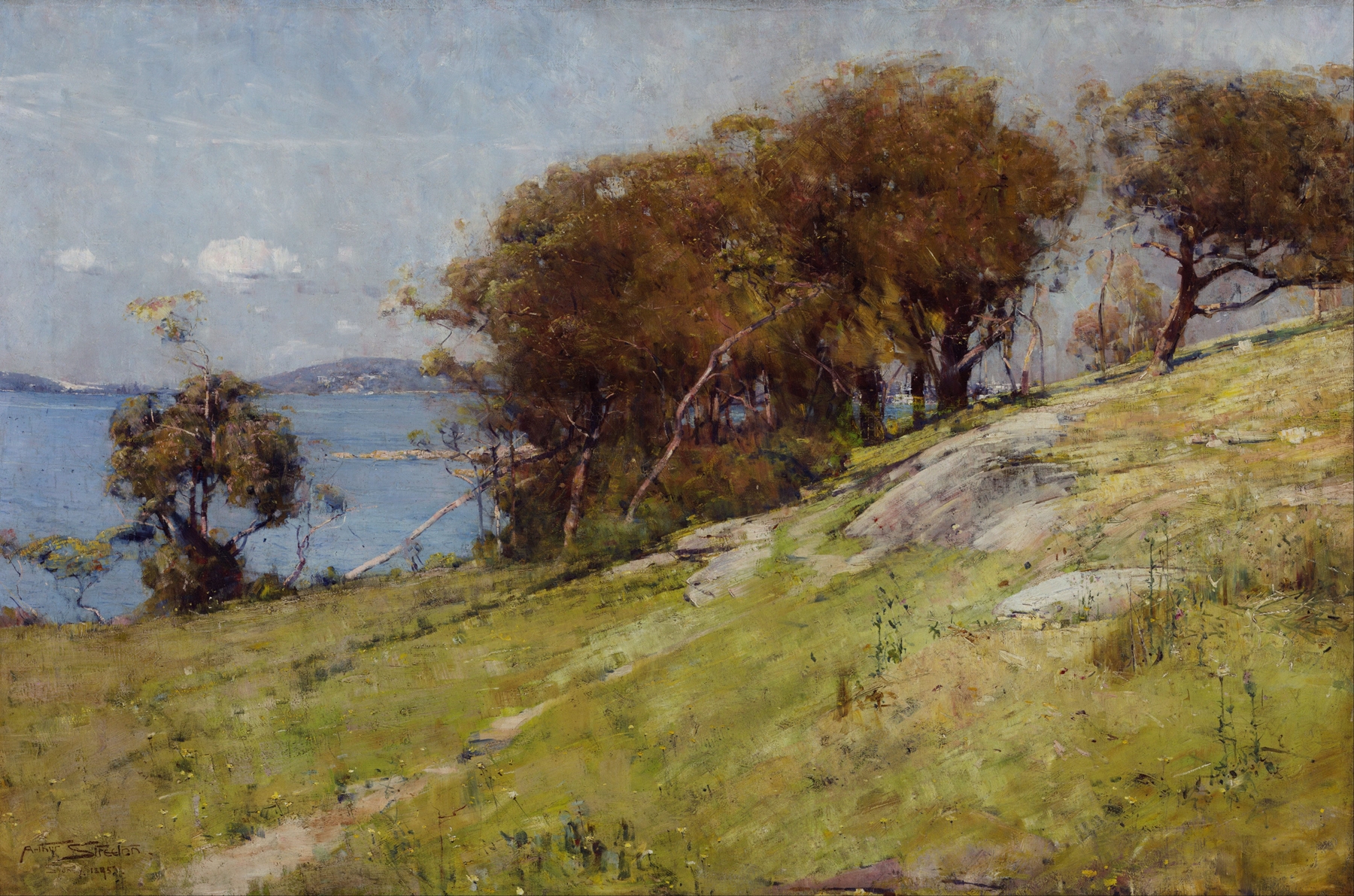
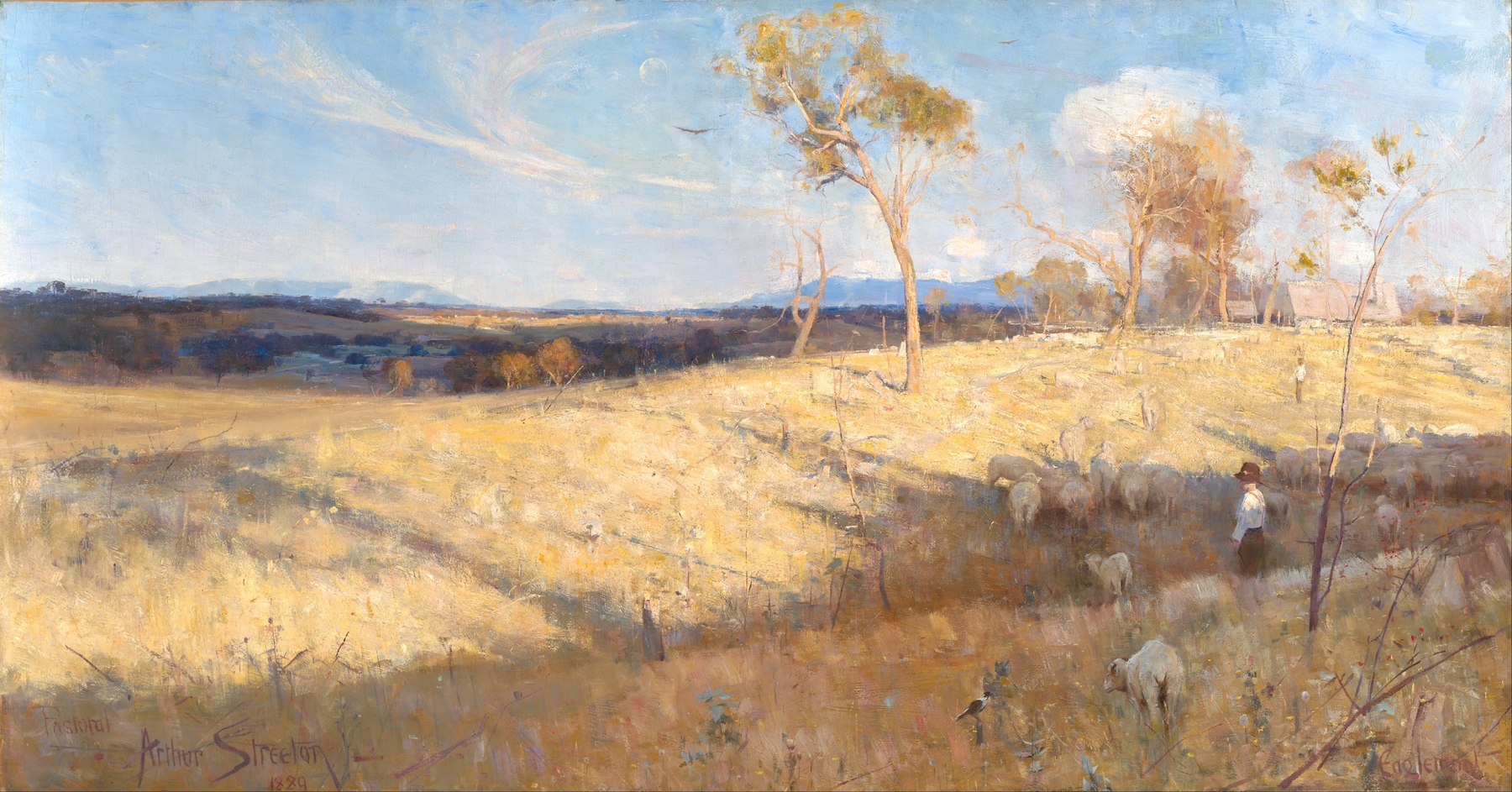
Could a single brushstroke hold eternity? In Arthur Streeton's Australia Felix, vivid landscapes burst forth from the canvas, capturing the essence of a land both wild and serene. Each stroke vibrates with the chaotic energy of nature, inviting viewers to immerse themselves in the beauty and tumult of the Australian scenery. Focus on the left, where the golden hues of the sun-drenched earth meet the deep blues of the distant hills.
Notice how the light dances across the textured surface, illuminating patches of wild grasses. The dynamic use of color suggests both the warmth of the midday sun and the cooling shadows that stretch beneath the eucalyptus trees, creating a palpable tension between light and dark. Within this vibrant composition lies a profound exploration of harmony and discord. The chaos of the natural world is evident in the brushwork—each stroke varies in direction and intensity, collectively conveying a sense of movement and life.
The juxtaposition of the expansive sky against the sturdy earth reminds us of nature's duality: nurturing yet unpredictable, serene yet wild. In 1907, Streeton painted this work during a pivotal period for Australian art, marked by the emergence of the Heidelberg School and the push for a distinct national identity. Living in a rapidly modernizing society, the artist sought to depict the unique landscapes of his homeland, reflecting both personal and collective aspirations as Australia grappled with its own evolving narrative.