Hoddle St., 10 p.m. — History & Analysis
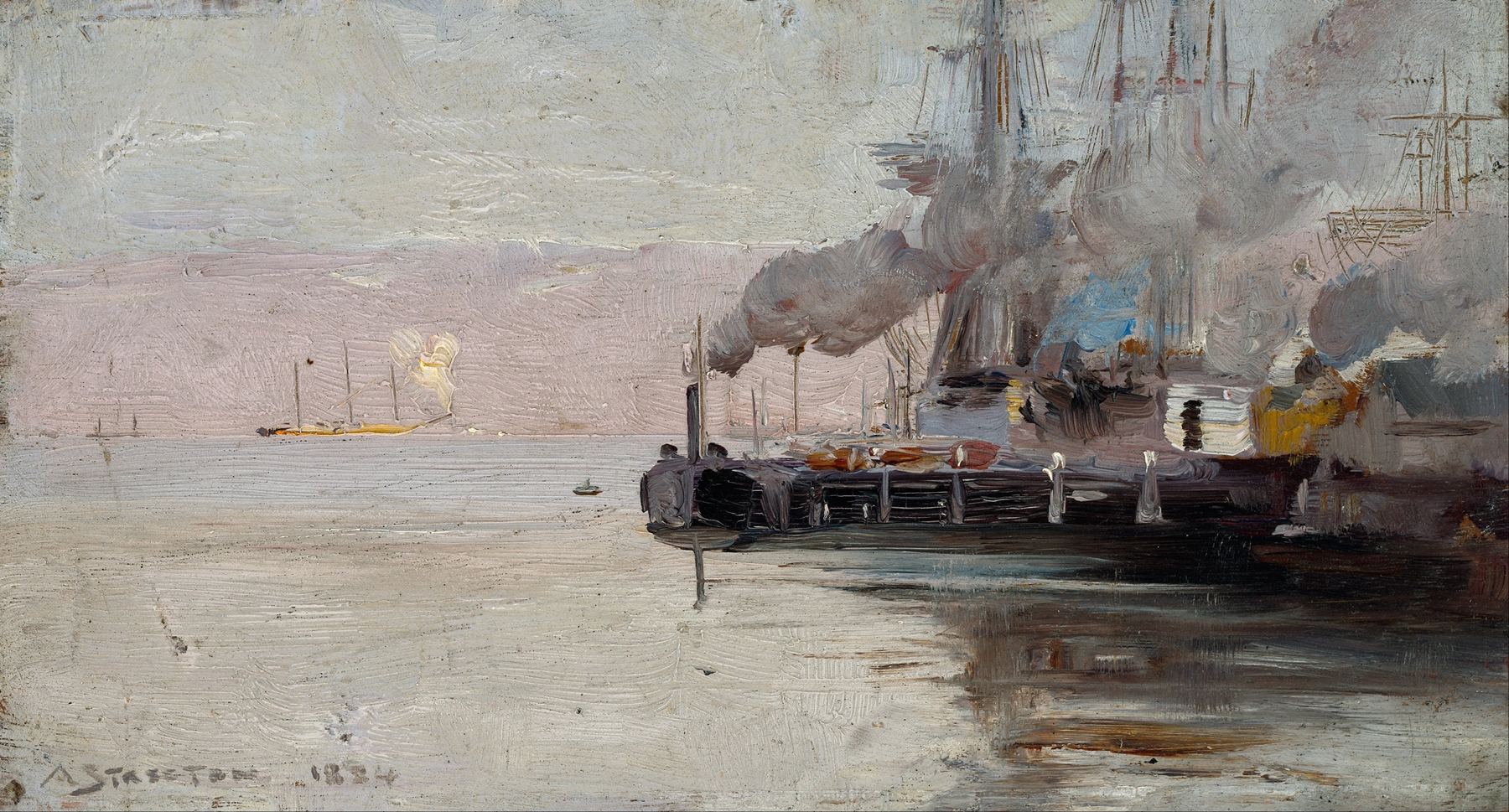
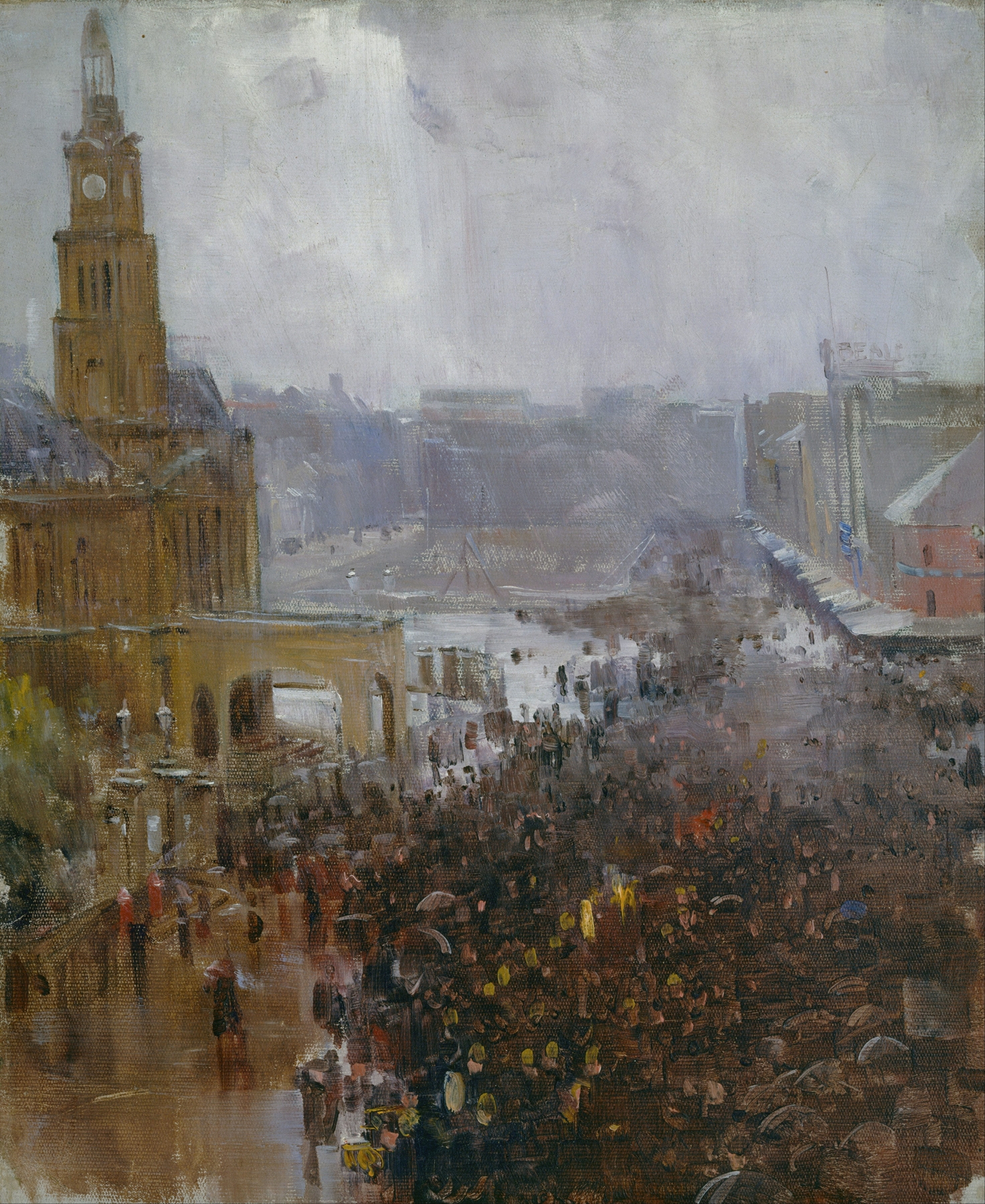
Could a single brushstroke hold eternity? In Hoddle St., 10 p.m., a world of longing unfolds beneath the gentle embrace of twilight, inviting the viewer to ponder the whispers of lives unseen. Look to the center where the street vanishes into the horizon, bathed in the deep blues and soft purples of night. The way the shadows blend into the asphalt suggests a warmth that contrasts with the coolness of the dusk. Notice how the glow of streetlamps punctuates the scene, their light spilling onto the road like liquid gold, guiding the eye toward distant dreams while grounding the viewer in the present.
The brushwork is both meticulous and fluid, evoking the rhythm of life in an urban landscape where motion seems suspended. Yet amid this serene twilight, there is an undercurrent of melancholy. The empty expanse of the street reflects a sense of solitude, amplifying the tension between the vibrant life suggested by the lights and the void left by absence. Each stroke captures fleeting moments—where companionship and connection might once have thrived, now only silence reigns.
This interplay between light and shadow not only illuminates the scene but also evokes the emotions of those who traverse these streets, leaving the viewer in a contemplative embrace of longing. Painted at an uncertain moment in the early 20th century, Streeton was at the forefront of the Australian Impressionist movement, capturing the essence of his homeland's landscapes and urban scenes. The world was shifting—Australia was grappling with its identity after Federation in 1901—and artists like him sought to express the burgeoning national consciousness. In this piece, he reflects not only the physical space but also the emotional landscape of his time, resonating with a collective yearning for connection amid the vastness of contemporary life.