From my camp (Sirius Cove) — History & Analysis
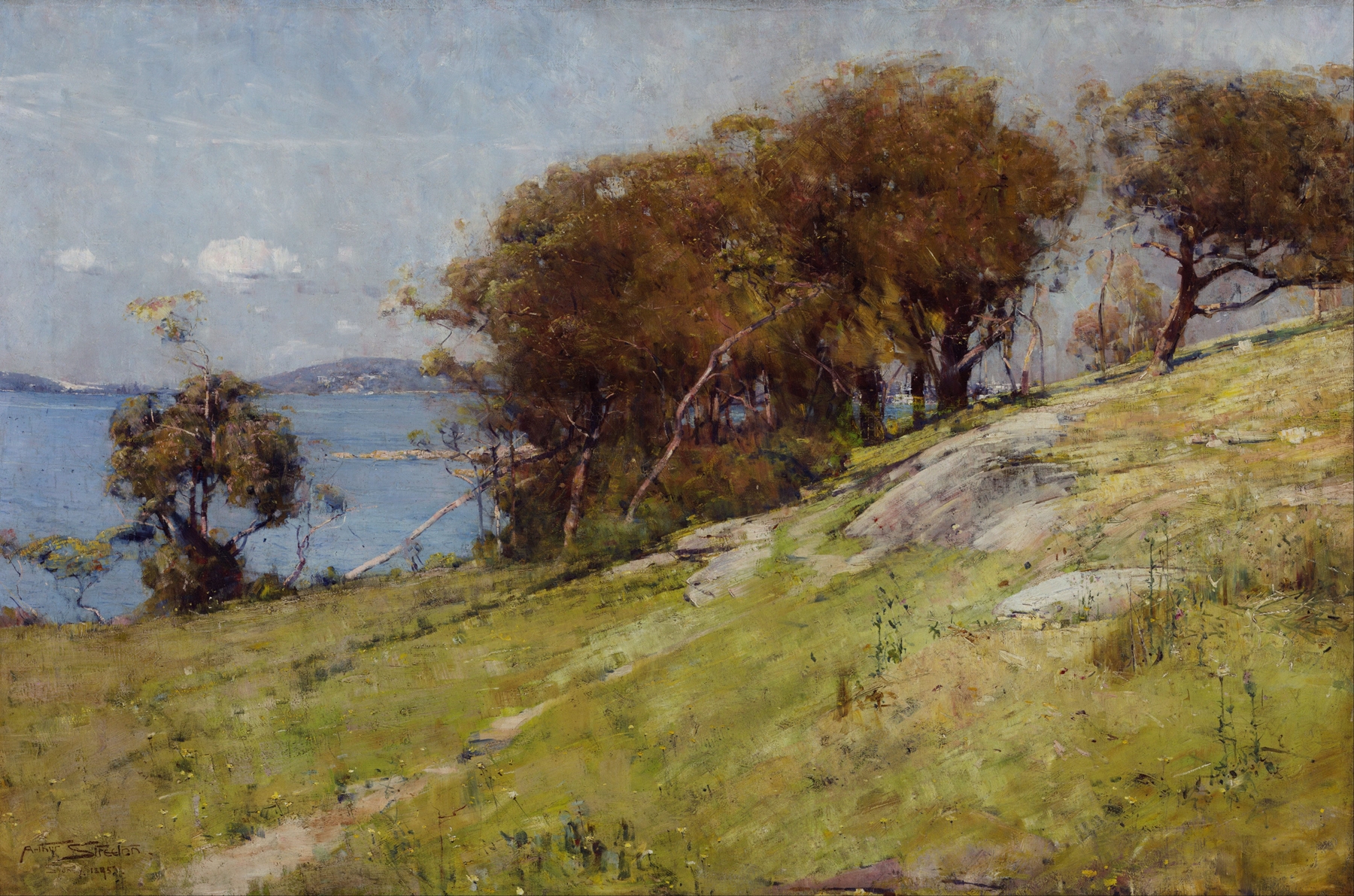
Is this a mirror — or a memory? In From my camp (Sirius Cove), the essence of nature's awe is captured, inviting the viewer to reflect on the profound connection between humanity and the landscape. Look to the foreground, where a vibrant patch of grass leads your eyes to the gentle lapping of water, its surface a tapestry of shimmering blues and greens. The brushstrokes are fluid, almost whispering the secrets of the cove, while the sunlight dances across the scene, illuminating the rugged cliffs in the distance.
The composition gracefully balances the ruggedness of nature with the tranquility of the water, creating a harmonious interplay that draws you in. Within the stark contrast of shadow and light, there is an emotional tension that resonates deeply. The encroaching dark cliffs loom over the serene cove, symbolizing the dichotomy of sheltering nature and the untamed wildness that lies beyond. The quietude is punctuated by the subtle ripples on the water's surface, suggesting the presence of unseen life, a reminder of nature's unpredictability.
Each detail, from the distant sails to the wispy clouds, invites contemplation of memory and imagination, evoking a sense of nostalgia. Arthur Streeton painted this work in 1896 while he was part of the Heidelberg School, a movement that celebrated Australian landscapes. At this time, he was actively exploring the vibrant colors and light of the Australian environment, seeking to capture the beauty of scenes that had both personal and universal significance. His innovative approach came at a pivotal moment when Australian art was establishing its identity, reflecting a growing national consciousness during the post-colonial era.