Cremorne pastoral — History & Analysis
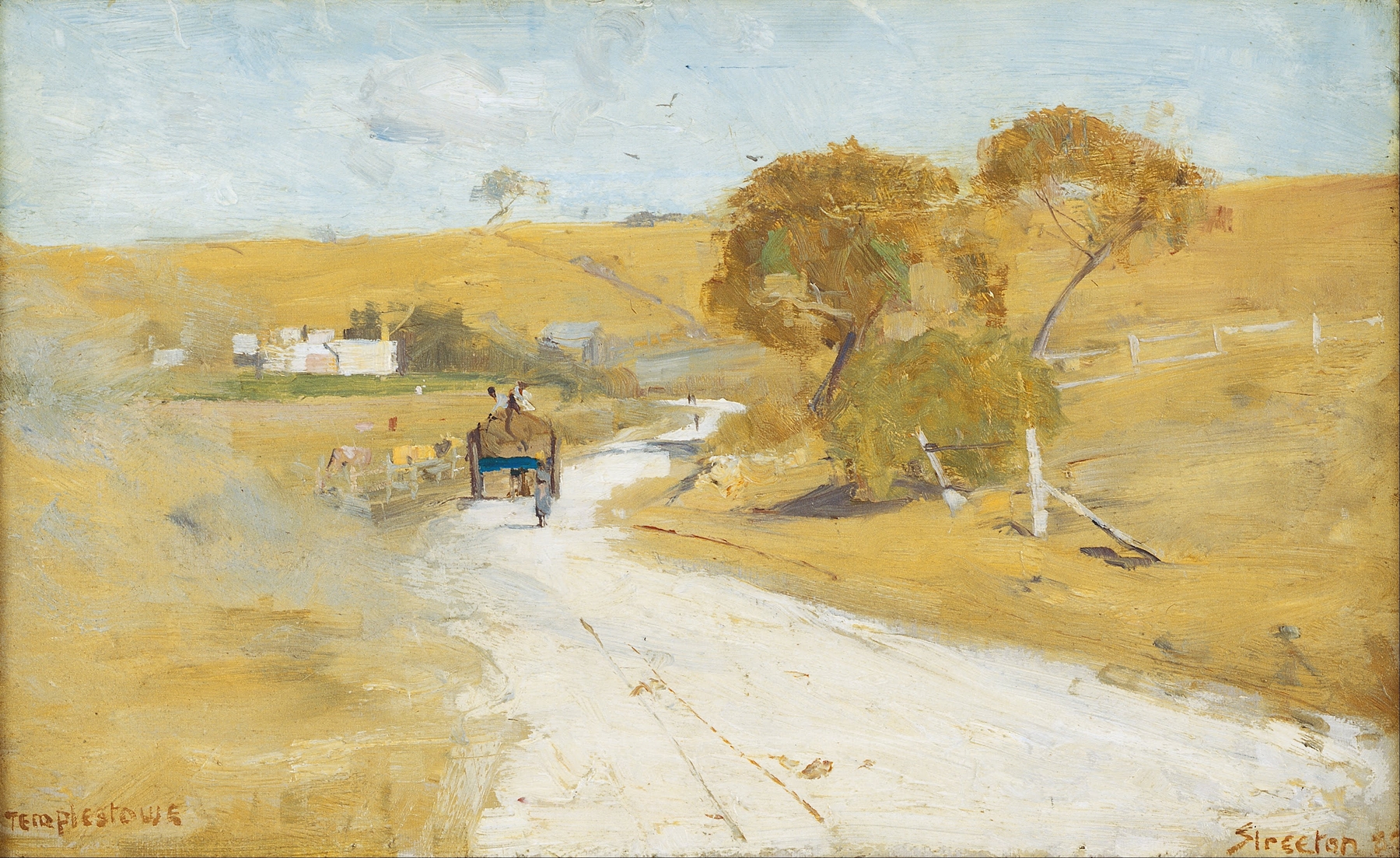
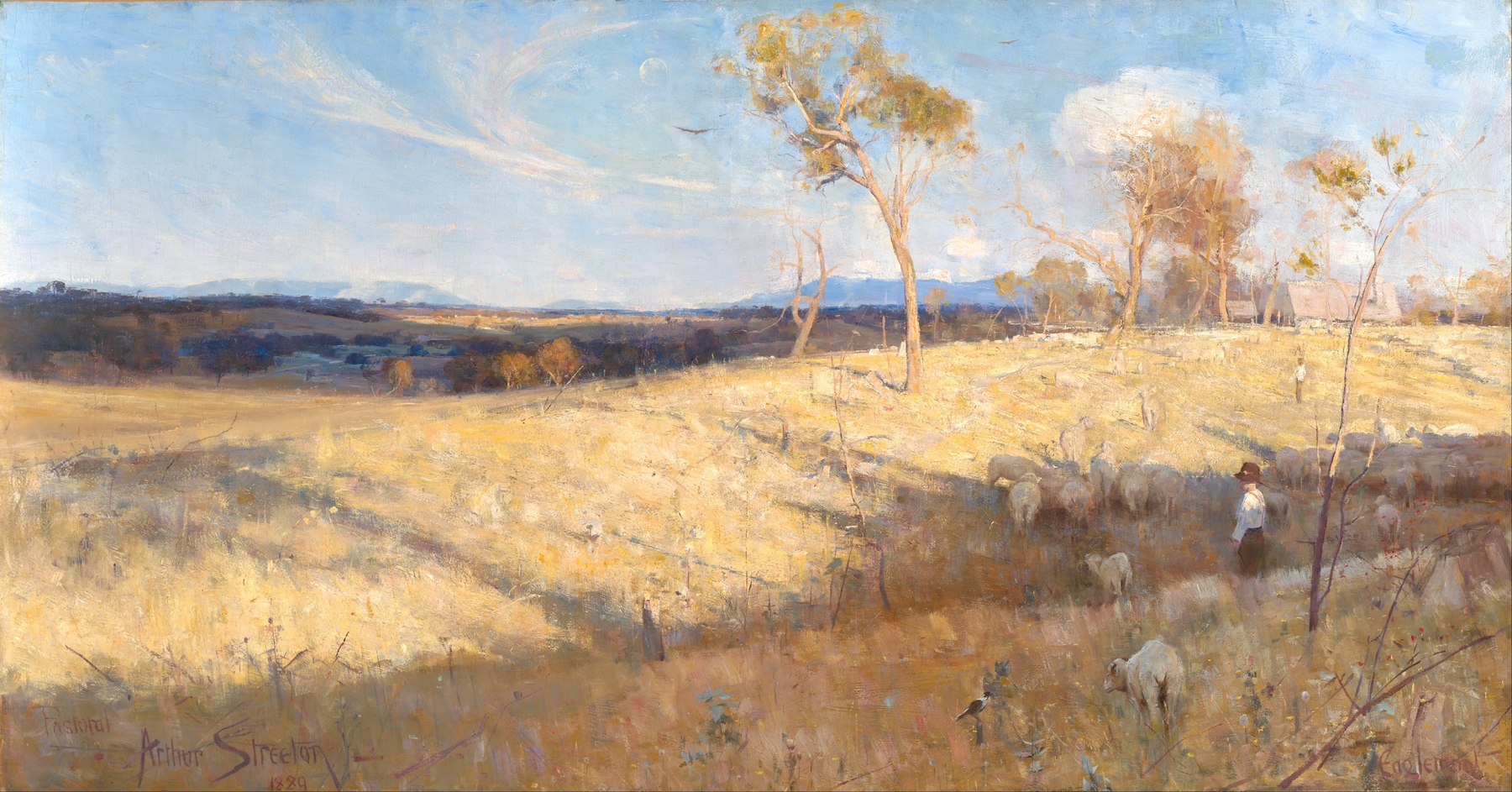
Could beauty survive in a century of chaos? Cremorne Pastoral invites us into a world where nature blooms defiantly, even amidst the encroaching uncertainties of the late 19th century. Look to the left, where a serene river gently curves through lush, verdant grass. The brushstrokes flow with an impressionistic softness, creating an ethereal quality as sunlight dances across the surface of the water. Notice how the warm hues of gold and green blend, suggesting the vitality of life that pulses in every leaf and ripple, while the distant hills recede into a calming blue, contrasting with the vibrant foreground.
The composition balances tranquility and movement, drawing the eye along the river's path. Examining the small details, the delicate play of light and shadow speaks to the emotional tension between nature and the urban world on the horizon. The vibrant flora seems to whisper a resistance to the chaos of industrialization, a subtle reminder of the beauty that can thrive under threat. Meanwhile, the soft figures in the distance, caught in casual leisure, embody a moment of stillness that could easily be shattered by the age's upheaval.
This juxtaposition captures the essence of a fleeting pastoral dream, layered with the weight of impending change. In 1895, Arthur Streeton painted this piece during a period of significant transformation in Australia, as the nation began to grapple with the duality of progress and preservation. Living in Melbourne, Streeton was influenced by the burgeoning Impressionist movement, which aimed to capture the essence of light and color in everyday scenes. His work reflects not only personal creativity but also a collective yearning for beauty amidst the backdrop of societal evolution and industrial revolution.