Bathers at Bellport — History & Analysis
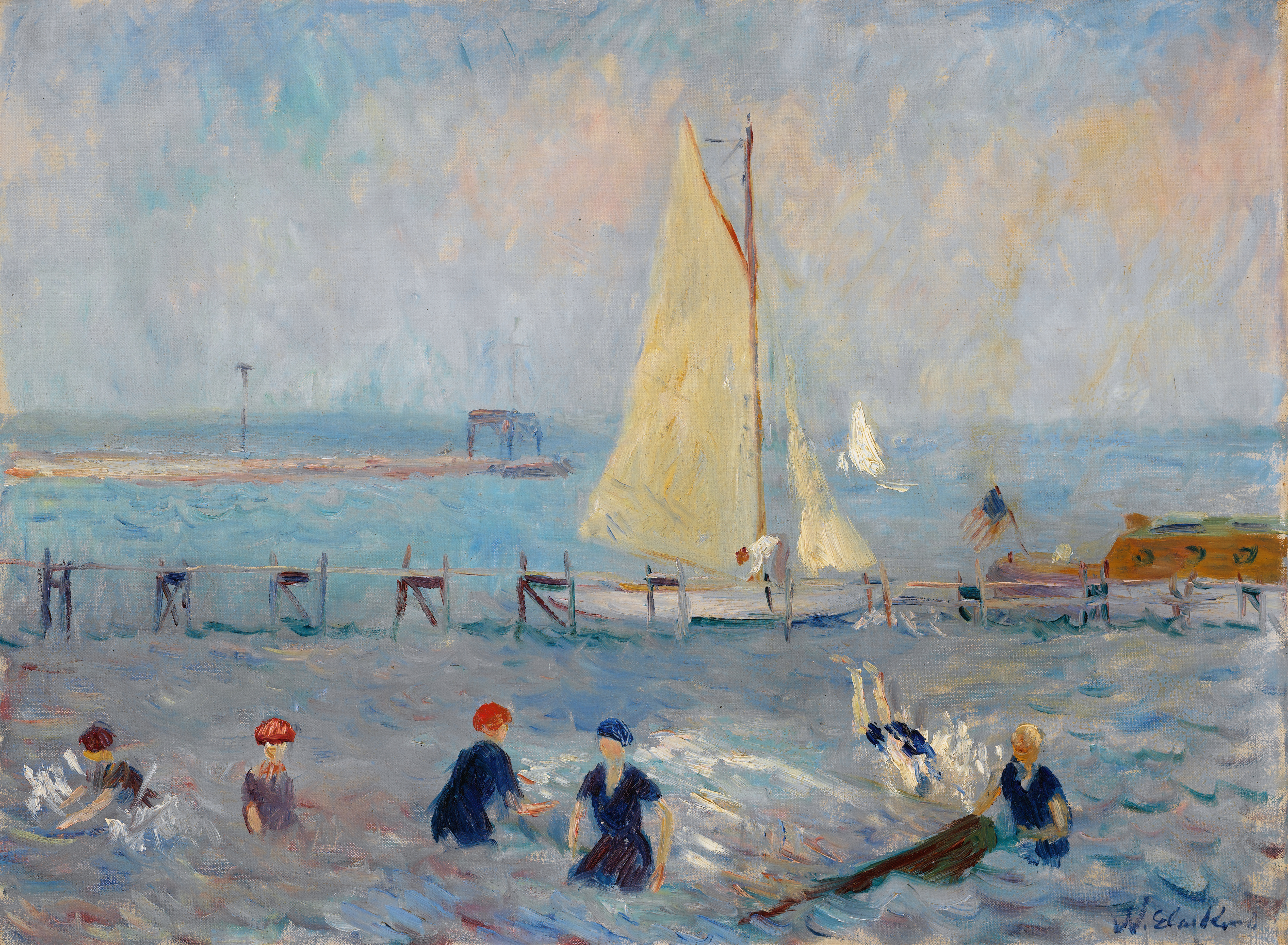
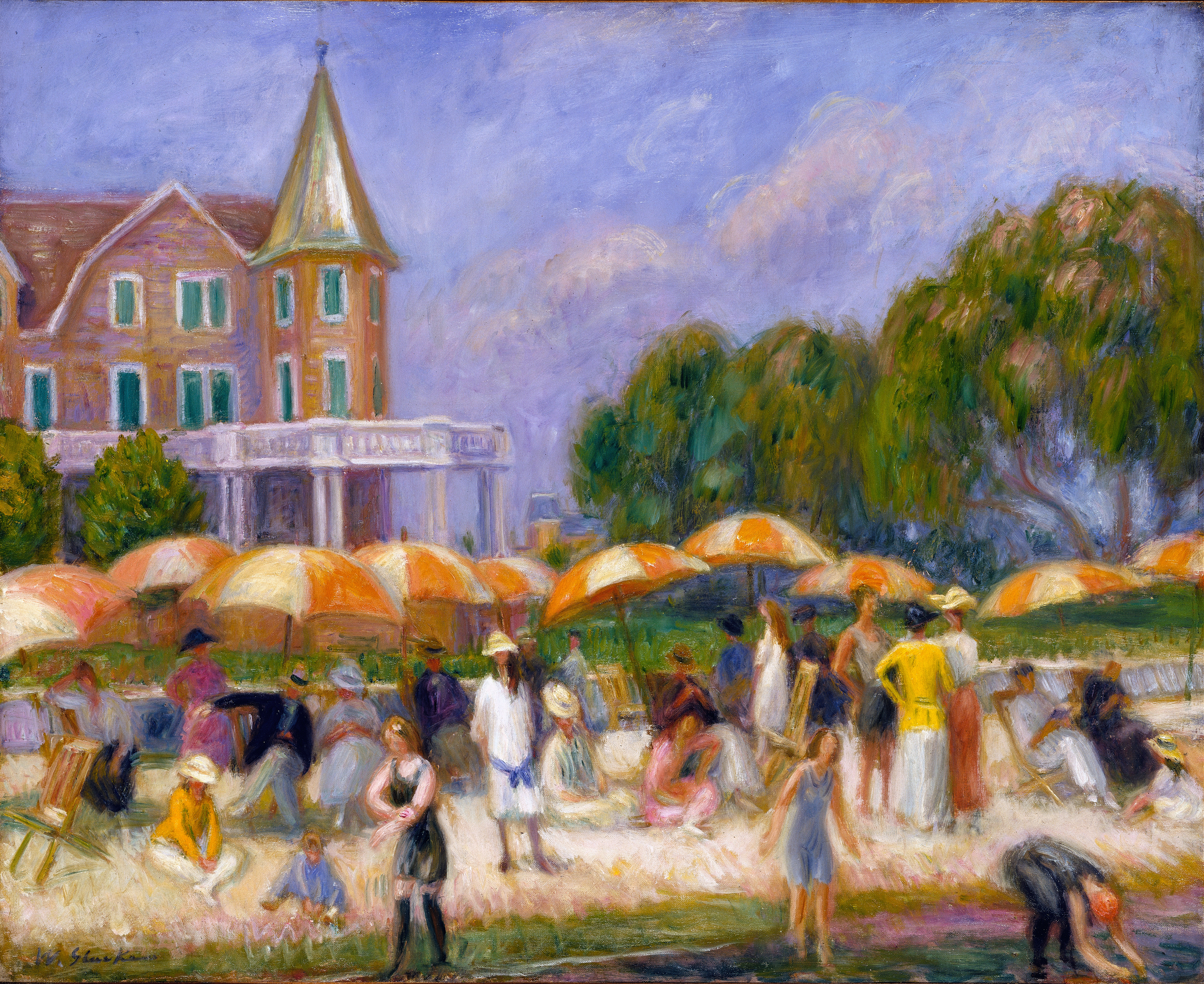
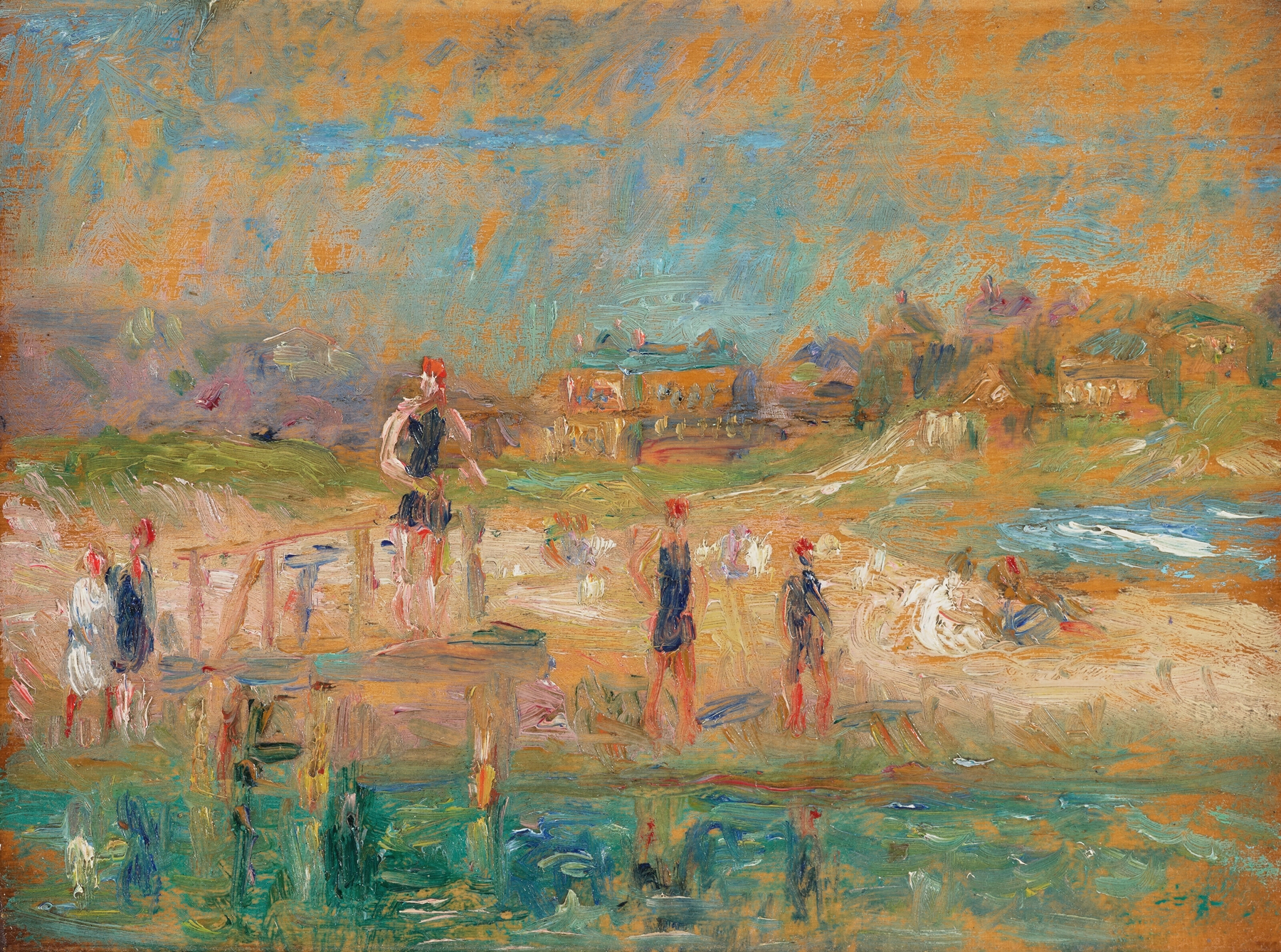
“To paint is to remember what time wants us to forget.” In Bathers at Bellport, shadows whisper secrets of fleeting moments, casting a veil over memories and lives intertwined in leisure. Look to the left at the figures submerged in sparkling water, their forms a dance of vibrant blues and greens. Notice how the sunlight spills onto their skin, illuminating the joy of a summer day while darker shadows loom, hinting at the complexity of their leisure. The composition balances between the playful energy of the bathers and the quiet presence of the shoreline, inviting the viewer to explore the interplay of light and shadow that defines the scene.
Beneath the surface of this idyllic summer day lies a tension between joy and transience. The cast shadows suggest the impermanence of these moments, as if each splash of laughter is swallowed by the depths of time. Subtle details, like the fleeting glances exchanged between bathers, evoke a sense of connection and nostalgia, accentuating the ephemeral nature of joy in a world that is always moving forward.
This work was created during a time when Glackens was deeply immersed in the American art scene of the early 20th century. Influenced by Impressionism, he sought to capture the spontaneity of modern life. Painting Bathers at Bellport, likely in the early 1910s, he reflected a growing interest in leisure and social interaction, emblematic of the changing American identity amidst a backdrop of rapid societal transformation.