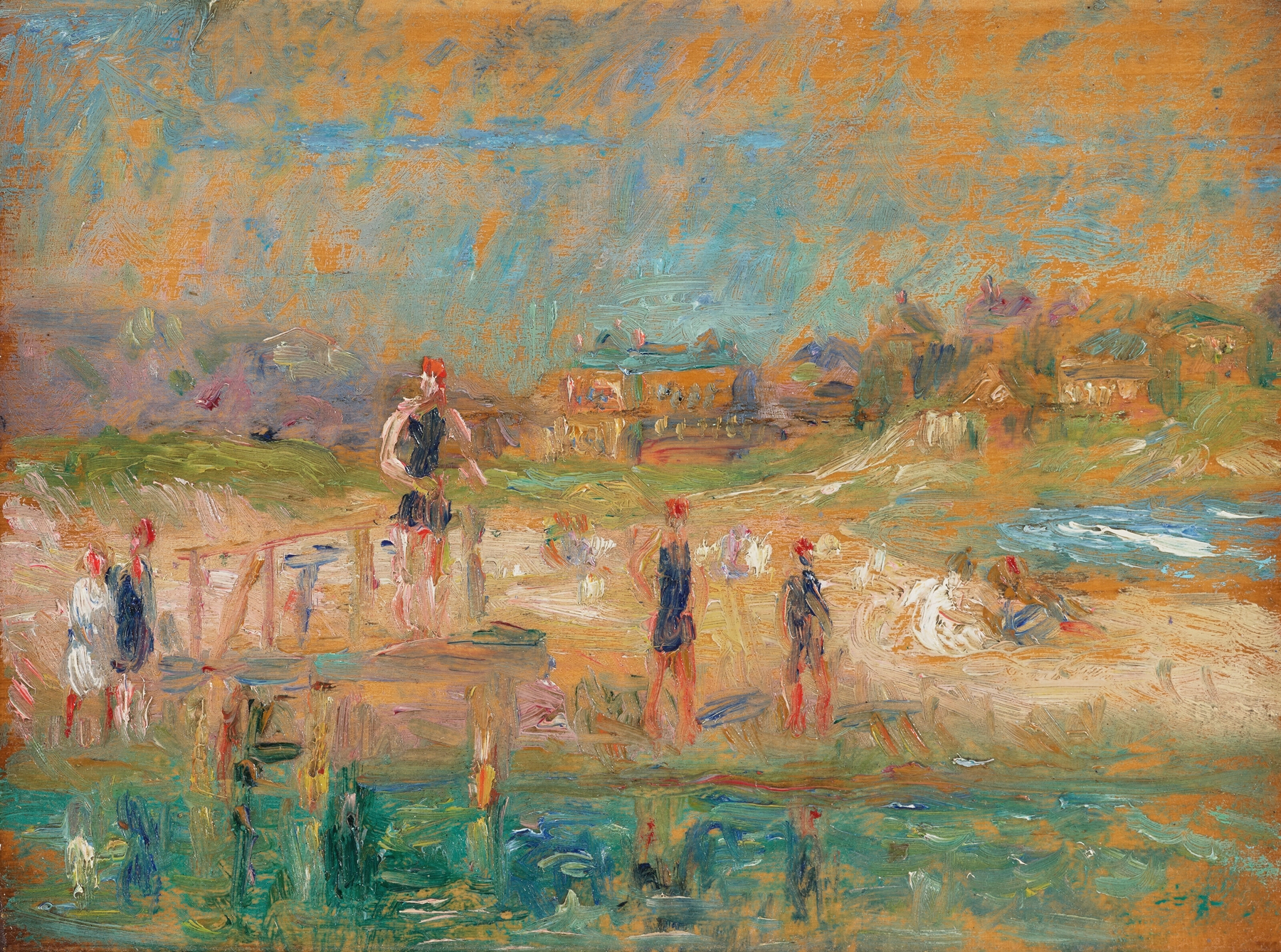
Beach Umbrellas at Blue Point — History & Analysis
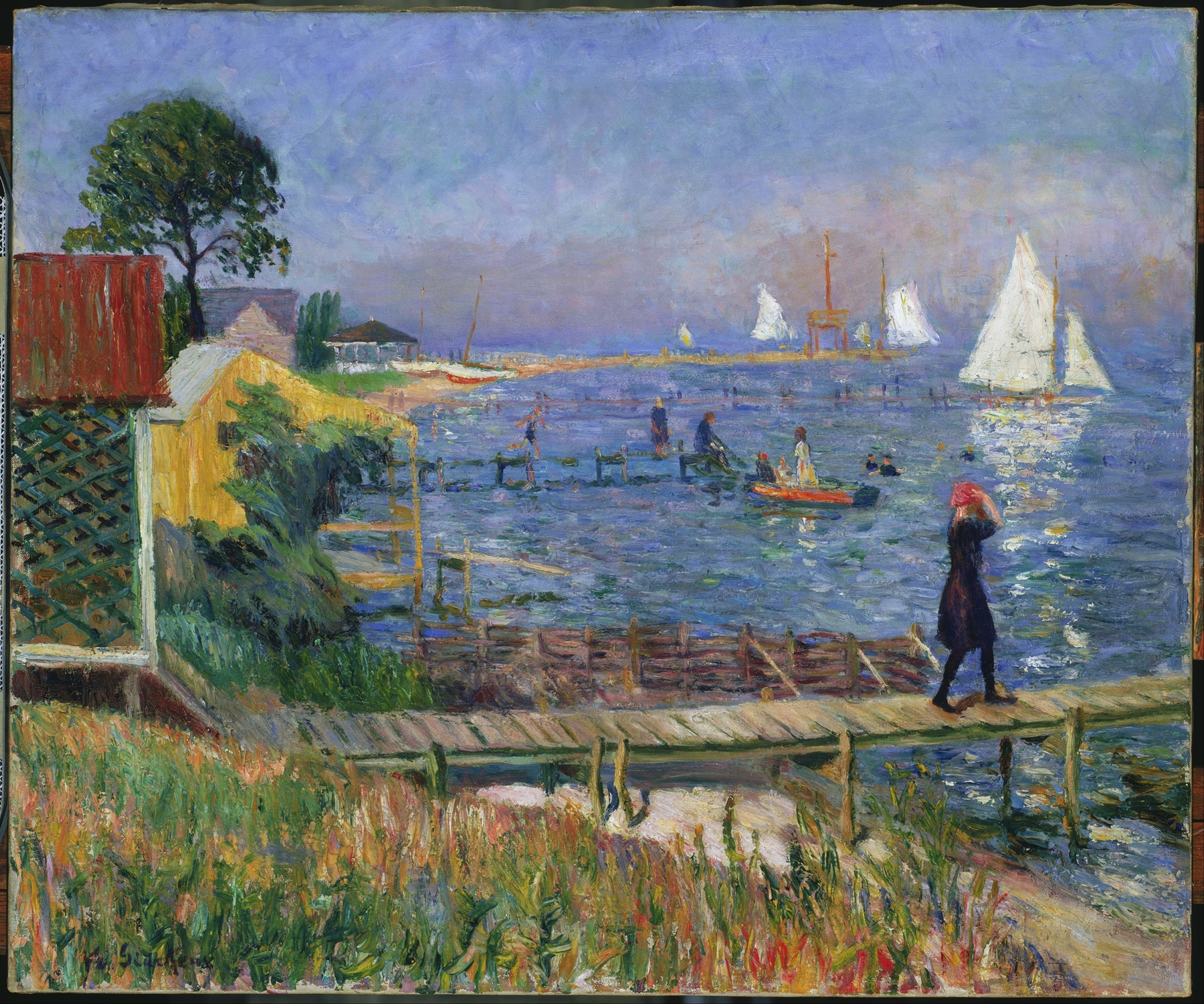
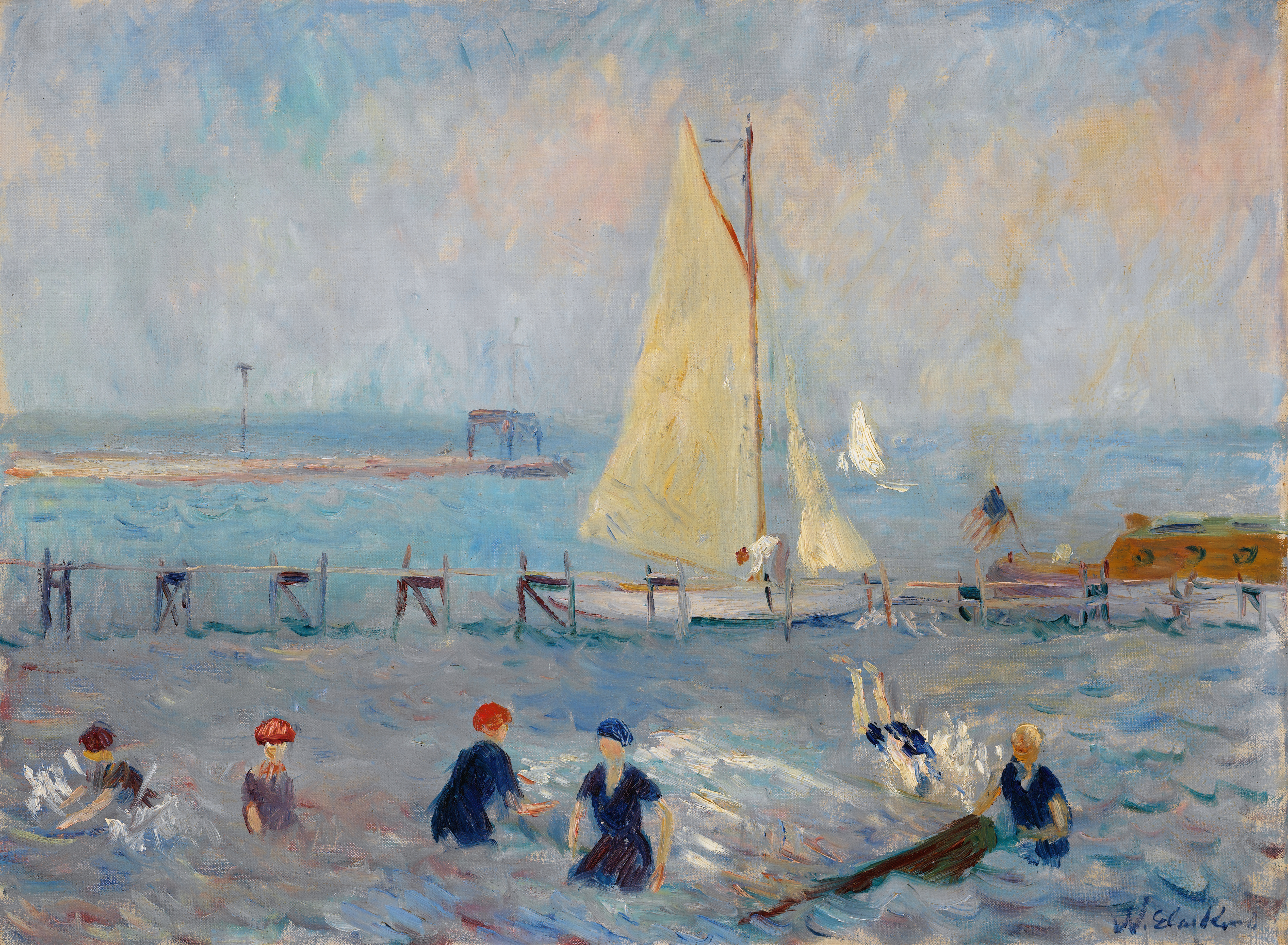
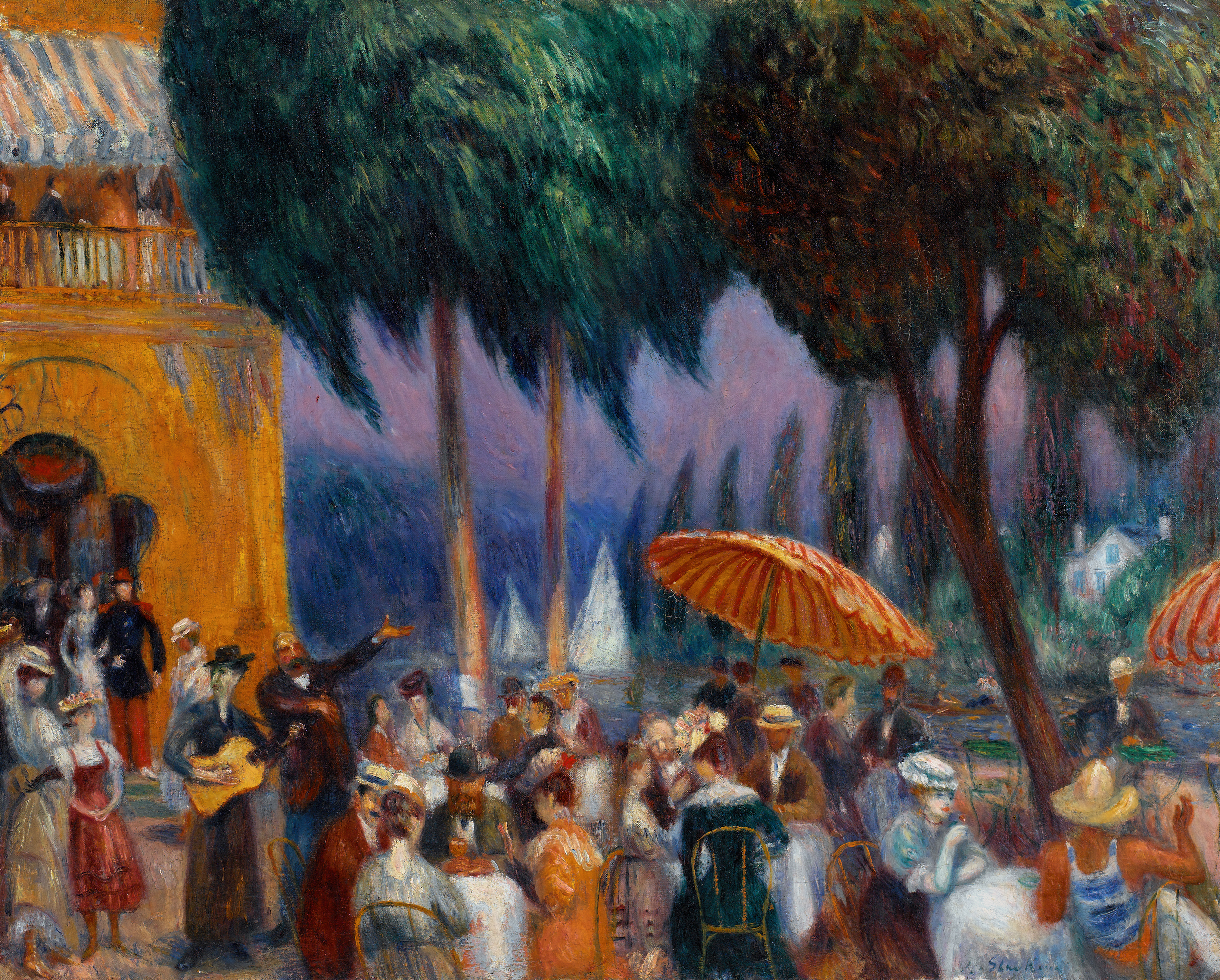
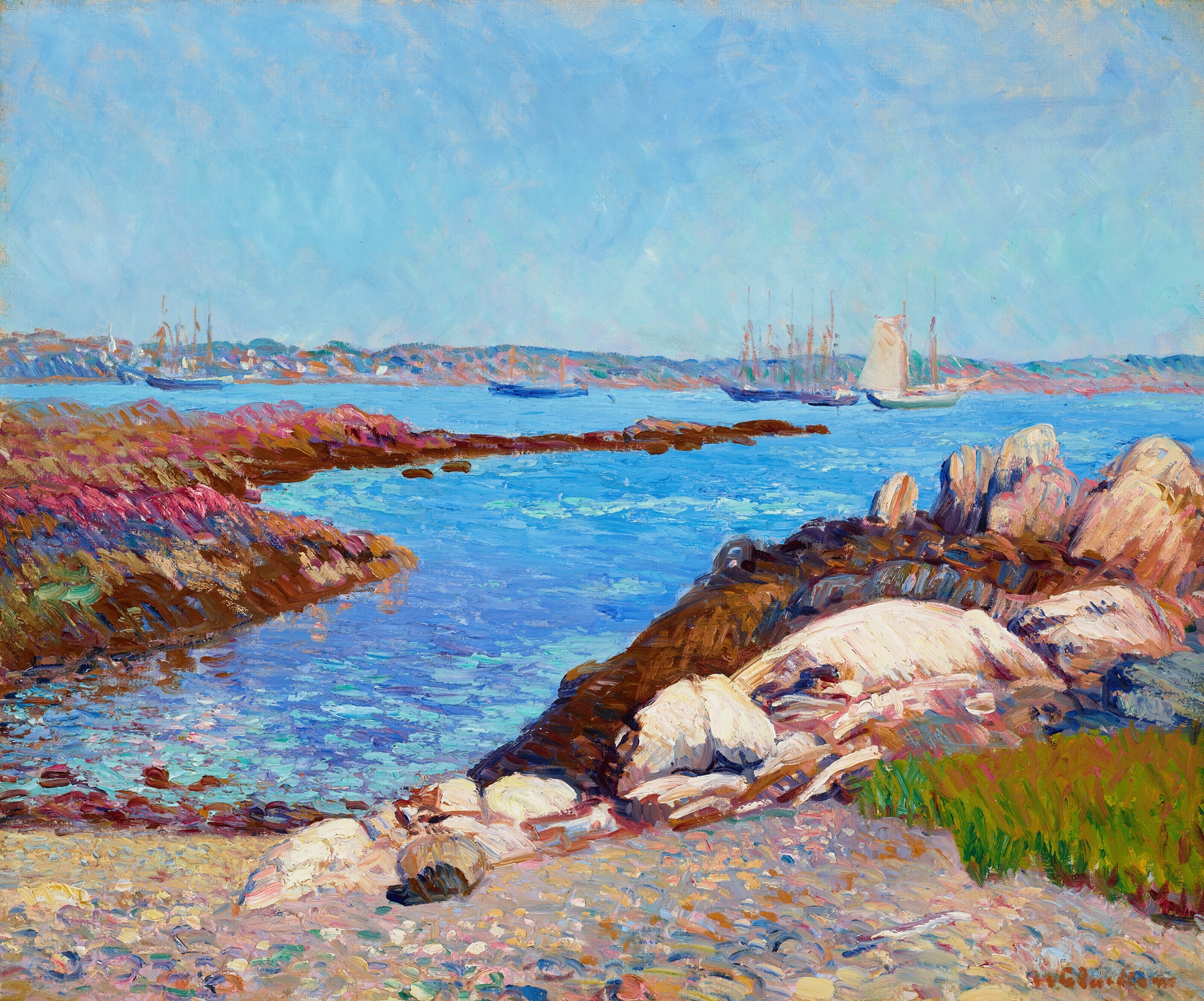
“The canvas doesn’t lie — it simply waits.” In the silence of a sun-soaked day, beneath the vibrant pails of color, Glackens captures not just a scene but a truth that echoes through time. It invites viewers to ponder: what stories lie hidden beneath the blue and white canopies, veiled in shadows and light? Look closely at the left side of the canvas where the sun-drenched sand meets the horizon. Notice how the vibrant umbrellas stand as sentinels against the sky, their bright hues contrasting sharply with the cool, gentle waves lapping at the shore.
Each brushstroke breathes life into the scene, creating a rhythmic interplay of color and texture that draws the eye across the canvas, inviting exploration of the joyful chaos that defines a day at the beach. Beneath the surface, the umbrellas represent a moment of leisure, yet they also embody a collective human experience — the laughter, the conversation, the unspoken camaraderie among strangers. The slight tilt of one umbrella hints at a playful breeze, a reminder of the fleeting nature of joy. Here, Glackens captures an essence of truth, where serenity meets the vibrancy of life, creating a rich tapestry of emotion.
In 1915, Glackens was immersed in the American art scene, blending impressionism with burgeoning modernist trends. Working in New York and influenced by the burgeoning Ashcan School, he sought to capture everyday life with authenticity and immediacy. This period marked a turning point in his career, as he began to explore the vitality of urban leisure, as depicted in Beach Umbrellas at Blue Point.